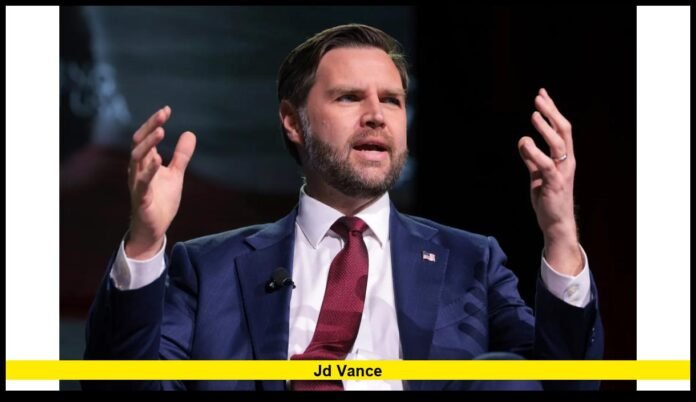

Vice President JD Vance has drawn renewed attention after discussing his views on biblical prophecy, the end times and the possibility that the Antichrist could already be present in the world. His remarks came during a conversation with Christian podcaster Bryce Crawford released on August 31, 2026.
The JD Vance prophecy statement does not amount to a prediction that the end times have begun. Vance said he does not know whether the world is currently experiencing the end times. He also explained that he does not want to spend too much of his attention trying to determine when such events might occur.
His comments have attracted interest because Vance is a major U.S. political figure, and his discussion connected personal religious beliefs with broader questions involving artificial intelligence, spiritual forces, political leaders and the future of humanity.
Key Points Summary
╔════════════════════════════════════════════════════════════════════╗
║ – JD Vance discussed biblical prophecy and the end times during an August 31 podcast interview. ║
║ – He said he does not know whether the world is currently in the end times. ║
║ – Vance said he would not be shocked if the Antichrist were already among humanity. ║
║ – He recalled receiving the John Hagee Prophecy Study Bible as a child. ║
║ – He discussed artificial intelligence and expressed concerns about its potential spiritual implications. ║
║ – Vance said his focus should remain on his responsibilities rather than predicting the timing of the end times. ║
╚════════════════════════════════════════════════════════════════════╝
JD Vance Prophecy Statement: What Did He Actually Say?
During the podcast conversation, Vance discussed his longstanding interest in biblical prophecy. He explained that his interest began during childhood, when he received a John Hagee Prophecy Study Bible at around 10 or 11 years old.
That early exposure appears to have remained part of his religious background. However, Vance did not use the recent conversation to announce a specific prophecy or provide a timetable for future events.
When asked about whether the world is currently living through the end times, Vance said he did not know. He also indicated that trying to determine the exact timing of such events should not become the central focus of his life.
His position was therefore more cautious than some online descriptions of the discussion might suggest. Vance acknowledged the possibility of major biblical events while emphasizing that he cannot determine whether they are happening now.
Vance’s Childhood Interest in Biblical Prophecy
Vance’s interest in prophecy goes back many years. During the podcast discussion, he recalled receiving a prophecy-focused Bible during childhood.
The John Hagee Prophecy Study Bible played a role in his early exposure to interpretations of biblical passages concerning the end times. Vance’s recollection provides useful context for understanding why he was willing to discuss subjects such as the Antichrist and the end of the world during the interview.
His religious background has evolved considerably since childhood. Vance went through a period when he identified as an atheist before returning to Christianity. In 2019, he converted to Catholicism.
That history is relevant because his recent comments were personal and theological rather than an announcement of a new political position. His remarks reflect how his religious worldview influences the way he thinks about history, technology and major events.
What Does Vance Mean by the End Times?
The term “end times” does not have one universally accepted interpretation among Christians. Different denominations and theological traditions understand biblical passages about the end of the world in different ways.
Some Christians interpret references to the Antichrist, tribulation, judgment and other events literally. Others approach those passages symbolically or place them within different theological frameworks.
Vance did not attempt to settle those disagreements during the podcast. Instead, he discussed his own uncertainty about whether the world is approaching the events described in biblical prophecy.
He did not identify a particular year as the beginning of the end times. He also did not point to a specific political leader or current event and declare that it represents a fulfillment of prophecy.
That distinction is important when discussing the biblical prophecy and JD Vance connection. Having an interest in prophecy does not mean that Vance has claimed to possess a prophetic prediction.
Why the Antichrist Remark Attracted Attention
One of the most discussed portions of the interview involved Vance’s comments about the Antichrist.
Vance said he would not be shocked if the Antichrist were already among humanity. The remark quickly attracted attention because of his position as vice president and because references to the Antichrist carry significant religious meaning.
However, Vance did not identify a particular person as the Antichrist. He did not name a political leader or suggest that a specific individual currently holds that role.
He also did not say that the existence of the Antichrist proves that the end times have begun.
Instead, the comment formed part of a broader conversation about faith, uncertainty and the possibility that people may be living through events they do not fully understand.
The distinction between possibility and certainty is critical. Vance expressed that he would not be surprised by the possibility, but he stopped short of claiming that he knows such a figure is currently alive.
Biblical Prophecy and JD Vance: His Concerns About Artificial Intelligence
Artificial intelligence became another important subject during the conversation.
Vance discussed developments in AI and expressed concerns about what he views as their potential spiritual consequences. His comments focused partly on situations in which people appear to develop unusually strong emotional relationships with AI systems.
He also discussed an example involving the retirement of an AI model. Vance described a situation in which employees reacted emotionally and held what he characterized as a burial-style ceremony for the discontinued technology.
For Vance, the example raised questions about the relationship between humans and increasingly sophisticated technology.
His concern was not limited to technological development itself. He discussed what happens when people begin treating technology as something that can replace important human relationships.
Vance framed those concerns through his religious beliefs. He suggested that technology can become troubling when it begins occupying a role that should belong to human relationships and community.
These statements should be understood as Vance’s personal interpretation. They do not establish that artificial intelligence has a supernatural connection to biblical prophecy.
Vance’s Comments About Spiritual Darkness
The discussion also included Vance’s descriptions of experiences that he interpreted through a spiritual lens.
He spoke about meetings with unnamed world leaders where he said he sometimes sensed what he considered spiritual darkness. He did not identify the individuals involved or claim that they were responsible for supernatural events.
Vance also recalled visiting Gettysburg and describing the experience in spiritual terms.
Such comments help explain the broader context of his discussion about biblical prophecy. Vance appears to view some historical and political experiences through both religious and practical perspectives.
However, his personal impressions should not be treated as independently verified evidence of supernatural activity. They represent his own interpretation of experiences.
The Trump Assassination Attempt and Vance’s Belief in Providence
Vance also connected his religious worldview to the assassination attempt against Donald Trump in July 2024.
Trump was shot in the ear during a campaign rally in Butler, Pennsylvania, while addressing supporters. Vance later discussed Trump’s survival in terms of divine providence.
He reflected on circumstances surrounding the event and how small changes in timing or movement could have produced a different outcome.
Vance viewed Trump’s survival as something that could have a deeper meaning. His interpretation illustrates the role that religious belief plays in how he understands major political events.
That perspective also helps explain why his comments about prophecy have generated attention. Vance does not necessarily separate his understanding of politics from his personal religious worldview.
Why Vance Does Not Focus on Predicting the End
Although Vance discussed the Antichrist and the end times, he emphasized that he does not want to spend his life attempting to predict when those events will occur.
His approach focuses more on responsibility than prediction.
Vance explained that if the end times were approaching, people would still need to live responsibly. If they were not approaching, the same principle would apply.
For him, the uncertainty does not eliminate the need to act.
He has described his responsibilities in terms of family, public service and faith. Rather than trying to determine exactly where humanity stands on a prophetic timeline, he said he wants to focus on doing what he believes is God’s work.
That position makes his recent comments different from a conventional apocalyptic prediction.
How the Statement Fits Into Vance’s Religious Views
Vance’s religious beliefs have been an important part of his public identity.
His conversion to Catholicism in 2019 followed years of changes in his religious outlook. He has spoken about faith in the context of family life, politics and his understanding of American society.
His latest discussion shows that biblical prophecy remains a subject he finds meaningful. However, the interview does not establish that Vance believes he has special knowledge about future events.
That distinction is especially important when discussing biblical prophecy and JD Vance.
There is a difference between discussing biblical predictions and making a new prediction. Vance discussed biblical ideas, expressed his personal beliefs and acknowledged possibilities, but he did not provide a specific date for an apocalyptic event.
He also did not identify a current political figure as the Antichrist.
JD Vance Prophecy Statement Timeline
Childhood: Vance said he received the John Hagee Prophecy Study Bible when he was approximately 10 or 11 years old. That experience contributed to his early interest in biblical prophecy.
2019: Vance converted to Catholicism after a period of significant changes in his religious beliefs.
July 2024: Trump survived an assassination attempt at a campaign rally in Butler, Pennsylvania. Vance later discussed Trump’s survival through the concept of divine providence.
2026: Vance continued discussing questions involving faith, politics, international affairs and God’s will during public appearances.
August 31, 2026: Vance appeared on the Bryce Crawford Podcast, where he discussed biblical prophecy, the end times, the Antichrist, artificial intelligence and spiritual concerns.
September 2026: His comments attracted renewed public attention, particularly his statement that he would not be surprised if the Antichrist were already among humanity.
What the JD Vance Prophecy Statement Does Not Establish
Several conclusions should not be drawn from Vance’s remarks.
He did not say that the end times are definitely underway. He did not give a date for the apocalypse. He did not identify a specific person as the Antichrist.
Vance also did not establish that artificial intelligence represents a fulfillment of biblical prophecy. His concerns about AI were expressed through his personal religious worldview.
Likewise, his interpretation of Trump’s survival as providence represents his own belief. It should not be presented as an independently verified supernatural explanation.
These distinctions help separate what Vance actually said from interpretations that may circulate online.
The most accurate description of his comments is that he discussed biblical prophecy and acknowledged the possibility of end-times events while admitting that he does not know whether those events are currently unfolding.
Why Vance’s Comments Matter
The discussion has attracted attention partly because Vance is serving as vice president.
A private citizen discussing the Antichrist might receive limited national attention. A sitting vice president discussing the subject naturally receives much greater scrutiny.
His remarks may also prompt broader conversations about the role of religious beliefs in political leadership. Vance’s comments demonstrate that his faith is relevant to how he personally interprets certain issues, including technology, historical events and political developments.
At the same time, his podcast comments should not automatically be treated as official U.S. government policy.
The conversation centered on personal faith and worldview. It was not an official announcement from the White House about religion, foreign policy or national policy.
Understanding that distinction prevents the remarks from being exaggerated beyond what Vance actually said.
The Main Takeaway From Vance’s Remarks
The central message behind the JD Vance prophecy statement is uncertainty rather than prediction.
Vance has a longstanding interest in biblical prophecy that began during childhood. He remains willing to discuss subjects such as the Antichrist and the end times, but he has not claimed to know that the world has entered its final period.
His comments about artificial intelligence and spiritual experiences provide additional insight into his worldview. He sees certain developments through a religious framework, particularly when technology appears to affect human relationships or when major events seem to carry deeper meaning.
For readers trying to understand the controversy, the key distinction is simple: Vance discussed the possibility of biblical prophecy being relevant to the modern world, but he did not announce that the apocalypse has begun or identify a specific person as the Antichrist.
Frequently Asked Questions
Q: What was the JD Vance prophecy statement about?
A: Vance discussed his long-running interest in biblical prophecy, the end times and the Antichrist. He said he does not know whether the world is currently in the end times.
Q: Did JD Vance say the end times have begun?
A: No. Vance expressed uncertainty and did not claim that the end times are definitely underway.
Q: Did JD Vance say the Antichrist is alive today?
A: He said he would not be shocked if the Antichrist were already among humanity. He did not identify any specific person as the Antichrist.
Q: When did JD Vance become interested in biblical prophecy?
A: Vance has said his interest dates back to childhood. He recalled receiving the John Hagee Prophecy Study Bible when he was around 10 or 11 years old.
Q: What does biblical prophecy and JD Vance mean in this context?
A: It refers to Vance’s personal discussion of biblical predictions, the end times and the Antichrist, rather than a formal political or governmental prophecy.
Q: Did JD Vance connect artificial intelligence to biblical prophecy?
A: Vance discussed AI in spiritual terms and expressed concerns about people forming unusual relationships with technology. He did not establish that AI fulfills a specific biblical prophecy.
Q: Did JD Vance predict when the world will end?
A: No. He did not provide a date or specific timetable for the end of the world.
The most important takeaway is that JD Vance discussed biblical prophecy and the possibility of the end times without claiming that he knows they are happening now.