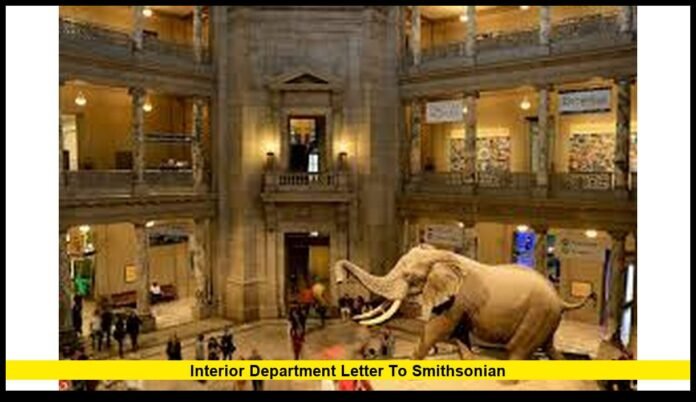

Interior Department letter to Smithsonian has drawn national attention as federal officials challenge the Smithsonian Institution’s leadership and approach to presenting American history. The communication from Interior Secretary Doug Burgum and White House Domestic Policy Council Director Vince Haley warned that federal agencies could reconsider certain forms of support for the institution, including artifact loans, assistance programs, and other partnerships.
The letter represents the latest development in an ongoing disagreement between the Trump administration and the Smithsonian over museum content, historical interpretation, and the role of federal oversight. Officials have raised concerns about how certain exhibitions address topics involving race, identity, culture, and the nation’s history.
The Smithsonian continues to operate its museums, galleries, research centers, and educational programs while the debate over government involvement and institutional independence continues.
Federal Officials Raise Concerns About Smithsonian Operations
The Interior Department communication was directed to the Smithsonian Board of Regents, the governing body responsible for overseeing the institution. The letter questioned whether federal agencies should continue providing support if officials believe Smithsonian programs do not align with administration priorities.
Federal officials specifically pointed to concerns about museum exhibitions and educational materials. They argued that some presentations of American history focus too heavily on national conflicts and social issues while not giving enough attention to achievements and shared values.
The administration’s position follows earlier efforts to review Smithsonian content and operations. A White House review examined exhibitions, educational materials, and institutional practices as part of a broader effort focused on historical presentation.
The dispute has placed renewed attention on the balance between government funding and the independence of cultural institutions.
Why the Smithsonian Became a Focus of Federal Review
The Smithsonian Institution holds a unique position in American public life. It operates as a national museum and research organization with support from federal appropriations while maintaining independent governance through its Board of Regents.
The institution includes 21 museums and galleries, along with the National Zoo. Millions of visitors rely on Smithsonian facilities each year for education, historical collections, scientific research, and cultural programs.
The Trump administration has argued that some Smithsonian exhibits reflect what officials describe as a political interpretation of history. The administration has called for changes to what it considers unbalanced portrayals of the United States.
Smithsonian leaders have defended the institution’s mission, emphasizing research-based scholarship, historical preservation, and public education.
Details Highlighted in the Federal Warning
The Interior Department letter raised concerns about continued cooperation between federal agencies and the Smithsonian. The possible areas affected include several forms of government assistance.
Key areas discussed include:
- Federal agency loans of historical artifacts
- Government cooperation with Smithsonian programs
- Certain grants and support opportunities
- Administrative partnerships between agencies and museums
The letter did not announce an immediate closure of Smithsonian facilities or an immediate end to all federal funding. Instead, it warned that future cooperation could change if concerns remain unresolved.
The issue has created uncertainty about how future museum projects and exhibitions may develop.
Smithsonian Defends Its Historical Mission
The Smithsonian has maintained that its museums serve the public by presenting history through evidence, research, and professional scholarship.
Institution leaders have rejected accusations that the organization promotes a political agenda. Smithsonian Secretary Lonnie G. Bunch III has emphasized that the institution’s responsibility is to tell America’s story through collections, research, and educational programs.
The Smithsonian has argued that understanding American history requires examining both achievements and difficult moments from the past. Museum officials have said that presenting different parts of history helps visitors understand the country’s development.
The debate has highlighted different views about what national museums should represent.
Timeline of the Smithsonian Dispute
March 2025:
The Trump administration issued an executive order focused on reviewing historical presentations at Smithsonian-related institutions and addressing what it called improper ideological influence.
August 2025:
The White House requested a review of Smithsonian exhibitions, educational materials, and public-facing content.
July 2026:
The administration issued another executive action related to restoring trust in the Smithsonian Institution and directed federal officials to use available authorities regarding concerns raised in the review.
September 2026:
The Interior Department letter became public, increasing attention on the relationship between federal agencies and the Smithsonian.
Federal Funding and Institutional Independence
One of the biggest questions surrounding the dispute involves the relationship between federal support and Smithsonian independence.
The Smithsonian receives federal funding to help operate museums, maintain collections, support research, and provide educational services. However, the institution’s governance structure gives it independence in many operational decisions.
Federal officials argue that taxpayer-supported organizations must remain accountable for how they present information to the public. Critics of government intervention argue that museums require independence to protect academic research and historical accuracy.
The disagreement reflects a larger national conversation about the role of government in cultural institutions.
Possible Effects on Smithsonian Programs
The immediate impact on visitors remains limited. Smithsonian museums continue welcoming guests, and regular programs remain available.
However, future partnerships could face changes if federal agencies alter their relationships with the institution.
Many museum projects depend on cooperation between government agencies, researchers, historians, and cultural organizations. Artifact loans and research partnerships often help create exhibitions that would not otherwise be possible.
Any reduction in cooperation could influence future planning, although the long-term effects remain unclear.
Board of Regents Becomes Central to the Discussion
The Smithsonian Board of Regents now plays an important role in determining how the institution responds.
The board oversees major decisions involving leadership, policies, and the direction of the Smithsonian. Federal officials have sought discussions with the board regarding the concerns outlined in the letter.
The board must balance several responsibilities, including protecting the institution’s mission while responding to questions from government officials who support the organization through public resources.
The outcome of these discussions could shape the future relationship between the Smithsonian and federal agencies.
National Debate Over Museums and History
The controversy surrounding the Smithsonian reflects a broader debate across the United States about how museums should present history.
Supporters of the administration’s position argue that museums should highlight national accomplishments and avoid interpretations they believe create division.
Supporters of the Smithsonian’s approach argue that museums must include complex historical topics to provide a complete understanding of the nation’s past.
The discussion has reached beyond the Smithsonian and has influenced conversations about public education, historical research, and cultural institutions nationwide.
What Comes Next for the Smithsonian
The future relationship between the federal government and the Smithsonian will depend on upcoming discussions between officials and institutional leaders.
Potential developments could involve:
- Additional meetings between federal officials and Smithsonian representatives
- Further reviews of museum materials
- Changes in agency cooperation
- Continued public discussion about historical interpretation
For now, the Smithsonian continues its mission of preserving collections, conducting research, and serving visitors across the United States.
The Interior Department letter to Smithsonian has become a significant moment in the continuing discussion over government involvement, museum independence, and how America’s history should be presented to the public. As the situation develops, attention will remain focused on how Smithsonian leaders and federal officials address their differences.
What do you think about the future of national museums and their role in telling America’s story? Share your thoughts and stay updated on the latest developments.