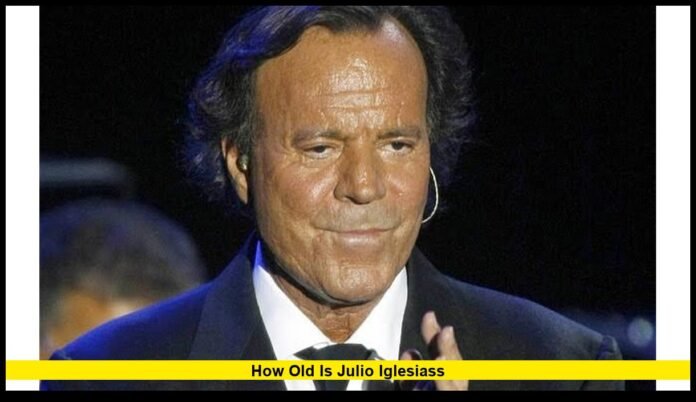

Julio Iglesias is 83 years old as of November 19, 2026, and remains one of the most internationally recognized Spanish singers in the history of popular music. Born on September 23, 1943, in Madrid, Spain, Iglesias built a remarkable career that brought Spanish-language music to audiences across Europe, the Americas, Asia, and other parts of the world. His romantic ballads, distinctive voice, multilingual recordings, and polished stage performances helped establish him as a major figure in international entertainment.
His music has reached listeners across generations, making his name familiar to audiences who discovered him decades ago as well as younger fans exploring classic Latin pop. Throughout his career, Iglesias recorded songs in multiple languages, performed on stages around the world, collaborated with prominent musicians, and achieved commercial success on an extraordinary scale.
Interest in his personal life and current status continues, particularly as new developments have brought renewed attention to the veteran performer. His age, birthday, musical achievements, family connections, and recent news remain among the subjects fans frequently search for.
Julio Iglesias is 83 in 2026, having celebrated his birthday on September 23. His life story stretches from his early years in Madrid to an international music career that transformed him into one of the most recognizable artists associated with Spanish-language entertainment.
Julio Iglesias Age, Birthday, and Personal Details
Julio Iglesias was born on September 23, 1943, in Madrid, Spain. His birth name is Julio José Iglesias de la Cueva. He grew up in a Spanish family and initially pursued interests outside the music industry before circumstances changed the direction of his life.
His birthday places him among the entertainers whose careers began during a period when international music was becoming increasingly accessible through television, radio, touring, and the expanding recording industry.
| Personal Detail | Information |
|---|---|
| Full name | Julio José Iglesias de la Cueva |
| Date of birth | September 23, 1943 |
| Age in 2026 | 83 years old |
| Birthplace | Madrid, Spain |
| Nationality | Spanish |
| Profession | Singer, songwriter, recording artist |
| Musical genres | Latin pop, romantic ballads, pop |
| Languages recorded | Spanish, English, French, Italian, Portuguese, and others |
| Famous for | International romantic music and multilingual recordings |
| Children | Eight publicly recognized children |
| Son | Enrique Iglesias, internationally successful singer |
Iglesias celebrated his 83rd birthday in September 2026. His age is particularly notable because his name remains connected with a music career that began many decades ago and produced recordings that continue to be played around the world.
His birthday also provides a useful point of reference for understanding the length of his career. Few singers have maintained such broad international recognition across so many decades, especially while recording in multiple languages and reaching audiences with different musical tastes.
A Childhood in Madrid and His Early Interests
Julio Iglesias was born in Madrid during the early 1940s. His childhood took place in Spain during a period of social, political, and economic change. Growing up in the Spanish capital, he was exposed to the country’s culture, language, traditions, and developing popular entertainment scene.
His father, Julio Iglesias Puga, was a physician, and the family placed importance on education and professional development. During his younger years, Iglesias was not initially known as someone destined to become an internationally famous singer.
He developed an interest in football and pursued the sport seriously. His athletic abilities eventually led him to become involved with Real Madrid’s youth football system. At the time, football appeared to be a possible professional path for the young Iglesias.
His interest in sports was an important part of his early identity. The discipline required for athletic training, competition, and performance would later become relevant to his approach to music and professional life.
However, an unexpected event dramatically changed his future.
The Accident That Changed His Life
During his youth, Iglesias experienced a serious automobile accident that affected his physical abilities and changed his plans for the future. The injury left him facing a difficult recovery period and interrupted his ambitions in football.
The accident was a turning point. Instead of continuing toward a professional sports career, he spent time recovering and reconsidering what he might do with his life.
During his recovery, he began developing a stronger interest in music. Guitar playing and singing became activities that helped him occupy his time and explore a new creative direction.
The period was challenging, but it also opened a door that might otherwise have remained closed. Music gradually became more than a hobby. It developed into a serious pursuit that eventually led him to professional opportunities.
The story of Iglesias’ transition from football to music is frequently associated with the idea that unexpected circumstances can reshape a person’s career. His experience demonstrates how a major setback can sometimes create opportunities in an entirely different field.
Rather than returning to his previous ambitions, Iglesias began building a new future through singing, songwriting, and musical performance.
How Julio Iglesias Began His Music Career
Iglesias’ entry into the music industry did not happen overnight. He gradually developed his vocal abilities, learned more about songwriting, and began pursuing opportunities to perform.
His early musical interests included romantic songs and melodic compositions that emphasized emotional expression. His voice became particularly suited to ballads, where the singer could communicate love, heartbreak, longing, nostalgia, and personal emotion.
His early performances and recordings helped him gain recognition in Spain. As he became more confident as a performer, he began appearing in competitions and pursuing broader opportunities within the entertainment industry.
A significant moment in his early career came when he represented Spain at the Eurovision Song Contest in 1970. His participation helped introduce him to a wider European audience and provided an opportunity to demonstrate his abilities on an international stage.
Eurovision exposure was important because the competition brought together performers from different countries and gave artists access to audiences beyond their home markets.
The experience helped Iglesias continue developing his career, and his subsequent recordings gradually established him as a successful Spanish singer.
The Rise of an International Music Star
Julio Iglesias’ career expanded significantly during the 1970s and 1980s. His recordings increasingly reached audiences outside Spain, and his music became popular across Latin America, Europe, and other regions.
One of the major factors behind his international success was his willingness to record in several languages. Instead of limiting his career to Spanish-language audiences, he explored English, French, Italian, Portuguese, and other languages.
This strategy allowed him to connect with listeners who might not otherwise have followed Spanish-language music.
His romantic songs were also adaptable to different markets. Love, heartbreak, affection, longing, and emotional relationships are universal subjects, and his musical style could reach listeners regardless of their language or cultural background.
His recordings often featured polished arrangements, smooth melodies, and a vocal style that emphasized emotion rather than aggressive performance.
Over time, Iglesias developed a recognizable image as an international romantic singer. His music became associated with elegant performances, emotional ballads, and a sophisticated presentation.
The combination of his voice, multilingual recordings, international touring, and strong promotional presence helped turn him into a global music figure.
Why Julio Iglesias Became Popular Around the World
Iglesias’ international success was not the result of a single hit song. His career developed through a combination of consistent recording, international promotion, touring, language versatility, and a musical style that appealed to a broad audience.
His ability to record in several languages played a particularly important role. Many international artists depend heavily on a single language or market, but Iglesias regularly adapted his music for audiences in different countries.
His Spanish-language recordings remained central to his identity, while his English-language albums helped him reach listeners in the United States and other English-speaking markets. His French and Italian recordings also contributed to his popularity in Europe.
The singer was able to move between different markets without completely changing the emotional character of his music. His ballads often maintained a romantic atmosphere, even when the language and musical arrangements changed.
His international appeal was further strengthened by television appearances, concerts, radio broadcasts, and the growing popularity of global entertainment during the late 20th century.
The result was a career that reached far beyond Spain and Latin America. Iglesias became a familiar name in countries where listeners did not necessarily speak Spanish.
Julio Iglesias and His English-Language Success
The American music market was one of the major areas in which Iglesias achieved significant recognition. His English-language recordings introduced his music to audiences who might have been unfamiliar with Spanish pop.
His smooth vocal delivery and romantic musical style helped him compete in a market dominated by artists from the United States and the United Kingdom.
One of his best-known English-language recordings was “To All the Girls I’ve Loved Before,” a duet with American country music star Willie Nelson. The collaboration became a major international success and helped Iglesias reach a broader audience.
The song was particularly important because it connected two different musical traditions. Iglesias was associated with international pop and romantic ballads, while Nelson was a prominent figure in country music.
The collaboration demonstrated that Iglesias could work with artists from different backgrounds and still maintain his distinctive musical identity.
His American success helped establish him as more than a foreign-language singer. He became a recognized international recording artist whose music could compete across different markets.
The Songs That Made Julio Iglesias Famous
Over the course of his career, Iglesias recorded a large collection of songs that became associated with his name. His music often focused on romantic themes, emotional relationships, nostalgia, and the complexities of love.
Many of his songs became familiar to listeners through radio, television, albums, live performances, and later digital music platforms.
Some of the recordings commonly associated with his career include:
- “To All the Girls I’ve Loved Before”
- “Begin the Beguine”
- “Hey!”
- “Me Va, Me Va”
- “La Vida Sigue Igual”
- “Baila Morena”
- “Crazy”
- “All of You”
- “Quiero”
- “De Niña a Mujer”
His music frequently combined romantic lyrics with melodic arrangements that made the songs memorable.
Some recordings became popular because of their emotional intensity, while others gained recognition through international collaborations or their ability to appeal to audiences across multiple languages.
Iglesias’ catalog includes songs that listeners associate with different periods of their lives. For many fans, his music evokes memories of relationships, family celebrations, weddings, romantic moments, and earlier decades of popular entertainment.
That emotional connection has helped his recordings remain relevant long after their original release.
The Importance of Romantic Ballads in His Career
Romantic ballads were among the defining elements of Iglesias’ musical identity.
His songs frequently explored subjects such as falling in love, losing a relationship, remembering someone, longing for a partner, and experiencing the emotional complications of romance.
His vocal style was particularly suited to these themes. Rather than relying on a powerful or aggressive singing approach, Iglesias often used a smooth and expressive delivery.
The style allowed him to communicate emotion through the melody, vocal tone, and phrasing.
Romantic music has remained popular across generations because its themes are universal. People experience love, separation, happiness, disappointment, and nostalgia regardless of their nationality or language.
Iglesias’ ability to present these subjects through songs in multiple languages helped make his recordings accessible to a wide audience.
His music became associated with a particular atmosphere of romance and elegance. That image contributed to his long-term popularity and helped distinguish him from many other singers.
Julio Iglesias’ Recording Career and Album Success
Iglesias has released a substantial body of recordings throughout his career. His albums have covered romantic pop, Latin music, international standards, traditional influences, and contemporary arrangements.
His recording career has included both original songs and interpretations of well-known compositions.
One of the strengths of his catalog is its variety. While romantic ballads remain the foundation of his reputation, his albums also demonstrate his interest in different musical styles and arrangements.
His recordings were produced for audiences across several countries, and his international approach influenced the way his albums were marketed and distributed.
During the height of his career, the music industry relied heavily on physical albums, radio promotion, television performances, and concert tours. Iglesias successfully operated within this environment and became one of the artists whose music was widely distributed internationally.
As the industry moved toward digital platforms, his older recordings continued to attract listeners through streaming services and online music libraries.
The continued availability of his catalog has helped introduce his songs to audiences who may not have experienced his music during the original release period.
His Record Sales and International Recognition
Julio Iglesias is widely associated with enormous international record sales. Throughout his career, estimates of his worldwide sales have frequently placed him among the best-selling recording artists in history.
His commercial achievements are connected to the large number of countries in which his albums were released and the broad range of languages in which he recorded.
His success was not limited to one geographic region. He built audiences in Spain, Latin America, Europe, the United States, and other international markets.
This worldwide popularity is one of the most important parts of his legacy.
The music industry often measures an artist’s success through record sales, chart positions, awards, concert attendance, and cultural influence. Iglesias achieved recognition in several of these areas.
His commercial career also helped demonstrate the potential of Spanish-language and multilingual music to reach international audiences at a time when English-language pop dominated much of the global recording industry.
His success became an important example of how artists could build careers beyond their home countries by adapting their music and promotional strategies to different markets.
Julio Iglesias’ Awards and Career Honors
Throughout his career, Iglesias received recognition for his musical achievements and international influence.
His honors include awards connected with his recordings, his contributions to Latin music, and his broader impact on the entertainment industry.
His career has included recognition from major music organizations and institutions. Among his notable achievements was winning a Grammy Award for his album Un Hombre Solo in 1988.
He also received a Grammy Lifetime Achievement Award in 2019, recognizing his long career and his contributions to the music industry.
Lifetime achievement awards are particularly meaningful for performers whose careers span multiple generations. They recognize not only individual songs or albums but also an artist’s broader influence on music and entertainment.
Iglesias’ career has continued to be discussed in connection with the international development of Latin music.
His work helped make Spanish-language recordings more familiar to listeners around the world and contributed to the visibility of Latin artists in international markets.
Julio Iglesias’ Family and Personal Life
Although Iglesias is widely known for his music, his personal life has also attracted considerable public attention throughout his career.
He has been married and has children from different stages of his life. His family includes several individuals who have become publicly recognized, particularly because of their connections to entertainment, business, and public life.
His first marriage was to Isabel Preysler, a well-known figure in Spanish society. Their relationship attracted attention and was part of the public interest surrounding Iglesias during the early years of his international fame.
He later married Miranda Rijnsburger, with whom he has a family. Their relationship has been part of his life for many years, although Iglesias has generally maintained a degree of privacy regarding his family life.
His children include internationally recognized names, particularly his son Enrique Iglesias, who became a successful singer in his own right.
The Iglesias family has therefore become associated with several generations of entertainment, particularly through the musical careers of Julio and Enrique.
Enrique Iglesias and His Father’s Musical Legacy
Enrique Iglesias is one of Julio Iglesias’ most internationally successful children. He developed his own recording career and became a major figure in contemporary pop and Latin music.
Although Enrique’s music has a different sound and production style from his father’s recordings, both artists achieved international success.
Julio’s career helped establish a foundation of global recognition for the Iglesias family name. Enrique later built his own identity through contemporary pop, dance music, Latin rhythms, and collaborations with artists from different genres.
The two singers represent different generations of international music.
Julio Iglesias became famous during a period when physical albums, television, radio, and live touring were major forces in the entertainment industry.
Enrique Iglesias developed his career during a period when music videos, digital distribution, international collaborations, and online platforms increasingly influenced the music business.
Their success demonstrates how artists from the same family can achieve recognition while adapting to different eras of popular music.
The connection between Julio and Enrique continues to generate interest among fans who follow the Iglesias family’s musical history.
How Julio Iglesias Built His Public Image
Iglesias developed a public image closely associated with romance, sophistication, international travel, and elegant performances.
His stage presentation often emphasized polished appearances and a relaxed but confident style. This image became part of his identity as a performer.
His music and visual presentation were closely connected. Romantic songs were accompanied by a style that helped reinforce the emotional atmosphere of his recordings.
Over time, he became associated with a particular image of the international romantic singer.
His public persona helped distinguish him from artists who focused on more energetic, rebellious, or experimental musical styles.
The image was particularly effective in the international markets where romantic ballads remained popular.
His performances often appealed to audiences seeking familiar melodies and emotional songs rather than music built around rapidly changing trends.
That consistency helped Iglesias maintain a recognizable identity across decades.
Julio Iglesias’ Influence on Latin and International Music
Iglesias’ influence extends beyond his individual recordings.
He was among the artists who demonstrated that Spanish-language singers could achieve large-scale international success without abandoning their musical identities.
His career helped broaden the visibility of Latin music in international markets.
At a time when many global music markets were heavily influenced by English-language recordings, Iglesias demonstrated the commercial possibilities of multilingual music.
His success encouraged greater attention to international artists and helped create a broader environment in which Latin music could reach audiences across national borders.
The music industry has changed considerably since Iglesias began recording. Digital platforms now allow artists to reach international listeners without depending entirely on traditional record companies, physical album distribution, or radio promotion.
However, the international foundation created by artists from earlier generations remains an important part of the music industry’s development.
Iglesias’ career is frequently viewed as part of that history.
His recordings helped establish a connection between Spanish-language music and global audiences that continued to develop in later decades.
His Musical Style and Distinctive Voice
Iglesias’ voice became one of the defining elements of his career.
His vocal approach was generally smooth, expressive, and focused on melody. He often used a restrained style that allowed the lyrics and emotional atmosphere of the song to remain central.
His recordings frequently featured orchestral arrangements, pop production, traditional influences, and romantic melodies.
The style was particularly suited to songs about love and relationships.
His ability to perform in several languages also required him to adapt his vocal delivery to different lyrics and musical traditions.
Although his recordings were produced for international markets, he maintained a recognizable vocal identity.
That consistency helped listeners identify his music even when the songs were performed in different languages.
His voice, musical style, and image became closely connected, forming a recognizable brand that lasted throughout his career.
Julio Iglesias’ Career in the United States
The United States was an important market for Iglesias, particularly as he expanded his English-language recordings and performed for American audiences.
His success in the country was notable because international singers often faced significant challenges when attempting to reach the mainstream American music market.
Iglesias managed to connect with American listeners through romantic songs, collaborations, television appearances, touring, and recordings designed for English-speaking audiences.
His duet with Willie Nelson was one of the most visible examples of his ability to connect with American music audiences.
The collaboration helped introduce him to listeners who were primarily familiar with country music.
His American success also demonstrated the importance of cross-genre collaborations in expanding an artist’s reach.
Rather than being limited to one musical category, Iglesias was able to work with artists from different backgrounds and connect with a wide range of listeners.
His career helped establish him as an international artist with significant recognition in the United States.
Julio Iglesias’ Life Away From the Spotlight
As his career developed, Iglesias increasingly maintained a private lifestyle away from the demands of public appearances and touring.
International fame can place considerable pressure on performers, particularly those who spend decades traveling, recording, and appearing before audiences.
Iglesias has spent much of his life moving between countries and maintaining homes in different locations. His international career required a lifestyle that could accommodate travel, performances, recording sessions, and personal commitments.
In later years, his public appearances became less frequent than during the peak periods of his career.
This has contributed to continuing curiosity about his current activities, health, lifestyle, and whether he plans to return to the stage.
For fans who grew up listening to his recordings, his reduced public presence has not necessarily diminished interest in his music.
His songs remain accessible through recordings, digital services, television, and radio, allowing listeners to revisit his work even when he is not actively touring.
Is Julio Iglesias Still Active in Music?
Iglesias is not currently known for maintaining the same intensive touring schedule that characterized some earlier periods of his career.
His later years have included fewer public performances compared with the height of his international touring activity.
For many longtime artists, the transition away from regular touring is a natural part of aging and changing personal priorities.
Recording artists who have spent decades performing may choose to spend more time with family, maintain a quieter lifestyle, or reduce professional commitments.
Iglesias’ continued recognition means that his name remains relevant even without frequent live performances.
His music continues to circulate internationally, and his catalog remains an important part of the history of Latin pop and romantic music.
Fans continue to search for information about possible appearances, new recordings, releases, and his personal life.
Recent Music Releases and Catalog Activity
The music industry continues to revisit the catalogs of internationally successful artists through anniversary collections, vinyl releases, remastered recordings, compilations, and special editions.
Julio Iglesias’ recordings remain valuable to fans and music collectors because of the size of his catalog and the number of international hits associated with his career.
Recent catalog activity has included renewed attention to collections of his greatest hits.
A premium three-LP vinyl collection titled Mi Vida: Grandes Éxitos was reported as a recent release in November 2026.
The collection reflects continued interest in physical music formats among collectors and longtime fans.
Vinyl has experienced renewed popularity in recent years, with listeners purchasing records not only for their sound but also for their artwork, packaging, collectability, and nostalgic value.
For an artist whose career spans decades, compilations provide a way for listeners to revisit major recordings in a single collection.
The continued release and promotion of his catalog demonstrate that his music remains commercially and culturally relevant.
Latest News Surrounding Julio Iglesias
Recent news has brought renewed attention to Iglesias beyond his musical achievements.
In November 2026, Spanish judicial authorities reportedly opened an investigation following complaints from two former employees who alleged sexual offenses, assault, and degrading treatment connected with residences in the Caribbean during 2021.
The allegations have not been proven in court.
Iglesias has denied wrongdoing. The legal developments remain part of an ongoing process, and it is important to distinguish allegations from established facts.
The reported investigation has generated public discussion and renewed media attention surrounding his personal life.
The legal process is expected to continue, with further proceedings and testimony reportedly scheduled for a later date.
Because the matter remains unresolved, developments may change as authorities review evidence and hear testimony.
For readers following current news, the situation should be understood as an ongoing legal matter rather than a final determination of guilt or liability.
Why the Recent Investigation Has Drawn Attention
The recent allegations have attracted attention because Iglesias is one of the most famous Spanish entertainers in modern music history.
Public figures with long careers often experience renewed scrutiny when legal developments emerge.
The allegations have also generated discussion about the treatment of employees, power relationships in private residences, workplace conditions, and accountability involving high-profile individuals.
However, the legal process must be allowed to proceed, and the allegations should not be presented as proven facts.
Iglesias’ musical legacy and the current legal situation are separate subjects that can be examined independently.
His career achievements are documented through decades of recordings, performances, awards, and international success.
The investigation, meanwhile, remains an active matter that may develop as additional information becomes available.
The Cultural Impact of Julio Iglesias’ Music
Iglesias’ music became part of the cultural landscape for many listeners around the world.
His recordings were played at family gatherings, romantic occasions, celebrations, restaurants, and events where music was used to create an emotional atmosphere.
Some of his songs became recognizable even among listeners who were not familiar with his entire catalog.
His career also helped create a greater awareness of Spanish-language entertainment in markets where international music was often dominated by English-language artists.
The success of multilingual recordings showed that music could cross cultural boundaries through emotion, melody, performance, and adaptation.
His songs reached audiences who spoke different languages, had different backgrounds, and experienced different musical traditions.
That international connection remains one of the most important aspects of his career.
Julio Iglesias and the Evolution of Global Music
The international music industry has undergone enormous changes since Iglesias began his career.
During his early years, artists depended heavily on record companies, radio stations, television programs, physical albums, and touring to reach audiences.
International promotion required substantial resources, and singers often needed the support of major music organizations to enter foreign markets.
Iglesias was successful during this period because his career was supported by a combination of recording opportunities, international distribution, promotional appearances, and live performances.
Today, artists can distribute music digitally and reach audiences around the world through streaming platforms and social media.
Despite these changes, the basic elements of musical success remain familiar. Artists still need memorable songs, distinctive voices, strong performances, and the ability to connect with listeners.
Iglesias’ career demonstrates how these qualities can remain valuable across different generations of music technology.
His recordings continue to reach listeners through platforms that did not exist when many of his most famous songs were originally released.
Why Fans Continue to Search for Julio Iglesias
Search interest in Iglesias continues because his name is connected to several areas of public interest.
Fans may search for his age, birthday, biography, songs, awards, family, net worth, health, current activities, and recent news.
His age is a particularly common question because he has maintained public recognition for such a long period.
At 83 years old in 2026, Iglesias represents a generation of international performers whose careers developed during the expansion of modern recorded music.
People who discovered him decades ago may now be interested in learning about his current status.
Younger listeners may encounter his music through playlists, family members, classic recordings, music documentaries, or collaborations involving his son Enrique.
His international fame has also made him a subject of interest among readers exploring the history of Latin music and global entertainment.
The continued popularity of his recordings helps ensure that his name remains visible in searches and discussions about music history.
Julio Iglesias’ Legacy in Romantic Music
Iglesias is frequently associated with romantic music because of the emotional themes that dominate much of his catalog.
His songs have been used to express love, nostalgia, longing, happiness, and heartbreak.
The romantic character of his recordings helped create a lasting connection with audiences.
Unlike music built around a particular trend or production style, many of his ballads focus on subjects that remain relevant regardless of the decade.
Love and relationships continue to be central themes in popular music, and Iglesias’ recordings remain recognizable because of their melodic structure and emotional delivery.
His music also became associated with a certain style of international entertainment that emphasized elegance, polished performances, and romantic storytelling.
For many fans, the songs are connected to memories and experiences rather than simply being recordings from a particular era.
This emotional connection is one reason his catalog continues to attract listeners.
The Significance of His Multilingual Recording Career
One of the most remarkable elements of Iglesias’ career was his ability to perform for audiences in multiple languages.
Recording in Spanish allowed him to remain connected to his cultural background and the audiences who first supported his music.
English-language recordings opened opportunities in the United States and other international markets.
French and Italian recordings helped him connect with European audiences, while recordings in additional languages further strengthened his global presence.
Multilingual performance requires more than translating lyrics. Singers must adapt pronunciation, rhythm, emotional expression, and phrasing to the language in which they perform.
Iglesias’ international recordings helped demonstrate that a singer could maintain a recognizable artistic identity while adapting to different audiences.
His approach was a significant part of his success and contributed to the international visibility of Spanish-language music.
What Julio Iglesias’ Career Means Today
Julio Iglesias’ career remains an example of how an artist can achieve international recognition through consistency, adaptability, and a distinctive musical identity.
His success came during a period when international music markets were becoming more connected, but artists still faced considerable barriers when attempting to reach audiences outside their home countries.
Iglesias overcame many of those barriers by recording in different languages, performing internationally, collaborating with artists from different musical backgrounds, and maintaining a recognizable style.
His career also illustrates the importance of a large musical catalog. Even when an artist is no longer performing regularly, older recordings can continue generating interest through streaming, compilation albums, vinyl collections, radio, and television.
His music has become part of the broader history of international pop and Latin music.
The combination of his career achievements, family connections, personal life, and recent developments continues to make him a subject of public interest.
How Old Is Julio Iglesias in 2026?
Julio Iglesias is 83 years old in 2026. He was born on September 23, 1943, in Madrid, Spain, and celebrated his 83rd birthday in September.
His age reflects a career that has spanned several generations of music listeners. From his early recordings in Spain to his international success in Europe, Latin America, and the United States, Iglesias has remained a recognizable name in entertainment.
His career includes numerous recordings, international performances, multilingual albums, major collaborations, awards, and a lasting influence on romantic music.
Although his public appearances have become less frequent in recent years, his songs continue to reach listeners through music platforms and collections of his greatest hits.
Recent developments involving his personal life have also brought renewed attention to his name, although the legal allegations reported in November 2026 remain unresolved and should not be treated as proven.
At 83, Julio Iglesias remains one of the most recognized figures associated with international romantic music. His recordings, distinctive voice, and decades-long career continue to form an important part of his legacy.