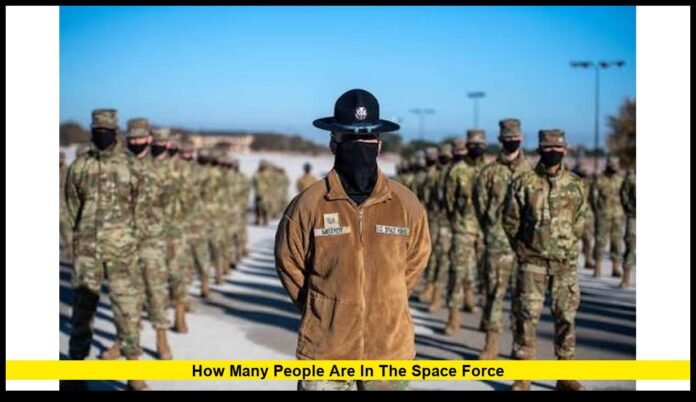

The answer to how many people are in the Space Force is approximately 10,000 active-duty military personnel, making the United States Space Force the smallest branch of the U.S. military. The latest available federal budget estimates put its projected personnel strength at 10,657 members for fiscal year 2026, while the fiscal year 2026 defense authorization established an active-duty end-strength figure of 10,400. These figures represent different measures of personnel strength, rather than a confirmed, real-time headcount.
Established in December 2019, the U.S. Space Force protects American interests in space, supports military communications and navigation, tracks objects in orbit, and helps defend U.S. military systems against space-related threats. Although its workforce is much smaller than those of the Army, Navy, or Air Force, its responsibilities are central to modern military operations.
Understanding the number of people serving in the Space Force requires looking beyond its headline personnel total. Its workforce includes officers and enlisted Guardians, while civilian employees and personnel from other military services may also contribute to its missions. Those categories should not automatically be combined into a single military headcount.
How Many People Are in the Space Force in 2026?
As of November 2026, the most useful way to answer this question is to distinguish between active-duty military personnel, the broader military and civilian workforce, and the service’s planned future size.
The U.S. Space Force does not have a single headcount that accurately describes every person supporting its operations under every personnel category. Official publications use different reporting dates and definitions, so the figures must be interpreted carefully.
The following table summarizes the key numbers available for 2026.
| Personnel category | Reported or projected strength |
|---|---|
| Fiscal year 2026 active-duty authorized end strength | 10,400 |
| Fiscal year 2026 projected active-duty end strength | 10,657 |
| Broader military and civilian workforce | Approximately 14,000–15,000 |
| Planned additional Guardians over five years | 10,000 |
The first figure is the active-duty strength authorized under the fiscal year 2026 defense authorization. The second comes from the federal government’s fiscal year 2027 budget projections for the end of fiscal year 2026. The broader workforce figure includes personnel beyond uniformed active-duty members, so it should not be compared directly with the military-only total.
The planned addition of 10,000 Guardians is a growth objective, not a statement that those positions have already been filled.
What Is the United States Space Force?
The United States Space Force is the newest branch of the U.S. armed forces. It was established on December 20, 2019, to organize, train, and equip military personnel responsible for space-related operations.
Before its creation, many American military space missions were handled by the U.S. Air Force. Establishing a separate service created a dedicated organization focused on protecting and operating space capabilities.
The Space Force operates within the Department of the Air Force, much as the Marine Corps operates within the Department of the Navy. However, it is a separate military service with its own leadership, personnel structure, and operational responsibilities.
Its mission extends well beyond launching rockets or putting satellites into orbit. The service supports the systems that allow the U.S. military to communicate, navigate, detect missile launches, and maintain awareness of activity in space.
Guardians is the official name for members of the Space Force. It applies to the service’s military personnel and, in broader organizational usage, its civilian workforce.
Although the service has relatively few uniformed members, its systems support military operations across the globe. This makes the size and expertise of its workforce important considerations in U.S. defense planning.
Why Does the Space Force Have So Few Personnel?
The Space Force is much smaller than the Army, Navy, Air Force, and Marine Corps. That difference is largely connected to the type of missions it performs.
The Army requires large numbers of soldiers for ground operations, logistics, engineering, transportation, and other functions. The Navy operates ships, submarines, aircraft, and extensive support facilities. The Air Force maintains a broad network of aircraft, air bases, and operational units.
The Space Force has a different organizational model. Its workforce concentrates on technically demanding missions involving satellites, space surveillance, cyber operations, intelligence, communications, and command systems.
Many of these activities depend on specialized knowledge rather than large formations of personnel deployed in the field.
A Technology-Focused Military Service
Space Force Guardians work with advanced systems that require training in areas such as orbital operations, software, electronics, intelligence, cybersecurity, and engineering.
A relatively small team can operate sophisticated systems when its members have the appropriate technical skills, equipment, and support.
However, a smaller workforce does not mean that the service has fewer responsibilities. Space capabilities support numerous military operations, and disruptions to those systems could affect forces operating in different regions simultaneously.
The service must therefore balance efficiency with its need for enough trained personnel to operate equipment, protect networks, maintain readiness, and respond to emerging threats.
Support From the Air Force and Other Organizations
The Space Force does not independently provide every service required to maintain its installations and personnel.
It relies on support arrangements with the Air Force and other organizations for functions such as medical services, base support, civil engineering, security, information technology, and other essential activities.
This arrangement helps the Space Force focus its uniformed workforce on specialized space missions.
It also explains why counting only active-duty Guardians does not capture the entire network of people who contribute to Space Force operations.
How Many Active-Duty Guardians Are There?
Active-duty Guardians make up the uniformed core of the Space Force.
The fiscal year 2026 defense authorization sets an active-duty end-strength level of 10,400 members as of September 30, 2026. Separately, the federal government’s fiscal year 2027 budget projects a fiscal year 2026 year-end active-duty strength of 10,657.
These numbers are close, but they are not interchangeable. An authorized end-strength figure establishes a personnel limit or target under the applicable law, while a budget estimate represents a projected staffing level.
Neither number should automatically be described as the exact number of Guardians serving on November 11, 2026.
A precise current headcount would require a current personnel report with a clearly identified reporting date and definition. Without such a report, there is no confirmed basis for presenting a live November 2026 total as an exact figure.
For general readers, the central takeaway is straightforward: the Space Force has roughly 10,000 uniformed active-duty members, while its broader workforce is considerably larger.
Officers and Enlisted Guardians
The uniformed workforce is divided into officers and enlisted personnel, each with distinct responsibilities.
Officers typically lead teams, manage operations, make command decisions, and oversee complex missions. Depending on their career field and experience, they may specialize in space operations, intelligence, engineering, acquisitions, or other areas.
Enlisted Guardians provide technical expertise and perform many of the operational duties required to keep systems functioning. Their work may involve operating space systems, monitoring networks, maintaining mission readiness, and supporting command-and-control activities.
Both groups are essential. Officers provide leadership and direction, while enlisted specialists contribute operational knowledge and technical proficiency.
The fiscal year 2027 federal budget projections estimate 4,876 officers and 5,781 enlisted personnel for fiscal year 2026. These figures add up to 10,657, matching the projected total for that year.
They are estimates, not a verified breakdown of personnel currently serving on the date of publication.
How Many People Work for the Space Force in Total?
The number of people associated with the Space Force becomes larger when civilian employees and other workforce categories are included.
Official Space Force material has described the service as having approximately 14,000 military and civilian personnel, while senior leadership has also referred to a broader force of around 15,000 Guardians.
These figures help explain why reports sometimes give different answers to the question, “How many people are in the Space Force?”
One report may count active-duty service members, while another may describe the entire military and civilian workforce. The figures can both be useful if their definitions and reporting dates are understood.
Civilian employees contribute to the service in a variety of areas, including engineering, acquisition, research, program management, policy, and technical support.
They are not the same as active-duty military members. They generally do not occupy uniformed military positions, and their employment arrangements differ from military service.
In addition, personnel from other military services, contractors, and partner organizations may support Space Force activities without being counted as Space Force active-duty members.
For that reason, an estimate of the broader workforce should not be interpreted as the number of uniformed Guardians alone.
What Do Space Force Guardians Do?
The Space Force manages and develops capabilities that support U.S. national security and military operations. Its responsibilities cover several important mission areas.
Satellite Communications
Military communications satellites allow forces to exchange information across long distances, including in locations where ordinary communications infrastructure may be unavailable or unreliable.
Guardians operate, manage, and protect space-based communications capabilities that support military command and control.
These systems help military leaders communicate with forces around the world and coordinate activities across different operational environments.
Missile Warning and Tracking
The Space Force supports systems that detect and track missile launches. Early warning provides military leaders with information needed to assess potential threats and make time-sensitive decisions.
Missile warning is particularly important because a launch may create a short window in which decision-makers must understand what is happening and determine an appropriate response.
The personnel supporting these capabilities need specialized training in sensors, data interpretation, operations, and system management.
Space Domain Awareness
Space domain awareness involves monitoring objects and activity in space.
Satellites and other space objects travel at high speeds, and understanding their positions and movements is important for safe and effective operations. Monitoring activity also helps identify potential threats to American and allied space systems.
Guardians use data from space surveillance networks, sensors, and other sources to maintain awareness of the space environment.
This mission requires technical expertise, analytical judgment, and coordination among different organizations.
Positioning, Navigation, and Timing
Space-based positioning, navigation, and timing services support military navigation and numerous civilian activities.
The Global Positioning System, commonly known as GPS, is a major example. GPS provides positioning and timing information used by military systems, transportation networks, communications infrastructure, and many everyday technologies.
The Space Force plays a central role in operating and sustaining the military’s GPS space segment.
Because so many activities rely on accurate timing and positioning, protecting these capabilities is a significant national security responsibility.
Cybersecurity and Space Control
Space systems depend on ground stations, software, communication links, and networks. These supporting components can be exposed to cyber threats and other forms of interference.
Guardians working in cyber operations and related technical fields help protect mission systems and support the resilience of space capabilities.
Space control also involves protecting friendly access to space and supporting the ability to operate in an environment where adversaries may attempt to disrupt or interfere with U.S. capabilities.
These responsibilities require a workforce that combines operational experience with specialized technical knowledge.
How Does the Space Force Compare With Other Military Branches?
The Space Force is the smallest U.S. military service by active-duty personnel.
The Army, Navy, Air Force, and Marine Corps each maintain much larger uniformed workforces because their missions cover broader sets of activities, including ground combat, maritime operations, aviation, and extensive logistical support.
The Space Force’s smaller size reflects its narrower but strategically important mission area.
Its personnel totals should be compared using the same category. Comparing approximately 10,000 active-duty Guardians with the combined military and civilian workforce of another service would produce a misleading result.
The same caution applies when comparing annual budgets, recruitment figures, or authorized personnel levels. Those measurements answer different questions about a military organization’s size and capabilities.
A smaller personnel count also does not necessarily mean a smaller strategic impact. Satellites, missile warning systems, and secure military communications can support operations conducted by large numbers of service members across multiple branches.
The Space Force is designed to provide those capabilities without replicating the entire organizational structure of the other services.
How Has the Space Force Grown Since 2019?
When the Space Force was established in December 2019, it began with a small group of personnel transferred primarily from existing Air Force space organizations.
Creating the service involved more than changing uniforms or establishing a new headquarters. The military had to develop its own organizational structures, training systems, personnel policies, career paths, and long-term workforce plans.
It also had to establish the processes required to recruit new members and prepare them for specialized missions.
The service subsequently expanded its workforce, while continuing to build the institutions needed to support a separate military branch.
Its growth has included new training arrangements, dedicated recruiting efforts, and changes intended to attract and retain people with technical skills.
A Small Force With Increasing Responsibilities
As the United States becomes more dependent on space-based capabilities, the Space Force faces pressure to maintain readiness while taking on evolving responsibilities.
Its missions include sustaining existing systems and preparing for new operational requirements. Those demands may involve satellite constellations, improved missile tracking, more resilient communications, and stronger protection against interference.
Growing the workforce is only one part of the challenge. New personnel must receive appropriate training, obtain relevant experience, and be assigned to positions where they can contribute effectively.
The service also needs adequate infrastructure, equipment, and leadership capacity to support additional Guardians.
Consequently, changes in personnel totals should be considered alongside developments in training, technology, and operational requirements.
Latest Space Force Personnel Updates for 2026
Several developments make 2026 an important year for the Space Force’s future workforce.
The service is working to strengthen its recruiting pipeline, introduce more flexible personnel arrangements, and plan for significant long-term growth.
These initiatives matter because its future personnel requirements may be substantially greater than its current uniformed workforce.
The Space Force Plans to Add 10,000 Guardians Over Five Years
In September 2026, Space Force leadership outlined a plan to add approximately 10,000 Guardians over the following five years. The announced growth objective reflects the service’s assessment that it needs more personnel to meet expanding mission requirements.
The plan represents a significant potential change in the size of the organization.
However, the announcement should not be interpreted as evidence that the additional 10,000 positions have already been filled. It describes a future growth target, and the actual pace of expansion will depend on recruiting, training, retention, funding, and implementation.
The Space Force has also discussed a longer-term objective of substantially increasing its personnel to support future operational needs.
The precise future headcount will depend on how those plans develop and which workforce categories are included in official totals.
Recruiting and Training Remain Important
Recruiting qualified candidates is a major part of the Space Force’s workforce strategy.
The service needs people who can develop and operate sophisticated systems, analyze information, manage complex programs, and support military missions in a rapidly changing technical environment.
Recruitment alone does not immediately increase the number of fully trained operational Guardians. New members must complete the necessary training and prepare for the responsibilities associated with their assignments.
Training programs therefore play an important role in turning new recruits into qualified personnel.
The Space Force must also retain experienced members whose knowledge of systems and operational procedures may take years to develop.
A successful personnel expansion requires a balance between bringing in new talent and maintaining the experience of the existing force.
Part-Time Service Creates Additional Flexibility
The Space Force has also begun introducing new personnel arrangements that allow some experienced individuals to contribute in part-time roles.
In July 2026, the service announced the initial transfer of 18 space-experienced Air Force reservists into Space Force part-time work roles.
This initiative is part of a broader effort to create more flexible ways for the service to manage military talent.
Part-time arrangements may allow the Space Force to access valuable expertise without relying exclusively on traditional full-time active-duty positions.
However, these personnel categories must be interpreted carefully when assessing total force size. The number of people participating in a particular program does not automatically translate into an equal increase in full-time active-duty strength.
The service’s personnel management model is evolving, making clear reporting definitions increasingly important when comparing workforce figures across years.
Why Is the Number of Space Force Personnel Important?
The size of the Space Force matters because its workforce supports systems that are essential to military operations and national security.
A service with too few trained personnel could face difficulties filling operational assignments, sustaining equipment, maintaining readiness, or meeting new mission requirements.
At the same time, increasing personnel numbers requires additional resources. New members need training, equipment, facilities, supervision, and opportunities to gain operational experience.
Workforce growth must therefore be coordinated with broader defense planning.
National Security and Space Competition
Space has become an increasingly important area of military competition. Satellites and related systems support communications, navigation, intelligence, surveillance, missile warning, and other critical functions.
The United States must maintain the ability to operate these systems and protect them against disruption.
Guardians contribute to this effort by operating space capabilities, developing technical expertise, and helping prepare the military for threats that could affect operations in orbit or through supporting networks.
As the Space Force develops new capabilities, its personnel needs may change.
That is one reason the service’s leadership has emphasized the need to expand the workforce over the coming years.
Technology Does Not Eliminate the Need for People
Automation and advanced software can improve efficiency, but they do not remove the need for trained personnel.
Military space operations still require people to interpret information, make decisions, manage risks, maintain systems, and respond to unexpected events.
Cybersecurity, mission planning, intelligence analysis, and command responsibilities also require human judgment.
The challenge is not simply to employ more people. It is to develop a workforce with the right combination of technical skills, operational experience, and leadership.
The Space Force’s future effectiveness will depend on both the number of Guardians available and their ability to carry out demanding missions.
How Can You Join the Space Force?
People interested in becoming Guardians can explore both enlisted and officer career paths.
The appropriate route depends on an applicant’s education, qualifications, experience, and eligibility for military service.
Enlisted Careers
Enlisted Guardians perform technical and operational duties across the service.
Career fields may include space operations, intelligence, cyber operations, and other specialized functions.
Applicants generally need to satisfy applicable military eligibility requirements and complete the required testing, screening, and training.
The specific qualifications depend on the career field and current recruiting policies.
Officer Careers
Officer positions generally involve leadership, planning, management, and specialized professional responsibilities.
Applicants may pursue officer opportunities through applicable commissioning pathways, including programs connected with higher education or other authorized routes.
Some career fields require specific academic backgrounds or technical qualifications.
Selection is competitive, and meeting basic eligibility requirements does not guarantee acceptance.
Training and Career Development
After joining, Guardians receive training appropriate to their roles. This may include military instruction, technical education, and specialized preparation for operational assignments.
Career development continues throughout service as personnel gain experience, qualify for additional responsibilities, and pursue leadership opportunities.
Because the Space Force relies heavily on technical expertise, professional development is an important part of maintaining an effective workforce.
Applicants should evaluate current recruiting information for the latest requirements, available career fields, and eligibility standards.
Frequently Asked Questions
Q1. How many people are in the Space Force in 2026?
The Space Force has roughly 10,000 active-duty military members. The federal government’s fiscal year 2027 budget projects an active-duty strength of 10,657 at the end of fiscal year 2026, while the fiscal year 2026 defense authorization sets an end-strength level of 10,400. The broader military and civilian workforce is approximately 14,000–15,000.
Q2. Is the Space Force the smallest branch of the U.S. military?
Yes. The Space Force is the smallest U.S. military service by active-duty personnel. Its workforce is concentrated on specialized space operations, satellite systems, communications, missile warning, and related technical missions.
Q3. What are Space Force members called?
Members of the U.S. Space Force are called Guardians. The name identifies the service’s personnel and reflects their responsibility for protecting American interests in space.
Q4. How many officers and enlisted members are in the Space Force?
The federal government’s fiscal year 2027 budget estimates 4,876 officers and 5,781 enlisted members for fiscal year 2026. These projected figures total 10,657, but they should not be treated as an exact count of personnel serving on November 11, 2026.
Q5. Does the Space Force have civilian employees?
Yes. Civilian employees contribute to engineering, acquisition, program management, research, policy, and technical support. Including civilians increases the total workforce beyond the number of uniformed active-duty Guardians.
Final Thoughts
So, how many people are in the Space Force? The most practical answer is approximately 10,000 active-duty Guardians, with a broader military and civilian workforce of around 14,000–15,000 people. The fiscal year 2026 authorized strength and projected year-end estimate differ slightly, so neither should be presented as an exact live headcount.
The service’s planned addition of 10,000 Guardians over five years also signals that its workforce may grow considerably as the United States invests in space-based military capabilities. That growth will require recruiting, training, and retaining qualified personnel while maintaining the systems that support military operations around the world.
Although the Space Force is the smallest military service, its responsibilities extend across communications, missile warning, navigation, space surveillance, and national security. Its importance cannot be measured by personnel numbers alone.
What do you think about the Space Force’s planned growth? Share your thoughts in the comments and stay updated for the latest U.S. Space Force personnel news.