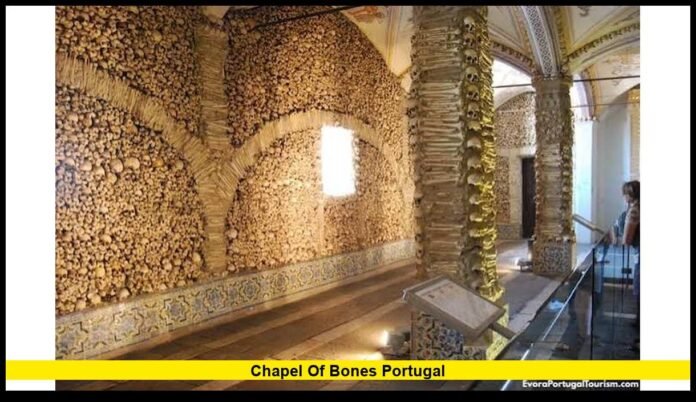

The chapel of bones portugal remains one of the most unusual historical attractions in Europe, attracting international visitors to the ancient city of Évora. Located inside the Church of São Francisco, this distinctive religious site is known for its walls decorated with thousands of human bones and skulls. Its unusual appearance has made it a major attraction for travelers, but its historical significance goes far beyond its striking interior.
Built during the 17th century, the chapel reflects a period when religious communities used architecture and visual symbolism to communicate important spiritual messages. Its creators wanted visitors to consider the temporary nature of life, the inevitability of death, and the importance of living with humility.
Today, the attraction offers a fascinating glimpse into Portugal’s religious heritage while remaining one of the most recognizable cultural landmarks in the Alentejo region.
A Historic Attraction With an Unusual Story
The Chapel of Bones, known in Portuguese as Capela dos Ossos, forms part of the Church of São Francisco in central Évora. The city is recognized for its remarkable collection of historic buildings, archaeological remains, and religious monuments.
The chapel was constructed in the 17th century by members of the Franciscan religious community. Its interior contains human skulls and bones arranged across the walls and supporting pillars.
Historical accounts commonly associate the remains with individuals buried in cemeteries around Évora. The collection is traditionally estimated to represent approximately 5,000 people, although this number is not an exact verified count.
The decision to incorporate human remains into a religious structure reflected the beliefs of the period. Rather than treating death as something that should remain hidden, the Franciscans used the chapel to make mortality a central subject of spiritual contemplation.
For modern visitors, the result is an unusual combination of religious architecture, historical practice, and powerful symbolism.
Why Human Bones Cover the Chapel’s Interior
The chapel’s design is closely connected to the Christian tradition of memento mori, a Latin expression meaning remember that you must die.
This idea was particularly important in religious communities that emphasized humility and spiritual preparation. It reminded people that material possessions, social position, and personal achievements were temporary.
The Franciscans incorporated this philosophy into the chapel’s appearance. Human skulls and bones became part of the architectural decoration, encouraging visitors to reflect on the shared fate of humanity.
The interior also illustrates historical attitudes toward burial practices. As religious institutions managed burial grounds and limited cemetery space, the relocation and reuse of human remains became part of certain historical customs.
The chapel transformed these remains into a permanent religious statement rather than presenting them as an ordinary collection of archaeological objects.
The Message Written Above the Entrance
One of the chapel’s most recognizable details is the inscription displayed above its entrance.
The Portuguese wording reads:
“Nós ossos que aqui estamos pelos vossos esperamos.”
Its commonly accepted English translation is, “We bones that are here await yours.”
The sentence establishes the chapel’s central message before visitors enter. It reminds people that death is universal and that no individual can escape the passage of time.
The inscription also reflects the religious thinking behind the structure. Visitors are encouraged to consider how they use their lives rather than concentrating entirely on wealth, status, or worldly ambitions.
This message helps explain why the chapel was built in such an unusual way. Its purpose was not simply to display human remains but to create an environment that encouraged spiritual reflection.
Visiting Information: Tickets, Hours and Location
The attraction is situated at Praça 1º de Maio in Évora, making it accessible to visitors exploring the city’s historic center.
According to the latest published visitor information, the complex generally operates on the following schedule:
- Summer hours: 9 a.m. to 6:30 p.m.
- Winter hours: 9 a.m. to 5 p.m.
- Adult admission: €7
- Reduced admission: €5 for visitors up to age 25 and adults over 65
- Family ticket: €15 for two adults and young visitors.
The main church can be visited without an admission charge, while access to the chapel and associated museum areas requires a ticket. The complex typically closes on January 1, Easter Sunday, the afternoon of December 24, and December 25.
Travelers should confirm the latest admission arrangements before setting out, as prices and opening times can change.
How to Reach Évora From Lisbon
Évora is approximately 80 miles (130 kilometers) east of Lisbon by road. Its location makes the city a practical destination for travelers looking beyond Portugal’s coastal resorts and capital.
Visitors can travel by car, intercity bus, or train. Driving generally takes around 90 minutes, depending on traffic, while public transportation times depend on the selected service.
Once in Évora, the Chapel of Bones is within walking distance of several major landmarks. Its central position makes it easy to incorporate into a day of sightseeing without requiring extensive transportation between attractions.
Spring and fall are attractive seasons for exploring the city on foot. Summer visitors should prepare for high temperatures, particularly when walking between outdoor monuments.
Other Landmarks Worth Exploring
A visit to the chapel can become part of a wider exploration of Évora’s historic center.
The Roman Temple of Évora offers a look at the city’s ancient past through its surviving columns and stone architecture. Nearby, Évora Cathedral provides another perspective on Portugal’s religious history, with distinctive architectural features and historic interiors.
Visitors can also explore Praça do Giraldo, a central square lined with traditional buildings and cafés. The surrounding streets contain local shops, restaurants, and architectural details that reflect the city’s long history.
These nearby attractions make it possible to experience several different periods of Portuguese history during one visit.
Why the Chapel Continues to Attract International Visitors
Interest in the chapel reflects a broader fascination with places where architecture, history, and human experience intersect. Its interior is visually distinctive, but its lasting appeal also comes from the questions it raises about mortality and the passage of time.
For travelers researching chapel of bones portugal, the attraction provides an opportunity to discover an important part of Évora’s cultural heritage beyond the country’s better-known coastal destinations.
The site may be unsettling for some visitors, particularly children or people uncomfortable with human remains. Others find its historical context and symbolic meaning deeply compelling.
Respectful behavior is essential inside the chapel. Visitors should follow posted photography rules, avoid touching the remains, and maintain a quiet atmosphere, particularly when religious services are taking place.
A Distinctive Stop on a Portugal Itinerary
The Chapel of Bones remains one of Évora’s most recognizable attractions because it offers an experience unlike that of a conventional museum or church. Its design preserves a centuries-old religious message in a form that continues to provoke curiosity and reflection.
For anyone exploring Portugal’s historic towns, Évora offers a compelling combination of ancient monuments, religious architecture, and traditional urban life. The chapel adds another dimension to that experience, connecting modern visitors with the beliefs and customs of an earlier era.
Its historical setting, unusual interior, and central location make it a worthwhile stop for travelers seeking a deeper understanding of Portugal’s cultural heritage.