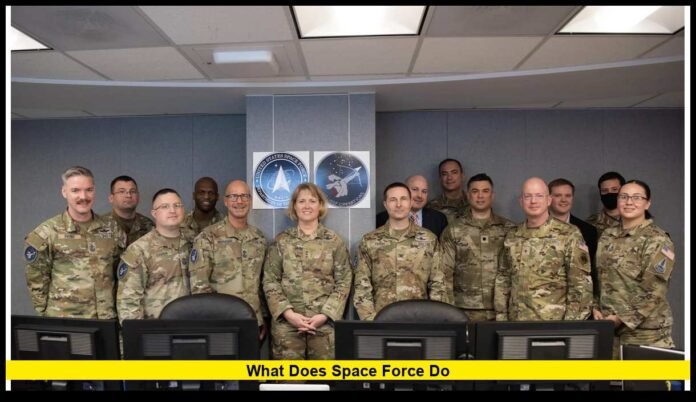

What does Space Force do, and why has the United States established a separate military branch dedicated to space? The U.S. Space Force protects American interests in space, operates military satellite systems, supports missile warning, maintains critical navigation and communication capabilities, and prepares the nation to respond to threats involving space technology. Established on December 20, 2019, the Space Force has become an important part of the U.S. national defense system as military operations increasingly depend on reliable information and services from satellites.
The United States Space Force, commonly known as USSF, is the sixth branch of the U.S. Armed Forces. It operates within the Department of the Air Force but maintains its own service leadership, specialized personnel, and military responsibilities. Its members are called Guardians, and their work includes satellite operations, cybersecurity, space surveillance, engineering, intelligence, and other technical specialties.
The Space Force does not focus on sending astronauts to other planets or conducting civilian scientific exploration. Those activities generally fall under NASA and other organizations. Instead, the Space Force concentrates on ensuring that the United States can use space-based technology for national security while protecting important military capabilities from disruption.
Its responsibilities also extend beyond military bases and spacecraft. GPS navigation, satellite communications, missile-warning information, and the ability to monitor activity in orbit all contribute to the country’s security. Many of these systems support military operations directly, while some space-based technologies also provide services used by businesses and the public.
Understanding what the Space Force does requires looking at its main responsibilities, its relationship with other military branches, its career opportunities, and the challenges it faces as space becomes an increasingly important part of modern defense.
What Is the Main Mission of the U.S. Space Force?
The Space Force’s official mission is to secure the nation’s interests in, from, and to space. In practical terms, that means protecting U.S. space capabilities, providing essential military services through satellites, and helping the armed forces maintain access to the space domain.
The service organizes, trains, and equips military personnel to perform space-related missions. It also develops and operates specialized systems that help military commanders understand the space environment and use space-based capabilities effectively.
Three broad responsibilities explain its purpose.
- Space superiority: Protecting American access to space and developing capabilities to counter threats against U.S. space systems.
- Global mission operations: Providing military capabilities such as satellite communications, positioning, navigation, timing, and missile warning.
- Assured access to space: Supporting launches, space infrastructure, and the systems needed to deploy and sustain military capabilities in orbit.
These responsibilities work together. A satellite may provide valuable information, but military personnel must also be able to communicate with it, monitor its performance, protect its supporting networks, and respond to potential interference.
The Space Force therefore combines technology, intelligence, operational planning, cybersecurity, and military training. Its mission is not limited to spacecraft themselves. It also includes the ground stations, communication links, computer networks, and personnel required to keep space systems functioning.
The service works with the Army, Navy, Air Force, Marine Corps, intelligence agencies, and other defense organizations. These partners rely on space capabilities for different purposes, making coordination an essential part of the Space Force mission.
What Does Space Force Do on a Daily Basis?
The daily work of the Space Force varies by assignment. Some Guardians monitor satellites from operations centers, while others analyze intelligence, protect computer networks, develop software, or help design future military space systems.
Satellite operators monitor spacecraft, evaluate system performance, and coordinate commands that maintain their operations. Cybersecurity personnel protect networks and digital infrastructure. Intelligence specialists examine information about space activity and potential threats, while engineers work on technical systems that support military missions.
Other personnel coordinate launches, maintain operational facilities, manage acquisitions, provide training, and support logistics.
Much of this work takes place on Earth rather than in orbit. Guardians may use computer systems, specialized sensors, satellite tracking information, and secure communications networks to perform their responsibilities.
For example, an operator may monitor a satellite’s condition and investigate an unexpected technical issue. An intelligence specialist may assess information about an object in orbit. A cyber professional may work to identify weaknesses in a network supporting a military space mission.
These activities contribute to a larger objective: ensuring that American military forces can depend on space-based capabilities when they need them.
Not every Guardian performs the same duties, and the service does not operate as a single team performing one task. Its mission requires different technical and operational specialties working together.
The Main Responsibilities of the Space Force
1. Operating and Protecting Military Satellites
Satellites support many of the United States’ most important military capabilities. They help transmit information across long distances, provide navigation and timing services, and support warning systems that monitor potential threats.
The Space Force operates and supports military satellite systems and works to maintain their reliability. Guardians monitor spacecraft, communicate with satellites through ground facilities, assess technical problems, and coordinate operations.
Protecting these systems requires more than monitoring their physical condition. Satellites depend on communication links, computer networks, control systems, and supporting infrastructure. Weaknesses in any of these areas may affect a mission.
Potential threats include signal interference, cyberattacks, and other attempts to disrupt space-based services. The Space Force prepares to protect military capabilities against these challenges.
Its work also involves assessing the space environment and understanding how other countries’ activities could affect American satellites.
The goal is to preserve reliable access to important capabilities, including during periods of heightened international tension or military conflict.
2. Maintaining Satellite Communications
Military forces need dependable communications to coordinate operations across the United States and overseas. Satellite communications can connect units separated by oceans, remote terrain, or areas with limited ground infrastructure.
The Space Force supports military satellite communication systems that help authorized users exchange information securely.
These services may support ships at sea, aircraft, deployed troops, command centers, and other military organizations. Satellite networks are especially valuable when forces operate beyond the reach of conventional communications infrastructure.
However, satellite communications also face technical and security challenges. Adversaries may attempt to interfere with signals, while equipment failures or damaged infrastructure can disrupt service.
The Space Force works to maintain and protect the systems supporting these communications. Its responsibilities include operating military space capabilities and helping ensure that the armed forces can continue exchanging information under demanding conditions.
Commercial satellite companies also provide communication services. The military may use commercial capabilities alongside government systems when appropriate, but commercial and military satellite operations are not interchangeable in every situation.
3. Supporting GPS and Military Navigation
The Global Positioning System, better known as GPS, is one of the most familiar examples of space technology affecting everyday life.
GPS satellites transmit signals that compatible receivers use to calculate location and determine precise time. These services support navigation, transportation, aviation, maritime activity, and many other applications.
For the military, GPS provides positioning, navigation, and timing capabilities that help forces determine their locations, coordinate movements, and synchronize equipment and operations.
The Space Force operates and maintains the U.S. GPS satellite constellation and associated military systems.
Reliable navigation is particularly important when military units operate in unfamiliar environments or coordinate complex activities over large distances.
GPS signals can be vulnerable to interference, however. Jamming and other forms of disruption can affect the ability of receivers to use satellite signals correctly. The military therefore needs to protect these capabilities and prepare for situations in which GPS becomes unreliable.
The Space Force contributes to that effort by maintaining the satellite infrastructure and supporting the broader defense mission for positioning, navigation, and timing.
GPS also illustrates why military space operations can matter to civilians. Although the Space Force does not manage every navigation application or commercial GPS receiver, the satellite system it operates provides services that reach far beyond the military.
4. Detecting Missile Launches and Supporting Early Warning
Missile warning is one of the Space Force’s most important national security responsibilities. Space-based sensors help detect the heat signatures associated with certain missile launches and provide information that defense organizations can use to assess potential threats.
Early warning matters because military and government leaders may have limited time to evaluate a developing situation. Information about a launch can help them determine what may be happening and coordinate an appropriate response.
The Space Force operates and supports systems that contribute to missile warning and missile tracking. These capabilities work alongside ground-based radar, command centers, and other defense systems.
Missile warning and missile defense are not the same thing. Warning systems help identify and assess potential missile threats, while missile defense involves capabilities intended to intercept or defeat certain incoming weapons.
The Space Force contributes space-based information to the broader national defense network. Other military commands and agencies have additional responsibilities for assessing threats, making decisions, and carrying out defensive operations.
5. Monitoring Satellites and Space Debris
Earth’s orbit contains active satellites, inactive spacecraft, discarded rocket stages, and fragments of debris. Understanding the location and movement of these objects is important for protecting spacecraft and maintaining a safe operating environment.
The Space Force conducts space domain awareness activities to help identify, track, and characterize objects in orbit. This work supports assessments of satellite movements, potential collision risks, and activity that may affect American space capabilities.
Monitoring orbital activity also helps military planners understand the wider space environment. An unexpected change in a satellite’s orbit or unusual activity involving a spacecraft may require additional analysis, although individual movements do not automatically indicate a threat.
Space domain awareness combines information from sensors, tracking systems, technical analysis, and other sources. It allows relevant organizations to build a more complete understanding of activity in orbit.
This responsibility is particularly important because satellites often operate for years and support missions that cannot easily tolerate prolonged interruptions.
6. Defending Against Threats in Space
Space has become an increasingly important military domain, and the systems operating there can face several types of threats.
Electronic interference can disrupt satellite signals. Cyberattacks may target networks or supporting infrastructure. Other capabilities may threaten spacecraft or attempt to limit an opponent’s ability to use space-based services.
The Space Force develops, organizes, and equips forces to address these challenges. Its responsibilities include orbital warfare, electromagnetic warfare, and cyberspace warfare.
Orbital warfare concerns military operations involving space systems and capabilities in orbit. Electromagnetic warfare focuses on activities involving the electromagnetic spectrum, including protecting friendly capabilities and addressing hostile interference. Cyberspace warfare involves relevant military operations in digital environments.
These responsibilities require technical expertise and careful coordination. A threat affecting a satellite may also involve its ground control network, communications links, or supporting computer systems.
The Space Force works to improve resilience, maintain awareness of potential threats, and prepare personnel to protect U.S. access to space.
Its mission does not mean that every satellite is a military target or that every unusual activity represents hostile action. Assessments depend on available information, operational circumstances, and the nature of the activity.
7. Supporting Space Launches
Military space systems must reach orbit before they can perform many of their intended functions. The Space Force supports national security space launches through launch infrastructure, range operations, and related services.
Its launch organizations provide facilities and operational support for launches from important U.S. spaceports, including installations in Florida and California.
Launch operations require coordination among launch providers, government organizations, range personnel, and other participants. Teams must monitor safety, prepare facilities, coordinate activities, and support the launch process.
Private companies manufacture and operate many of the rockets used to carry satellites into orbit. The Space Force does not build or launch every spacecraft itself.
Instead, it provides important infrastructure and operational support for national security missions and other authorized launches. Its launch-range responsibilities can also support civilian and commercial space activities.
Assured access to space matters because military capabilities may require replacement satellites, new technology, or additional systems to maintain their effectiveness.
Why Is the Space Force Important to the United States?
The Space Force helps protect military capabilities that support the country’s national defense. Modern armed forces rely on satellite services for communications, navigation, timing, missile warning, and other operational needs.
Without dependable space capabilities, some military activities could become more difficult. Units might have to rely on alternative communication methods, navigation could become less precise, and commanders might receive less timely information from certain warning systems.
The Space Force helps reduce these vulnerabilities by operating space systems, monitoring the orbital environment, and preparing forces to respond to interference and other threats.
Its mission also contributes to deterrence. Protecting military space capabilities can make it more difficult for an adversary to gain an advantage by disrupting American systems.
The service works with other U.S. military branches, intelligence organizations, allies, and commercial partners. Each organization contributes different capabilities, and the precise responsibilities depend on the mission.
The Space Force does not independently manage every part of American national security or control all activity in orbit. Its contribution focuses on military space capabilities and the forces needed to protect and operate them.
How Does the Space Force Affect Everyday Americans?
Although the Space Force primarily serves a military mission, space-based technology affects many aspects of daily life.
GPS helps drivers find destinations, supports aircraft navigation, and enables location-based services. Satellite communications connect people and organizations across long distances. Precise timing signals also support systems that rely on accurate synchronization, including parts of telecommunications infrastructure.
Other satellites monitor weather, observe Earth, and support scientific research. Those services may involve civilian agencies, commercial companies, and international organizations rather than the Space Force itself.
The important distinction is that the Space Force protects and operates military space capabilities, while the broader space industry includes many organizations with different responsibilities.
Nevertheless, protecting national security space infrastructure matters because modern society depends on reliable technology. Disruptions to certain satellite services could affect military operations and, depending on the system involved, civilian users as well.
The Space Force’s work helps maintain the military’s ability to operate in a world where space-based services have become essential to communications, navigation, and national defense.
What Is the Difference Between Space Force and NASA?
The Space Force and NASA both work in the space domain, but their purposes differ significantly.
NASA is a civilian government agency responsible for scientific research, space exploration, aeronautics, and related technology development. It conducts missions involving the Moon, planets, astronomy, Earth science, and human spaceflight.
The Space Force is a military service responsible for national security space operations. It focuses on military satellites, missile warning, space domain awareness, secure communications, and protecting American access to space.
| Category | U.S. Space Force | NASA |
|---|---|---|
| Primary mission | Military space operations and national security | Scientific discovery and space exploration |
| Organization | Military service within the Department of the Air Force | Civilian government agency |
| Personnel | Military Guardians and civilian employees | Civilian employees, astronauts, researchers, and contractors |
| Satellite activities | Operates and supports military space capabilities | Conducts scientific and exploration missions |
| Main objective | Protect U.S. interests and provide military space capabilities | Advance scientific knowledge and exploration |
The organizations may cooperate when their missions overlap, but they are not interchangeable.
For example, NASA may operate a spacecraft designed to study a distant planet, while the Space Force supports military satellite systems used for secure communications or missile warning.
Does the Space Force send astronauts into space?
Sending astronauts on scientific or exploration missions is not the Space Force’s primary mission. Guardians generally perform military, technical, intelligence, operational, and support duties connected to national security space systems.
Is the Space Force Part of the Air Force?
The Space Force is a separate military service within the Department of the Air Force.
It has its own service leadership, personnel structure, and operational responsibilities. However, it shares a department-level organization with the U.S. Air Force.
The Secretary of the Air Force provides civilian leadership for the department. The Chief of Space Operations is the senior uniformed officer of the Space Force and advises senior defense leaders on matters involving the service.
The Space Force organizes, trains, and equips its personnel for space missions. Its forces support military operations conducted under the appropriate command arrangements.
The Air Force and Space Force also share certain support functions, including aspects of installations, administration, logistics, and personnel services.
This arrangement allows the Space Force to concentrate on its specialized mission while benefiting from established department-level resources.
When Was the Space Force Created?
The United States Space Force was established on December 20, 2019, through the National Defense Authorization Act for Fiscal Year 2020.
Before that date, the U.S. military had conducted space-related activities for decades. Many responsibilities later assigned to the Space Force were previously handled by the Air Force, including through Air Force Space Command.
The creation of a separate service reflected the growing importance of space to national security and the need for dedicated leadership, training, personnel, and long-term planning.
Satellites had already become essential to military communications, navigation, missile warning, and other defense activities. At the same time, potential adversaries were developing capabilities that could threaten or interfere with space infrastructure.
Establishing the Space Force created a dedicated military organization focused on these responsibilities.
It did not mark the beginning of American military space operations. Instead, it established a new organizational structure for missions that had previously been managed through existing defense organizations.
What Careers Are Available in the Space Force?
The Space Force offers military and civilian career opportunities in technology, national security, engineering, intelligence, and operational support.
Military personnel serve as enlisted Guardians or officers, depending on their career path and qualifications. Civilian employees also provide specialized expertise and support.
Common career areas include:
- Space operations: Monitoring satellites, managing spacecraft operations, and supporting military space missions.
- Cybersecurity: Protecting computer networks and digital systems connected to national security operations.
- Intelligence: Analyzing space activity, foreign capabilities, and potential threats.
- Engineering: Developing, evaluating, testing, and improving space-related technologies.
- Acquisition and program management: Helping the military purchase, develop, and deliver new systems.
- Communications and information technology: Maintaining networks and systems used to exchange operational information.
- Logistics and administration: Supporting personnel, equipment, facilities, and organizational requirements.
Requirements vary by position. Some roles demand specialized degrees or technical experience, while others provide structured training.
Applicants should check current official recruiting information for eligibility, education, citizenship, physical standards, and available career fields.
Not every position involves direct satellite control. Many Guardians work in technical support, intelligence, cybersecurity, planning, or administrative roles that contribute to the service’s overall mission.
Latest Space Force Developments and Challenges
The Space Force continues to assess how its missions, technology, and staffing needs must change as national security requirements evolve.
One major area of attention is long-term force planning. In 2026, the service released planning documents examining the future space environment and the force structure it may need by 2040. These documents help frame future requirements but do not mean every proposed capability is already operational.
Another important issue is workforce readiness.
A July 2026 Government Accountability Office review found that the Space Force faced significant challenges in determining and meeting its personnel requirements. The review reported that the service had about 15,400 military and civilian personnel in fiscal year 2025 and that assigned personnel represented approximately 75% of its identified workforce requirements.
The report also identified inconsistencies in how units calculated staffing needs and highlighted shortages in support personnel provided by the Air Force. It recommended stronger workforce planning and better methods for assessing personnel requirements.
These figures describe staffing levels, not the percentage of missions completed. They show why workforce planning matters as the service manages technical systems and prepares for evolving responsibilities.
Technology is another area of continued development. In November 2026, the Department of the Air Force discussed plans to introduce additional artificial intelligence tools and training for Air Force and Space Force personnel. The effort emphasizes the need to understand how AI can support specialized missions and recognize its limitations.
Artificial intelligence may assist with certain analytical and administrative tasks, but its use does not eliminate the need for qualified personnel, operational oversight, cybersecurity, and reliable data.
Space operations also face ongoing challenges involving satellite protection, electronic interference, cyber threats, acquisition timelines, and the need to maintain reliable access to space.
The precise timing and availability of future systems depend on their development, testing, funding, and deployment. A planning announcement alone does not confirm that a new capability has entered operational service.
What Challenges Does the Space Force Face?
The Space Force must keep pace with changing technology while protecting systems that support essential military operations.
One challenge is the growing complexity of the space environment. More satellites and other objects operate in orbit, making tracking, coordination, and collision-risk assessment important.
Another challenge involves electronic and cyber threats. The service must protect satellite communications, ground stations, and supporting networks from disruption.
The Space Force also needs experienced personnel with specialized knowledge of engineering, cybersecurity, satellite operations, intelligence, and other technical disciplines. Recruiting and retaining those workers can be difficult when private companies seek similar skills.
Budget priorities, procurement decisions, testing requirements, and coordination with other military organizations can also influence the development of new capabilities.
Addressing these challenges requires careful planning, technical investment, training, and cooperation across the national security community.
Frequently Asked Questions
Q1. What does Space Force do in simple terms?
The Space Force protects American military interests in space. It operates and supports military satellites, provides capabilities for GPS and secure communications, supports missile warning, monitors activity in orbit, and prepares to address threats against space systems.
Q2. Is the Space Force a real military branch?
Yes. The United States Space Force became the sixth branch of the U.S. Armed Forces on December 20, 2019. It operates within the Department of the Air Force.
Q3. Does the Space Force fight wars in space?
The Space Force prepares forces to protect U.S. interests in space and respond to threats against space capabilities. Its responsibilities include orbital warfare, electromagnetic warfare, and cyberspace warfare. Its mission also involves routine operations, monitoring, training, and protecting systems.
Q4. Does the Space Force control GPS?
The Space Force operates and maintains the U.S. GPS satellite constellation. GPS provides positioning, navigation, and timing services for military users and supports numerous civilian applications.
Q5. How is the Space Force different from NASA?
NASA focuses on civilian space exploration, science, research, and aeronautics. The Space Force focuses on military space operations, national security, and the protection of U.S. space capabilities.
Final Thoughts
The answer to what does Space Force do begins with national security but extends to the technology and infrastructure that support modern military operations. The service operates and protects military satellite systems, supports GPS and secure communications, contributes to missile warning, monitors activity in orbit, and prepares forces to address threats in space.
Since its establishment in 2019, the Space Force has developed a distinct role within the U.S. Armed Forces. Its future effectiveness will depend on reliable technology, skilled personnel, sound planning, and coordination with other military and government organizations.
As space becomes more important to national defense, the Space Force will remain responsible for helping the United States maintain access to critical space-based capabilities.
What responsibility of the U.S. Space Force do you consider most important? Share your thoughts in the comments and follow our latest coverage of military technology and national security.