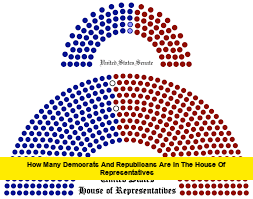

March 31, 2026 — The U.S. House of Representatives currently has 220 Republicans, 213 Democrats, and 2 vacant seats.
When considering how many Democrats and Republicans are in the House of Representatives, the current political composition is central to understanding legislative control, policy direction, and committee leadership. As of early 2026 in the 119th Congress, the House has 220 Republicans and 213 Democrats, with two seats vacant due to resignations and pending special elections. This razor-thin Republican majority — the minimum required to control the chamber — gives the GOP authority over the Speaker’s gavel, committee chairmanships, and the legislative agenda. However, the narrow margin means party leaders must maintain near-unified support on major votes, as even a small number of defections can stall or derail legislation. With special elections approaching and all 435 seats up for grabs in the 2026 midterms, the balance of power remains highly competitive and subject to change.
Current party breakdown in the U.S. House of Representatives
🏛️ Party Composition in the House (2026)
1. Total Seats
- The House has 435 voting seats in total.
2. Republicans
- Republican Party seats: ~220
- Typically hold a narrow majority
- Control House leadership (Speaker, committees)
3. Democrats
- Democratic Party seats: ~213
- Serve as the minority party
- Lead opposition and minority committees
4. Vacancies (if any)
- 2 seats vacant at any given time
- Caused by resignations, deaths, or appointments
- Filled through special elections
5. What This Means
- A simple majority (218 seats) is needed to pass legislation
- The majority party controls:
- The legislative agenda
- Committee leadership
- Floor scheduling
6. Key Takeaway
- The House is closely divided, with Republicans holding a slim majority, making bipartisan cooperation or internal party unity critical for passing bills.
Social Security became a central topic during the State of the Union
On 24th Feb 2026, Social Security became a central topic during the State of the Union, with President Donald Trump emphasizing retirement security for American workers and retirees. The address highlighted efforts to protect existing Social Security benefits while encouraging additional personal savings. A key proposal introduced a government-supported 401(k) matching contribution of up to $1,000 for workers without employer retirement plans. The initiative targets gig workers, part-time employees, and small-business staff who often lack access to workplace savings programs. Lawmakers are expected to review the proposal’s funding, eligibility rules, and implementation as retirement policy discussions continue in Washington.
Read Also-When Does the No Tax on Social Security Start — What 2026 Means for Retirees
Why Party Numbers in the House Matter
The balance between Democrats and Republicans plays a central role in determining how the U.S. House of Representatives operates. Party numbers directly shape the chamber’s priorities, power structure, and legislative outcomes in several key ways:
- Control of the Legislative Agenda:
The majority party decides which bills reach the floor, sets the voting schedule, and determines what issues receive immediate or long-term focus. This power allows the majority to advance its policy goals while limiting or blocking proposals from the minority. - Leadership Elections and Influence:
Positions such as the Speaker of the House, Majority Leader, and committee chairs are chosen based on which party holds the most seats. These leadership roles drive policy direction, oversight priorities, and negotiations with the Senate and the White House. - Committee Power and Oversight Capacity:
Committee seats and chairmanships are allocated in proportion to party numbers, shaping which party leads hearings, directs investigations, drafts legislation, and issues official reports. This directly impacts how federal agencies and national issues are scrutinized. - Impact of a Slim Majority:
When the margin between parties is narrow, every single vote becomes pivotal. The majority party must maintain strict cohesion to pass legislation, avoid defections, and prevent the minority from influencing or blocking key initiatives. - Effect of Vacancies on Voting Power:
Even temporary vacancies can shift the functional balance of power, reducing the majority’s vote cushion and raising the stakes of upcoming special elections. These races can determine whether the majority maintains control or faces new obstacles in advancing its agenda.
Overall, party numbers shape nearly every aspect of House operations—from daily floor activity to long-term legislative strategy—making them a critical component of how Congress functions.
Republicans Hold a Narrow Edge in the House
The Republican Party currently maintains a slim majority in the U.S. House of Representatives, giving it formal control over the chamber’s agenda, committee leadership, and legislative priorities. However, this majority is narrow enough that internal divisions within the party can significantly impact its ability to pass legislation. A small group of dissenting members can block bills, influence leadership decisions, or demand concessions, making party unity essential for advancing policy goals. The Democratic Party, as the minority, still plays a critical role by leveraging procedural tools and public messaging to shape debate and occasionally build bipartisan coalitions. This delicate balance often results in slower legislative progress and increased negotiation. Key issues such as government funding, defense spending, and social programs frequently become battlegrounds where even a handful of votes can determine outcomes. As a result, House leadership must constantly manage both ideological factions and political strategy, ensuring that the narrow majority is preserved while still delivering on campaign promises and maintaining governance stability.
Which Party Controls Congress Right Now?
Control of Congress is currently divided between the two major political parties, creating a system of shared power that directly affects how laws are passed in the United States. The Republican Party controls the House of Representatives, while the Democratic Party holds the majority in the Senate. This split arrangement is often referred to as a “divided Congress,” and it typically leads to increased negotiation, compromise, or legislative gridlock depending on the issue at hand. In such a structure, neither party can unilaterally pass major legislation without at least some level of bipartisan support. The House may advance bills aligned with Republican priorities, but those measures must also pass the Democratic-controlled Senate before reaching the president. Conversely, Senate-driven initiatives must gain approval in the House. This dynamic often results in scaled-back legislation or stalled proposals, particularly on controversial topics such as immigration, taxation, and healthcare. While divided government can slow policy-making, it also ensures that multiple perspectives are considered, reflecting the broader political diversity of the electorate.
Factors That Influence the House Composition
The makeup of the U.S. House of Representatives is never truly static. A variety of political and procedural factors can shift the number of Democrats and Republicans over time, often reshaping the balance of power within a single congressional term:
- Special Elections:
When seats become vacant due to death, resignation, or other circumstances, special elections determine who will fill them. These races can alter the partisan breakdown, especially in competitive districts where either party has a realistic chance of winning. - Resignations or Retirements:
When sitting members step down before their terms end, their departures create open seats. Such openings are often heavily targeted by both parties, as they present an opportunity to flip a district without challenging an incumbent. - Party Switching:
Although relatively rare, a representative may decide to change party affiliation during their term. This shift immediately affects the chamber’s partisan count and can strengthen or weaken a party’s ability to pass legislation, depending on the size of the majority. - Redistricting:
Every ten years, congressional district lines are redrawn following the U.S. Census. Changes in population distribution and district boundaries can influence which party is favored in future elections, potentially reshaping the House for the next decade.
These factors illustrate that the House’s composition is fluid. Political shifts, demographic changes, and individual member decisions can all contribute to changes in party control—even in the middle of a congressional session.
House of Representatives: Current Balance of Power
The balance of power in the House of Representatives remains firmly, though narrowly, in favor of the Republican Party. With only a small margin separating the majority from the minority, the chamber operates under constant political tension. Every vote is critical, and attendance, party discipline, and negotiation play a major role in determining legislative outcomes. The Democratic Party, despite being in the minority, retains substantial influence through unified opposition and strategic alliances on key issues. The House’s rules, which differ from the Senate, allow the majority party to exert more direct control over which bills are brought to the floor. However, a narrow majority reduces that advantage, as leadership must secure near-total agreement within its own ranks. This environment often leads to compromises within the majority party itself, as different ideological factions push competing priorities. Ultimately, the current balance creates a dynamic where legislative success depends not only on party control but also on internal cohesion and cross-party negotiation.
Current Senate Power Balance Explained
The U.S. Senate is presently controlled by the Democratic Party, which holds a narrow majority that allows it to set the legislative agenda, confirm judicial nominees, and oversee executive branch appointments. The margin is tight, meaning that every vote carries significant weight, especially in closely contested decisions. In cases of a 50-50 split, the vice president—affiliated with the Democratic Party—can cast a tie-breaking vote, effectively giving Democrats operational control. The Republican Party, while in the minority, remains highly influential by using procedural tactics such as the filibuster, which often requires a 60-vote threshold to advance most legislation. This requirement forces bipartisan cooperation for major bills, limiting the majority party’s ability to act alone. The Senate’s structure, with equal representation for each state regardless of population, further amplifies the importance of individual senators. As a result, moderate lawmakers from both parties frequently become key power brokers, shaping the final form of legislation and determining whether proposals move forward or stall.
Vacancies and Non-Voting Members
In addition to the 435 voting representatives, the House also includes several non-voting delegates representing U.S. territories and the District of Columbia. While these delegates cannot cast votes on the final passage of legislation, they do play meaningful roles in shaping the legislative process. They participate in debates, serve on committees, and contribute to policy discussions, adding important regional perspectives even without full voting authority. Their presence influences committee dynamics and the development of legislation, though not the final vote count.
Vacancies arise in the House for a variety of reasons, such as resignations, deaths, or members leaving office for other positions. When a seat becomes vacant, it remains unfilled until a special election is held in that district. During this interim period, the total number of active voting members is reduced, which can temporarily weaken the majority party’s ability to pass legislation—especially when the chamber is narrowly divided. As a result, each remaining vote carries additional weight, and party leaders often adjust their strategies to account for these temporary shifts in voting power.
These factors underscore how both vacancies and non-voting members shape the practical functioning of the House and influence the balance of power at any given moment.
Implications for Legislation and Governance
The current party numbers have several direct consequences for governance and legislative action:
- Passing Legislation: A narrow majority requires near-total party support to advance bills, meaning dissent within the majority can delay or block legislation.
- Leadership Stability: Tight margins make leadership positions more sensitive to internal party disagreements and challenge management of House priorities.
- Minority Influence: The minority party gains leverage in negotiations, procedural decisions, and amendments because even a few majority members can shift outcomes.
- Election Strategy: Both parties must actively defend and target competitive districts, as a single seat change can influence the overall control of the House.
The 220–213 split underscores the fragility of majority control and the importance of strategic planning in legislative operations.
Historical Perspective
Compared to previous Congresses, the current slim majority highlights the increased polarization and competitive nature of U.S. politics. Historically, larger majorities allowed the dominant party to pass legislation more easily, but with only a few seats separating the parties now, every vote carries significant weight. This division makes the House more sensitive to political shifts, resignations, or changes in public sentiment during special elections.
What Could Change the Numbers
Several developments could influence the current balance between Democrats and Republicans in the House:
- Special Elections: Filling vacant seats could shift the balance if a seat flips from one party to another.
- Unexpected Resignations or Retirements: Open seats create opportunities for the minority party to gain ground.
- Party Affiliation Changes: Representatives switching parties, though rare, could impact the majority.
- Future General Elections: All 435 seats are up for election every two years, offering opportunities for significant changes in control.
These factors make it crucial to monitor each district, upcoming elections, and changes in membership to understand potential shifts in the House majority.
Senate Seat Changes in the Most Recent Election
The most recent Senate elections resulted in a limited number of seat changes, but those shifts were enough to reinforce the Democratic Party’s narrow control of the chamber. Key battleground states saw highly competitive races, with both parties investing heavily in campaigning, advertising, and voter outreach. In several instances, incumbents were either narrowly re-elected or replaced, reflecting the polarized political environment. A few seats flipped between the Republican Party and Democrats, but not in sufficient numbers to dramatically alter the overall balance of power. Instead, the outcome maintained a closely divided Senate, where control hinges on just a handful of seats. These results highlight the growing importance of swing states and independent voters, who often determine the final outcome in tightly contested races. The limited number of flips also underscores the entrenched nature of partisan alignment in many regions, where candidates from one party consistently dominate. Despite minimal changes, the implications remain significant, as even a single seat can shift committee control, legislative priorities, and confirmation processes.
What to Watch Next: Key Factors That Could Shift Control of the House
Looking ahead, several critical developments could reshape the balance of power in the U.S. House of Representatives. With such a narrow margin between Republicans and Democrats, even small changes can have major political consequences.
Upcoming Special Elections Could Tip the Balance
Special elections are one of the fastest ways the House makeup can change between regular election cycles. These elections are typically triggered by:
- Resignations
- Deaths of sitting members
- Appointments to other government roles
Because the current majority is so slim, flipping even one or two seats in special elections could significantly weaken—or strengthen—the Republican hold on the chamber.
In highly competitive districts, these races often become national battlegrounds, attracting major funding, media attention, and involvement from top party leaders. Voter turnout in these off-cycle elections is usually lower, which can make outcomes less predictable.
The 2026 Midterm Elections Will Be a Turning Point
The 2026 midterm elections will be the biggest factor in determining who controls the House next.
All 435 seats will be up for election, meaning the entire chamber is essentially reset. Historically:
- The party in control of the White House often loses seats in midterms
- Voter sentiment on the economy, inflation, and major national issues plays a huge role
- Approval ratings of the president can directly impact down-ballot races
If current trends hold, both parties are expected to heavily target competitive districts, making 2026 one of the most closely watched midterms in recent history.
Swing Districts Will Decide Control
A relatively small number of swing districts—also known as battleground districts—will likely determine which party holds the majority.
These districts are characterized by:
- Nearly even splits between Democratic and Republican voters
- Frequent shifts in party control from one election to another
- High levels of campaign spending and political advertising
Candidates in these areas often focus on moderate positions to appeal to independent voters, who can ultimately decide the outcome.
In recent elections, just a handful of districts have determined the House majority. That trend is expected to continue, meaning control of Congress could come down to a few tightly contested races.
Redistricting and Legal Challenges
Although most redistricting occurred after the 2020 Census, legal battles over district maps are ongoing in several states.
Court rulings could:
- Redraw district boundaries
- Make certain seats more competitive
- Shift the political advantage in key regions
Even small map changes can have a ripple effect on national election results.
Voter Turnout and Demographic Shifts
Changes in voter turnout and population trends will also play a major role. Key factors include:
- Increased participation among younger voters
- Shifts in suburban voting patterns
- Changing demographics in fast-growing states
These trends can reshape traditionally safe districts into competitive ones over time.
Conclusion
In summary, when asking how many Democrats and Republicans are in the House of Representatives, the current breakdown stands at 220 Republicans and 213 Democrats, with three vacant seats pending special elections. This razor-thin majority gives Republicans formal control over House leadership, committee chairmanships, and the legislative agenda, while underscoring how critical party unity is in passing major bills.
With such a closely divided chamber, even a single resignation, party switch, or special election outcome can shift the balance of power. As additional elections are scheduled and the 2026 midterms approach, the composition of the House remains fluid. Keeping track of these numbers is essential for understanding how legislation advances, how committees operate, and how national policy priorities are ultimately shaped.
FAQs
1. How many total seats are in the House of Representatives?
There are 435 voting seats in the United States House of Representatives.
2. Which party currently controls the House?
The Republican Party holds the majority because it has more seats than the Democratic Party.
3. How many votes are needed for a majority in the House?
A party needs 218 seats to have a majority when all 435 seats are filled.
4. How often are House members elected?
Members are elected every two years during U.S. federal elections.
5. Who leads the House majority party?
The majority party is led by the Speaker of the House, currently Mike Johnson.
6. Why does the number of members sometimes change?
The number can temporarily change due to vacancies, resignations, deaths, or special elections.