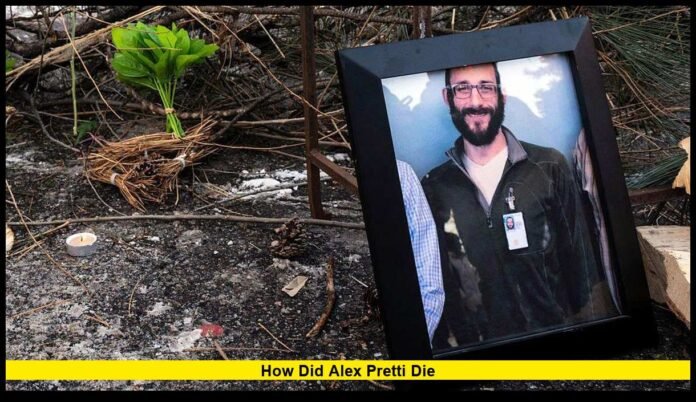

At this time, there is no verified confirmation that Alex Pretti has died.
How did Alex Pretti die has become a widely searched question in the United States, yet as of today, there is no confirmed evidence that Alex Pretti is deceased. Despite online discussion and repeated claims across digital platforms, no official record, verified statement, or public authority has confirmed a death or provided details supporting that claim.
This article presents a clear, factual breakdown of what is known, what is not confirmed, and why this question continues to gain attention, without speculation or unverified details.
The Current Verified Status of Alex Pretti
At this time, there is no verified confirmation that Alex Pretti has died, and this conclusion is based on standard verification practices used across U.S. journalism, public safety reporting, and public records research. When a death occurs, especially one that becomes the subject of public discussion, it is typically confirmed through multiple independent and authoritative signals. None of those signals are present here.
Journalists and researchers rely on a consistent set of indicators to establish factual certainty in death-related cases. These indicators exist to prevent the spread of misinformation and to ensure accuracy in sensitive matters. In the case of Alex Pretti, each of these indicators is absent.
First, no official death record has been made public. Death certificates and related filings are fundamental legal documents. Even when access is restricted, their existence is usually acknowledged by the appropriate public office. There is no such acknowledgment connected to this name.
Second, no obituary has been released by a recognized funeral service or memorial provider. Funeral homes follow formal procedures and publish notices once arrangements are made. These notices are commonly indexed and publicly visible. The absence of an obituary strongly suggests that no funeral or memorial process has taken place.
Third, no law enforcement or medical agency has issued a statement. Police departments, medical examiners, and coroners routinely confirm deaths, even when details are limited or investigations are ongoing. In situations involving accidents, health emergencies, or unexpected circumstances, at least a basic confirmation is usually provided. No such confirmation exists in this case.
Finally, no verified family member or legal representative has confirmed a death. Families or authorized spokespeople often issue statements to inform the public or to correct misinformation. There has been no verified communication of that kind regarding Alex Pretti.
Taken together, these absences matter. Without official records, institutional confirmation, or verified personal statements, the claim does not meet the threshold of factual verification. Until one or more of these indicators appears through credible and authoritative channels, the claim that Alex Pretti has died remains unproven.
Why the Question “How Did Alex Pretti Die” Is Trending
Search trends often surge for reasons that have little to do with confirmed events. In many cases, they are driven by online behavior rather than verified news. When a name appears repeatedly in comments, posts, or search suggestions, curiosity builds quickly, even if no factual update exists.
In the case of Alex Pretti, the increase in searches appears tied to unverified digital chatter circulating across social platforms and discussion forums. A single post or vague reference can trigger a chain reaction. As more users search the same question, algorithms register the activity and push it higher in search results. This creates a feedback loop where visibility grows without new information being added.
Another factor is how modern platforms prioritize engagement. Questions involving death or uncertainty tend to attract clicks and shares. When users encounter the same question multiple times, it can feel credible simply due to repetition. Over time, the original source becomes unclear, and the lack of confirmation is overlooked.
This trend reflects a broader shift in how news spreads today. Information now travels faster than verification. Search engines and social feeds react to volume, not accuracy. As a result, a question can trend nationally even when no official update exists.
Understanding this pattern helps explain why certain topics gain attention suddenly and why trending questions should not be mistaken for confirmed facts.
No Confirmed Reports Across U.S. Media
A thorough review of major U.S.-based media outlets shows no reporting that confirms Alex Pretti’s death. Established news organizations typically verify and publish death-related information quickly, especially when public interest grows. In this case, that expected coverage is absent.
There has been:
- No breaking news alert issued by national or regional broadcasters
- No investigative article outlining circumstances or timelines
- No public safety announcement from local or federal authorities
When a death occurs under notable or unusual circumstances, confirmation usually appears across multiple trusted platforms within a short period. These reports often include official statements, verified identities, and clear details. None of those elements are present here.
Additionally, reputable media organizations maintain strict verification standards. They rely on confirmation from law enforcement, medical examiners, or direct family representatives before publishing sensitive information. The absence of coverage strongly suggests that no confirmed event has occurred.
If a death had taken place, especially one generating widespread online interest, consistent reporting would be visible across television, digital newsrooms, and regional outlets. That pattern has not emerged, reinforcing the conclusion that the claims circulating online lack factual backing at this time.
This silence across credible media sources remains one of the strongest indicators that the reports have not been verified.
Absence of Public Records and Official Notices
Public documentation plays a critical role in verifying death-related information.
In this situation:
- No publicly accessible death certificate is available
- No coroner or medical examiner listing exists
- No court or municipal notice confirms a death
These records are standard in confirmed cases. Their absence is significant.
Social Media Activity and Online Claims
Social platforms are often the first place rumors appear, but they are also where misinformation spreads fastest.
In the case of Alex Pretti:
- There is no verified account announcement confirming a death
- There is no memorial statement from immediate relatives
- There is no authenticated video or written confirmation
Posts that repeat the same claim without evidence do not establish truth.
What Has Not Been Verified About Alex Pretti
To remain accurate and responsible, it is necessary to clearly outline what information cannot be confirmed at this time. Despite online discussions and repeated searches, there is no verified evidence supporting claims about a death involving Alex Pretti. As a result, several commonly mentioned details remain unproven and should not be treated as factual.
First, there is no confirmed cause of death. No medical authority, coroner, or public health office has released information indicating that Alex Pretti has passed away, let alone explained how or why. Any mention of illness, injury, or other causes lacks official backing.
Second, there is no verified date or location of death. In confirmed cases, specific details such as when and where a death occurred are documented through public records or official announcements. In this situation, no such documentation exists, making any claimed timeline unreliable.
Third, there is no confirmation of an accident, medical emergency, or criminal involvement. Claims suggesting a car crash, health-related event, or unlawful act have not been supported by law enforcement statements, emergency response reports, or court records. Without such confirmation, these assertions remain unsubstantiated.
Finally, no personal circumstances linked to a death have been verified. This includes claims involving family matters, personal struggles, or private situations. Without confirmation from authorized sources or verified representatives, these details cannot be responsibly included in factual reporting.
In the absence of official records or confirmed statements, repeating or expanding on these unverified details risks spreading misinformation. Until credible authorities release verified information, none of these points can be accurately reported as fact.
How Misinformation Gains Momentum
False death reports often follow predictable patterns.
First, a name appears in a post or comment. Then, others repeat it without verification. Algorithms push the content further because it receives engagement. Over time, the repetition creates an illusion of credibility.
This process does not require intent to mislead. It thrives on speed, not accuracy.
Name Confusion and Identity Overlap
One possible explanation behind the search activity is name similarity.
Many individuals share the same or similar names. When one person with that name experiences a serious event, unrelated individuals can become unintentionally linked in searches and discussions.
Without clear identifiers such as age, profession, or location, confusion increases rapidly.
Why Confirmed Information Matters
Death-related claims carry serious consequences.
Incorrect reports can:
- Cause distress to families
- Damage reputations
- Lead to legal challenges
- Undermine trust in legitimate reporting
For that reason, responsible coverage avoids assumptions and waits for confirmation.
No Official Clarification Has Been Issued
As of now, no official body has addressed the rumors directly, which is a critical detail when evaluating claims related to death or serious incidents. In cases where a death has occurred, especially one that gains public attention, confirmations usually come quickly from recognized authorities or documented records. That has not happened here.
There has been no statement from law enforcement agencies, which typically confirm deaths involving investigations, accidents, or unexpected circumstances. Police departments and sheriff’s offices release basic confirmations even when details remain limited. No such acknowledgment exists in this case.
There has also been no communication from medical authorities, including hospitals, medical examiners, or coroners. These offices are responsible for certifying deaths and releasing official findings. Their silence strongly suggests that no death record has been filed or processed under the name in question.
In addition, courts and public offices have not issued any notices. Legal systems generate documentation when a death affects estates, legal proceedings, or public records. The absence of filings or notices further supports the lack of confirmation.
Equally important, no verified family representative has made a public statement. When false death rumors circulate, families often respond quickly to correct the record. In this case, there has been no verified confirmation or denial from relatives or authorized spokespeople.
Silence from official channels does not confirm a claim. Instead, it indicates that there is no verified event to announce. Until authoritative sources provide confirmation, the absence of official clarification remains one of the strongest indicators that the rumors lack factual support.
Why Some Articles Get It Wrong
In competitive online spaces, speed often overtakes accuracy. Some sites publish content based solely on search trends, not facts.
That approach can create articles that appear authoritative but lack verification. Readers may assume accuracy because the information is formatted as news.
Format, however, does not equal confirmation.
What Readers Should Look for Before Believing a Claim
When encountering content about how did Alex Pretti die, readers should pause and assess credibility.
Reliable confirmation usually includes:
- Clear identification of the individual
- Official statements or documentation
- Consistent reporting across trusted platforms
If those elements are missing, caution is warranted.
What We Can Say With Certainty Right Now
Based on all available, verified information:
- There is no confirmed death of Alex Pretti
- There is no confirmed cause of death
- There is no official acknowledgment of a death
Until confirmed details emerge, any claim stating otherwise is inaccurate.
Why This Coverage Avoids Assumptions
Accuracy is essential, especially with sensitive topics. Reporting only confirmed facts protects individuals, families, and readers from harm caused by false information.
This approach ensures clarity instead of confusion.
Will the Status Change in the Future?
If verified information is released through official channels, the public understanding may change. Until then, the current status remains unchanged.
At present, the most accurate response to the question how did Alex Pretti die is straightforward.
There is no verified evidence that Alex Pretti has died.
If you are following this topic or have encountered new, verifiable developments, stay engaged and continue to seek confirmed updates as they emerge.