
Hampshire College news in 2026 reflects a clear shift from uncertainty to renewed stability, as the Amherst-based institution continues rebuilding after its widely reported financial crisis and admissions pause earlier in the decade.
The college, known for its experimental and student-driven academic model, has now firmly re-established undergraduate admissions and is seeing steady enrollment gains. This progress marks one of the most closely followed turnarounds in U.S. higher education.
From Crisis to Comeback: A Defining Turning Point
Hampshire College’s recent momentum cannot be understood without looking back at 2019. That year, the college made the controversial decision to pause new student admissions due to financial instability.
The announcement sparked immediate backlash:
- Students organized protests and campus demonstrations
- Alumni mobilized fundraising efforts
- Faculty raised concerns about the institution’s future
At the time, many questioned whether the college could survive. Instead, the crisis forced a deep institutional reset.
Leadership restructured operations, reassessed spending, and focused on preserving the college’s core identity. That reset laid the groundwork for today’s recovery.
Admissions Fully Restored and Gaining Traction
One of the most important developments in recent Hampshire College news is the successful return of undergraduate admissions, which resumed with the Fall 2024 intake.
By 2026, admissions efforts have stabilized and show encouraging signs:
- Consistent recruitment cycles are now in place
- Applications reflect renewed interest in alternative education
- Incoming class sizes are modest but steadily increasing
Rather than chasing large enrollment numbers, Hampshire has stayed intentional. The college continues to attract students who value independence, creativity, and interdisciplinary study.
Enrollment Trends Show Measured Growth
Enrollment remains one of the most closely watched indicators of Hampshire’s recovery. As of 2026, the numbers are moving in a positive direction.
Key Enrollment Insights
- First-year student numbers have grown compared to post-crisis lows
- Transfer student interest has increased
- Retention rates are improving as student satisfaction rises
The college is not expanding aggressively. Instead, it is building a sustainable student population aligned with its academic philosophy.
This measured approach reduces financial risk while preserving the close-knit campus environment Hampshire is known for.
A Distinct Academic Model Still Leads the Way
Hampshire College continues to stand apart from traditional institutions. Its academic system remains one of the most unique in the United States.
Students do not follow conventional majors or receive letter grades. Instead, they design individualized academic paths guided by faculty mentors.
Three-Division Academic Structure
- Division I: Broad academic exploration
- Division II: Focused area of concentration
- Division III: Independent, in-depth final project
In 2026, this model continues to evolve. Faculty are expanding interdisciplinary opportunities and encouraging students to connect academic work with real-world challenges.
This approach attracts learners who want flexibility and deeper engagement rather than standardized coursework.
Campus Life and Student Engagement Improving
Campus energy has noticeably improved in recent years. Students report a stronger sense of community as enrollment stabilizes and programs expand.
What’s Changing on Campus
- More student-led clubs and initiatives
- Increased collaboration with nearby colleges
- Greater access to research and creative projects
Hampshire’s participation in the Five College Consortium remains a major advantage. Students can take classes and access resources across neighboring institutions, broadening their academic experience.
The result is a hybrid environment—small college intimacy with access to larger academic networks.
Financial Strategy Focuses on Stability, Not Speed
Financial health remains central to Hampshire’s long-term outlook. Since the 2019 crisis, leadership has taken a disciplined approach to budgeting and growth.
Key Financial Priorities
- Maintaining balanced budgets
- Increasing alumni contributions
- Controlling operational costs
Rather than pursuing rapid expansion, the college is focusing on sustainability. This strategy reflects lessons learned during the earlier crisis.
The goal is clear: avoid repeating past financial vulnerabilities while continuing to invest in core programs.
Campus Upgrades and Sustainability Efforts
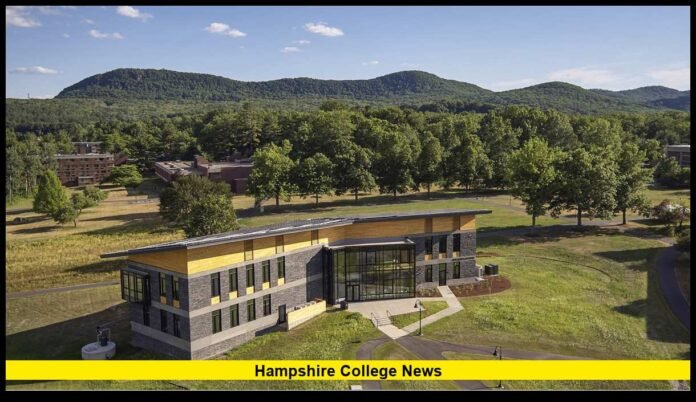
Hampshire College has also made visible improvements to its campus infrastructure. These updates support both academic needs and environmental goals.
Recent Developments
- Renovated academic and research spaces
- Improvements in student housing facilities
- Continued investment in sustainability initiatives
Sustainability remains a defining feature of the college. Many programs integrate environmental responsibility into both coursework and campus operations.
Reputation Rebuilding Across Higher Education
Hampshire’s comeback story has begun to reshape its national reputation. Once seen as a college in crisis, it is now viewed as an example of resilience.
What’s Driving the Reputation Shift
- Strong alumni engagement and support
- Renewed student interest in nontraditional education
- Clear institutional mission and identity
Prospective students are increasingly drawn to colleges that offer something different. Hampshire fits that demand, especially for those seeking creative and self-directed learning.
Challenges Still Facing the College
Despite the progress, Hampshire College is not without ongoing challenges.
Areas to Watch
- Sustaining long-term enrollment growth
- Competing with larger universities for visibility
- Ensuring continued financial discipline
These challenges are not unique, but they remain critical as the college moves forward.
Leadership continues to emphasize careful planning over rapid change.
Looking Ahead: What 2026 Signals for the Future
The latest Hampshire College news suggests a cautiously optimistic future. The institution has moved beyond survival mode and is now focused on growth with purpose.
Future Focus Areas
- Expanding interdisciplinary learning opportunities
- Increasing accessibility through financial aid
- Strengthening partnerships within the academic community
Hampshire is not trying to become a traditional college. Instead, it is doubling down on what makes it different.
That decision may ultimately define its long-term success.
Why This Story Matters Now
Hampshire College’s journey reflects broader shifts in U.S. higher education. Students are increasingly questioning traditional models and looking for more personalized learning experiences.
The college’s recovery highlights:
- The value of institutional identity
- The importance of adaptability
- The growing demand for innovative education
As 2026 unfolds, Hampshire remains a case study in how smaller institutions can recover, evolve, and remain relevant.
Hampshire College’s ongoing transformation continues to spark conversation—what do you think about its comeback and future direction?