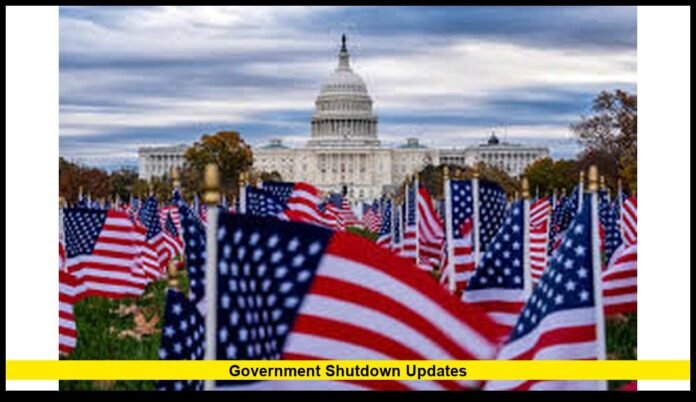

The latest government shutdown updates reveal a major breakthrough in Washington. The U.S. Senate has officially approved a short-term funding bill designed to end the record-long government shutdown and restore operations across key federal agencies. The measure, passed late on Monday, now heads to the House of Representatives, where lawmakers are expected to vote later this week.
What’s in the Senate Deal
The Senate’s funding bill represents a carefully negotiated compromise between Republican and Democratic leaders after weeks of stalled discussions.
Key points of the deal include:
- Reopening federal agencies that have been shut down since October 1.
- Extending government funding at current levels through January 30, 2026.
- Providing back pay to hundreds of thousands of furloughed federal employees.
- Restoring full funding for the Supplemental Nutrition Assistance Program (SNAP) through September 2026.
- Including full-year appropriations for veterans’ programs, agriculture, and the legislative branch.
However, the measure notably excludes the extension of enhanced Affordable Care Act (ACA) subsidies, which are set to expire at the end of December. This omission has created new friction between parties and sets the stage for another political showdown before the end of the year.
Timeline: How the Shutdown Unfolded
- October 1, 2025: The federal government officially entered shutdown mode after lawmakers failed to agree on a new spending package for the 2026 fiscal year.
- Early October: Negotiations began but quickly stalled over disagreements tied to healthcare funding and federal program allocations.
- Mid-October: Multiple stopgap measures failed in the Senate, as both parties held firm on demands for or against including healthcare subsidies.
- Late October: Federal services began scaling back, and hundreds of thousands of employees faced furloughs or delayed paychecks.
- November 10: The Senate advanced and then passed a bipartisan bill to reopen the government temporarily, ending more than 40 days of partial shutdown—the longest in U.S. history.
What Happens Next: House Action Ahead
Following Senate passage, the bill now moves to the House of Representatives. Speaker Mike Johnson has called members back to Washington to debate and vote on the measure this week. If approved, it will be sent to President Donald Trump for his signature, which would officially reopen the federal government and end the shutdown.
The House is expected to propose limited amendments, but party leaders have urged swift passage to avoid further disruption. Should the bill pass without delay, government operations could resume within days, allowing furloughed employees to return to work and agencies to restore normal functions.
Impact of the Shutdown
The six-week shutdown has left a lasting impact on millions of Americans and the federal workforce.
Economic and workforce impact:
- Roughly 900,000 federal workers were either furloughed or forced to work without pay.
- Thousands of government contracts were delayed, affecting local economies across multiple states.
- The federal court system and immigration hearings experienced significant backlogs.
Social and public services:
- Food assistance programs, including SNAP, faced payment delays in several states.
- Federal loan and grant processing slowed, affecting students and small businesses.
- National parks, museums, and passport offices saw reduced hours or closures.
Financial cost:
Experts estimate the shutdown cost the U.S. economy billions of dollars in lost productivity, missed paychecks, and delayed services. The new funding measure seeks to address these damages by ensuring retroactive pay for all impacted federal employees and contractors.
Unresolved Issues and Political Fallout
While the Senate’s approval signals progress, key disputes remain unresolved. The most pressing issue is the fate of the ACA subsidies, which have been excluded from this funding deal. Without further congressional action, millions of Americans could see higher health insurance premiums in early 2026.
Lawmakers from both parties acknowledge that the current bill is a temporary fix rather than a long-term solution. By extending funding only through January 30, Congress has effectively postponed larger budget negotiations for another two months. Those talks will likely reignite debates over healthcare, border security, and discretionary spending limits.
Despite frustrations, many political analysts view the Senate’s compromise as a critical step toward restoring public confidence and preventing further economic harm. Still, both parties will face scrutiny from constituents eager for stability after weeks of uncertainty.
Why This Matters for Americans
The passage of the Senate bill means a potential end to widespread disruptions that have affected households, businesses, and communities nationwide.
Here’s what the bill’s approval could mean for ordinary Americans:
- Federal workers: Immediate restoration of pay and benefits.
- Public programs: Restart of delayed services such as SNAP, student aid, and transportation safety inspections.
- Economic recovery: Gradual return of consumer spending and confidence as paychecks resume.
- Local communities: Relief for towns and cities reliant on federal employment and tourism tied to national sites.
However, with only temporary funding secured, Americans should remain alert to future debates that could lead to another fiscal standoff early next year.
Key Dates and Milestones
| Date | Event |
|---|---|
| October 1, 2025 | Government enters shutdown after missed deadline. |
| October 15, 2025 | Negotiations stall over healthcare and budget priorities. |
| November 9, 2025 | Senate leadership reaches preliminary funding agreement. |
| November 10–11, 2025 | Senate passes short-term funding bill 60–40. |
| November 12–13, 2025 | House expected to debate and vote on the bill. |
| January 30, 2026 | New deadline for government funding under this measure. |
Public Response
Public sentiment has leaned toward frustration as the shutdown extended beyond six weeks, affecting families across the country. With news of the Senate’s approval, there’s a cautious sense of optimism that the political stalemate may soon end.
Federal workers’ unions have praised the back-pay guarantee but continue to call for reforms that prevent future shutdowns from impacting livelihoods. Meanwhile, business groups have urged Congress to enact longer-term appropriations to stabilize the economy.
Outlook
If the House acts swiftly and the president signs the bill, normal government operations could resume within a few days. This would mark the official end of the 2025 government shutdown. However, the reprieve may be short-lived. Lawmakers will soon need to return to the negotiating table to reach consensus on full-year funding and major policy programs.
For now, the Senate’s action provides a measure of relief for millions of Americans who have endured weeks of uncertainty. All attention now shifts to the House as the nation awaits the final step toward reopening the government.
Stay tuned for more government shutdown updates as Congress works to finalize the deal and federal services prepare to resume.