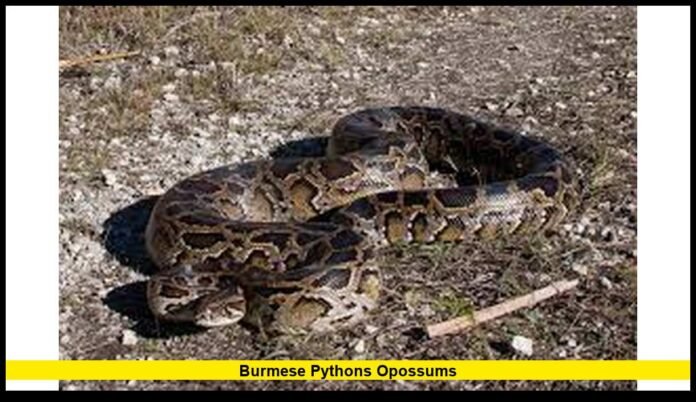

Burmese pythons opossums remain a critical focus in U.S. wildlife research as new observations from 2026 continue to reveal how native mammals respond to invasive predators in South Florida. Field data collected across protected wetlands shows a clear trend: many mammal populations have declined sharply, yet opossums are still present in areas where ecological disruption has been severe.
This contrast is reshaping how scientists understand survival, adaptation, and ecosystem balance. While the invasive snake population remains firmly established, not all native species are reacting in the same way. The presence of opossums in affected zones is now considered one of the most important indicators of resilience in altered habitats.
The Rise of an Invasive Predator in U.S. Wildlife
The spread of the Burmese python across South Florida has become one of the most significant wildlife challenges in the United States. These snakes, originally introduced through the exotic pet trade, found suitable conditions in the warm, wet environment of southern Florida.
Over time, they established breeding populations that expanded into key natural areas, including Everglades National Park. The landscape provided everything needed for survival: abundant prey, dense vegetation, and minimal natural predators.
Today, these snakes are deeply embedded in the ecosystem. Their presence has forced a shift in how wildlife management agencies approach conservation and invasive species control.
How Burmese Pythons Changed Mammal Populations
The impact of Burmese pythons on native mammals has been substantial and measurable. Wildlife monitoring efforts over the past decade have confirmed that several species experienced dramatic population drops after python populations increased.
Field observations across South Florida show:
- Raccoon sightings dropped sharply in heavily invaded zones
- Rabbit populations declined to near absence in some areas
- Foxes became rare in regions with high python density
- Bobcat numbers decreased in overlapping habitats
These declines are not temporary fluctuations. They reflect sustained predation pressure from a large, adaptable predator capable of consuming a wide range of animals.
Unlike native predators, Burmese pythons do not have natural population checks in this environment. This allows them to continue influencing wildlife patterns year after year.
Where Opossums Fit Into This Changing Landscape
The Virginia opossum stands out in this altered ecosystem. As the only marsupial native to the United States, it has unique biological and behavioral traits that may contribute to its persistence.
Recent field tracking shows:
- Opossums remain present in areas where other mammals are rarely seen
- Population decline exists but is less severe than in comparable species
- Individuals continue to appear in long-term monitoring zones
These findings suggest that opossums are not unaffected, but they are adapting in ways that reduce direct vulnerability.
Behavioral Advantages That Support Survival
Opossums rely on a mix of instinctive behaviors and environmental flexibility. These traits appear to give them an edge in areas where predator pressure is high.
Adaptable Feeding Habits
Opossums are omnivores. They consume insects, fruits, small animals, and carrion. This wide diet reduces dependency on any single food source.
Flexible Movement Patterns
They do not follow predictable routes. This makes it harder for ambush predators to track them consistently.
Use of Elevated Spaces
Opossums climb trees and structures. While pythons can climb, they spend much of their time on the ground, creating a partial spatial advantage.
Defensive Responses
Their well-known behavior of becoming motionless when threatened can disrupt predator engagement. It does not guarantee safety, but it adds a layer of unpredictability.
Ongoing Research and 2026 Wildlife Observations
Wildlife researchers continue to monitor animal populations using advanced tools such as motion-triggered cameras and GPS tracking. These methods provide detailed insights into how species move, feed, and interact.
Key observations recorded in 2026 include:
- Continued dominance of Burmese pythons in core wetland regions
- Persistent absence of some small mammals in high-density snake zones
- Ongoing sightings of opossums across multiple monitoring sites
- Temporary increases in mammal activity following targeted python removal efforts
These patterns confirm that the ecosystem is still under pressure. At the same time, they highlight that not all species are equally affected.
Diet Studies Reveal Predator Preferences
Scientists have examined python feeding habits through long-term analysis. These studies show that Burmese pythons consume a wide variety of prey.
Common prey includes:
- Rabbits
- Raccoons
- Birds
- Deer
- Reptiles
Opossums appear in these records but not at the same frequency as other mammals. This suggests that while they are part of the food chain, they are not the primary target.
The reasons may include behavior, habitat use, or encounter rates. Each of these factors contributes to survival outcomes.
Environmental Conditions in the Everglades
The Everglades ecosystem plays a major role in shaping wildlife interactions. It is one of the most complex natural systems in the United States.
Key environmental features include:
- Dense vegetation that limits visibility
- Seasonal water level changes
- Extensive wetland coverage
- Remote and difficult terrain
These conditions create both challenges and opportunities for wildlife. Animals that adapt quickly can find ways to survive, even when predator pressure increases.
Opossums appear to benefit from this complexity. Their ability to navigate different environments gives them more options for avoiding danger.
Wildlife Management and Control Efforts
Government agencies and conservation groups continue to focus on reducing python numbers. These efforts are ongoing and involve multiple strategies.
Organizations involved include:
- Florida Fish and Wildlife Conservation Commission
- U.S. Geological Survey
Control measures include:
- Targeted removal programs
- Public participation initiatives
- Use of tracking technology
- Field research collaborations
Thousands of pythons have been removed over the years. However, the species remains established due to its ability to reproduce quickly and survive in difficult conditions.
Public Involvement in Wildlife Protection
Florida has increased public engagement in python removal efforts. Programs encourage trained individuals to assist in identifying and safely removing invasive snakes.
These initiatives include:
- Organized hunting challenges
- Certification programs for removal participants
- Awareness campaigns for residents and visitors
Public involvement has helped increase removal numbers. It also raises awareness about the broader impact of invasive species on U.S. wildlife.
Ripple Effects Across the Ecosystem
The influence of Burmese pythons extends beyond mammals. Their presence affects the entire ecosystem.
Observed impacts include:
- Changes in bird population behavior
- Reduced availability of prey for native predators
- Altered balance between species
When mammal populations decline, the effects spread across the food web. This creates long-term ecological changes that may take years to reverse.
Why Opossums Matter in Wildlife Research
The continued presence of opossums provides valuable insight into adaptation. Scientists study these patterns to understand how certain species survive under pressure.
Opossums serve as an indicator species in this context. Their survival suggests that some animals can adjust to new threats more effectively than others.
Understanding these differences helps guide conservation strategies. It also improves predictions about how ecosystems respond to change.
Challenges That Remain in Python Control
Despite years of effort, controlling the Burmese python population remains difficult.
Key challenges include:
- Low visibility in dense habitats
- Large geographic range
- High reproduction rates
- Limited detection methods
A single python can produce dozens of offspring. This allows populations to recover even after removal efforts.
These challenges make long-term management essential.
Data Snapshot: Wildlife Status in Affected Areas
| Species | Population Trend |
|---|---|
| Raccoons | Severe decline |
| Rabbits | Rare in core zones |
| Foxes | Nearly absent |
| Opossums | Moderate decline, still present |
| Deer | Reduced but stable |
This comparison highlights the unusual position of opossums within the current wildlife landscape.
The Broader Impact on U.S. Wildlife Policy
The situation in South Florida has influenced wildlife management across the United States. It serves as a clear example of how invasive species can reshape ecosystems.
Key lessons include:
- Prevention is more effective than removal
- Early detection is critical
- Public awareness plays a major role
Wildlife agencies now emphasize stricter controls on exotic species and stronger monitoring systems.
Future Outlook for Opossums and Native Mammals
Researchers will continue tracking how opossums and other mammals respond to ongoing changes. The future of these populations depends on several factors:
- Effectiveness of python control efforts
- Habitat conditions
- Climate patterns
If removal efforts increase, some native species may begin to recover. However, long-term stability will require sustained action.
Conclusion
The evolving relationship between Burmese pythons opossums highlights the complexity of wildlife survival in the United States. While many species have declined under predator pressure, opossums continue to persist in environments where others struggle.
Their adaptability offers valuable insight into how ecosystems respond to disruption. At the same time, the broader impact of invasive predators remains a serious concern for conservation efforts.
What are your thoughts on how wildlife adapts to invasive species? Join the conversation and keep following this developing story.