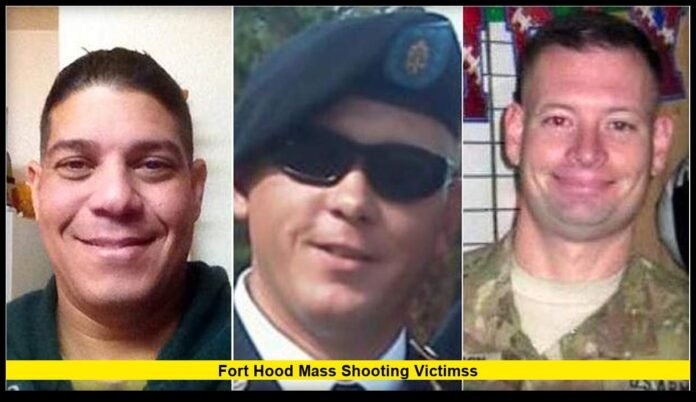

The fort hood mass shooting victims remain an important part of a national tragedy that continues to shape conversations about military safety, justice, and the lasting consequences of violence. The November 5, 2009, attack at Fort Hood, Texas, claimed 13 lives and injured 32 people, devastating families and shocking the U.S. military community. The case has returned to national attention following the latest decision by President Donald Trump on October 15, 2026, to cancel plans to livestream the scheduled execution of convicted gunman Nidal Malik Hasan.
Hasan, a former Army psychiatrist, is scheduled to be executed by firing squad at Fort Hood on December 3, 2026, at 1 p.m. Central Standard Time. The announcement reverses an earlier Pentagon plan to broadcast the execution publicly. While the decision has renewed debate over military justice and capital punishment, the lives lost in 2009 remain the central reason the case continues to attract public attention.
Fort Hood Shooting Latest Update: What Happened on October 15, 2026?
The latest development concerns how the U.S. government intends to carry out Hasan’s scheduled execution. Earlier in October, Defense Secretary Pete Hegseth announced that the execution would be livestreamed, describing public visibility as a way to demonstrate the consequences of committing such a crime.
The proposal quickly generated criticism. Some lawmakers, military veterans, religious leaders, survivors, and victims’ relatives questioned whether broadcasting an execution would respect the dignity of the justice system or the people affected by the shooting.
On October 15, Trump announced that the execution would not be livestreamed. He maintained that the execution would proceed as scheduled, while acknowledging that many people did not want to watch such an event.
The reversal settles the immediate question of whether the government plans to broadcast the execution publicly. However, it does not change Hasan’s death sentence or the announced execution method.
The scheduled date remains December 3, 2026. Legal developments could still affect the timetable, so the date should be understood as the current plan rather than a guarantee that the execution will occur without delay.
For families who have spent years coping with their losses, the announcement brings renewed attention to a case that has remained part of their lives since 2009.
What Happened at Fort Hood on November 5, 2009?
The shooting occurred at the Soldier Readiness Processing Center at Fort Hood, one of the largest U.S. Army installations in the country. Soldiers were visiting the facility for administrative and medical processing connected to their military duties and deployments.
Hasan opened fire inside the facility, killing military personnel and a civilian employee. The attack unfolded within a military community where many people were preparing for assignments, supporting fellow service members, or completing routine duties.
The shooting quickly triggered an emergency response. Military personnel and installation security officers worked to contain the situation, assist the wounded, and prevent further casualties.
Civilian police officer Kimberly Munley confronted Hasan during the response and shot him. Hasan survived but sustained injuries that left him paralyzed.
The final toll of the attack was 13 people killed and 32 injured. Families across the United States suddenly faced the loss of loved ones, while survivors began a difficult recovery that included physical treatment and emotional healing.
The incident also prompted questions about security procedures, communication between military agencies, and how authorities assess potential threats within the armed forces.
Although the immediate emergency ended in November 2009, the consequences continued through criminal proceedings, military investigations, memorial ceremonies, and years of discussion about accountability.
Names of the 13 People Killed in the Fort Hood Shooting
Remembering the victims means recognizing the individuals whose lives ended during the attack. The people killed included 12 military personnel and one civilian employee who worked at Fort Hood.
The victims were:
- Lieutenant Colonel Juanita L. Warman — A senior Army officer whose death represented a significant loss for her colleagues and family.
- Major Libardo Caraveo — An Army officer serving in a medical support unit.
- Captain John P. Gaffaney — A commissioned officer whose death deeply affected the military community.
- Captain Russell Seager — An Army captain who was among the service members killed.
- Staff Sergeant Justin Decrow — A noncommissioned officer whose military career was cut short by the attack.
- Sergeant Amy Krueger — A soldier whose death left family members and fellow service members grieving.
- Specialist Jason Hunt — A young soldier whose life ended during the shooting.
- Specialist Frederick Greene — A member of the Army who died alongside fellow personnel.
- Private First Class Aaron Nemelka — One of the younger soldiers killed in the attack.
- Private First Class Michael Pearson — A service member remembered among the 13 victims.
- Specialist Kham Xiong — A soldier whose death affected his family and community.
- Private Francheska Velez — A young soldier whose death became part of the tragedy’s lasting legacy.
- Michael Cahill — A retired Army warrant officer who worked as a civilian employee at Fort Hood.
These individuals came from different backgrounds and served in different roles, but they shared a connection through their work and presence at the installation.
Their names remain central to memorials and commemorations marking the attack. Remembering them also helps ensure that public discussion does not reduce the tragedy to the identity of the gunman or the legal proceedings that followed.
Who Was Nidal Malik Hasan?
Nidal Malik Hasan was an Army major and psychiatrist assigned to Fort Hood before the 2009 attack. His professional responsibilities involved military mental health care, making the shooting especially disturbing to service members and the public.
Authorities arrested Hasan after he was shot during the response. He subsequently faced a military court-martial for the killings and attempted killings.
In August 2013, a military jury convicted him of 13 counts of premeditated murder and 32 counts of attempted premeditated murder. The jury sentenced him to death later that month.
The case proceeded through the military justice system for years. On October 2, 2026, Trump approved Hasan’s death sentence following the completion of the appellate process. The Army subsequently announced the execution date and method.
Hasan’s scheduled execution by firing squad would mark the first U.S. military execution since 1961. It would also be the first military execution by firing squad since 1945.
The case has attracted attention not only because of the number of people killed but also because of Hasan’s position within the Army and the questions surrounding the circumstances before the attack.
Fort Hood Shooting Survivors and Their Continuing Struggles
The attack’s consequences did not end when the shooting stopped. People who survived faced different forms of recovery, ranging from serious physical injuries to emotional trauma and the challenges of returning to everyday life.
Alonzo Lunsford is among the best-known survivors. He was shot seven times during the attack and later became a public voice in discussions about the shooting and its aftermath.
Survivors may experience lasting physical limitations, anxiety, grief, and distress associated with reminders of the incident. Important developments in the case, including the scheduled execution, can bring memories of the attack back into public discussion.
The impact also extends to relatives of people who were killed or injured. Family members have had to navigate anniversaries, memorial events, public coverage, and the long legal process surrounding Hasan’s conviction.
Their views on the execution and its publicity are not necessarily identical. Some people may consider the approaching date an important milestone in the pursuit of justice, while others may find the renewed attention painful.
These differences deserve recognition. No single response can represent every victim’s relative or survivor, and the public should avoid assuming that all affected families share the same position on capital punishment.
Why the Livestream Decision Sparked Controversy
The proposed livestream raised questions that extended beyond the legal outcome of Hasan’s case.
Supporters of the original proposal argued that public visibility could demonstrate the consequences of a violent attack. Critics countered that broadcasting an execution would risk turning a solemn government proceeding into a spectacle.
Some military and religious leaders also raised concerns about the ethical implications of asking service members to participate in a publicly broadcast execution. Others focused on the potential effect on victims’ families, survivors, and younger viewers.
The opposition included people who supported Hasan’s conviction and death sentence but did not believe the execution should be shown to a mass audience.
That distinction became an important part of the debate. Whether a person supports capital punishment is a separate question from whether an execution should be livestreamed.
Trump’s October 15 announcement ended the immediate dispute over the proposed public broadcast. However, broader questions about military executions, transparency, deterrence, and the dignity of victims remain subjects of public discussion.
The episode illustrates how decisions made more than a decade after a tragedy can reopen difficult conversations for those who experienced it firsthand.
How the Army Honored the Fort Hood Victims
The Army and Fort Hood community have continued to recognize those who died and those who suffered injuries during the shooting.
In April 2015, victims and family members received Purple Hearts and Defense of Freedom medals during a ceremony at Fort Hood. The recognition acknowledged the losses suffered by military personnel, civilian victims, and survivors.
Purple Hearts were presented to representatives of fallen soldiers and to injured service members. The Defense of Freedom Medal recognized eligible civilian victims, including the family of Michael Cahill and Kimberly Munley, the civilian police officer wounded while responding to the attack.
These honors recognized the suffering caused by the shooting and the courage displayed during the emergency.
Memorial events and family remembrances have also helped preserve the victims’ stories. Such ceremonies give relatives, colleagues, and members of the wider community opportunities to reflect on the lives lost.
For families, remembrance is not limited to official events. The absence of a loved one remains part of everyday life, long after national attention shifts to other news.
How the 2009 Shooting Differs From the 2014 Fort Hood Attack
Fort Hood experienced another deadly shooting on April 2, 2014. Because both incidents occurred at the same installation, reports sometimes cause confusion between the victims and the individuals responsible.
The 2014 attack involved Army Specialist Ivan Lopez, who killed three soldiers before dying by suicide. The soldiers killed were Sergeant First Class Daniel Ferguson, Staff Sergeant Carlos Lazaney-Rodriguez, and Sergeant Timothy Owens.
That incident was separate from the November 2009 shooting carried out by Hasan. The victims, circumstances, investigations, and legal outcomes were different.
The execution currently scheduled for December 3, 2026, relates to Hasan’s conviction for the 2009 attack. It does not concern the 2014 shooting.
Understanding this distinction helps readers follow new developments accurately and prevents the victims of the two tragedies from being mistakenly grouped together.
What Happens Next in the Fort Hood Case?
The next major milestone is the scheduled execution of Hasan on December 3, 2026, at Fort Hood. The announced plan calls for a firing squad at 1 p.m. Central Standard Time.
The government has canceled the proposed livestream, but the execution date remains on the schedule. Further legal proceedings or other official developments could still affect the timing.
As the date approaches, public attention will likely focus on the execution arrangements, any legal changes, and the responses of survivors and victims’ relatives.
The case also leaves broader questions about military safety, accountability, and the long-term support available to people affected by violence. These issues remain relevant even as the legal process approaches its announced conclusion.
Ultimately, the tragedy should be remembered through the lives of the people who died, the experiences of those who survived, and the lasting impact on families and the military community.
Frequently Asked Questions
How many people were killed in the 2009 Fort Hood shooting?
Thirteen people died in the November 5, 2009, attack. Twelve were military personnel, and one was a civilian employee at Fort Hood.
How many people were injured?
The commonly reported total is 32 injured people. The attack caused serious physical harm and lasting consequences for survivors.
Who carried out the shooting?
Former Army Major Nidal Malik Hasan carried out the attack. A military jury convicted him of 13 counts of premeditated murder and 32 counts of attempted premeditated murder in 2013.
When is Hasan scheduled to be executed?
His execution is scheduled for December 3, 2026, at 1 p.m. Central Standard Time. Legal developments could change the timetable.
Will the execution be livestreamed?
No. Trump announced on October 15, 2026, that the execution would not be livestreamed, reversing the Pentagon’s earlier plan.
Was the Fort Hood shooting the same incident as the 2014 attack?
No. The 2009 attack involved Hasan and killed 13 people. A separate shooting in April 2014 killed three soldiers and involved a different gunman.
Conclusion
The 2009 Fort Hood shooting remains a painful chapter in American military history. The latest decision about Hasan’s scheduled execution has brought the case back into the headlines, but the 13 people who died and the survivors who continue to live with its consequences deserve lasting recognition.
As the scheduled execution date approaches, the public conversation will continue to address justice, accountability, and the appropriate way to remember the tragedy. Keeping the victims’ stories at the center of that conversation ensures that their lives are not overshadowed by the latest controversy.
What do you think is the most meaningful way to honor the Fort Hood victims and support survivors? Share your thoughts in the comments and follow the latest verified developments.