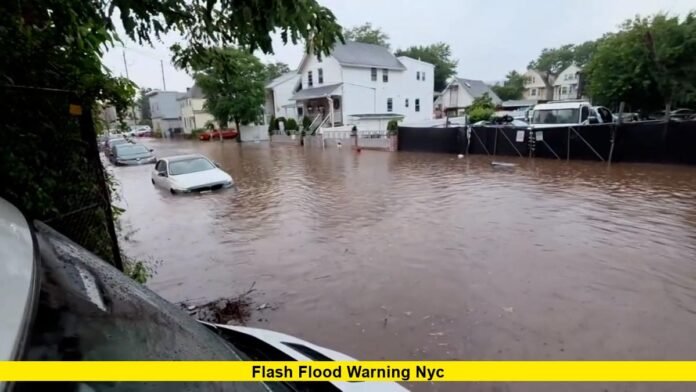

A flash flood warning for NYC has once again put New Yorkers on alert as a slow-moving storm system drenches the Tri-State Area with heavy rain and thunderstorms. The National Weather Service issued the warning early Monday, August 3, 2026, and it remained in effect until 8:15 a.m., part of a broader weather pattern that has also triggered flood watches and warnings across New Jersey, southern New York, and western Connecticut. With rainfall rates reaching one to two inches per hour in some bands, city officials moved quickly to activate emergency protocols aimed at reducing the risk of dangerous street and basement flooding.
Heavy Rain Triggers Flash Flood Warning Across the Tri-State Area
The latest round of severe weather began overnight as a humid, tropical airmass settled over the New York City area, setting the stage for repeated rounds of downpours and embedded thunderstorms. According to forecasters, the combination of high moisture content and slow storm movement created conditions ripe for flash flooding, particularly in low-lying neighborhoods, underpasses, and areas with poor drainage. The National Weather Service upgraded the flash flooding risk for parts of the region, citing as much as a 70 percent chance of flash flooding and the potential for up to five inches of rain in the heaviest bands.
New York City’s Emergency Management Department confirmed it had activated the city’s Flash Flood Emergency Plan ahead of the storm, a step that includes advance inspection and clearing of catch basins in flood-prone areas by the Department of Environmental Protection and the Department of Transportation. The city’s Downed Tree Task Force and Tow Truck Task Force were also placed on alert to respond to fallen trees, branches, and stranded vehicles as the storms moved through. Officials warned that rainfall rates could climb as high as three inches per hour during the most intense downpours, a pace capable of overwhelming storm drains within minutes.
A flood watch remained in effect for New York City boroughs including the Bronx, Brooklyn, Manhattan, Queens, and Staten Island, with officials cautioning that excessive runoff could lead to flooding of rivers, creeks, streams, and other low-lying or flood-prone locations well beyond the initial warning window. Neighboring New Jersey counties, including Bergen, Essex, Passaic, Hunterdon, Mercer, Morris, and Somerset, were placed under similar flash flood warnings and watches as the same storm system tracked eastward.
Emergency Response and Preparedness Efforts
City agencies and meteorologists have been closely coordinating throughout this stretch of unsettled weather. NYC Emergency Management has repeatedly urged residents, particularly those living in basement apartments or flood-prone blocks, to have an emergency plan in place, including knowing evacuation routes and keeping emergency supplies accessible. The department has also reminded New Yorkers that floodwaters can conceal serious hazards such as open manholes, storm debris, and downed electrical lines, making it dangerous to walk or drive through standing water even when it appears shallow.
Officials continue to stress that most flood-related deaths occur inside vehicles, and drivers are being urged to avoid flooded roadways entirely rather than attempt to pass through them. The New York State government has also been actively engaged in monitoring the situation, with water rescue teams staged in counties north of the city in case rapid-response operations become necessary. Non-essential state employees in several downstate counties, including New York City, Westchester, Rockland, and Nassau, were released early during a similarly severe rain event earlier in the summer, illustrating how seriously officials are treating this pattern of repeated flooding threats.
Why This Flash Flood Warning Has New Yorkers on Edge
Public attention around this flash flood warning for NYC has been heightened by a summer that has already brought multiple rounds of severe flooding to the region. Parts of northeastern New Jersey and southwestern Connecticut were pummeled by intense storms in recent weeks, and residents in flood-prone communities are understandably on alert whenever a new system approaches. Social media activity from residents and local emergency accounts has spiked during each warning, with many sharing real-time reports of ponding on roadways, subway platform flooding, and downed tree limbs.
Commuters have also felt the impact directly, as rain-soaked streets and reduced visibility slow both vehicle and mass transit travel. The Metropolitan Transportation Authority and city agencies have previously reported service disruptions and delays during comparable flash flooding events, and residents are advised to check transit alerts before heading out during active warnings. Local businesses in flood-prone corridors, particularly those with below-grade or basement-level space, have also become more proactive about protective measures such as sandbags and portable pumps.
Western Connecticut and Surrounding Counties Also Affected
The same weather system that prompted the flash flood warning for NYC has produced significant impacts just north and east of the city. A flash flood warning was issued for Fairfield County, Connecticut, along with parts of Putnam, Rockland, and Westchester counties in New York, as torrential rain moved through the region in the early morning hours. Western Connecticut has been particularly susceptible to flash flooding this summer, with earlier storms in the season dumping several inches of rain in a matter of hours and closing multiple roads due to downed trees and washouts.
Meteorologists have noted that far western Connecticut and the Lower Hudson Valley corridor have repeatedly fallen within the highest-risk zones for flash flooding during this stretch of unsettled weather, a pattern driven by so-called “training” storms, where multiple rounds of rain track over the same communities in succession. This phenomenon can cause rainfall totals to climb rapidly even when individual storm cells do not appear especially severe on radar. As of this report, there is no official confirmation of major structural damage, injuries, or fatalities directly linked to Monday’s flash flood warning, though officials continue to monitor conditions closely as additional showers may develop through the day.
Forecasters expect the wettest conditions to taper off later in the day, though residual showers and localized ponding may persist into the evening hours across the city and surrounding counties. Flood watches covering New York City, Long Island, and the Hudson Valley have extended into the evening, meaning additional flash flood warnings remain possible should thunderstorms redevelop or stall over already saturated ground.
Staying Safe During Ongoing Flash Flood Risk
This latest flash flood warning for NYC underscores how quickly summer storm systems can turn a routine rainy day into a serious safety concern across the Tri-State Area. With soil already saturated from previous rounds of heavy rain this season, even moderate rainfall can trigger rapid flooding in streets, subway entrances, and low-lying neighborhoods. Residents are encouraged to sign up for real-time emergency alerts, avoid unnecessary travel during active warnings, and never attempt to drive or walk through flooded roadways.
As the storm system continues to move through the region, officials may issue additional flash flood warnings or extend existing flood watches depending on how the weather develops throughout the day. New Yorkers, along with residents in neighboring New Jersey and Connecticut communities, are advised to stay alert to updates from the National Weather Service and local emergency management agencies in the hours ahead.
Stay safe out there, New York — share your storm updates in the comments and check back for the latest on this developing flash flood situation.