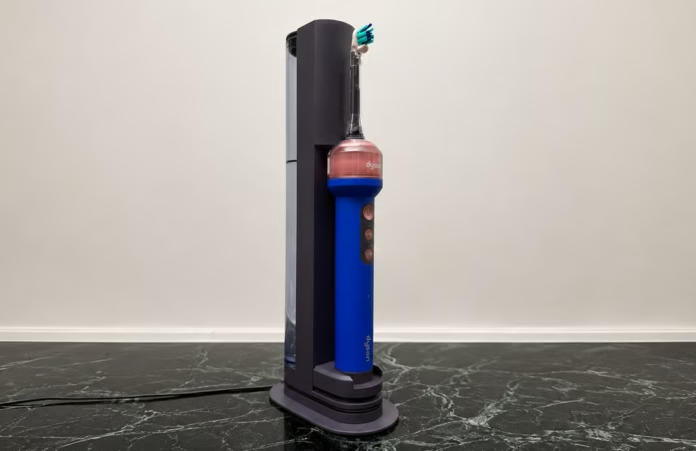

The Dyson toothbrush price is officially set at $499.99 in the United States for the new Dyson CameraJet electric toothbrush with flosser. Revealed on September 1, 2026, the premium oral-care device marks Dyson’s entry into the electric toothbrush market and combines brushing, camera-based gap detection, automatic liquid flossing, and app-connected guidance in one system.
Dyson is positioning the CameraJet as more than a conventional electric toothbrush. Its built-in camera is designed to identify spaces between teeth while users brush, allowing the device to direct a small jet of mouth rinse toward those areas. The result is an unusually technology-heavy approach to daily dental care, aimed at combining brushing and interdental cleaning in a single routine.
Dyson CameraJet Price and Availability
The U.S. retail price for the Dyson CameraJet is $499.99. Dyson officially launched the product in the United States on September 1, 2026.
The CameraJet is available in two color options:
- Ceramic Ultra Blue
- Ceramic Pink
The package includes the CameraJet toothbrush, a refill dock, two regular brush heads, and a charging cable. Dyson has also designed the dock to store, charge, and refill the device.
At nearly $500, the Dyson CameraJet sits firmly in the premium electric toothbrush category. However, its price reflects the fact that Dyson is combining several functions that are normally handled by separate products, including electric brushing, interdental cleaning, and oral imaging.
For consumers researching the Dyson toothbrush price, the important distinction is that the $499.99 figure applies to the CameraJet system rather than a basic electric toothbrush.
What Makes the Dyson CameraJet Different
The biggest difference between the CameraJet and conventional electric toothbrushes is the miniature camera integrated into its brush head.
Dyson says the camera has a 100,000-pixel macro lens and analyzes 28 images per second. Its Gap Optical Targeting system uses those images to identify gaps between teeth while the user is brushing.
When the system detects an interdental gap, the toothbrush can automatically trigger a targeted jet of liquid. Dyson describes this as precision-flossing because the jet is directed toward the space between teeth rather than spraying liquid indiscriminately.
This approach allows the CameraJet to combine two parts of an oral-care routine:
- Brushing the visible surfaces of teeth.
- Cleaning between teeth with a targeted liquid jet.
Users can also choose manual jetting rather than relying entirely on automatic detection.
How the Camera and Liquid-Flossing System Work
The CameraJet’s camera is not simply included as a novelty feature. It is central to how the automatic cleaning system operates.
As the brush moves through the mouth, the camera provides a close-range view of the teeth and surrounding areas. Dyson’s machine-learning system analyzes the live imagery and attempts to recognize interdental gaps.
Once a gap is identified, the device can release a conical burst of mouth rinse. Dyson says the jet can deliver up to 0.15 milliliters of liquid between teeth.
The system is designed to use a relatively targeted stream rather than the high-pressure spray commonly associated with some water flossers. This allows the CameraJet to integrate liquid interdental cleaning directly into the brushing process.
Dyson says the device was developed over six years of research, development, and engineering. The company also says its machine-learning technology was trained using hundreds of thousands of dental images.
Dyson Toothbrush Features
The CameraJet includes several features beyond its camera and liquid-flossing technology.
Variable Sonic Oscillation
The brush head uses variable sonic oscillation designed to maintain movement while brushing. Dyson says the system can prevent stalling and improve cleaning performance, particularly in harder-to-reach areas.
The brush head combines softer outer bristles with stiffer inner bristles. This construction is intended to provide a balance between gum contact and effective plaque removal.
Dyson’s laboratory testing reports significant plaque-removal improvements compared with selected competing premium electric toothbrushes. These are manufacturer testing claims, however, and results can vary depending on the testing conditions and comparison products.
Pressure and Technique Feedback
The CameraJet also provides feedback while users brush.
Built-in haptics can alert users when they are applying excessive pressure or using an undesirable technique. Through the MyDyson app, users can also receive guidance about brushing coverage and areas that may have been missed.
This turns the toothbrush into a coaching device rather than simply a powered brush.
MyDyson App Integration
The CameraJet connects to the MyDyson app through wireless connectivity.
Users can view live footage from the camera while brushing and receive guidance about their cleaning technique. The app can also provide coverage maps and summaries of previous cleaning sessions.
The live-view function effectively turns the toothbrush’s camera into an intraoral viewing tool. It is intended to help users see areas of their mouth that are otherwise difficult to observe while brushing.
Dyson says the camera images are not stored or shared. According to the company’s current product information, images processed on the device or through the app are deleted after viewing rather than being retained in the cloud.
Battery Life, Dock and Brush Heads
The CameraJet is designed to function as an everyday toothbrush rather than a device that requires constant charging.
Dyson says the toothbrush can provide up to 14 complete cleans on a single charge, depending on the usage conditions and cleaning mode.
The system also has a refill dock that serves several purposes. It stores the toothbrush, charges it, and replenishes the liquid reservoir.
Dyson says the device has a 12.5-milliliter mouth-rinse reservoir and uses an anti-gravity tank design intended to maintain liquid delivery at different angles.
The brush head includes RFID technology that allows the system to monitor wear and help determine when replacement is needed.
The battery is also designed to be swappable, which Dyson says can help extend the usable life of the device.
Dyson Toothpaste and Mouth Rinse
The CameraJet’s camera introduces an unusual requirement for the products used during brushing: excessive foam can interfere with visibility.
For that reason, Dyson has developed its own non-foaming toothpaste and low-foaming mouth rinse specifically for the system.
Dyson says its toothpaste does not contain sodium lauryl sulfate, commonly known as SLS, because reducing foam helps the camera maintain visibility of the teeth and interdental areas.
The company has indicated that its proprietary toothpaste and mouth rinse are part of a broader Dyson dental system. Consumers may therefore encounter additional recurring costs beyond the initial Dyson toothbrush price of $499.99, particularly if they choose Dyson’s own formulations and replacement products.
Dyson has also stated that compatible SLS-free, non-foaming products can be used, although the company recommends formulations designed to work with CameraJet.
What Comes With the $499.99 Dyson Toothbrush
The initial CameraJet package is designed as a complete hardware system rather than just a toothbrush handle.
The launch package includes:
- Dyson CameraJet electric toothbrush with flosser
- Two regular brush heads
- Refill dock
- Charging cable
The dock is particularly important because it combines charging and liquid refilling functions. The system is also designed to work with a travel case, making the CameraJet more practical for people who want to take it away from home.
Dyson says the toothbrush is fully waterproof and can be used in the shower.
How the Dyson Toothbrush Price Compares With Its Technology
The Dyson toothbrush price of $499.99 makes the CameraJet substantially more expensive than ordinary electric toothbrushes.
However, a direct price comparison with basic electric toothbrushes does not fully capture what Dyson is selling. The CameraJet incorporates an electric toothbrush, an interdental liquid-cleaning system, a miniature camera, machine-learning software, wireless connectivity, app-based tracking, and a specialized refill dock.
That makes the product closer to a complete smart oral-care platform than a traditional electric toothbrush.
The higher price will nevertheless be an important consideration for shoppers. Consumers who already own an effective electric toothbrush and separate flossing or water-flossing equipment may find the CameraJet’s integrated approach harder to justify financially.
For people who value technology, automated cleaning assistance, and the convenience of combining multiple oral-care steps, the additional features may be more relevant to the purchasing decision.
Clinical Testing and Cleaning Claims
Dyson has released testing information alongside the CameraJet launch.
The company says the device was clinically tested with 71 participants over four weeks, with participants using the product twice a day alongside Dyson formulations. Dyson reports improvements in gum health compared with a manual toothbrush under the test conditions.
The company also makes laboratory-based claims regarding plaque removal.
These findings should be understood in context. The available testing is not the same as long-term independent clinical evidence covering every type of user. Early independent hands-on reviews published around the launch have generally highlighted the CameraJet’s unusual technology and integrated cleaning approach, while also noting that longer-term evidence will be important in evaluating its effectiveness.
As with any dental product, the CameraJet should not be considered a substitute for professional dental examinations or individualized advice from a dentist or dental professional.
Privacy Considerations With a Camera Toothbrush
A toothbrush with an intraoral camera naturally raises privacy questions.
Dyson says the CameraJet’s camera operates only when required for features such as automatic gap detection and optional live viewing. A light indicates when the camera is active.
The company also states that live camera imagery is streamed to the MyDyson app and is not stored by Dyson, uploaded to the cloud, or shared with third parties.
This is an important part of the product because the camera captures images inside the user’s mouth. Dyson’s stated approach is to process the relevant information on the device or within the app and delete images rather than maintain a permanent photographic record.
Users who are particularly sensitive to connected-device privacy may still want to review Dyson’s current privacy information and app requirements before purchasing.
Why Dyson Is Entering the Dental-Care Market
Dyson is already strongly associated with premium consumer technology, particularly vacuum cleaners, hair-care devices, air treatment products, and other engineered household appliances.
The CameraJet represents a significant expansion into oral care.
The company is applying the same product-development philosophy to dental hygiene: identify a routine task, add sensors and engineering, and attempt to make the process more precise.
In the case of CameraJet, the central problem Dyson is targeting is the difficulty of consistently cleaning between teeth. Instead of requiring users to manually identify each interdental space, the system attempts to detect those gaps automatically.
That approach also explains why the camera is so important to the product’s identity.
Latest Dyson Toothbrush Update
The latest confirmed update is that the Dyson CameraJet launched in the United States on September 1, 2026, at $499.99.
The product is currently presented as Dyson’s flagship electric toothbrush with integrated precision-flossing technology. It is available in Ceramic Ultra Blue and Ceramic Pink, with the initial package including the toothbrush, two brush heads, refill dock, and charging cable.
Dyson is also expanding its oral-care lineup around the CameraJet with specialized toothpaste and mouth rinse designed to work with the camera-based system.
As of the latest available information, there is no official indication that Dyson is preparing a cheaper CameraJet model or a lower-priced version of the same technology. Consumers should therefore treat the $499.99 price as the confirmed U.S. launch price rather than expecting an announced budget alternative.
Is the Dyson CameraJet Worth the $499.99 Price?
Whether the CameraJet is worth its price will depend heavily on what a buyer expects from an electric toothbrush.
For someone looking for a simple electric toothbrush, $499.99 is clearly a premium purchase. Less expensive models can provide powered brushing without a camera, smartphone connection, or automated liquid-flossing system.
The CameraJet makes a stronger case for consumers who specifically want an integrated oral-care system. Its ability to detect interdental gaps, direct liquid cleaning toward those areas, provide visual feedback, and track brushing performance gives it capabilities that conventional toothbrushes do not offer in the same package.
The technology is also likely to be the main attraction. Dyson is not simply competing on brushing performance; it is attempting to change how users interact with their daily oral-care routine.
Ultimately, the Dyson toothbrush price reflects the complexity of the CameraJet rather than the cost of a conventional electric toothbrush. Buyers should consider both the $499.99 initial purchase and the potential ongoing cost of brush heads, toothpaste, and mouth rinse when evaluating the overall value.
Final Thoughts
The Dyson CameraJet is one of the most ambitious electric toothbrush launches of 2026. At $499.99, it is unmistakably positioned as a premium product, but Dyson has also packed it with technology rarely associated with everyday dental care.
Its 100,000-pixel camera, Gap Optical Targeting system, automatic liquid-flossing jet, MyDyson app integration, pressure feedback, refill dock, and replaceable battery distinguish it from conventional electric toothbrushes.
The biggest question for consumers is therefore not simply whether the CameraJet is expensive. It is whether the combination of brushing, interdental cleaning, imaging, and digital guidance provides enough additional value to justify the premium.
For shoppers searching for the Dyson toothbrush price, the key figure to remember is $499.99 in the United States at launch. As Dyson’s first major entry into smart oral care, the CameraJet also establishes a new direction for the company’s product portfolio and could make technology-driven dental care a much more visible consumer category.
What do you think about Dyson’s $499.99 CameraJet toothbrush? Share your thoughts in the comments and stay updated as new information about Dyson’s oral-care lineup emerges.