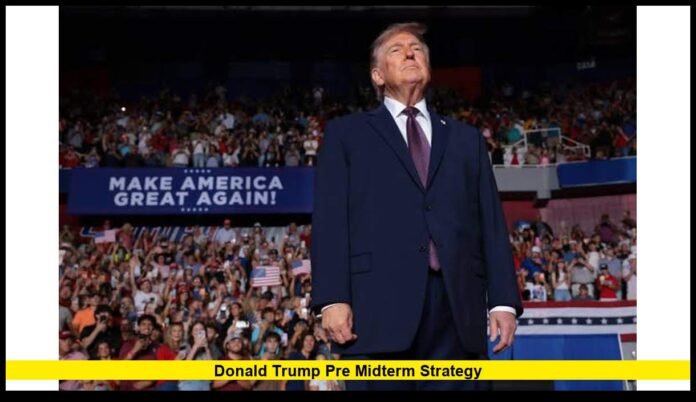

As the 2026 midterm elections approach, Donald Trump pre midterm strategy centers on energizing Republican voters, promoting his administration’s economic agenda, and helping the GOP retain control of Congress. President Donald Trump has stepped up his campaign involvement, using rallies, financial relief announcements, tax policies, and direct appeals to voters to strengthen Republican prospects before Election Day on November 3, 2026.
The political environment presents significant challenges for the president and his party. Voters continue to focus on household expenses, gasoline prices, health care costs, immigration, and the economic effects of the administration’s policies. Democrats are using affordability as a central campaign issue, while Republicans are attempting to connect their legislative agenda with tangible benefits for American families.
Trump’s approach also reflects a tension within the Republican Party. Some candidates want the president’s support to mobilize loyal voters, while others prefer to emphasize their own records and local priorities. With control of the House and Senate at stake, the campaign must balance Trump’s influence over the Republican base with the need to attract independent and undecided voters.
What Is Donald Trump’s Pre-Midterm Strategy?
Trump’s strategy combines personal campaigning, economic messaging, Republican fundraising, and efforts to increase voter participation. Rather than allowing congressional candidates to run entirely separate campaigns, the president has made himself a prominent figure in the national Republican effort.
His approach has several major components:
- Campaign rallies: Trump is using public appearances to energize Republican supporters and encourage turnout.
- Economic messaging: The administration is highlighting tax changes, financial assistance, energy policies, and other measures it says will benefit American households.
- Republican unity: The president is urging voters to support Republican congressional candidates who can advance his legislative agenda.
- Campaign spending: Republican political organizations are directing substantial resources toward competitive congressional and Senate races.
- Voter mobilization: The campaign is seeking to reach supporters who might otherwise skip a midterm election.
- Contrasts with Democrats: Trump and Republican candidates are presenting their policies as an alternative to Democratic proposals on taxes, immigration, government spending, and economic management.
These priorities reflect Trump’s understanding that midterm elections can determine how much of his remaining presidential agenda Congress will approve.
However, the strategy carries risks. When voters judge the administration negatively, candidates associated closely with the president may face additional difficulties. Republicans must therefore decide how prominently to feature Trump while addressing the concerns of voters in their individual districts and states.
Trump Puts Himself at the Center of the Republican Campaign
Trump’s personal involvement is one of the defining features of the 2026 Republican midterm effort. The president has encouraged voters to treat congressional races as an extension of his national political agenda.
Republican strategists recognize that Trump can attract enthusiastic crowds and motivate voters who strongly support his leadership. His rallies also provide opportunities to promote Republican candidates, criticize Democratic opponents, and repeat the administration’s principal policy arguments.
The president’s involvement is particularly important because midterm elections often produce different voting patterns from presidential elections. Some voters who participate in a presidential contest do not return for the next congressional election. Republicans need their strongest supporters to participate again if the party hopes to maintain its majorities.
Trump’s strategy seeks to close that participation gap by making the election feel consequential to his supporters.
Yet the same approach can create problems for vulnerable Republicans. Candidates in competitive districts may need support from independents and moderate voters who do not share the president’s views on every issue. An election dominated by Trump’s personality could make it harder for those candidates to distinguish their local priorities from the national political debate.
The central challenge is to use Trump’s popularity among core supporters without allowing dissatisfaction with his administration to overshadow individual Republican candidates.
Economic Affordability Becomes a Central Campaign Issue
Economic conditions have become a major test for Trump ahead of the midterms. Many Americans evaluate the administration through everyday expenses rather than broad economic announcements.
Gasoline, groceries, housing, insurance, and health care can influence how voters assess the president’s performance. Even when an administration points to tax reductions or investment announcements, households may remain dissatisfied if their regular expenses continue to strain their budgets.
Trump and his administration have responded by emphasizing tax relief, energy production, domestic manufacturing, and financial benefits for American families. Republican campaigns are attempting to connect these policies with their promises to improve living standards.
The administration has also promoted tax provisions under its working-families agenda, including changes involving tips, overtime compensation, and certain other categories of income. The practical benefit depends on eligibility, individual circumstances, and the applicable tax rules.
For the president, the political objective is clear: persuade voters that Republican policies will improve their financial circumstances over time.
Nevertheless, economic messaging presents a difficult challenge. Voters may distinguish between promised benefits and money they actually save. They may also compare tax advantages with higher expenses elsewhere in their household budgets.
Consequently, the effectiveness of Trump’s economic strategy will depend partly on whether voters believe the administration’s policies are producing meaningful improvements in their daily lives.
Trump Uses Financial Relief to Reach Economically Concerned Voters
Direct financial assistance has become another element of Trump’s pre-election messaging.
In October 2026, the administration began sending $500 payments to nearly one million Americans across 30 states. The payments were presented as refunds connected to Affordable Care Act fees that Trump said had been overcharged under the previous administration.
The administration also announced plans for $90 payments to more than 20 million seniors to help offset October Medicare premiums.
These announcements give Trump an opportunity to discuss financial relief in concrete terms. Instead of focusing exclusively on legislation or economic forecasts, he can point to payments that eligible recipients may receive.
However, the details matter. Eligibility requirements, the legal basis for a payment, its delivery schedule, and its effect on a household’s finances determine the actual benefit. Announcements should not automatically be interpreted as universal payments to all Americans.
The political implications also depend on how voters perceive the measures. Supporters may view them as evidence that the administration is addressing household expenses. Critics may question their timing, funding, or ability to provide lasting relief.
The broader strategy is to make economic policy more personal and immediate as voters prepare to decide which party should control Congress.
The Trump Dividend Promise and Its Political Significance
Trump has also promoted a proposed $5,000 Trump Dividend for adult American citizens. The president presented the payment as a potential benefit tied to Republican victories in the House and Senate.
The proposal is politically significant because it connects the outcome of the midterm elections with a possible financial benefit for voters. It also reinforces Trump’s message that Republican congressional control would help advance his agenda.
However, the proposed dividend must be distinguished from an enacted federal payment program. The announcement does not, by itself, establish that every adult citizen qualifies for a $5,000 payment or that the government has approved a distribution schedule.
Voters should distinguish between a political promise, a formal legislative proposal, and an authorized benefit. Funding, eligibility, implementation requirements, and congressional action can all affect whether a proposed program becomes reality.
For Trump, the dividend proposal reinforces the campaign’s economic theme. It gives the president a specific figure to discuss while arguing that Republican victories would enable further financial initiatives.
Its ultimate influence on voting decisions remains uncertain. Some voters may welcome the possibility of additional assistance, while others may focus on whether the proposal is financially feasible and whether it addresses their most pressing expenses.
The proposal therefore serves both as an economic message and as an appeal for Republican electoral support.
Republicans Highlight Tax Cuts and Trump Accounts
The administration’s tax agenda provides another important part of the campaign message. Republicans are emphasizing provisions intended to reduce certain tax burdens and encourage domestic economic activity.
The White House has promoted changes involving tips, overtime, Social Security income, and interest on qualifying American-made vehicle loans. Each provision has its own rules, and the benefits vary according to a taxpayer’s circumstances.
Trump Accounts also form part of the administration’s broader economic agenda. These tax-advantaged investment accounts are designed to help eligible children build financial assets over time. The program includes a government seed contribution for eligible children under its applicable rules.
The administration has highlighted the accounts as a way to encourage long-term saving and give children an early financial foundation.
For Republican candidates, such initiatives offer a way to discuss economic policy beyond immediate spending. They can present tax provisions and child investment accounts as measures intended to support families over a longer period.
The political challenge is to explain who qualifies, how the programs work, and what benefits households can reasonably expect. Voters may respond differently to long-term investment initiatives than to immediate concerns about groceries, rent, fuel, or insurance.
Trump’s campaign must therefore connect its broader economic agenda with the financial priorities voters experience every day.
Republican Campaign Spending and the Fight for Congress
Money is another important part of Trump’s pre-midterm strategy. Republican organizations have substantial financial resources, but the challenge lies in directing that money toward races where it can make a meaningful difference.
Republican campaign groups have invested heavily in congressional and Senate contests. MAGA Inc., the Republican National Committee, and other political organizations have helped support candidates through advertising and broader campaign activities.
The scale of available funding gives Republicans the ability to compete across several states. However, campaign spending does not guarantee electoral success, especially when voters express dissatisfaction with the party in power.
Recent campaign developments have also highlighted difficult decisions about resource allocation. The Congressional Leadership Fund has shifted advertising resources away from certain competitive House districts toward other races where Republicans previously enjoyed stronger support. This reflects a defensive approach as the party attempts to protect its congressional position.
The decision illustrates a broader challenge facing Republican strategists. They must choose between defending vulnerable incumbents, supporting candidates in emerging battlegrounds, and preserving resources for races that could determine control of Congress.
Trump’s involvement adds another dimension because his political operation can influence fundraising, advertising, endorsements, and candidate visibility.
Ultimately, the effectiveness of the Republican financial strategy will depend on whether spending reaches persuadable voters and helps candidates explain their positions. Large budgets can increase visibility, but they cannot automatically resolve concerns about the economy or the administration’s record.
Why Some Republican Candidates Are Taking a Different Approach
Although Trump wants to remain central to the midterm campaign, not every Republican candidate is following the same strategy.
Some candidates continue to embrace the president and emphasize their support for his policies. Others are attempting to establish a degree of independence, particularly in competitive districts where voters may hold mixed views about the administration.
This difference is visible in congressional races where candidates must appeal to both committed Republicans and voters who supported different parties in previous elections.
Candidates may agree with Trump on immigration, taxes, or judicial appointments while disagreeing with particular tariffs, foreign policy decisions, or economic measures. By emphasizing those distinctions, they can try to demonstrate that they represent their constituents rather than simply following national party leadership.
This approach creates a balancing act. Candidates who distance themselves too much from Trump could weaken their connection with his supporters. Those who associate themselves too closely with him may struggle to win over undecided voters.
The president’s campaign strategy therefore faces a practical limitation: national political messaging does not work equally well in every district.
Local economic conditions, candidate experience, state political trends, and the concerns of individual communities can all influence election results. Republicans must account for these differences even while Trump promotes a unified national message.
The Democratic Response to Trump’s Strategy
Democrats have built much of their midterm messaging around affordability and the cost of living. Their campaigns are seeking to connect economic frustrations with Republican control of the federal government.
This approach challenges Trump directly because it asks voters to judge the administration by its practical results rather than its stated objectives.
Democratic candidates have emphasized household expenses and argued that Republican policies have not adequately addressed the financial pressures facing many Americans. They have also criticized aspects of the administration’s trade, immigration, and foreign policy agendas.
The Democratic Congressional Campaign Committee has expanded its electoral ambitions beyond the districts that traditionally receive the most attention. Its efforts include targeting Republican-held seats in areas that have historically favored the GOP.
The strategy aims to force Republicans to spend money defending additional districts while giving Democratic candidates greater visibility and fundraising opportunities.
Republicans, meanwhile, argue that their policies offer a better path toward economic growth, lower taxes, stronger border enforcement, and increased domestic production.
The competing approaches create a clear contrast for voters. Democrats are asking whether the administration has delivered affordable living costs, while Republicans are asking voters to support the president’s agenda and allow more time for its effects.
Neither campaign message guarantees success. Voters will decide how much weight to give economic concerns, party loyalty, candidate quality, and their assessment of national leadership.
Immigration, Energy, and Foreign Policy Remain Important
Economic issues dominate many campaign discussions, but immigration and national security remain central to Trump’s political identity.
The president continues to emphasize border enforcement and his administration’s approach to immigration. These issues can strengthen support among voters who prioritize stricter enforcement and national sovereignty.
At the same time, immigration policy can create divisions among voters concerned about its economic consequences, implementation, or effects on communities and employers.
Energy policy presents a similarly complicated picture. Trump has promoted domestic oil and gas production as part of his economic agenda. However, higher fuel prices can create political difficulties even when an administration supports increased domestic production.
International conflicts also affect the campaign environment. The administration’s handling of the conflict involving Iran has drawn scrutiny as voters consider national security and the economic consequences of overseas instability.
Higher energy costs can influence transportation, business expenses, and household budgets. That connection makes foreign policy relevant to voters who might otherwise pay little attention to international affairs.
Republicans must therefore explain how the administration’s decisions support American interests while addressing the financial consequences voters experience at home.
For Trump, these issues offer opportunities to reinforce his national security and energy messages. They also create risks if voters believe the administration has failed to manage the consequences effectively.
What Is at Stake for Trump if Republicans Lose Congress?
The November 3 election will determine which party controls the House and Senate for the next Congress. The result will shape Trump’s ability to advance legislation during the remainder of his presidential term.
If Republicans retain both chambers, the president would have a more favorable environment for pursuing his legislative priorities. Republican leaders could continue working with the White House on taxes, immigration, spending, judicial nominations, and other matters within Congress’s authority.
A Democratic victory in either chamber would create a different political environment.
If Democrats gain control of the House, they could exercise greater influence over committee investigations, legislative scheduling, and oversight of the administration. A Democratic-controlled Senate could complicate the confirmation of presidential nominees and change the balance of power over legislation.
If Democrats control both chambers, Trump would face a substantially more challenging legislative landscape. He would retain his presidential powers, including the ability to veto legislation, but congressional approval for his priorities would become harder to secure.
Trump has publicly indicated that he would oppose Democratic legislative initiatives if Democrats regained control of Congress. He has also acknowledged the possibility of negotiating with Democrats on selected matters.
These possibilities help explain why the president is investing political capital in the midterms. The election is not simply a contest over individual congressional seats. It will also determine the balance of power between the White House and Congress for the final two years of his term.
Key Dates in Donald Trump’s Pre-Midterm Strategy
The following timeline highlights major developments relevant to the 2026 campaign.
| Date | Development |
|---|---|
| July 2026 | Trump’s political advisers focused on campaign messaging, polling, fundraising, and resource allocation ahead of the midterms. |
| August 2026 | Trump increased his involvement in Republican campaign activities as the party prepared for competitive congressional races. |
| September 2026 | Republicans held a national midterm convention in Dallas, where Trump promoted the party’s campaign and discussed proposed financial benefits. |
| October 2026 | The administration emphasized direct financial assistance and economic measures as affordability concerns remained central to the campaign. |
| November 3, 2026 | Election Day for the 2026 U.S. midterm elections. |
These developments demonstrate the campaign’s progression from planning and coordination toward more direct appeals to voters. The final results will depend on turnout, local races, voter preferences, and the political environment in individual states.
What to Watch Before Election Day
Several developments will help determine whether Trump’s approach strengthens Republican candidates.
- Voter turnout: Republican success will depend partly on whether the president can motivate his supporters to participate.
- Economic sentiment: Voters’ experiences with prices, employment, taxes, and household expenses could influence their decisions.
- Competitive congressional races: Results in closely contested House districts may determine which party controls the chamber.
- Senate contests: The outcome of key Senate races will shape the balance of power and the administration’s ability to secure confirmations.
- Campaign spending: Advertising and fundraising may influence which candidates receive the greatest support during the final weeks.
- Candidate independence: Republican candidates must decide how closely to associate themselves with Trump while appealing to voters in their own states and districts.
- Late campaign developments: Changes in economic conditions, foreign policy, or major political controversies could alter the campaign environment.
These factors will provide a clearer picture of the strategy’s effectiveness as Election Day approaches.
Frequently Asked Questions
What is Donald Trump’s pre midterm strategy?
Trump’s strategy combines campaign rallies, economic messaging, financial relief announcements, Republican fundraising, and efforts to increase voter turnout. He is encouraging voters to support Republican candidates who can advance his administration’s agenda.
When are the 2026 midterm elections?
The 2026 U.S. midterm elections will take place on November 3, 2026. Voters will choose members of Congress and participate in other federal, state, and local contests.
Why is Trump campaigning for Republican congressional candidates?
Republican victories would give Trump a better chance of advancing his legislative priorities. Losing either chamber could make legislation and presidential nominations more difficult.
Is the proposed $5,000 Trump Dividend an approved payment?
Trump announced the proposed dividend as a potential benefit connected to Republican victories in Congress. The announcement alone does not establish an authorized payment program, universal eligibility, or a confirmed distribution date.
How are economic issues affecting Trump’s midterm strategy?
Affordability concerns have pushed the administration to emphasize tax provisions, financial assistance, energy production, and other economic policies. Voters’ experiences with everyday expenses may influence how they evaluate these efforts.
Are all Republican candidates supporting Trump’s campaign approach?
No. Some Republicans closely associate themselves with the president, while others emphasize their independence on selected issues. Their approaches reflect differences in local political conditions and the voters they need to attract.
What happens if Democrats win control of Congress?
Democratic control of one or both chambers would change the legislative environment. Democrats could increase oversight, block or reshape legislation, and influence the confirmation process, depending on which chamber they control.
Conclusion
Donald Trump’s pre-midterm strategy reflects an effort to turn his personal political influence into Republican victories in Congress. Rallies, campaign spending, tax messaging, financial relief announcements, and appeals to loyal supporters all serve that objective.
However, the strategy faces significant challenges. Economic dissatisfaction, disagreements within the Republican Party, competitive congressional races, and Democratic efforts to focus attention on affordability could affect the outcome.
The central question is whether Trump can maintain enthusiasm among his core supporters while persuading enough undecided voters that Republican policies will improve their lives. The answer will shape not only the balance of power in Congress but also the direction of the administration’s agenda during its final two years.
What do you think will matter most in the 2026 midterm elections: the economy, Trump’s leadership, or control of Congress? Share your thoughts and stay updated as the election approaches.