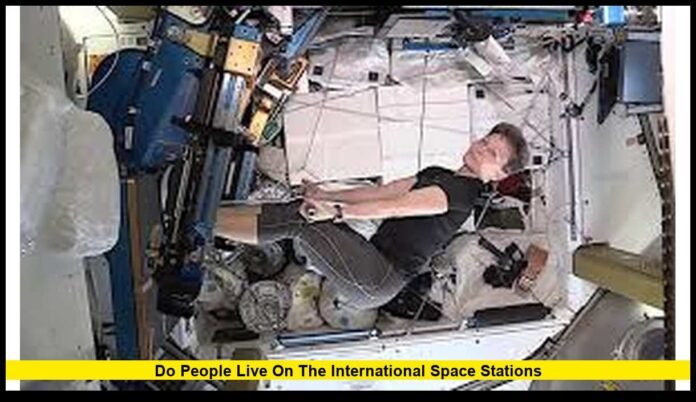

The question “do people live on the international space station” continues to spark curiosity as space exploration becomes more visible and relevant than ever. The answer is yes—humans have been living continuously aboard the International Space Station (ISS) for more than two decades, turning what once seemed like science fiction into a daily reality. But life in orbit is far from ordinary, requiring discipline, innovation, and constant adaptation.
The ISS is not just a place astronauts visit. It is a fully operational home, workplace, and research facility orbiting Earth at an altitude of roughly 250 miles. Since November 2000, it has remained continuously occupied, marking one of the most significant achievements in human spaceflight history.
Want to know what it truly takes to live in space for months at a time? Keep reading to explore how astronauts survive, work, and even relax while circling the planet every 90 minutes.
A Continuous Human Presence Beyond Earth
The International Space Station represents humanity’s longest-running experiment in living off the planet. Since the arrival of its first crew, the station has never been empty. This continuous presence demonstrates not only technological advancement but also international cooperation at an unprecedented scale.
Astronauts from the United States, Russia, Europe, Japan, and Canada rotate in and out of the station, ensuring ongoing operations. Over the years, nearly 300 individuals from different countries have spent time aboard the ISS, contributing to scientific research and station maintenance.
Each new crew builds on the work of those before them. This ongoing chain of missions allows scientists to conduct long-term experiments that would not be possible during short visits.
How Many People Live on the ISS at One Time?
The ISS typically houses about seven astronauts at any given time. This number is carefully managed to balance workload, safety, and available resources such as food, oxygen, and living space.
Crew sizes can temporarily increase during transition periods when new astronauts arrive before the previous crew departs. During these overlaps, the station becomes busier, with more experiments, more coordination, and more shared responsibilities.
In 2026, operations continue with regular crew rotations, ensuring the station remains fully staffed. These rotations are critical for maintaining scientific productivity and keeping systems running smoothly.
What Does a Normal Day in Space Look Like?
Life aboard the ISS follows a highly structured schedule. Astronauts operate on Coordinated Universal Time, which helps align their activities with mission control teams around the world.
A typical day includes:
- Morning planning sessions with ground control
- Scientific experiments across multiple disciplines
- Maintenance and system checks
- Physical exercise to counteract muscle and bone loss
- Personal time for communication and relaxation
Astronauts usually work about 10 hours per day on weekdays, with lighter schedules on weekends. Despite the demanding routine, there is time for personal moments, including looking out at Earth through the station’s windows—a favorite activity among crew members.
Sleeping in Microgravity
Sleeping in space is a unique experience. Without gravity, astronauts do not lie down in a bed. Instead, they sleep in small compartments using sleeping bags that are secured to the wall.
These compartments offer privacy and help maintain a regular sleep schedule. Since there is no natural “up” or “down,” astronauts can position themselves in any orientation.
The station experiences multiple sunrises and sunsets each day due to its rapid orbit. To maintain healthy sleep patterns, astronauts rely on scheduled lighting and strict routines rather than natural daylight.
Eating and Drinking in Space
Food plays an important role in maintaining both physical health and morale. Meals on the ISS are carefully planned, pre-packaged, and designed to last for long durations.
Astronauts eat a variety of foods, including:
- Dehydrated meals that require water
- Thermostabilized dishes that can be heated
- Snacks like nuts, cookies, and fruit products
Because liquids behave differently in microgravity, drinks are consumed from sealed pouches using straws. Crumbs and loose particles are avoided, as they can float into equipment and cause problems.
Meals are often shared, giving astronauts a sense of normalcy and connection despite being far from Earth.
Staying Healthy in Space
Living in microgravity affects the human body in several ways. Muscles weaken, bones lose density, and fluids shift within the body. To counter these effects, astronauts follow strict exercise routines.
The ISS is equipped with specialized exercise machines, including:
- A treadmill with harnesses
- A stationary bike
- A resistance device that simulates weightlifting
Astronauts spend about two hours each day exercising. This routine is essential for maintaining physical health during their mission and ensuring they can readjust to gravity upon returning to Earth.
Medical monitoring is also a key part of daily life. Crew members regularly check vital signs and participate in studies that help researchers understand how the body adapts to space.
Scientific Research in Orbit
The ISS serves as a floating laboratory where scientists conduct experiments that cannot be performed on Earth. Microgravity provides a unique environment for studying physical and biological processes.
Research areas include:
- Human health and disease
- Plant growth and agriculture
- Materials science
- Fluid dynamics
- Earth observation and climate monitoring
These experiments often lead to discoveries that benefit life on Earth. For example, studies conducted on the ISS have contributed to advancements in medicine, including improved understanding of certain diseases and new approaches to treatment.
Spacewalks and External Work
Astronauts occasionally leave the safety of the station to perform spacewalks. These missions are carefully planned and involve extensive preparation.
During a spacewalk, astronauts may:
- Repair or replace equipment
- Install new hardware
- Upgrade systems such as solar panels
Spacewalks can last several hours and require specialized suits that provide oxygen, temperature control, and protection from the harsh environment of space.
These activities are critical for maintaining the station and ensuring it continues to operate effectively.
How Astronauts Travel to and From the ISS
Getting to the ISS requires a journey aboard advanced spacecraft launched from Earth. These spacecraft dock with the station, allowing crew members to transfer safely inside.
Modern missions involve both government-operated and commercially developed spacecraft. This collaboration has increased the frequency of missions and improved access to space.
Once their mission is complete, astronauts return to Earth in the same or a similar spacecraft, landing either on land or in the ocean depending on the mission design.
Challenges of Living in Space
While life on the ISS is carefully managed, it comes with challenges that require constant attention.
Some of the main challenges include:
- Exposure to higher levels of radiation
- Limited medical facilities
- Isolation from family and friends
- Dependence on resupply missions
Astronauts are trained extensively to handle emergencies, including equipment failures and medical situations. The station is equipped with backup systems to ensure safety at all times.
Despite these challenges, astronauts consistently describe the experience as life-changing and deeply rewarding.
Why Humans Live in Space
The decision to live on the ISS is driven by the pursuit of knowledge and the desire to push the boundaries of human capability.
By maintaining a constant human presence in space, scientists can:
- Study long-term effects of space travel
- Test new technologies
- Prepare for missions to the Moon and Mars
The ISS acts as a stepping stone for future exploration. Everything learned aboard the station contributes to the next generation of space missions.
The Future of Life in Orbit
As the ISS approaches the later stages of its operational life, plans are already underway for what comes next. New space stations, including commercial platforms, are being developed to continue human activity in orbit.
These future stations aim to expand opportunities for research, manufacturing, and even tourism. The experience gained from decades of living on the ISS will play a vital role in shaping these new ventures.
Human life in space is no longer experimental—it is becoming routine. The lessons learned today will define how people live beyond Earth in the years ahead.
A Clear Answer to a Simple Question
To revisit the question—do people live on the international space station—the answer remains a definitive yes. Not only do people live there, but they do so continuously, maintaining a presence that has reshaped our understanding of what is possible.
Astronauts aboard the ISS are pioneers of a new frontier. They live in an environment where every action, from eating to sleeping, requires adaptation. Yet their work continues to drive innovation and inspire millions around the world.
Would you take the opportunity to live in space if given the chance? Share your thoughts and keep exploring the incredible future of human spaceflight.