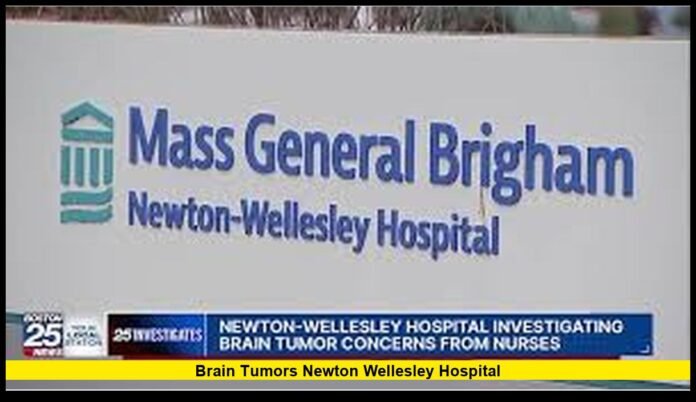

Brain tumors Newton Wellesley Hospital continues to draw attention across the United States as healthcare workers, public health officials, and community members follow developments surrounding a group of nurses who reported benign brain tumor diagnoses after working in the hospital’s maternity unit. More than a year after concerns first became public, investigations conducted by hospital officials and government agencies have not identified evidence linking the reported cases to environmental conditions inside the facility. Even so, the situation remains a closely watched workplace health story.
The issue became one of the most discussed healthcare workplace topics in Massachusetts after several current and former nurses reported diagnoses involving non-cancerous brain tumors. Those reports prompted extensive environmental reviews, occupational health assessments, and inspections by state and federal authorities. While investigators found no environmental cause, many nurses have continued to seek a clearer understanding of why multiple colleagues working in the same area experienced similar medical conditions.
How the Concerns First Emerged
The story began when nurses who had worked on the fifth floor of Newton-Wellesley Hospital started sharing information about their medical diagnoses.
Several staff members learned that colleagues from the same maternity and labor-and-delivery unit had also been diagnosed with benign brain tumors. As more conversations took place among current and former employees, concerns grew regarding the possibility of a common factor connecting the cases.
Healthcare workers spend long hours inside specialized environments. Because of that reality, staff members naturally wanted to know whether anything in their workplace could have contributed to the reported diagnoses.
Questions quickly spread beyond the hospital itself. Community members, patients, healthcare professionals, and labor organizations began seeking information about what investigators might discover.
The reports eventually led hospital leadership to launch a broad review of workplace conditions within the affected unit.
Understanding the Reported Cases
Publicly discussed cases primarily involved benign brain tumors rather than malignant brain cancer.
A benign brain tumor does not contain cancer cells and generally grows more slowly than a malignant tumor. However, benign tumors can still cause significant health challenges depending on their location within the brain.
The nurses involved reported a variety of experiences, including diagnoses discovered after medical evaluations for symptoms such as headaches, vision changes, dizziness, and other neurological concerns.
As additional individuals came forward, the number of publicly known cases increased.
The cases received significant attention because many of the affected individuals had worked in the same hospital area during different periods of their careers.
At the center of the discussion was whether the similarities represented coincidence or something requiring further investigation.
The Fifth-Floor Maternity Unit
Much of the attention focused on Newton-Wellesley Hospital’s fifth-floor maternity department.
The floor includes labor-and-delivery services and areas dedicated to maternal and newborn care.
Healthcare environments contain numerous systems and technologies necessary for patient treatment. These may include monitoring equipment, medical imaging devices used elsewhere in the facility, communication systems, electrical infrastructure, pharmaceuticals, cleaning agents, and specialized medical equipment.
When concerns emerged, investigators examined many of these factors as part of their review process.
The goal was straightforward: determine whether any workplace exposure could reasonably explain the reported health conditions.
Hospital Response to Employee Concerns
Newton-Wellesley Hospital responded by initiating an extensive review involving occupational health experts and environmental testing.
Hospital leaders stated that employee safety and patient safety remained top priorities throughout the process.
The hospital conducted evaluations covering a wide range of potential environmental concerns.
Areas reviewed included:
- Indoor air quality
- Water quality
- Ventilation systems
- Radiation exposure levels
- Cleaning products
- Medical equipment
- Building infrastructure
- Pharmaceutical handling procedures
- Occupational health records
The review involved collecting data from the workplace environment and examining whether any unusual conditions existed within the unit.
Hospital officials later reported that testing did not identify environmental hazards that could explain the reported brain tumor cases.
Those findings became a central part of the continuing discussion.
Environmental Testing Results
One of the most important aspects of the investigation involved environmental testing.
Experts assessed multiple workplace factors that could potentially affect employee health.
Testing examined air samples from the unit to identify potential contaminants. Investigators also reviewed water systems and evaluated ventilation performance.
Radiation measurements received particular attention because healthcare workers and members of the public often have concerns about possible radiation exposure in medical facilities.
The evaluations found radiation levels within accepted safety standards.
Investigators also reviewed whether equipment operating within or near the unit created unusual environmental conditions.
No testing results identified a hazard capable of explaining the reported diagnoses.
These findings remained consistent across multiple reviews.
Occupational Health Assessment
Occupational health specialists played a key role in evaluating the situation.
Their work involved examining workplace conditions, reviewing reported cases, and assessing whether known occupational risk factors existed.
Experts looked at:
- Work locations
- Employment histories
- Duration of employment
- Potential workplace exposures
- Environmental measurements
- Medical information available for review
Occupational health reviews are designed to identify patterns that may suggest a workplace connection.
In this case, specialists reported that available evidence did not establish a link between the reported tumors and conditions inside the hospital.
That conclusion aligned with the environmental testing results.
Read More – George W Moran, MD: Columbia’s Leading Urologist Redefining BPH Care and Surgical Education
State Health Officials Become Involved
As public attention increased, Massachusetts health authorities became involved in reviewing the situation.
State officials examined information related to workplace conditions and environmental safety.
Their participation provided an additional level of oversight beyond the hospital’s internal review.
Health officials evaluated testing results and reviewed concerns raised by staff members.
After completing their work, state investigators reported that they did not find evidence connecting the reported brain tumors to environmental conditions within the maternity unit.
The state review reinforced conclusions already reached through occupational health evaluations and environmental testing.
For many observers, independent government involvement added credibility to the investigative process.
Federal Workplace Safety Review
Federal workplace safety authorities also reviewed the matter.
Their involvement focused on determining whether workplace conditions violated safety standards or presented risks to employees.
Federal investigators examined available information and reviewed workplace conditions associated with the concerns.
The review did not identify environmental factors responsible for the reported cases.
As a result, the findings from federal authorities generally matched those reached by state officials and hospital investigators.
The consistency among these reviews became one of the most significant developments in the case.
Why the Investigation Attracted National Attention
The story reached audiences far beyond Massachusetts.
Healthcare workers across the country followed developments because the reports involved employees working in a hospital setting.
Hospitals are trusted institutions where staff dedicate their careers to caring for others. When concerns emerge regarding employee health, they naturally generate widespread interest.
Many healthcare professionals wanted to understand:
- Whether a workplace hazard existed
- How the investigation was being conducted
- What testing methods were used
- Whether similar concerns had appeared elsewhere
- What lessons other healthcare facilities could learn
The situation also highlighted the challenges associated with investigating possible disease clusters.
What Is a Disease Cluster?
A disease cluster occurs when more cases of a particular illness appear within a group than might normally be expected.
Clusters can occur in workplaces, schools, neighborhoods, or communities.
When investigators evaluate a potential cluster, they examine several factors.
These include:
| Factor | Purpose |
|---|---|
| Number of cases | Determines whether cases exceed expectations |
| Type of illness | Evaluates medical similarities |
| Time period | Identifies possible patterns |
| Location | Examines common environments |
| Potential exposures | Reviews environmental factors |
| Demographics | Considers age and population characteristics |
Investigations often take considerable time because researchers must separate coincidence from evidence-based connections.
Many reported clusters ultimately do not reveal a single identifiable cause.
That reality can make findings difficult for affected individuals who continue searching for answers.
Continuing Questions from Nurses
Although investigations found no environmental cause, some nurses have continued seeking additional information.
For affected employees, the issue remains deeply personal.
Many spent years working in the same unit and developed close professional relationships with colleagues.
Learning that multiple coworkers experienced similar diagnoses naturally raised concerns.
Some nurses have stated publicly that they want complete transparency and a thorough understanding of every factor reviewed during the investigations.
Their concerns have kept public attention focused on the story even after multiple reviews concluded.
The desire for clarity remains a major part of the ongoing conversation.
Role of Labor Organizations
Labor organizations representing nurses have also remained engaged.
Union representatives have emphasized the importance of employee safety and independent review.
Their involvement has centered on ensuring workers receive clear information regarding investigation methods and findings.
Labor groups often play a significant role in workplace health discussions because they advocate directly for employees who may have concerns about safety.
In this situation, union representatives have continued supporting nurses who seek further explanations regarding the reported diagnoses.
Impact on Hospital Staff
The situation has had a lasting emotional effect on many employees.
Questions involving personal health can create uncertainty even when investigations identify no workplace hazard.
Staff members have spoken about concerns regarding colleagues, workplace trust, and long-term health monitoring.
Healthcare professionals routinely work in high-pressure environments. Additional worries regarding health issues can add emotional strain to an already demanding profession.
Hospital leaders have emphasized ongoing support for affected employees throughout the process.
Maintaining open communication has remained an important objective as discussions continue.
Patient Safety and Community Concerns
Patients and local residents also paid close attention to developments.
Many families receive maternity care and newborn services at Newton-Wellesley Hospital each year.
As concerns became public, some community members wondered whether patient safety might also be affected.
Investigators addressed those concerns through environmental testing and workplace reviews.
The findings reported by hospital officials and government agencies did not identify conditions posing a risk to patients or visitors.
Those conclusions helped reassure many families who rely on the hospital for care.
Current Status in 2026
As of June 2026, the latest confirmed information indicates that investigations conducted by hospital officials, occupational health experts, state health authorities, and federal workplace safety agencies have not found evidence linking the reported benign brain tumors to environmental conditions within Newton-Wellesley Hospital.
The publicly discussed cases continue to involve nurses associated with the hospital’s fifth-floor maternity unit.
No government agency has announced findings establishing a workplace cause.
At the same time, some nurses and labor representatives continue to seek additional answers regarding the diagnoses.
The story remains significant because it highlights the importance of workplace health monitoring, employee communication, and thorough investigation whenever unusual health concerns arise.
Why the Story Remains Important
The discussion surrounding brain tumors Newton Wellesley Hospital extends beyond a single facility.
It raises broader questions about how healthcare organizations respond when employees report serious medical conditions.
The case demonstrates the value of:
- Environmental testing
- Occupational health reviews
- Government oversight
- Workplace transparency
- Employee engagement
- Public communication
Healthcare workers devote their careers to protecting others. When questions arise regarding their own health, comprehensive reviews become essential.
The investigations completed so far have not identified an environmental cause, but the story continues to serve as an important example of how hospitals and regulators respond to employee concerns.
For healthcare professionals nationwide, the situation underscores the need for ongoing attention to workplace safety, open communication, and evidence-based investigations whenever health issues emerge within a workforce.
As new information becomes available, many healthcare workers and community members will continue following developments and sharing their perspectives on this closely watched case.