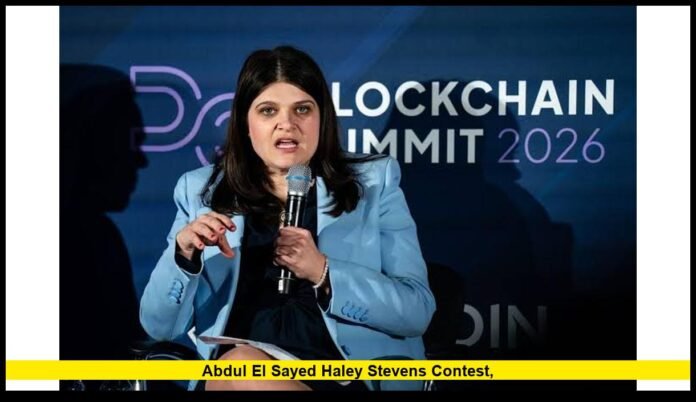

The Abdul El Sayed Haley Stevens contest has become one of the most significant Democratic primary races of the 2026 election cycle. Michigan voters will decide on August 4 which candidate will represent the Democratic Party in the race for the U.S. Senate seat being vacated by retiring Sen. Gary Peters. The winner will move on to face Republican nominee Mike Rogers in what is expected to be one of the nation’s most competitive Senate elections.
As Election Day approaches, both campaigns have intensified their efforts across Michigan. Television advertisements, candidate forums, debates, grassroots organizing, and early voting have kept the race in the national spotlight. The contest also reflects broader discussions within the Democratic Party about healthcare, economic policy, campaign financing, labor, manufacturing, and the best strategy for winning statewide elections.
Why the Michigan Senate Race Is So Important
Michigan remains one of the country’s premier battleground states. In recent election cycles, statewide races have often been decided by narrow margins, making every major contest closely watched by political leaders across the United States.
The retirement of Sen. Gary Peters created an open Senate seat, immediately drawing attention from Democrats and Republicans alike. Open-seat races are often more competitive because no incumbent is seeking reelection, giving candidates an opportunity to present new leadership to voters.
Control of the U.S. Senate could once again depend on results from a handful of swing states, and Michigan is widely viewed as one of the most important among them. That reality has attracted significant campaign activity, national attention, and increased voter engagement throughout the state.
Who Is Abdul El-Sayed?
Dr. Abdul El-Sayed is a physician, epidemiologist, and former executive director of the Wayne County Department of Health, Human and Veterans Services. He first gained statewide recognition during his campaign for Michigan governor in 2018 and has remained active in public policy and Democratic politics since then.
His Senate campaign has focused heavily on progressive policy proposals that he says would improve the lives of working families throughout Michigan.
Among his major priorities are:
- Expanding access to healthcare
- Supporting Medicare for All
- Lowering prescription drug costs
- Increasing affordable housing
- Strengthening labor protections
- Addressing climate change
- Reducing the influence of large political donors
El-Sayed frequently speaks about making healthcare more affordable and ensuring economic opportunities reach communities across both urban and rural Michigan.
Who Is Haley Stevens?
Haley Stevens currently serves as a member of the U.S. House of Representatives from Michigan. Before entering Congress, she worked on the federal effort to help stabilize the American automotive industry during the financial crisis.
That experience continues to shape much of her Senate campaign.
Stevens has emphasized policies that support:
- American manufacturing
- Auto industry investment
- Workforce development
- Economic growth
- Job creation
- Supply chain security
- Bipartisan cooperation
Her campaign argues that experience in Congress and knowledge of federal economic policy make her well prepared to serve in the Senate.
A Two-Candidate Race After a Major Change
The Democratic primary initially included three well-known candidates. Along with Stevens and El-Sayed, state Sen. Mallory McMorrow also sought the nomination.
The race changed considerably after McMorrow ended her campaign in July. Her departure narrowed the field and placed greater attention on the remaining two candidates.
Political observers immediately shifted their focus toward undecided voters and supporters who had previously backed McMorrow. Their decisions could influence the final outcome in a closely contested election.
Read More – Michigan Primary Election 2026 Heats Up as Governor and Senate Races Transform the Political Landscape
Healthcare Remains a Central Issue
Healthcare continues to separate the candidates in meaningful ways.
Abdul El-Sayed has consistently advocated for Medicare for All and broader reforms designed to provide universal healthcare coverage. He argues that Americans should not struggle to afford medical care or prescription medications.
Haley Stevens supports expanding healthcare access while strengthening existing programs. She has discussed lowering healthcare costs and protecting coverage without replacing the current system with a single-payer model.
The different approaches have become one of the clearest policy contrasts throughout the campaign.
Manufacturing and Michigan’s Economy
Manufacturing plays a vital role in Michigan’s economy, making jobs one of the most discussed issues in the campaign.
Stevens often highlights her work supporting the automotive industry and argues that continued investment in advanced manufacturing will create high-quality jobs for future generations.
She also emphasizes workforce training and domestic production as key priorities.
El-Sayed agrees that manufacturing remains essential but places additional emphasis on increasing wages, supporting organized labor, improving workplace protections, and reducing economic inequality.
Although both candidates support Michigan workers, they present different approaches to strengthening the state’s economy.
Labor Support and Union Issues
Michigan has a long history of organized labor, making union support an important issue during statewide elections.
Both campaigns have expressed support for workers’ rights and collective bargaining.
Stevens points to her congressional record involving manufacturing legislation and labor initiatives.
El-Sayed has emphasized broader workplace reforms while encouraging stronger protections for employees across multiple industries.
Union households remain an influential voting bloc that both candidates continue working to reach.
Campaign Spending Becomes a Major Talking Point
Financial support and outside political spending have become recurring topics throughout the race.
Millions of dollars have been spent on advertising by outside organizations seeking to influence Democratic primary voters.
El-Sayed has repeatedly argued that wealthy interests and independent political groups have too much influence in American elections.
Stevens has maintained that support from Democratic organizations reflects confidence in her ability to win a difficult statewide race.
The issue has appeared frequently during debates, interviews, and campaign appearances.
Foreign Policy Discussions
Foreign policy has also received attention during the campaign, particularly regarding U.S. policy in the Middle East.
El-Sayed has called for changes in certain aspects of American foreign policy while discussing humanitarian concerns.
Stevens has defended her congressional record and expressed continued support for the U.S.-Israel relationship.
Although foreign policy is not traditionally the top issue in Michigan Senate races, it has generated significant discussion among Democratic voters during this campaign.
Candidate Debates Highlight Key Differences
The televised debates offered voters an opportunity to compare both candidates side by side.
Several major topics dominated the discussions:
- Inflation
- Healthcare
- Immigration
- Manufacturing
- Childcare
- Foreign policy
- Campaign financing
- Federal spending
Both candidates defended their records while outlining different priorities for the future.
The debates remained focused on policy differences rather than personal attacks, allowing voters to evaluate each candidate’s proposals before casting ballots.
Campaign Strategies
Each campaign has adopted a different approach during the final weeks before the primary.
Stevens has emphasized her congressional experience, economic record, and ability to appeal to a broad coalition of Democratic and independent voters.
She continues holding campaign events across Michigan while highlighting manufacturing, infrastructure, and economic growth.
El-Sayed has focused heavily on grassroots organizing, volunteer engagement, community events, and direct voter outreach.
His campaign argues that building enthusiasm among Democratic voters will strengthen the party heading into November.
What Polling Has Shown
Public opinion surveys released during July have generally shown a competitive Democratic primary.
Some polling has placed Haley Stevens ahead entering the final stretch of the campaign, although undecided voters and turnout remain important factors.
Michigan elections have frequently produced close results, making early voting participation and Election Day turnout especially significant.
Campaigns continue investing substantial time and resources in reaching voters throughout the state rather than relying solely on polling numbers.
Key Differences Between the Candidates
| Issue | Abdul El-Sayed | Haley Stevens |
|---|---|---|
| Background | Physician and public health leader | U.S. Representative |
| Healthcare | Medicare for All | Expand existing programs |
| Economy | Wage growth and affordability | Manufacturing and job creation |
| Campaign Finance | Reduce outside influence | Focus on broad Democratic support |
| Political Style | Progressive grassroots campaign | Experienced congressional leadership |
These differences provide Democratic voters with two distinct visions for representing Michigan in the U.S. Senate.
The Importance of Early Voting
Early voting has become an increasingly important part of Michigan elections.
Campaign volunteers from both sides have worked to encourage supporters to vote before Election Day, helping campaigns identify remaining undecided voters and focus outreach efforts.
Community events, phone banking, digital advertising, and neighborhood canvassing have intensified during the closing weeks of the campaign.
What Happens After the Primary
Once Democratic voters select their nominee, attention will quickly shift to the general election.
Republican nominee Mike Rogers is already preparing for the statewide campaign, ensuring that the Democratic winner will have little time before facing another competitive race.
National political organizations are expected to continue investing heavily in Michigan because the Senate contest could influence the balance of power in Washington.
For that reason, both Democratic candidates have argued throughout the campaign that they are the strongest choice to compete successfully in November.
What Michigan Voters Are Considering
As voters prepare to cast their ballots, several questions remain central to the election:
- Which candidate has the strongest plan for Michigan’s economy?
- Who can best protect manufacturing jobs?
- What healthcare approach will benefit Michigan families?
- Which candidate is most likely to win the general election?
- How should campaign financing influence political races?
- Which vision best reflects the future of the Democratic Party?
The answers to those questions will help determine the Democratic nominee.
Final Days Before Election Day
The final stretch of the campaign has featured increased advertising, additional campaign appearances, volunteer outreach, and continued discussions of the major issues facing Michigan.
Both Abdul El-Sayed and Haley Stevens have emphasized affordability, economic opportunity, and protecting the interests of Michigan residents, even as they continue presenting different policy priorities.
With national attention focused on Michigan, the Democratic primary has become one of the defining races of the 2026 election season.
The outcome will shape not only the state’s Senate representation but also one of the country’s most closely watched general election contests later this year.
What are your thoughts on the Abdul El Sayed Haley Stevens contest? Share your opinion in the comments and follow the latest developments as Michigan voters prepare to make their decision.