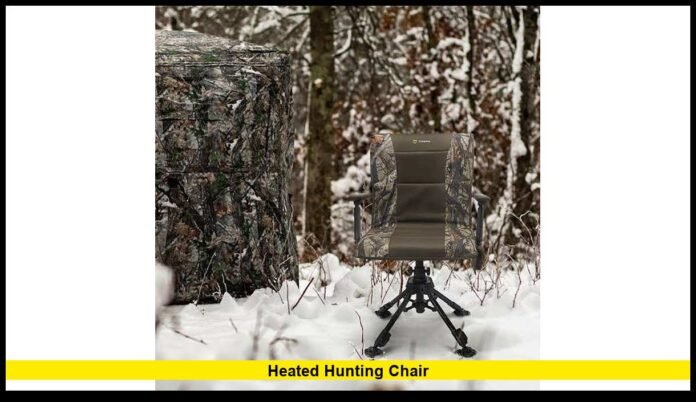

A heated hunting chair is becoming an attractive option for hunters who spend long hours waiting in cold outdoor conditions. During late-season hunts, sitting still in a ground blind or on exposed terrain can make even a well-prepared hunter uncomfortable. A chair with built-in heating technology may help provide warmth directly through the seat or backrest, making extended hunting sessions more manageable.
Today’s hunting chairs are designed with more than basic seating in mind. Depending on the model, they may include rechargeable heating systems, adjustable temperature controls, padded seats, folding frames, swivel mechanisms, height-adjustable legs, and wide feet designed for greater stability. These features are intended to make outdoor seating more comfortable while maintaining the practical requirements of hunting equipment.
For hunters who spend several hours in one location, choosing the right chair can be an important part of preparing for cold weather. A comfortable seat, reliable battery performance, and a quiet design may help reduce distractions during long periods of waiting.
However, heated chairs are not all alike. Some are lightweight and designed for easy transportation, while others are larger and built primarily for ground-blind use. Understanding the available features can help buyers choose a chair that matches their hunting style, terrain, and budget.
What Makes a Heated Hunting Chair Different?
A heated hunting chair combines outdoor seating with an electrically powered warming system. Heating elements are usually incorporated into the seat, backrest, or both. When connected to a compatible battery, the elements generate warmth that can be adjusted through built-in controls.
Unlike ordinary hunting chairs, heated models provide localized warmth without requiring hunters to place a separate heating cushion on the seat. This integrated design may be more convenient for people who regularly hunt during colder months.
Many models are also designed specifically for hunting environments. Camouflage fabric, quiet rotation, adjustable legs, folding frames, and padded backrests may help make them more suitable for use in ground blinds and other outdoor locations.
Some chairs provide heating only beneath the seat, while others offer additional warmth through the backrest. Models with multiple heating zones may allow hunters to adjust different areas independently, depending on the available features.
The overall purpose is to combine seating comfort, convenient movement, and additional warmth in a portable outdoor chair.
Why Cold-Weather Hunters Are Interested in Heated Chairs
Hunting often requires patience, particularly when pursuing deer or other wildlife during colder seasons. Hunters may arrive at their location before daylight and remain seated until movement begins. While warm clothing is essential, staying comfortable can still be challenging when the body remains inactive for long periods.
Cold seats, damp ground, wind exposure, and limited movement can contribute to discomfort. A heated chair may provide another layer of comfort by warming the areas of the body that come into contact with the seat.
The growing interest in heated outdoor seating is connected to several practical advantages.
- Additional warmth: Heating elements provide localized warmth through the seating surface.
- Improved sitting comfort: Padding and heating may make extended periods of sitting more comfortable.
- Reduced need for separate accessories: An integrated heating system may eliminate the need to carry an additional heated seat pad.
- Adjustable heat: Users can select different temperature settings according to personal comfort and conditions.
- Convenient movement: Rotating chairs allow hunters to change their viewing direction while remaining seated.
- Better adaptability: Adjustable legs may help position the chair on different surfaces.
- Easier transportation: Folding frames and carrying straps may make some models easier to move and store.
These advantages may be particularly relevant for hunters who prefer stationary hunting rather than frequently walking through the woods. A chair that provides warmth and comfortable seating may help make a long hunting session more enjoyable.
How Heated Hunting Chairs Generate Warmth
Heated hunting chairs generally use electrical heating elements that are installed beneath the fabric or within designated heating panels. These components produce heat when connected to an appropriate power source.
The heating system is commonly controlled through a button, switch, or electronic control unit. Depending on the model, hunters may be able to select different heating levels.
Heating Zones and Coverage
Heating coverage varies by chair.
Some models warm only the seat, while others include heating elements in the backrest. Seat heating can help reduce the discomfort associated with sitting on a cold surface, while back heating may provide additional warmth during extended periods of inactivity.
Models featuring multiple heating zones may offer more flexibility because the user can adjust the warmth in different areas. However, heating coverage should be considered alongside battery capacity because operating more heating zones may affect power consumption.
Temperature Adjustment
Multiple temperature settings allow users to adjust the heating system as conditions change.
Hunters may prefer a higher setting when first settling into a cold blind and then lower the temperature after becoming comfortable. Lower settings generally require less energy and may allow the battery to operate for a longer period.
The controls should also be easy to reach. A chair that requires excessive movement to change the temperature may be less convenient during a hunting session.
Rechargeable Power Systems
Battery-powered heating is a common feature in heated outdoor chairs. Some products include a rechargeable battery pack, while others require users to provide a compatible power bank.
Battery capacity and electrical compatibility are important. Buyers should check the required voltage, connection type, battery specifications, and charging instructions before purchasing an additional power source.
A larger battery may offer greater capacity, but it must still be compatible with the chair’s heating system.
Features That Matter When Buying a Heated Hunting Chair
The best chair for one hunter may not be the best option for another. Someone who hunts inside a ground blind may prioritize rotation and adjustable height, while a hunter who walks several miles may focus on weight and portability.
1. Heating Performance
Heating performance should be one of the first features to evaluate.
Check whether the chair heats the seat, backrest, or both. Consider whether it offers multiple heating zones and adjustable temperatures.
The amount of warmth needed depends on the weather, personal comfort, clothing, and the length of the hunting session. A chair with adjustable heating may be more versatile than one offering only a single heat level.
2. Battery Runtime
Battery runtime determines how long the heating system can operate before requiring another charge.
Manufacturers may advertise maximum runtime estimates, but these figures often depend on the selected heat setting. A chair operating on low heat may last substantially longer than one operating on high heat.
Hunters should consider the length of their usual hunting sessions and whether they can recharge the battery between outings.
3. Seat Comfort
A heated chair should also provide comfortable seating when the heating system is turned off.
Seat width, padding, backrest support, armrests, and overall construction may influence comfort during long sessions. Some hunters prefer a firm seat, while others may want thicker padding.
The chair should also fit the hunter’s body and clothing. Bulky cold-weather clothing can affect how much space is needed.
4. Swivel Functionality
A swivel mechanism can be useful when hunting inside a blind.
The ability to rotate may allow hunters to monitor different directions without lifting or repositioning the chair. A well-designed swivel mechanism may also help reduce unnecessary movement.
Hunters should check the mechanism for stability and noise. Although many products are marketed as quiet, the actual noise level may depend on maintenance, assembly, dirt, wear, and how the chair is used.
5. Adjustable Seat Height
Adjustable legs can help hunters position the chair according to their surroundings.
A lower seating position may work better in some ground blinds, while a higher chair may make sitting down and standing up more convenient. Adjustable legs can also help accommodate uneven ground.
The adjustment mechanism should lock securely into position. Hunters should check that all legs are stable before using the chair.
6. Stability on Different Surfaces
A stable chair is essential for outdoor use.
Some hunting chairs feature wider feet, anti-sink pads, or adjustable foot sections designed to help distribute weight. These features may be useful on soft ground or uneven terrain.
However, the surface beneath the chair still matters. Hunters should avoid placing a chair on unstable ground and should check for wobbling before sitting.
7. Weight and Portability
A heated chair may be heavier than a traditional hunting stool because of the battery, heating components, padding, and additional frame features.
Hunters who travel by vehicle and hunt near their parking area may not be as concerned about weight. Those who walk long distances should consider a lighter folding chair.
A carrying strap or storage bag may also make transportation easier.
8. Weight Capacity
Buyers should check the manufacturer’s weight rating before purchasing.
The chair’s capacity depends on its frame, legs, joints, swivel mechanism, and overall construction. Exceeding the published limit may compromise stability and safety.
The weight rating should be considered alongside seat dimensions and the chair’s overall sturdiness.
9. Fabric Durability
Hunting chairs may encounter mud, rain, snow, dirt, leaves, and rough handling.
Durable fabric, reinforced seams, sturdy padding, and a strong frame may help the chair withstand regular outdoor use. Some models also feature removable covers that may make cleaning easier.
Buyers should check whether the fabric can be cleaned safely without damaging heating components.
Types of Heated Hunting Chairs Available
Heated hunting chairs come in several different configurations. Understanding the design differences can help buyers select the most practical option.
Compact Folding Heated Chairs
Compact folding models are generally designed for portability.
They may be suitable for hunters who need to carry their equipment into the woods or travel between different hunting locations. These chairs may have simpler frames and fewer accessories than larger models.
The main advantage is transportation. The trade-off may be less padding, fewer adjustment features, or a smaller seating area.
Swivel Heated Hunting Chairs
Swivel models allow the user to rotate while seated.
These chairs may be particularly useful inside ground blinds where hunters need to monitor different windows or change direction. Some designs feature adjustable legs and wider feet to improve positioning.
A swivel chair may provide greater convenience, but the mechanism should be sturdy and maintained properly.
Dual-Zone Heated Chairs
Dual-zone models typically provide heating in both the seat and backrest.
This design may offer more comprehensive warmth during extended cold-weather sessions. Depending on the chair, users may be able to control heating zones separately.
Hunters should compare the heating coverage with the battery requirements because additional heating zones may affect runtime.
Low-Profile Heated Chairs
Low-profile chairs are designed to provide a lower seating position.
They may be useful inside compact ground blinds or other setups where a lower chair is preferred. However, the seating height should still be comfortable for the hunter and appropriate for the blind’s windows.
Oversized Heated Chairs
Oversized heated chairs may feature wider seats, thicker padding, armrests, and larger backrests.
These designs may be comfortable for hunters who remain seated for several hours, but they may be less convenient to transport and may not fit inside smaller blinds.
Popular Heated Hunting Chair Brands and Models
Several outdoor equipment brands offer heated seating designed for hunting, camping, and other cold-weather activities. Product designs and specifications can differ between versions, so buyers should compare the exact model rather than relying only on the brand name.
TIDEWE Heated Hunting Chairs
TIDEWE offers hunting equipment that includes heated seating options designed for outdoor use. Depending on the model, features may include battery-powered heating, multiple heat settings, adjustable legs, swivel functionality, folding construction, and camouflage designs.
These chairs may appeal to hunters who want an integrated heating system combined with adjustable seating and portability.
Before buying, compare the battery requirements, heating coverage, weight, seating dimensions, weight capacity, and accessories included with the particular model.
KEMIMOTO Heated Hunting Chairs
KEMIMOTO heated seating options may appeal to hunters looking for a combination of warming features and rotating seating.
Certain designs include heating for the seat and backrest, adjustable heating controls, and a swivel mechanism. These features may be useful for hunters who spend extended periods inside a ground blind.
The most important specifications to review include heating zones, battery requirements, runtime, chair dimensions, and overall weight.
SUNNYFEEL Heated Outdoor Chairs
SUNNYFEEL offers outdoor seating designs that may be suitable for hunters looking for portable chairs with heating features.
Some models focus on folding construction, padded seating, and heating coverage across the seat and backrest. A lower seating design may also be useful in certain ground-blind configurations.
Hunters should consider the chair’s height, portability, and dimensions before selecting it for a particular blind.
REDCAMP Heated Hunting Chairs
REDCAMP outdoor seating options may be worth comparing for hunters interested in heated seating and swivel functionality.
Depending on the model, features may include multiple heat settings, a rotating seat, folding construction, and battery-powered heating.
Buyers should check whether the required battery is included and confirm the chair’s weight capacity, heating coverage, and compatibility with the intended power source.
KUMA Heated Outdoor Seating
KUMA offers outdoor chairs designed around comfort, padding, and recreational use. Some heated seating designs may be suitable for hunting, camping, fishing, or outdoor sporting events.
Larger padded chairs may provide greater comfort during long sitting sessions, but they may not be ideal for hunters who need compact equipment or must walk considerable distances.
The chair’s dimensions, carrying weight, and suitability for a hunting blind should be considered before purchasing.
Heated Hunting Chair vs. Regular Hunting Chair
The choice between a heated chair and a traditional hunting chair depends on the user’s priorities.
| Feature | Heated Hunting Chair | Regular Hunting Chair |
|---|---|---|
| Heating | Built-in electrical heating | No built-in heating |
| Power source | Battery or compatible power bank | Not required |
| Cold-weather comfort | Provides localized warmth | Depends on clothing and seat insulation |
| Weight | May be heavier | Often lighter |
| Price | Usually higher | Often more affordable |
| Maintenance | Electrical components and batteries require care | Generally simpler |
| Portability | Depends on frame and battery design | Often easier to transport |
| Comfort features | May include heated padding and adjustable controls | Varies by design |
| Long hunting sessions | May provide additional comfort | Depends on seat quality |
A traditional chair may be a better choice for hunters who want simple equipment, lower cost, and easy transportation. A heated model may offer more comfort for people who regularly hunt during colder weather.
The decision should be based on the type of hunting, duration of each session, weather conditions, and how much equipment the hunter wants to carry.
Who Can Benefit Most From a Heated Hunting Chair?
Late-Season Deer Hunters
Late-season deer hunting can involve colder temperatures and long periods of inactivity.
Hunters may spend several hours waiting in a blind or another stationary location. A heated chair may provide additional comfort during these sessions, especially when the seating surface becomes cold.
Ground-Blind Hunters
Ground-blind hunters may benefit from chairs that combine heating with adjustable legs and swivel seating.
The ability to rotate while seated can help hunters monitor different directions without repeatedly standing up. Adjustable height may also help position the chair according to the blind’s layout.
Hunters Who Prefer Long Sits
Hunters who remain in one location for several hours may find heated seating particularly useful.
A comfortable chair may help reduce the need to shift constantly or take breaks because of discomfort. The heating system may also provide additional warmth when the hunter is not moving around.
Hunters Who Want More Comfortable Equipment
Comfort is an important consideration when preparing for extended outdoor activities.
A heated chair with padding, back support, and adjustable positioning may provide a more comfortable seating experience than a basic stool or hard chair.
Camping, Fishing, and Outdoor Recreation
Heated outdoor chairs may also be used for camping, fishing, outdoor sporting events, photography, and other recreational activities.
The versatility of a chair may make it more attractive to buyers who want equipment that can be used beyond hunting season.
How to Select the Right Heated Hunting Chair
Choosing the right chair requires matching its features to your typical hunting conditions.
Choose According to Your Hunting Environment
A chair used inside a ground blind may need a different design from one used on open terrain.
Ground-blind hunters may prioritize swivel functionality, adjustable height, and compact dimensions. Hunters on uneven ground may prefer adjustable legs and wider feet.
If the hunting location requires a long walk, portability and overall weight should become major purchasing considerations.
Match Battery Runtime to Your Hunting Schedule
Consider how long you usually remain in the field.
Short hunting sessions may require less battery capacity, while extended morning or full-day hunts may require a chair with longer runtime or an additional compatible battery.
Do not rely exclusively on the maximum runtime advertised by the manufacturer. Consider the temperature setting you are likely to use and the conditions in which the chair will operate.
Prioritize Comfort Before Extra Features
A chair may have heating, swivel functionality, adjustable legs, armrests, and other features, but it should still provide comfortable seating.
Compare seat width, padding, backrest support, and overall dimensions. If possible, evaluate the seating position before purchasing.
Consider Transportation
A chair that is comfortable inside a blind may be inconvenient if it is too heavy to carry.
Hunters who travel on foot should compare the chair’s weight, folding size, carrying strap, and storage options. A compact design may be more practical for longer walks.
Check the Total Cost
The price of a heated chair may not include every component needed for operation.
Some models require a separate battery or power bank. Buyers should include these accessories in their budget when comparing products.
The cost of replacement batteries, charging accessories, and maintenance may also be worth considering.
Understanding Heated Chair Battery Life
Battery runtime is an important factor for hunters who plan to remain seated for several hours.
The operating time depends on the battery’s capacity, selected temperature setting, heating coverage, outdoor temperature, and condition of the battery.
Higher heat settings generally require more electrical energy. This means that a chair operating at maximum heat may use its battery more quickly than one operating at a lower setting.
Why Advertised Runtime May Differ
Manufacturers may publish maximum runtime estimates based on specific test conditions.
Those estimates may not reflect every hunting environment. Extremely cold temperatures, higher heat settings, multiple heating zones, or an aging battery may affect actual operating time.
Hunters should consider advertised runtime as an estimate rather than a guarantee.
Battery Storage and Charging
Rechargeable batteries should be charged according to the manufacturer’s instructions.
Hunters should avoid using damaged batteries, incompatible power sources, or charging equipment that is not recommended for the product.
When storing the chair between hunting seasons, follow the battery’s storage instructions and avoid exposing it to extreme temperatures for extended periods.
Carrying an Additional Power Source
An additional compatible battery may be useful for longer hunting sessions.
Hunters who cannot return to a vehicle or charging location may prefer to have a backup power source available. However, the backup battery must be compatible with the chair’s heating system.
Safety and Proper Use
Heated hunting chairs are designed to provide outdoor comfort, but their electrical and heating components require responsible use.
Inspect the Chair Before Use
Check the chair before every hunting trip.
Inspect the wiring, heating elements, battery connections, frame, legs, swivel mechanism, and fabric. If anything appears damaged, avoid using the chair until the problem has been addressed.
Keep Electrical Components Protected
Moisture may damage batteries, wiring, and heating controls.
Check the chair’s weather-resistance information before using it in rain or snow. Protect electrical components according to the manufacturer’s instructions.
Follow Charging Instructions
Use the recommended charging equipment and follow the battery manufacturer’s guidance.
Do not attempt to modify the heating system or repair damaged electrical components without appropriate knowledge.
Check Stability Before Sitting
Place the chair on a stable surface and make sure the legs are properly positioned.
Adjustable legs should be locked securely. Hunters should check for wobbling before sitting, particularly when using the chair on uneven or soft ground.
Use Appropriate Cold-Weather Clothing
A heated chair should be considered an additional comfort feature rather than a replacement for proper cold-weather clothing.
Hunters should still prepare for changing temperatures, wind, moisture, and prolonged outdoor exposure.
Maintaining a Heated Hunting Chair Throughout the Season
Regular maintenance can help keep a heated chair functional and comfortable throughout hunting season.
Clean the Seat After Hunting
Outdoor chairs can collect mud, leaves, dust, and other debris. Remove dirt after each outing and follow the manufacturer’s cleaning instructions.
Avoid using cleaning methods that could damage the fabric, heating elements, wiring, or battery connections.
Dry the Chair Before Storage
If the chair becomes damp, allow it to dry thoroughly before storing it.
Moisture may affect the fabric, frame, electrical connections, or other components. Proper drying is particularly important after hunting in rain, snow, or wet conditions.
Inspect the Frame and Swivel System
Check the legs, joints, adjustment points, and swivel mechanism regularly.
Loose hardware or worn components may affect stability and create unwanted noise. Address any problems before using the chair again.
Protect the Battery
Store the battery according to the manufacturer’s recommendations.
Avoid leaving rechargeable batteries exposed to extreme temperatures for extended periods. Check the battery and connections before the next hunting trip.
Use a Storage Bag When Available
A carrying or storage bag may help protect the chair from dirt and damage when it is not in use.
Keeping the chair, battery, charging cables, and other accessories together can also make preparation easier before the next trip.
Current Trends in Heated Hunting Chairs
Heated outdoor seating continues to develop as manufacturers combine warmth with practical features for hunting environments.
Several features are increasingly common across the category.
Dual-zone heating: Some chairs provide warmth through both the seat and backrest, offering more coverage than seat-only designs.
Rechargeable heating systems: Battery-powered heating remains a major feature, although batteries may be included with some products and sold separately with others.
Adjustable temperature controls: Multiple heating levels allow users to adjust warmth and manage battery consumption.
Rotating seats: Swivel mechanisms provide more flexibility when monitoring different directions from a stationary hunting position.
Adjustable legs: Height adjustment can help accommodate uneven ground and different blind configurations.
Folding construction: Folding frames, carrying straps, and storage bags make certain models easier to transport.
Improved padding: More comfortable seating surfaces may be useful for hunters who spend several hours in one location.
These features offer more choices for hunters, but they also make product comparisons important. A chair with additional heating zones, a swivel mechanism, and heavier padding may have different portability and battery requirements than a simpler model.
Hunters should focus on the features they will actually use rather than selecting a chair simply because it has the longest feature list.
Are Heated Hunting Chairs Worth Buying?
For hunters who regularly spend long periods sitting in cold weather, a heated chair may be a worthwhile purchase.
The main benefit is additional localized warmth. Instead of relying exclusively on clothing, insulated seating, or separate warming accessories, hunters can use a built-in heating system to warm the seat or backrest.
The added comfort may be particularly appealing during late-season hunting, when temperatures are lower and hunters may remain stationary for several hours.
Other features can add value. Adjustable legs, swivel seating, padded backrests, folding frames, and carrying straps may make a hunting setup more convenient.
However, heated chairs are not essential for every hunter.
Those who walk frequently, move between hunting locations, or prefer minimal equipment may find a lightweight traditional chair more practical. Heated chairs may also require charging, battery care, and additional maintenance.
The value of a heated chair depends on how frequently it will be used, the weather conditions, the duration of hunting sessions, and the hunter’s personal comfort preferences.
For someone who regularly spends hours in a ground blind during cold weather, the additional warmth may justify the cost. For someone who hunts occasionally or spends most of the day moving, a standard chair may be a better fit.
Final Thoughts on Heated Hunting Chairs
A heated hunting chair can make cold-weather hunting more comfortable by combining supportive seating with integrated warmth. Features such as adjustable temperature controls, rechargeable power systems, padded seats, swivel mechanisms, and folding designs may make extended outdoor sessions easier to manage.
The best chair is not necessarily the most expensive or the one with the greatest number of features. Instead, hunters should choose a model that fits their hunting environment, body size, access distance, seating needs, and expected duration of use.
Battery runtime, weight capacity, stability, portability, seat dimensions, and weather-resistance information should all be considered before purchasing.
Hunters who spend long periods in ground blinds may appreciate a heated chair with swivel functionality and adjustable legs. Those who walk long distances may prefer a compact and lightweight design. Others may decide that a traditional hunting chair is sufficient for their needs.
Ultimately, the right seating equipment should provide comfort, stability, and convenience without creating unnecessary complications. A well-selected heated chair may help hunters spend more comfortable time outdoors while remaining focused on the hunting experience.
Frequently Asked Questions About Heated Hunting Chairs
What is a heated hunting chair used for?
A heated hunting chair is used to provide seating and additional warmth during cold-weather outdoor activities. It is particularly useful for hunters who spend extended periods sitting in ground blinds or stationary hunting locations.
How does a heated hunting chair work?
It uses electrical heating elements integrated into the seat, backrest, or both. The heating system is powered by a rechargeable battery or compatible power bank and may offer adjustable temperature settings.
How long does the battery last?
Battery runtime depends on the battery capacity, heat setting, number of heating zones, outdoor temperature, and battery condition. Lower heat settings generally use less energy and may provide longer runtime.
Are batteries included with heated hunting chairs?
Some models include rechargeable batteries, while others require a separate compatible power bank. Buyers should check the product specifications to determine which accessories are included.
Can a heated hunting chair be used in a ground blind?
Yes. Many heated hunting chairs are designed for ground-blind use. Swivel seating, adjustable legs, compact dimensions, and heating features may be particularly useful in this environment.
Are heated hunting chairs comfortable for long hunts?
Comfort depends on the chair’s seat width, padding, backrest support, height, and heating coverage. Models designed for extended sitting may provide additional comfort, but hunters should consider their personal seating preferences.
Do heated hunting chairs make noise?
Some models feature quiet swivel mechanisms and designs intended to reduce noise. However, noise can depend on the chair’s condition, maintenance, assembly, and how it is used.
Are heated hunting chairs waterproof?
Not all heated hunting chairs are waterproof. Buyers should check the manufacturer’s weather-resistance specifications and protect the electrical components from moisture according to the instructions.
Can I use a heated hunting chair without turning on the heat?
Many heated chairs can be used as ordinary chairs when the heating system is switched off. Some designs may also have removable heated components, depending on the model.
What features are most important when buying one?
The most important features include heating coverage, battery runtime, temperature controls, seat comfort, weight capacity, stability, adjustable legs, swivel functionality, portability, and fabric durability.
Are heated hunting chairs worth the investment?
They may be worth the investment for hunters who regularly sit for long periods in cold conditions. Hunters who move frequently or prefer lightweight equipment may find a traditional hunting chair more practical.
Are you planning to use a heated hunting chair this season? Share your favorite features, hunting experiences, or recommendations in the comments, and stay tuned for more cold-weather hunting gear updates.