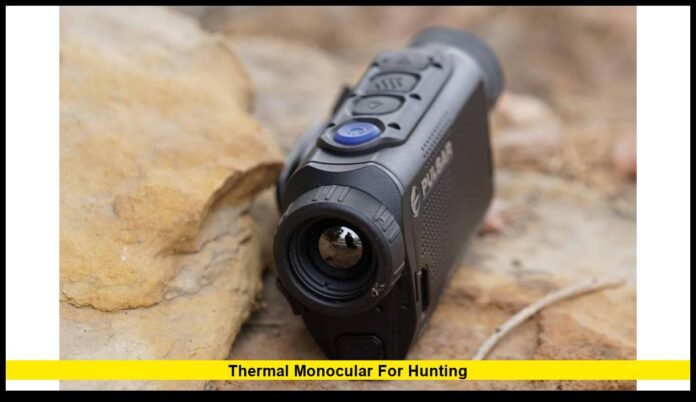

Thermal imaging technology has become an increasingly discussed topic among outdoor enthusiasts, wildlife observers, and hunters looking for better ways to understand their surroundings in low-visibility conditions. A thermal monocular for hunting uses infrared technology to detect heat signatures and display temperature differences, allowing users to observe objects that may be difficult to see with traditional optics. As manufacturers continue introducing more compact devices with improved sensors, sharper displays, and longer battery life, interest in thermal imaging equipment is growing across the outdoor market.
Unlike conventional binoculars or night-vision equipment that relies on visible light or light amplification, thermal monoculars operate by detecting infrared energy. This technology can reveal heat patterns in darkness, but its capabilities are often misunderstood. Understanding how thermal imaging works, what specifications matter, and how regulations affect its use can help consumers make more informed decisions before purchasing thermal equipment.
Key Points Summary
╔════════════════════════════════════════════════════════════════════╗
║ – Thermal imaging detects infrared energy and displays heat differences, allowing observation in darkness without relying on visible light. ║
║ – Sensor resolution, NETD sensitivity, refresh rate, lens design, field of view, and battery performance all influence image quality. ║
║ – Manufacturers’ detection-range claims should not be confused with the ability to recognize or positively identify an object. ║
║ – Thermal monoculars are also used for wildlife observation, search-and-rescue activities, and other outdoor applications. ║
║ – Hunting regulations concerning thermal equipment vary by state, species, season, and activity, making local rules essential. ║
╚════════════════════════════════════════════════════════════════════╝
How Thermal Imaging Technology Works
Thermal imaging cameras use infrared sensors to measure energy emitted by objects. Every object with a temperature above absolute zero emits infrared radiation, although the amount and pattern of energy vary according to temperature and other physical characteristics.
A thermal monocular processes the infrared information collected by its sensor and converts it into an electronic image. Different temperatures are represented through shades of gray or colors, depending on the display palette selected by the user.
For example, a warmer object may appear white in a white-hot setting and black in a black-hot setting. Other palettes may use combinations of yellow, orange, red, purple, or blue to distinguish temperature variations.
The technology does not depend on traditional visible-light illumination. That is why thermal devices can continue displaying heat patterns in complete darkness. Nevertheless, environmental conditions can influence the image. Rain, fog, humidity, temperature changes, and obstacles may affect how much infrared energy reaches the sensor.
Understanding Thermal Sensor Resolution
Sensor resolution is among the most important technical specifications consumers encounter when shopping for thermal equipment. It describes the number of pixels within the infrared sensor itself, not simply the resolution of the screen used to display the image.
Common sensor categories include 256 × 192, 384 × 288, and 640 × 512. Higher-resolution sensors generally capture more thermal information, helping produce more detailed images when other factors are comparable.
A higher pixel count can improve the ability to distinguish shapes and thermal patterns. However, it does not automatically guarantee better performance in every environment. Lens quality, image processing, sensitivity, viewing distance, and the surrounding temperature also influence the final image.
Consumers should be careful when comparing a manufacturer’s sensor resolution with its display resolution. A device may have a high-resolution screen but a lower-resolution thermal sensor. The display can make an image look cleaner or more attractive, but it cannot recreate thermal details that the sensor did not capture.
What NETD Means for Image Quality
NETD stands for Noise Equivalent Temperature Difference. It is commonly expressed in millikelvin, abbreviated as mK, and indicates how sensitive a thermal sensor is to small temperature differences.
Lower NETD values generally indicate better thermal sensitivity. A sensor with a lower NETD rating may be better at displaying subtle differences between an object and its background when temperatures are relatively similar.
This can become particularly relevant during conditions when the landscape and objects within it have similar temperatures. For example, a device may experience different image-quality conditions on a cold evening compared with a warm day when the ground, vegetation, and animals have less pronounced temperature differences.
NETD should not be viewed as the only measure of quality. Sensor resolution, lens aperture, processing technology, display performance, and environmental conditions all contribute to the overall viewing experience.
Refresh Rate and Smooth Image Performance
Refresh rate measures how frequently the thermal image is updated. It is normally expressed in hertz, or Hz.
A higher refresh rate generally produces a smoother image when the device is moved or when objects change position. Lower refresh rates may create a less fluid viewing experience, particularly when scanning or observing movement.
Consumers comparing devices should examine the actual refresh-rate specification and determine whether it meets their expectations for general observation. Marketing descriptions such as smooth imaging or real-time viewing are less useful than a clearly stated technical rating.
Lens Size, Magnification, and Field of View
Thermal monoculars use specialized infrared lenses designed to collect thermal energy. Lens size and optical design influence the viewing experience, including the field of view and the amount of detail presented at different distances.
The field of view describes how much of the surrounding area can be viewed at once. A wider field of view provides a broader image, while a narrower view concentrates on a smaller portion of the scene.
Magnification is another specification that deserves attention. Optical magnification changes the viewing perspective, while digital zoom enlarges the displayed image electronically. Digital zoom may make an object appear larger on the screen, but it does not add new thermal information to the original image.
Consumers should therefore consider the complete optical system rather than focusing exclusively on the magnification number advertised by a manufacturer.
Battery Life and Outdoor Reliability
Battery performance can influence whether a thermal device is practical for extended outdoor use. Different models use internal rechargeable batteries, replaceable batteries, or combinations of battery systems.
A manufacturer may advertise several hours of operation, but real-world battery performance can vary according to temperature, display brightness, recording activity, wireless connectivity, and other settings.
Buyers should check the advertised runtime, charging method, battery replacement options, and availability of compatible accessories. Devices designed with removable batteries may provide additional flexibility, while integrated rechargeable systems can offer convenience and simplified charging.
Cold weather may also affect battery performance, making battery management an important consideration for anyone planning to use electronic equipment outdoors for extended periods.
Image Palettes and Digital Features
Modern thermal monoculars often include multiple viewing palettes. These settings change how thermal information is represented on the screen, allowing users to select a display style they find easier to interpret.
Common palette options include:
- White-hot: Warmer areas appear brighter than cooler surroundings.
- Black-hot: Warmer areas appear darker.
- Color palettes: Temperature differences may be represented using multiple colors.
- Red-highlighted modes: Some devices use a limited color range to emphasize warmer areas.
The availability of different palettes varies by manufacturer and model. Some devices also include image adjustment settings that allow users to modify brightness, contrast, sharpness, or other display characteristics.
Digital features may include photo capture, video recording, internal storage, memory cards, wireless connectivity, and smartphone compatibility. These features can be useful for documenting wildlife observations, reviewing footage, or sharing recorded material.
However, digital features should be evaluated according to their practical value. A simple device with dependable image quality, intuitive controls, and adequate battery performance may be more useful to some consumers than a model packed with features they rarely use.
Thermal Monoculars Versus Traditional Night Vision
Thermal imaging and night vision are often grouped together because both can be used in low-light environments, but they work differently.
Traditional night-vision equipment generally amplifies available light or uses an illumination system to create a visible image. Thermal imaging detects infrared energy and displays differences in heat.
Thermal equipment may reveal a heat signature in darkness without visible-light illumination. Traditional night vision, on the other hand, may provide a more familiar view of surrounding objects when sufficient light or appropriate illumination is available.
The choice between these technologies depends on the intended activity. Thermal imaging is designed around heat detection, while night vision is primarily concerned with improving visibility in dark conditions.
Neither technology eliminates the need for careful observation, appropriate identification, or awareness of environmental hazards.
Can Thermal Imaging See Through Vegetation or Fog?
One common misconception is that thermal equipment can see through trees, walls, thick brush, or every type of weather. Thermal imaging does not work that way.
The sensor detects infrared energy that reaches its lens. If a physical object blocks that energy, the device cannot simply display what is behind the obstruction. Dense vegetation and solid barriers can prevent useful thermal information from reaching the sensor.
Fog, rain, snow, humidity, and atmospheric conditions can also influence performance. The amount of thermal contrast between an object and its surroundings matters as well.
A thermal monocular should be considered an observation device with environmental limitations, not a tool capable of seeing through all obstacles.
Different Applications for Thermal Imaging Equipment
Although thermal imaging is associated with hunting and outdoor activities, the technology has applications across several areas.
Wildlife observers may use thermal equipment to study animals in low-visibility environments. Search-and-rescue personnel may use thermal imaging as part of broader efforts to locate people. Property owners and outdoor professionals may also use thermal technology for certain monitoring tasks where permitted.
Thermal cameras can be used in industrial applications to identify heat patterns, inspect equipment, and detect potential temperature-related problems. In some settings, they can help professionals locate abnormal heat sources that may require additional investigation.
The versatility of thermal imaging is one reason the technology has become more widely available in different price ranges and device formats.
Price, Value, and What Buyers Should Expect
Thermal monoculars are available across a wide range of price points. The cost usually reflects sensor quality, resolution, lens specifications, sensitivity, display technology, battery system, software, construction, and additional features.
Entry-level products may provide basic heat detection and observation capabilities, while more expensive models can offer improved thermal detail, enhanced sensitivity, more sophisticated processing, higher-quality displays, and additional functions.
A higher price does not automatically mean a device is the right choice. Buyers should compare the specifications that matter to their intended application and consider the overall value of the product.
Before purchasing, review the manufacturer’s technical information and look for details about:
- Thermal sensor resolution
- NETD sensitivity rating
- Refresh rate
- Lens specifications
- Field of view
- Display resolution
- Battery capacity and operating time
- Storage and recording features
- Weather resistance
- Warranty coverage
- Customer service and return policies
Reading independent reviews and understanding the differences between advertised specifications can help consumers avoid making decisions based solely on promotional claims.
Legal Restrictions and Responsible Outdoor Use
The legality of thermal imaging equipment for hunting is not uniform across the United States. State wildlife agencies establish rules that can differ according to the species being hunted, the season, the location, and the type of equipment being used.
Some jurisdictions may permit certain thermal devices for specific activities, while others may restrict their use or possession during hunting-related activities. Regulations may also distinguish between wildlife observation, scouting, hunting, and other forms of outdoor activity.
Hunters should check the most recent official regulations for their state before purchasing or carrying thermal equipment for hunting purposes. They should also review any applicable local restrictions and understand the specific circumstances under which the equipment may be legally used.
Responsible use also means recognizing that a thermal image does not provide automatic species identification. A heat signature may represent wildlife, a domestic animal, a person, or another heat-producing object. Thermal equipment should never replace positive identification, situational awareness, or sound safety practices.
What Consumers Should Consider Before Making a Purchase
The thermal imaging market continues to evolve, with manufacturers introducing new sensors, smaller devices, updated image processing, and additional digital features. Buyers may find that product specifications vary substantially even among monoculars that look similar on the outside.
The most useful approach is to evaluate the complete device rather than focusing on one specification. Sensor resolution and thermal sensitivity matter, but so do the lens, display, controls, battery system, durability, and the conditions in which the equipment will be used.
A thermal monocular should also be comfortable to carry and simple enough to operate without unnecessary frustration. A complicated interface, poor battery management, or an uncomfortable viewing experience can reduce the practical value of a device, regardless of its technical specifications.
Consumers should take time to compare multiple models, review warranty terms, and understand local regulations before committing to a purchase.
Final Outlook on Thermal Imaging Technology
Thermal imaging has moved beyond specialized equipment and is now an increasingly accessible technology for outdoor observation, wildlife monitoring, and other applications. Improvements in sensor resolution, thermal sensitivity, image processing, battery systems, and display technology continue to shape the market.
For consumers researching thermal equipment, understanding the technology is more important than simply choosing the model with the longest advertised detection range. A balanced device with dependable image quality, practical features, comfortable operation, and reliable battery performance may provide better value than equipment selected primarily for impressive marketing specifications.
As thermal technology continues to develop, consumers can expect additional improvements in portability, image clarity, connectivity, and overall usability. Responsible use, realistic expectations, and awareness of applicable regulations remain essential considerations.
Stay tuned for more updates on outdoor technology, hunting equipment, and the latest developments in thermal imaging, and share your thoughts in the comments.