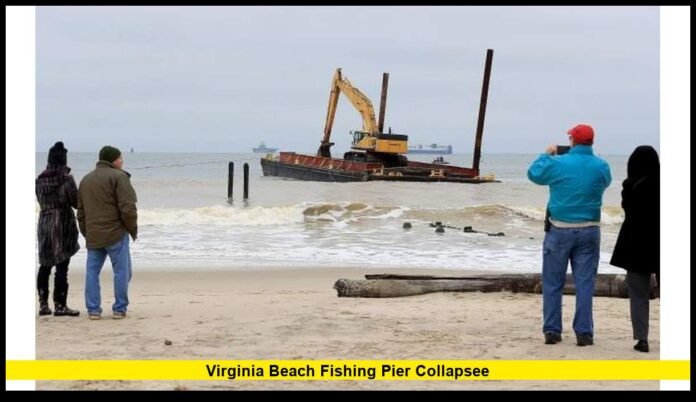

The Virginia Beach fishing pier collapse during the Thanksgiving coastal storm has left a major section of the city’s historic Oceanfront attraction broken apart, with powerful waves tearing away the pier’s outer end and scattering wooden debris across nearby beaches. The damage occurred on Thursday, November 26, as severe coastal weather brought high winds, rough surf, heavy rain, and flooding to parts of Virginia’s Hampton Roads region.
Video recorded at the Oceanfront showed waves repeatedly striking the pier before sections of the structure gave way. The storm’s force carried large pieces of wooden decking and other material into the water and onto the beach, creating additional hazards for residents, tourists, and anyone considering a visit to the waterfront.
The pier, which has served as a fishing and sightseeing destination for generations, is now facing an uncertain future. Its owner is assessing the damage, while questions remain about the condition of the surviving structure, cleanup operations, repair costs, and whether the historic pier will be restored or undergo a larger reconstruction project.
Key Points Summary
╔════════════════════════════════════════════════════════════════════╗
║ – A powerful Thanksgiving coastal storm damaged the Virginia Beach Fishing Pier on November 26, 2026. ║
║ – Waves tore away the pier’s T-shaped outer section, with wooden debris spreading onto nearby beaches. ║
║ – The pier has been a familiar Virginia Beach Oceanfront landmark since 1950. ║
║ – The privately owned structure is associated with Sunsations Inc. and ownership connected to the Sibony family. ║
║ – Dangerous surf, coastal flooding, and scattered pier debris created safety concerns around the Oceanfront. ║
║ – The owner is assessing the damage, but a confirmed repair, reconstruction, or reopening timeline has not been announced. ║
╚════════════════════════════════════════════════════════════════════╝
Thanksgiving Storm Causes Major Damage at Virginia Beach Oceanfront
The coastal storm that moved through Virginia on Thanksgiving created hazardous conditions along the Atlantic shoreline. Strong winds and pounding waves battered the Virginia Beach Oceanfront, while water surged toward the beach and Boardwalk.
The fishing pier was directly exposed to the storm’s ocean-facing conditions. Waves struck the structure repeatedly, and video from the scene captured the pier breaking apart under the pressure of the surf. The footage showed a dramatic failure as portions of the structure appeared to separate and fall into the water.
The storm was not limited to pier damage. The Oceanfront also experienced powerful winds that knocked down a statue near the Boardwalk, while rough surf pushed water onto waterfront areas. Coastal flooding and wind-related disruptions affected parts of Hampton Roads during the holiday.
The combination of high winds, heavy waves, and rising water made Thanksgiving a particularly dangerous day for people near the Virginia Beach shoreline.
The Pier’s T-Shaped Outer Section Was Torn Away
The most visible damage occurred at the far end of the fishing pier, where its T-shaped platform was broken apart by the storm.
The outer platform is an important part of the pier’s fishing area because it provides additional space for visitors to spread out and cast their lines. Its exposure to the open ocean also makes it vulnerable when waves become exceptionally powerful.
Following the collapse, large pieces of wood were reported along several sections of beach north of the pier. The debris included substantial boards that had apparently been carried away from the structure by the waves and deposited along the shoreline.
The amount of material washed ashore indicates that the damage extended beyond a small, isolated break. However, the exact extent of the structural loss remains unclear until a complete inspection is finished.
It is also important to distinguish between the collapse of the outer section and the condition of the entire pier. Reports confirm significant damage, but the full structural status of the remaining portions has not yet been established publicly.
Where Is the Virginia Beach Fishing Pier?
The fishing pier is located at the Virginia Beach Oceanfront, near Atlantic Avenue and 15th Street. Its position places it close to hotels, restaurants, shops, beach access points, and other attractions that draw visitors to the city’s coastal district.
The pier extends into the Atlantic Ocean and has historically provided a popular place for recreational fishing, sightseeing, photography, and enjoying the waterfront.
Its location also makes it highly exposed to ocean weather. Unlike structures located farther inland, the pier receives the full impact of waves, wind, saltwater, and changing coastal conditions.
The damage may therefore have implications beyond the structure itself, particularly if debris removal or safety inspections require restrictions around nearby portions of the beach or Boardwalk.
A Virginia Beach Landmark With a History Dating Back to 1950
The pier has been part of the Virginia Beach coastline since 1950. Over the decades, it developed into a familiar landmark for both longtime residents and visitors.
For many people, the fishing pier represents more than a place to catch fish. It is connected to memories of family vacations, summer visits, sunrise walks, fishing trips, photographs, and time spent at the Oceanfront.
The structure has survived numerous weather events throughout its history. However, the pier’s age and wooden construction have made regular maintenance and repairs necessary.
The latest storm damage adds another chapter to the pier’s long history of weather-related challenges. Whether the structure can be restored in its current form or requires a more substantial replacement effort remains one of the major questions facing the owners.
The Pier Has Survived Previous Storms and Damage
The Virginia Beach Fishing Pier has experienced significant damage in the past, including problems caused by severe storms and other incidents.
Storm damage has previously affected sections of the pier, requiring repairs and temporary restrictions. In August 2025, Hurricane Erin caused damage involving a support pile that had been weakened by long-term water exposure. Portions of the pier were temporarily restricted while repairs were completed.
The pier also experienced a closure following a vehicle-related incident in 2024 that damaged part of the structure. It eventually reopened after repairs.
These previous incidents show how difficult it can be to maintain an aging wooden structure in an environment where storms, saltwater, wind, and waves can continually affect its condition.
The Thanksgiving storm, however, appears to have caused a particularly serious loss at the outer end of the pier. The latest damage could require a more extensive evaluation than routine maintenance or localized repairs.
Owner Is Evaluating Damage, but Rebuilding Plans Remain Unclear
The pier is privately owned, meaning the owners will have a central role in deciding whether to repair the damaged structure, rebuild the missing section, or consider a larger redevelopment plan.
Sunsations Inc., associated with the Sibony family, owns the fishing pier. Following the storm, the owner was assessing the damage and determining how much of the structure had been affected.
At this stage, there is no confirmed reconstruction plan, repair budget, reopening date, or final decision about the pier’s future.
Several issues will likely influence the decision:
- Structural condition: Engineers or qualified inspectors must determine whether the remaining sections are safe and stable.
- Repair costs: Replacing the damaged platform and restoring other affected portions could involve substantial expenses.
- Insurance considerations: Coverage and claims could influence the financial approach to repairs.
- Permitting requirements: Work involving a pier extending into the ocean may require regulatory approvals.
- Long-term durability: The owner may need to consider whether repairing the existing structure is practical compared with a more extensive rebuilding effort.
The immediate priority is likely determining the condition of what remains before any final decision is made.
Could Virginia Beach Fishing Pier Be Rebuilt as a Modern Structure?
The possibility of replacing or substantially upgrading the pier has been discussed in Virginia Beach in previous years.
Earlier concepts involving the Oceanfront included proposals for new pier structures and additional visitor attractions. Some ideas envisioned modern construction materials and expanded recreational or entertainment features.
Those earlier proposals did not establish a confirmed replacement project. However, the Thanksgiving storm could renew discussions about whether the historic wooden pier should be repaired in its existing form or whether a more modern structure would provide a better long-term solution.
A replacement pier could potentially incorporate updated engineering, stronger construction materials, and design features intended to improve resilience against severe weather.
Nevertheless, a major rebuilding project would likely require substantial financial investment, planning, environmental considerations, and permits. It could also take considerably longer than repairing a limited section of the existing structure.
For now, no official announcement confirms that a new pier will be built.
Ocean Eddie’s Restaurant Could Face Operational Disruptions
The fishing pier has also been associated with Ocean Eddie’s restaurant, a waterfront dining destination serving visitors at the Oceanfront.
The storm damage raises questions about the restaurant’s immediate operations and whether the damaged structure will affect access, safety, or the ability to remain open.
Restaurants and other businesses located on or connected to damaged infrastructure can face additional challenges when inspections or safety restrictions are required. Even if a business itself does not suffer direct physical damage, it may be affected if the surrounding structure cannot safely accommodate customers.
The restaurant’s operating status and future plans will depend on the condition of the pier, access restrictions, repair decisions, and any required safety measures.
Visitors should check current information before planning a trip specifically to the pier or its restaurant.
Beach Debris Creates Additional Safety Concerns
The pier’s collapse created a safety issue that extends beyond the structure itself.
Large pieces of wood reportedly washed onto nearby beaches north of the pier. These materials can be dangerous even when they appear to be lying harmlessly on the sand.
Possible hazards include:
- Sharp nails or metal hardware.
- Broken wooden boards and splintered material.
- Heavy debris that may shift unexpectedly.
- Floating objects moving through the surf.
- Strong waves that can suddenly reach the beach.
- Unstable sections of the damaged pier.
- Flooded or slippery Boardwalk areas.
People should not attempt to collect debris as souvenirs or walk close to damaged portions of the structure.
A piece of wood that has been carried through the ocean may have hidden nails, sharp edges, or other hazards. The debris may also move again if waves or water levels increase.
Cleanup crews and authorities may need time to inspect the area, remove hazardous material, and determine which sections of the waterfront can safely reopen.
Visitors Should Avoid the Damaged Oceanfront Area
Virginia Beach visitors should exercise caution while the damage is being evaluated.
The storm created dangerous surf and coastal flooding, and city officials warned people to avoid affected waterfront areas. Conditions may change as the storm moves away, but the presence of damaged infrastructure and debris means the shoreline may remain hazardous after the strongest winds and waves have passed.
Visitors should:
- Stay away from the damaged pier.
- Follow temporary barriers and official instructions.
- Avoid beaches containing pier debris.
- Keep away from the water during dangerous surf conditions.
- Check local updates before visiting the Oceanfront.
- Avoid entering restricted areas for photographs or videos.
The safest approach is to remain away from damaged sections until authorities confirm that access is permitted.
Impact on Virginia Beach Tourism and Local Businesses
The fishing pier has been an important attraction for the Virginia Beach Oceanfront, drawing tourists who enjoy fishing, sightseeing, beach activities, and waterfront dining.
Its location near hotels, restaurants, shops, and entertainment venues has made it a convenient stop for visitors exploring the coastal district. The damage could affect people who planned to visit the pier during the Thanksgiving holiday and the days following the storm.
However, the incident does not necessarily mean the entire Virginia Beach Oceanfront is closed. The city has numerous attractions and businesses located away from the damaged pier, and visitors may still be able to access other areas depending on current conditions and restrictions.
The most immediate impact is likely to involve the fishing pier itself and nearby sections of the beach and Boardwalk where debris or dangerous surf conditions may be present.
Local businesses could also experience changes in visitor activity if travelers adjust their plans because of the storm damage.
Why Ocean Piers Are Vulnerable to Severe Weather
Fishing piers extending into the ocean face some of the most challenging conditions experienced by coastal structures.
Waves can place enormous pressure on support piles, wooden decking, connecting hardware, and other structural components. Repeated exposure to saltwater can also contribute to deterioration over time.
During severe storms, wave forces become significantly stronger. Water moving beneath and around a pier can create pressure that places stress on its supports. Floating debris may also strike the structure, adding another source of damage.
Wooden piers require ongoing inspection and maintenance because individual components can weaken over time. Even a structure that has survived previous storms may experience serious damage when conditions become especially severe.
The Thanksgiving storm illustrates the vulnerability of older coastal infrastructure to powerful surf and changing weather conditions.
What Happens Next?
The next stage will likely involve a detailed inspection of the pier and an assessment of the damage.
The owner will need to determine whether the remaining structure can be repaired, whether additional sections need to be removed, and how much work would be required to restore safe access.
Cleanup efforts may also be necessary to remove debris from nearby beaches and waterfront areas. Depending on the condition of the structure, additional restrictions could remain in place while inspections and safety work are completed.
The public will be watching for several important developments:
- The results of the structural assessment.
- Confirmation of the condition of the remaining pier.
- Any official repair or rebuilding announcement.
- Information about debris removal.
- Updates on Ocean Eddie’s restaurant.
- Any reopening schedule or continued restrictions.
- Potential plans for a larger replacement structure.
The Virginia Beach fishing pier collapse has left one of the city’s most recognizable waterfront attractions facing an uncertain future. While the pier has survived storms and repairs in previous decades, the latest damage appears significant enough to raise new questions about its long-term condition and the feasibility of restoring it.
Until an official assessment is completed, visitors should avoid the damaged area and follow safety instructions issued by local authorities.
The Future of the Historic Virginia Beach Fishing Pier
The fishing pier has been part of the Virginia Beach Oceanfront for more than seven decades, making its damage particularly significant for residents who have watched the structure become a familiar part of the city’s coastal identity.
The storm’s destruction has raised questions about whether the pier will return in its historic form, receive major repairs, or eventually be replaced by a different structure. Each possibility would involve different financial, engineering, and permitting considerations.
For now, the most important step is determining exactly what remains of the pier and whether those sections can be safely preserved.
The coming days and weeks could provide greater clarity about the owner’s plans, cleanup operations, and the future of the Oceanfront attraction. Until then, the pier remains a damaged landmark, and the public should stay away from unsafe waterfront areas.
Have you visited the Virginia Beach Fishing Pier, and do you think the historic structure should be repaired or replaced? Share your thoughts in the comments and stay tuned for the latest developments.