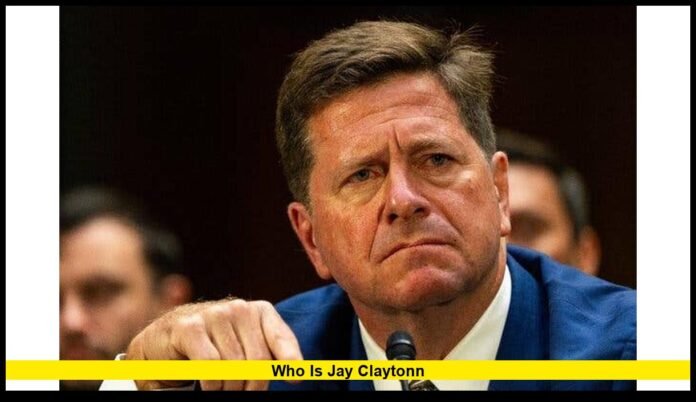

Jay Clayton is an American attorney, former financial regulator, and senior government official who currently serves as the Director of National Intelligence (DNI) under President Donald Trump. Known for his leadership at the Securities and Exchange Commission (SEC) and his experience as a federal prosecutor, Clayton has become an important figure in the administration’s national security strategy. His appointment to oversee America’s intelligence agencies in 2026 marked a major transition from corporate law and financial regulation to national intelligence leadership.
With decades of experience in the legal, financial, and public sectors, Clayton brings a distinctive professional background to one of the most influential positions in the federal government. His responsibilities include coordinating intelligence activities, advising the president on national security threats, and ensuring that intelligence agencies provide accurate information to policymakers and military leaders.
His latest public appearances have also attracted attention as the United States faces growing international security concerns, particularly involving Iran, cybersecurity, artificial intelligence, and foreign intelligence operations.
Key Points Summary
╔════════════════════════════════════════════════════════════════════╗
║ – Jay Clayton is an American attorney and the ninth Director of National Intelligence. ║
║ – President Donald Trump nominated him for the intelligence position in June 2026. ║
║ – The Senate confirmed his nomination on July 28, 2026, by a 51–47 vote. ║
║ – He officially assumed the DNI position on August 3, 2026. ║
║ – Clayton previously served as SEC chairman from 2017 through 2020. ║
║ – He also led the U.S. Attorney’s Office for the Southern District of New York. ║
║ – His professional background includes corporate law, financial regulation, cybersecurity, and academia. ║
║ – In October 2026, President Trump appointed him to lead the Super Intelligence Force. ║
║ – On November 18, 2026, he addressed lawmakers about increasing threats from Iran. ║
╚════════════════════════════════════════════════════════════════════╝
Jay Clayton’s Early Life and Educational Background
Walter Joseph Clayton III, widely known as Jay Clayton, was born at Fort Eustis in Newport News, Virginia. He was raised primarily in central and southeastern Pennsylvania, where he developed an interest in academics, athletics, and professional development.
Unlike many government officials who begin their careers exclusively in politics or public administration, Clayton pursued an educational path combining engineering, economics, and law.
He attended the University of Pennsylvania, graduating with a Bachelor of Science degree in Engineering in 1988. His studies provided a foundation in analytical thinking, technical problem-solving, and complex systems.
Clayton subsequently attended the University of Cambridge in England as a Thouron Scholar. He earned bachelor’s and master’s degrees in economics in 1990.
He later returned to the University of Pennsylvania to study law, graduating with a Juris Doctor degree in 1993. His legal education included recognition through the Order of the Coif, an academic honor associated with outstanding law school performance.
After completing his studies, Clayton began his legal career as a law clerk to Judge Marvin Katz of the U.S. District Court for the Eastern District of Pennsylvania.
His combination of technical, economic, and legal education would later become valuable in his work involving financial institutions, corporate transactions, securities markets, and federal government responsibilities.
Jay Clayton’s Career at Sullivan & Cromwell
One of the most important chapters of Clayton’s professional life began at Sullivan & Cromwell LLP, a prominent international law firm.
He joined the firm as an associate in 1995 and eventually became a partner in 2001. Over the following years, he developed expertise in corporate law, capital markets, securities offerings, mergers and acquisitions, and financial transactions.
His responsibilities extended beyond traditional legal advice. He worked with major businesses and financial institutions on complex transactions involving corporate financing, investment activities, regulatory requirements, and governance.
Clayton eventually became a member of the firm’s Management Committee and co-headed its Corporate Practice.
He also established and led the firm’s cybersecurity practice, developing experience in an area that would become increasingly important to financial institutions and national security organizations.
His work in cybersecurity involved engagement with government agencies and businesses dealing with digital threats, information protection, and corporate security challenges.
This experience helped establish his reputation as an attorney familiar with both the legal and operational challenges facing large institutions.
His private-sector career became particularly important when President Trump selected him to lead the SEC in 2017.
How Jay Clayton Became SEC Chairman
In January 2017, President Donald Trump nominated Clayton to become chairman of the Securities and Exchange Commission.
The Senate confirmed his nomination on May 2, 2017, and he was sworn into office on May 4, becoming the 32nd chairman of the agency.
The SEC plays a central role in the American financial system. It regulates securities markets, oversees publicly traded companies, protects investors, and enforces federal securities laws.
Clayton served as chairman until December 2020.
During his tenure, the commission pursued several regulatory priorities involving public companies, investment markets, financial professionals, and enforcement activities.
Modernizing Financial Market Regulations
Clayton supported efforts to update securities regulations and make certain disclosure and reporting requirements more efficient.
His administration focused on improving the regulatory framework for businesses raising capital and investors participating in financial markets.
Protecting Investors
Investor protection remained a central responsibility during his chairmanship.
The SEC continued investigating alleged financial misconduct, misleading disclosures, insider trading, and other securities violations.
The agency reported more than 2,300 enforcement actions during Clayton’s chairmanship, resulting in over $10 billion in penalties and disgorgement. More than $3 billion was returned to harmed investors.
Supporting Capital Formation
Another important priority involved improving access to capital for businesses.
The commission pursued changes affecting smaller companies, public offerings, private investment markets, and financial disclosure requirements.
Addressing Cybersecurity
As financial institutions increasingly depended on digital infrastructure, cybersecurity became an important regulatory concern.
Clayton emphasized the need for businesses and financial market participants to recognize cyber risks and strengthen their information security practices.
His SEC experience gave him direct exposure to the relationship between financial stability, technology, regulation, and national economic security.
What Did Jay Clayton Do After Leaving the SEC?
Clayton departed from the SEC in December 2020 and returned to private-sector and academic activities.
He maintained professional connections with Sullivan & Cromwell, where he served as senior policy adviser and counsel.
He also became chairman of the board of Apollo Global Management, a major investment management company. His responsibilities included corporate governance and strategic oversight.
Additionally, he served as chairman of the Audit Committee of American Express.
His academic activities continued through the University of Pennsylvania, where he held adjunct teaching positions at the Carey Law School and Wharton School.
Between 2022 and 2025, he also co-chaired the university’s Institute for Law and Economics.
These positions allowed him to remain involved in business, financial policy, education, and corporate leadership.
However, his return to government service in 2025 brought his professional experience into a different area of federal responsibility.
Jay Clayton’s Appointment as U.S. Attorney for the Southern District of New York
In April 2025, Clayton returned to public service when he began working as interim U.S. Attorney for the Southern District of New York.
The office is one of the most prominent federal prosecutor’s offices in the country. Its jurisdiction includes Manhattan, the Bronx, and several surrounding counties.
The Southern District of New York handles significant federal investigations involving financial crime, securities fraud, organized crime, cybercrime, terrorism, and international criminal networks.
Clayton’s background in corporate law and financial regulation was particularly relevant to investigations involving complex financial transactions and securities-related offenses.
During his tenure, his office pursued matters involving alleged terrorism, international narcotics trafficking, organized criminal organizations, and other federal violations.
Among the high-profile matters highlighted by the Justice Department were prosecutions involving alleged Iranian-backed militant activity and international narcotics trafficking.
Clayton’s experience at the office also provided him with exposure to federal law enforcement operations and intelligence-related investigations.
His time as U.S. Attorney ended in July 2026 after the Senate confirmed him for a senior intelligence position.
Jay Clayton’s Nomination as Director of National Intelligence
President Donald Trump announced Clayton’s nomination as Director of National Intelligence on June 11, 2026.
The decision attracted considerable attention because Clayton had spent most of his professional career in corporate law, financial regulation, and federal prosecution rather than traditional intelligence leadership.
The DNI position is one of the most important national security appointments in the United States.
The director serves as the head of the Intelligence Community and the president’s principal adviser on intelligence matters.
The position involves coordinating information and activities across 18 intelligence organizations and agencies.
Trump’s selection reflected confidence in Clayton’s experience managing major institutions, working with federal law enforcement, and addressing complicated national security and financial matters.
However, the nomination also generated questions about his readiness to oversee intelligence agencies with highly specialized responsibilities.
Senate Confirmation and the 51–47 Vote
Clayton’s nomination proceeded through the Senate confirmation process during the summer of 2026.
The Senate Select Committee on Intelligence held his confirmation hearing on July 15, 2026.
During the hearing, senators questioned him about intelligence oversight, national security priorities, the independence of intelligence agencies, and his views on the 2020 presidential election.
His responses regarding the election attracted particular attention. Clayton acknowledged that Joe Biden had been certified as the winner but did not directly answer repeated questions about whether Donald Trump lost the election.
The discussion contributed to disagreements between Republican and Democratic lawmakers.
On July 28, 2026, the full Senate confirmed Clayton by a vote of 51–47.
The result followed party lines, with Republican senators supporting the nomination and Democratic senators and two independents voting against it. Two Republican senators did not participate in the vote.
The confirmation cleared the way for Clayton to become the ninth Director of National Intelligence.
When Did Jay Clayton Become Director of National Intelligence?
Clayton officially assumed the position on August 3, 2026.
Following his swearing-in, he emphasized the importance of delivering reliable intelligence to the president, policymakers, military leaders, and Congress.
He also discussed the need to maintain public confidence in intelligence institutions through appropriate oversight, transparency, and accountability.
His stated leadership priorities included creating an intelligence organization that is streamlined, agile, team-oriented, and focused on its mission.
The Office of the Director of National Intelligence was established following the September 11, 2001, terrorist attacks to improve coordination across intelligence organizations.
Clayton now leads the broader intelligence community responsible for identifying and assessing threats to American national security.
Jay Clayton and the Super Intelligence Force
Another important development came in October 2026, when President Trump appointed Clayton to chair the administration’s Super Intelligence Force.
The initiative is designed to coordinate federal efforts involving advanced artificial intelligence and help maintain American leadership in emerging technologies.
Artificial intelligence has become an increasingly important national security issue because it can influence cybersecurity, military planning, intelligence analysis, economic competition, and critical infrastructure.
The administration’s initiative is intended to bring together technology companies, government officials, public-interest organizations, consumers, and other stakeholders.
Clayton’s involvement is significant because his responsibilities now connect intelligence leadership with broader discussions about advanced technology.
The Justice Department also announced a separate Super Intelligence Task Force on November 5, 2026, to address potential criminal and national security risks associated with the misuse of advanced intelligence technologies.
The department described its initiative as a partnership with Clayton’s Super Intelligence Force.
These developments demonstrate how artificial intelligence has become an important part of the administration’s national security agenda.
Jay Clayton’s Latest Update: Iran Threats and National Security Concerns
One of Clayton’s most recent public appearances took place on November 18, 2026, when he addressed the House Homeland Security Committee.
During the hearing, he warned that threats from Iran against Americans, both inside the United States and abroad, had increased substantially.
His comments came amid continuing tensions involving Iran, U.S. military operations, and security concerns affecting American personnel and regional allies.
Clayton said U.S. intelligence agencies remained committed to identifying and countering potential Iranian plots.
Lawmakers also raised questions about reports of possible threats involving unconventional weapons.
Clayton declined to discuss specific intelligence details during the public hearing, noting that mass-casualty threats were not a new concern for U.S. national security agencies.
His remarks highlighted the importance of intelligence cooperation, threat monitoring, and coordination between federal security organizations.
The latest developments underline the responsibilities facing Clayton as the country responds to evolving international security risks.
Jay Clayton’s Personal Life and Financial Background
Despite holding several high-profile government and corporate positions, Clayton generally maintains a private personal life.
The official biography published by the Office of the Director of National Intelligence notes that he has been married to his high school sweetheart for 35 years.
He is also described as a lifelong athlete and sports enthusiast.
During his younger years, he worked as a lifeguard with the Ocean City Beach Patrol and played college soccer.
He also served as captain of Cambridge University’s men’s basketball team.
His professional career has included senior positions at major financial and legal institutions, but a verified figure for his current personal net worth has not been publicly established.
As a result, specific estimates circulating online should be treated cautiously rather than presented as confirmed financial information.
Why Is Jay Clayton Important to American Politics and National Security?
Clayton’s importance comes from the combination of public and private leadership positions he has held.
His SEC chairmanship gave him experience overseeing financial markets and enforcing federal securities regulations.
His work as U.S. Attorney introduced him to federal investigations involving financial crime, international organizations, and national security matters.
His current intelligence position gives him responsibility for coordinating the activities of America’s intelligence agencies.
There are several major areas where his leadership will remain important:
Intelligence Coordination: Ensuring that federal intelligence organizations share relevant information and work effectively together.
Foreign Threat Assessment: Monitoring threats involving foreign governments, international conflicts, terrorism, and hostile intelligence operations.
Cybersecurity: Addressing cyber threats against government networks, financial institutions, businesses, and critical infrastructure.
Artificial Intelligence: Supporting responsible government coordination involving advanced AI technology and its national security implications.
Government Accountability: Maintaining appropriate oversight and public confidence in intelligence activities.
These responsibilities make his leadership relevant to both national security policy and the broader direction of the federal government.
Frequently Asked Questions
1. What is Jay Clayton’s full name?
His full name is Walter Joseph Clayton III. He is commonly known as Jay Clayton.
2. How old is Jay Clayton?
Jay Clayton was born in 1966. He is 60 years old in November 2026.
3. Who appointed Jay Clayton as Director of National Intelligence?
President Donald Trump nominated Clayton for the position on June 11, 2026. The Senate confirmed him on July 28, 2026.
4. What is Jay Clayton known for?
He is known for serving as chairman of the Securities and Exchange Commission, U.S. Attorney for the Southern District of New York, and Director of National Intelligence.
5. What was Jay Clayton’s previous government position?
Before becoming DNI, Clayton served as U.S. Attorney for the Southern District of New York. Earlier, he served as SEC chairman from 2017 to 2020.
6. What is Jay Clayton’s educational qualification?
He holds an engineering degree from the University of Pennsylvania, bachelor’s and master’s degrees in economics from the University of Cambridge, and a law degree from the University of Pennsylvania.
7. What does Jay Clayton do as Director of National Intelligence?
He oversees the Intelligence Community, coordinates intelligence activities, advises the president, and helps ensure that policymakers receive information about national security threats.
8. What is the Super Intelligence Force?
It is an administration initiative focused on coordinating federal artificial intelligence efforts and supporting American leadership in advanced technology. President Trump appointed Clayton to lead it in October 2026.
9. What did Jay Clayton say about Iran on November 18, 2026?
During a congressional hearing, he said threats from Iran against Americans in the United States and abroad had increased substantially. He also emphasized the commitment of U.S. intelligence agencies to identifying and countering potential plots.
10. Is Jay Clayton still the SEC chairman?
No. His SEC chairmanship ended in December 2020. He currently serves as Director of National Intelligence.
Conclusion
Jay Clayton’s professional journey reflects a transition from corporate law and financial regulation to some of the highest levels of federal government leadership. His experience at Sullivan & Cromwell, the SEC, and the Southern District of New York helped establish his reputation as an experienced attorney and institutional leader.
His confirmation as Director of National Intelligence in July 2026 marked a new chapter in his public career. Since taking office in August, he has become responsible for coordinating America’s intelligence agencies and advising the president on major security developments.
His additional leadership role in the Super Intelligence Force has also connected his work to the administration’s artificial intelligence priorities. With international security concerns continuing to develop, his statements and decisions are likely to remain important to discussions about America’s intelligence capabilities and national defense.
What are your thoughts on Jay Clayton’s leadership of America’s intelligence community? Share your opinion in the comments and follow the latest updates on his role in U.S. national security.