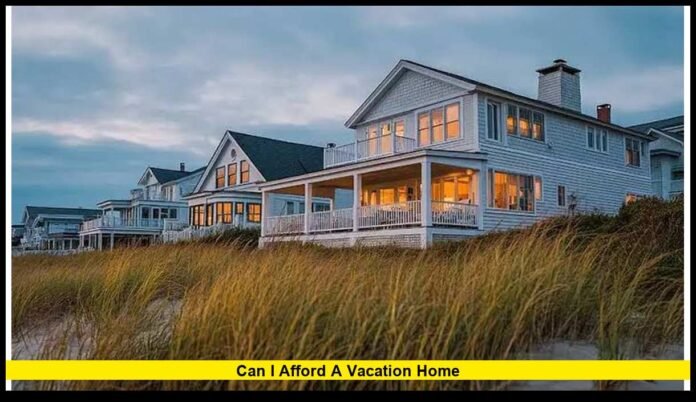

Buying a second property can turn favorite getaways into familiar places to relax, but Can I afford a vacation home is a question that requires more than checking your savings account or estimating a monthly mortgage payment. Buyers must consider mortgage rates, down payments, property taxes, homeowners insurance, maintenance, travel expenses, and the cost of keeping the property available throughout the year. The latest housing market data shows that vacation homes remain a significant financial commitment, especially as borrowing costs and property ownership expenses continue to influence affordability.
As of the latest available mortgage data for October 29, 2026, Freddie Mac reported an average 30-year fixed mortgage rate of 7.24% and a 15-year fixed rate of 6.60%. The 30-year rate declined from 7.32% the previous week, offering some relief to prospective buyers. However, these averages do not represent guaranteed offers for vacation-home mortgages, which lenders may price differently from loans for primary residences.
The second-home market also remains expensive. Redfin reported that the typical second home purchased in 2025 was worth approximately $515,000, compared with $395,000 for primary residences. Mortgages for second homes increased about 4% year over year in 2025, marking the first annual increase in four years. Even with that recovery, vacation-home purchases remain a discretionary expense that requires careful financial planning.
For prospective buyers, the central question is not simply whether a lender will approve a mortgage. It is whether the household can comfortably pay for two properties while maintaining savings, covering everyday expenses, and preparing for unexpected financial setbacks.
What Does It Really Mean to Afford a Vacation Home?
Affording a vacation home means being able to purchase the property, maintain it, and enjoy using it without putting your primary residence or long-term financial security at risk.
A household might have enough income to qualify for a second mortgage but still struggle with the additional expenses. Mortgage approval and personal affordability are two different things.
Lenders evaluate income, existing debts, credit history, available assets, and other financial information. Buyers should go further by considering their lifestyle, job stability, retirement plans, family obligations, and expected use of the property.
A realistic vacation-home budget should account for five major financial areas:
- Upfront costs: Down payment, closing costs, inspections, and initial repairs.
- Monthly housing expenses: Mortgage principal and interest, property taxes, insurance, and homeowners association fees.
- Ongoing maintenance: Repairs, landscaping, pest control, utilities, and seasonal preparations.
- Travel and personal use: Transportation, groceries, cleaning, and other expenses associated with visiting the property.
- Financial reserves: Emergency savings for major repairs, insurance deductibles, temporary income loss, or other unexpected costs.
The property should remain affordable even when it produces no rental income. Buyers who depend on short-term bookings to cover their mortgage may face financial pressure during slow seasons, unexpected closures, or periods of weak demand.
How Much Does a Vacation Home Cost in 2026?
The purchase price depends heavily on the destination, property type, location, condition, and distance from popular attractions.
A small cabin in a less expensive inland community may cost substantially less than a beachfront property or a condominium in a popular resort market. Even within one destination, prices can vary according to waterfront access, views, property size, and proximity to restaurants or recreational facilities.
Redfin’s reported typical second-home value of approximately $515,000 in 2025 provides a useful market reference. It is not a nationwide asking-price guarantee or a recommended budget for every buyer. Individual properties can cost much less or considerably more.
Consider the following hypothetical purchase-price comparison to understand how the upfront financial commitment changes.
| Vacation-home price | 20% down payment | Mortgage before closing costs |
|---|---|---|
| $200,000 | $40,000 | $160,000 |
| $300,000 | $60,000 | $240,000 |
| $400,000 | $80,000 | $320,000 |
| $515,000 | $103,000 | $412,000 |
| $600,000 | $120,000 | $480,000 |
These figures illustrate possible financing structures rather than current market averages for each price category. They assume a 20% down payment and exclude closing costs, prepaid expenses, and other fees.
A buyer purchasing a $400,000 vacation home with a 20% down payment would need $80,000 before paying the remaining transaction expenses. If the buyer also needs to replace a roof, furnish the property, or make safety improvements, the initial cash requirement could rise considerably.
The purchase price should therefore be only the starting point of the affordability calculation.
How Mortgage Rates Affect Vacation-Home Affordability
Mortgage rates can significantly change the cost of purchasing a second home because buyers must finance the property while continuing to meet their existing financial obligations.
Freddie Mac’s October 29, 2026, mortgage survey reported these national averages:
| Mortgage type | Average rate |
|---|---|
| 30-year fixed-rate mortgage | 7.24% |
| 15-year fixed-rate mortgage | 6.60% |
These figures describe broader mortgage-market conditions. They are not specific quotes for second homes, and individual borrowers may receive different rates depending on their credit, loan terms, down payment, property, and lender.
Second-home financing can involve stricter underwriting requirements than financing a primary residence. Lenders may require stronger credit, additional cash reserves, or a larger down payment. Some properties and intended uses may also fall outside standard second-home loan requirements.
Example: Monthly Payments on a $400,000 Vacation Home
Suppose a buyer purchases a $400,000 property with a $80,000 down payment. The resulting mortgage principal is $320,000.
At an illustrative fixed interest rate of 7.24% over 30 years, the principal-and-interest payment would be approximately $2,180 per month.
This estimate excludes property taxes, homeowners insurance, HOA dues, utilities, maintenance, and closing costs. It also assumes that the borrower actually qualifies for the stated rate and loan terms.
The following comparison demonstrates how the monthly principal-and-interest payment changes with the loan amount, assuming the same illustrative 7.24% rate and a 30-year term.
| Mortgage amount | Approximate monthly principal and interest |
|---|---|
| $160,000 | $1,090 |
| $240,000 | $1,635 |
| $320,000 | $2,180 |
| $412,000 | $2,810 |
| $480,000 | $3,270 |
These are rounded estimates, not lender quotes. Actual payments may differ.
The important point is that the mortgage payment represents only one part of ownership. A buyer who can comfortably afford $2,180 per month in principal and interest must still determine whether the household can cover the full cost of operating the property.
Should You Wait for Lower Mortgage Rates?
Waiting may make sense for buyers who cannot comfortably afford current financing costs. However, future mortgage rates are uncertain, and no buyer can rely on a particular rate reduction occurring by a specific date.
A more useful approach is to calculate affordability using a realistic rate available today. Buyers can also ask lenders how different rates, down payments, and loan terms would affect their payments.
Shopping around for multiple mortgage offers can help borrowers compare interest rates, lender fees, reserve requirements, and other loan conditions.
A vacation home should fit the budget under the financing terms the buyer can actually obtain, rather than depending on a future refinancing opportunity.
How Much Income Do You Need to Afford a Vacation Home?
There is no universal income threshold for purchasing a vacation home. A household earning $150,000 annually might comfortably afford a modest second property if it has little debt and substantial savings. Another household earning more could struggle if it carries large mortgage payments, student loans, childcare expenses, or other financial obligations.
The relevant measure is disposable cash flow after accounting for the household’s existing commitments.
Start with monthly take-home pay, then subtract:
- The primary home’s mortgage or rent.
- Property taxes and insurance on the primary residence.
- Car payments, student loans, and credit card obligations.
- Food, transportation, utilities, healthcare, and childcare.
- Retirement contributions and other long-term savings.
- Emergency savings contributions.
- The full estimated cost of the vacation home.
The remaining amount should comfortably cover discretionary spending and unexpected expenses.
For example, consider a household with $10,000 in monthly take-home income. If its regular expenses and savings contributions total $7,000, it has $3,000 remaining before considering a vacation home.
That $3,000 is not automatically available for a second mortgage. The household must still leave room for fluctuating expenses, future goals, and emergencies. If the vacation home would consume nearly all the remaining cash, the purchase may be too expensive even if a lender approves the application.
Income stability matters, too. Self-employed buyers, commission-based workers, seasonal employees, and households with a single major income source may need larger cash reserves to handle fluctuations.
What Percentage of Your Income Should Go Toward a Vacation Home?
Buyers should be cautious about using a single percentage of income to determine whether a second property is affordable.
Mortgage lenders commonly evaluate debt-to-income ratio, or DTI. This calculation compares qualifying monthly debt obligations with gross monthly income.
For example, a borrower with $3,000 in qualifying monthly debt and $10,000 in gross monthly income has a 30% debt-to-income ratio.
When a lender considers a second home, the proposed mortgage and other qualifying property expenses may increase that ratio. The lender’s exact calculation depends on the loan program and underwriting rules.
However, DTI does not capture every expense that affects a household’s financial comfort. It may not fully reflect groceries, healthcare, travel, savings goals, or irregular home repairs.
For that reason, buyers should use two tests:
The lender test: Can the household meet the lender’s income, credit, debt, and asset requirements?
The personal affordability test: Can the household cover all property expenses while continuing to save, manage everyday spending, and handle unexpected costs?
Passing both tests provides a stronger basis for making a purchase decision.
The Hidden Costs of Owning a Vacation Home
The expenses that buyers overlook can make the difference between a manageable second property and an ongoing financial burden.
Property Taxes
Property taxes depend on the property’s assessed value, local tax rates, exemptions, and applicable assessment rules.
A vacation home may not qualify for the same exemptions available to an owner’s primary residence. Buyers should check the tax bill and confirm whether a change in ownership could affect the assessment.
For budgeting purposes, divide the expected annual property tax by 12 and include that amount in the monthly ownership estimate.
Homeowners Insurance
Insurance costs vary according to the property’s location, construction, replacement value, claims history, coverage limits, and exposure to local hazards.
A coastal property may require separate flood insurance or additional windstorm coverage. A home in a wildfire-prone area may face higher premiums, stricter underwriting, or limited insurance availability.
Vacation homes can also require specialized coverage, particularly when they remain unoccupied for long periods or accommodate paying guests.
The buyer should obtain property-specific insurance quotes before closing. A general estimate based on another house may significantly understate the actual cost.
Maintenance and Repairs
Every property needs maintenance, even when nobody occupies it.
Common expenses include plumbing repairs, roof maintenance, heating and cooling systems, appliance replacement, pest prevention, landscaping, and snow removal.
Seasonal properties can require additional preparation. Owners may need to winterize plumbing, maintain access roads, protect outdoor equipment, or inspect the property after severe weather.
A practical budget should include a recurring maintenance allowance and a separate reserve for major repairs. The amount depends on the property’s age, condition, size, and local environment.
Utilities and Internet
Electricity, water, sewer service, trash collection, heating, cooling, and internet access can continue to generate bills even when the property sits empty.
Some utilities have fixed monthly charges regardless of consumption. Remote homes may also require well maintenance, septic-system inspections, or additional services.
Ask the seller for recent utility bills whenever possible. Actual usage history offers a better starting point than guessing based on the home’s size.
HOA Fees and Special Assessments
Condominiums and planned communities may charge homeowners association fees for shared amenities, landscaping, exterior maintenance, security, or common-area insurance.
Those fees can change over time. Associations may also impose special assessments to pay for major repairs or improvements.
Review the association’s budget, reserve fund, meeting records, insurance arrangements, and assessment history before buying.
Travel and Property Management
A vacation home creates costs that a primary residence may not.
Owners must pay to reach the property, maintain it between visits, and arrange repairs when they are away. Remote locations may require local caretakers, cleaning services, or property managers.
These expenses should reflect how the buyer intends to use the home. A property several hours away by car may generate a very different annual travel budget from one requiring regular flights.
How Much Should You Save Before Buying a Vacation Home?
The required savings depend on the purchase price, mortgage terms, closing costs, condition of the property, and household finances.
A sensible savings target should cover more than the down payment. Buyers should maintain their existing emergency fund and set aside additional cash for the second property’s immediate and ongoing needs.
Before purchasing, consider saving for:
- The down payment. Calculate the amount required by the lender and determine whether a larger payment would improve the loan terms.
- Closing costs. Budget for lender fees, appraisal, title services, inspections, prepaid taxes, and insurance.
- Initial repairs and furnishings. Identify necessary work before moving into the property or making it available for personal use.
- Property-specific emergencies. Set aside money for repairs, insurance deductibles, and unexpected assessments.
- Household emergencies. Preserve enough liquid savings to handle income disruptions and expenses at the primary residence.
Do not use every available dollar to complete the purchase. A vacation home is a discretionary asset, and owning one should not leave the household financially vulnerable.
Buyers should also avoid assuming that home equity can always be accessed quickly or affordably. Borrowing against the primary residence to finance a second property can increase risk for both homes.
Can You Afford a Vacation Home If You Already Have a Mortgage?
Yes, some homeowners can afford a vacation property while carrying a mortgage on their primary residence. The key is whether the combined expenses fit comfortably within their finances.
Start by calculating the full monthly cost of the primary residence, including mortgage principal and interest, taxes, insurance, maintenance, and any HOA fees.
Then add the vacation home’s projected expenses. Include its mortgage payment, taxes, insurance, utilities, maintenance, travel, and property management.
The combined amount should leave enough money for regular living costs, retirement contributions, emergency savings, and other financial priorities.
Existing home equity may help a buyer qualify for financing or provide a source of funds, but equity is not the same as spendable cash. Selling investments, withdrawing retirement funds, or borrowing against a primary home may also create tax consequences, penalties, or additional financial risk.
A buyer should assess those trade-offs before committing to a second property.
Should You Rent Out Your Vacation Home to Make It Affordable?
Rental income can help offset ownership expenses, but it should not be treated as guaranteed income.
Redfin’s 2026 reporting found that second-home mortgage activity increased in 2025, although second homes remained a small share of the overall mortgage market. Meanwhile, vacation-rental economics depend on location, seasonality, competition, operating expenses, and local regulations.
A property that attracts visitors during summer may experience much weaker demand during other months. Even a popular destination can face cancellations, unexpected repairs, or changing travel patterns.
Before buying a property for both personal use and rental income, estimate realistic revenue and subtract:
- Property management commissions.
- Cleaning and laundry costs.
- Repairs and replacement furnishings.
- Utilities and internet.
- Rental-related insurance.
- Booking and payment-processing fees.
- Local lodging taxes and other applicable taxes.
- Licensing, registration, and compliance costs.
- Periods when the property remains vacant.
The remaining amount is closer to the property’s operating income, although financing costs and income taxes may still need to be considered.
Do not assume that a rental platform’s projected earnings represent guaranteed cash flow. Confirm local short-term rental restrictions, zoning rules, HOA policies, and insurance requirements before purchasing.
A strong affordability plan should allow the buyer to pay for the home without relying on optimistic rental projections.
How Insurance and Climate Risks Affect Vacation-Home Budgets
Location can influence vacation-home affordability long after the purchase closes.
A property near the ocean, in a flood zone, or in an area exposed to wildfires may require more expensive coverage and additional precautions. Some insurers may limit coverage or decline new policies in certain locations.
Insurance costs have also become a concern for homeowners more broadly. The Federal Reserve’s May 2026 report on household economic well-being found that many insured homeowners had experienced insurance cost increases greater than expected in recent years.
That finding does not establish a single nationwide premium for vacation homes. It does reinforce the importance of reviewing actual insurance costs rather than relying on an outdated estimate.
Before making an offer, investigate flood exposure, wildfire risk, storm history, local building requirements, and the property’s ability to withstand seasonal weather.
Obtain insurance quotes for the specific address and confirm that suitable coverage is available. If the property needs flood insurance, specialized wind coverage, or additional protection for periods of vacancy, include those costs in the affordability calculation.
A home that appears inexpensive to purchase may become costly to own when insurance, mitigation work, and recurring maintenance are included.
A Practical Vacation-Home Affordability Checklist
Before moving forward, review the following questions.
- Can I make the required down payment without exhausting my savings?
- Can I qualify for a second-home mortgage under current lending conditions?
- Can I afford both properties if my income temporarily declines?
- Have I obtained realistic property tax and insurance estimates?
- Have I included utilities, repairs, HOA fees, and travel expenses?
- Can I pay for major repairs without relying on credit cards?
- Will I continue contributing to retirement and other long-term savings?
- Have I checked local rules governing short-term rentals?
- Can I afford the property if rental income falls short?
- Will I use the home enough to justify the expense?
If several answers are uncertain, consider a less expensive property, a larger down payment, or a longer period of saving before buying.
Another useful step is to create a separate monthly budget for the vacation home. Track the estimated expenses for several months and transfer the projected amount into savings. This exercise can show whether the additional cost feels manageable before you commit to a mortgage.
If maintaining the trial budget proves difficult, the property may be too expensive at its current price or financing terms.
Is Buying a Vacation Home Better Than Renting One?
Buying offers the potential for long-term personal use, control over the property, and possible equity accumulation. However, it also creates recurring expenses and concentrates more of the household’s wealth in real estate.
Renting a vacation property allows travelers to choose different destinations without paying year-round ownership costs. It also avoids responsibility for major repairs, property taxes, insurance, and long periods of vacancy.
The better choice depends on how frequently the household visits the destination, how long it expects to keep the property, and the total cost of ownership compared with renting.
For example, a family that visits the same destination for only one week each year may find renting more practical. A household that spends several months annually in the same location may find ownership more appealing, provided the finances work.
There is no universal number of vacation days that makes buying worthwhile. Property prices, rental rates, financing costs, taxes, maintenance, and personal preferences all influence the comparison.
Buyers should compare the complete annual ownership cost with the realistic cost of renting similar accommodations for the periods they plan to visit.
What Is the Safest Way to Decide Whether You Can Afford a Vacation Home?
The safest approach combines a detailed budget, current financing quotes, property-specific expenses, and a conservative assessment of future cash flow.
Begin with a price range that does not interfere with essential household expenses. Obtain mortgage preapproval based on your actual financial circumstances, then verify the property’s taxes, insurance, maintenance needs, and any association fees.
Next, calculate the full annual cost of ownership. Divide that amount by 12 to estimate the average monthly commitment, while separately accounting for irregular expenses that do not arrive every month.
Finally, test the budget against less favorable conditions. Consider what would happen if insurance premiums increased, a major repair became necessary, rental income disappeared, or household income fell temporarily.
If the home remains affordable under those circumstances, the purchase may fit your financial position. If it works only under the most optimistic assumptions, waiting or choosing a less expensive property may be the wiser decision.
A vacation home should add enjoyment to your life without creating persistent financial stress. The goal is not simply to secure a second property. It is to own one while preserving the financial flexibility that makes taking a vacation enjoyable in the first place.
FAQs
Can I afford a vacation home on a $100,000 salary?
Possibly. A $100,000 salary does not automatically qualify someone for a vacation-home mortgage or establish an affordable purchase price. Existing debt, the primary mortgage, down payment, credit profile, living expenses, and property costs all affect the answer.
How much money should I have saved before buying a vacation home?
You should have enough for the required down payment, closing costs, immediate property needs, and additional emergency reserves. The exact amount depends on the purchase price, lender requirements, and your household’s financial obligations.
Can I buy a vacation home with a 10% down payment?
Some lenders may offer second-home financing with less than 20% down, but requirements vary. A smaller down payment can increase borrowing costs and may affect mortgage eligibility. Confirm the terms with lenders before choosing a property.
Are mortgage rates for vacation homes higher than rates for primary residences?
They can be. Lenders may consider second homes riskier than primary residences and adjust rates or underwriting requirements accordingly. The actual offer depends on the borrower, property, loan structure, and lender.
How much does it cost to maintain a vacation home?
There is no single reliable national amount. Costs depend on the property’s size, age, location, climate, insurance requirements, and usage. Buyers should estimate maintenance using the home’s inspection results and local service prices.
Can rental income pay the vacation-home mortgage?
It can offset some or potentially all of the mortgage expense in certain circumstances, but income varies by season and market. Owners must also pay operating costs, insurance, taxes, maintenance, and any management fees. Do not rely on unverified rental projections.
Does a vacation home qualify for tax deductions?
Certain mortgage interest, property taxes, and rental-related expenses may receive tax treatment under applicable federal rules. Eligibility depends on how the property is used, the taxpayer’s circumstances, and current tax law. Consult a qualified tax professional before including potential deductions in your budget.
Is it better to pay cash for a vacation home?
Paying cash eliminates mortgage payments and interest, but it can tie up a large amount of money in an illiquid asset. Buyers should consider emergency reserves, investment alternatives, maintenance costs, and their broader financial goals before deciding.
What credit score do I need to buy a vacation home?
There is no single credit score that guarantees approval for every second-home mortgage. Requirements depend on the lender, loan program, down payment, debt-to-income ratio, and other underwriting factors. Stronger credit may improve the financing options available.
Should I buy a vacation home now or wait?
The answer depends on your financial readiness and the property. Mortgage rates and home prices can change, but future conditions are uncertain. If you can comfortably afford the full cost today, a purchase may be feasible. If the budget is tight, building savings or considering a less expensive property may reduce risk.
Before buying a second property, calculate the complete cost of ownership and decide whether it fits your long-term financial goals. Share your thoughts in the comments, and stay informed about the latest developments affecting vacation-home affordability.