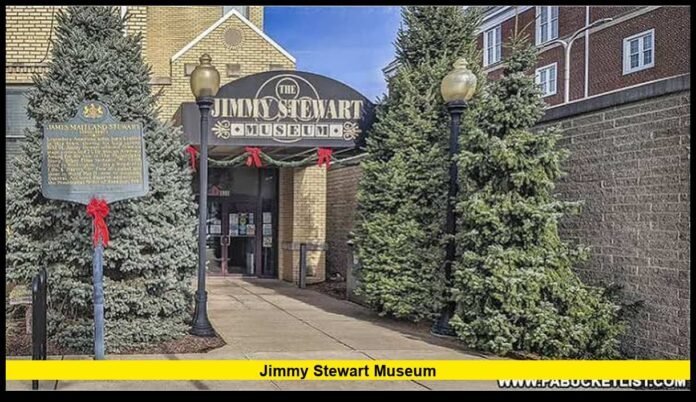

The Jimmy Stewart Museum in Indiana, Pennsylvania, is drawing fresh interest as audiences prepare for the upcoming theatrical release of JIMMY, a biographical film about the legendary Hollywood actor. With a temporary exhibition dedicated to the movie, historic memorabilia and collections documenting Stewart’s life, the museum offers visitors an opportunity to explore the story behind one of America’s most recognizable screen personalities.
The renewed attention arrives at a significant moment for fans of classic cinema. The film is scheduled to open in theaters nationwide on November 6, 2026, while the museum’s special exhibition, The Making of JIMMY, is scheduled to remain available through November 15. The timing gives visitors a limited opportunity to experience the production-related display alongside the museum’s permanent collection.
A Timely Exhibition Connects Hollywood History With a New Film
The current exhibition provides a closer look at the work involved in bringing Stewart’s story to the screen. Visitors can expect production photographs, costumes, props, quotations and other materials associated with the film’s creation.
The display offers a different perspective from the museum’s permanent galleries, which concentrate on Stewart’s actual life, career and military service. Instead of simply revisiting familiar movie roles, visitors can explore elements of a modern production inspired by his legacy.
KJ Apa stars as Stewart in JIMMY. The film’s theatrical release is expected to introduce his story to audiences who may know him primarily through classic movies such as It’s a Wonderful Life and Rear Window.
For the museum, the exhibition creates an opportunity to connect generations of moviegoers. Longtime admirers can revisit Stewart’s legacy, while younger visitors can discover the historical figure behind the familiar name.
A Pennsylvania Hometown Preserves a Hollywood Legacy
Indiana, Pennsylvania, played a formative role in Stewart’s life. Born there on May 20, 1908, James Maitland Stewart grew up in a community far removed from the Hollywood studios that would eventually make him famous.
His childhood, family background and education helped shape the personality audiences came to recognize on screen. Before becoming an international star, Stewart attended Princeton University and developed interests that extended well beyond acting.
The museum opened in 1995, on what would have been Stewart’s 87th birthday. Its location in the Indiana Borough Community Building places his story within the community that remains closely associated with his early years.
The collection presents Stewart as more than a film star. It documents his personal interests, family relationships, education and public service, offering visitors a fuller understanding of the man behind the performances.
Inside the Museum’s Collection of Film Memorabilia
The museum’s Hollywood displays cover Stewart’s long career, which included more than 80 films released between 1935 and 1991.
Visitors can explore movie posters, photographs, costumes, awards and objects connected with productions from different stages of his career. The exhibits illustrate how Stewart moved between comedy, drama, suspense and Westerns while maintaining a distinctive screen presence.
His collaborations with director Frank Capra helped establish his reputation for portraying principled characters caught in difficult circumstances. Films such as Mr. Smith Goes to Washington and It’s a Wonderful Life became enduring examples of his ability to portray sincerity and vulnerability.
Stewart also demonstrated considerable range in Alfred Hitchcock’s suspense films. His performances in Rear Window and Vertigo revealed darker, more psychologically complicated characters than the idealistic figures associated with some of his earlier work.
The museum’s collection gives fans an opportunity to place these performances within the broader story of his career.
Military Service Remains a Central Part of Stewart’s Story
Stewart’s achievements outside entertainment form another important part of the museum experience.
During World War II, he served in the U.S. Army Air Forces and flew bombing missions in Europe. His military career continued after the war, eventually reaching the rank of brigadier general in the U.S. Air Force Reserve.
Military uniforms, medals and other artifacts help tell this chapter of his life. Among the honors associated with his service are the Distinguished Flying Cross and the French Croix de Guerre.
His decision to serve during wartime distinguished him from many of his contemporaries in the entertainment industry. It also contributed to the public image of Stewart as a figure whose commitments extended beyond professional success.
The military exhibits provide historical context for visitors interested in aviation, World War II and the experiences of Americans who served while maintaining careers in public life.
Childhood Artifacts Offer a More Personal Perspective
Several displays move away from movie sets and military history to examine Stewart’s personal background.
A recreation of his boyhood bedroom includes objects and photographs connected with his early life. The display helps visitors understand the environment in which his interests and ambitions developed.
Another exhibit recreates elements of his father Alexander Stewart’s hardware store, connecting the actor’s history with the family business in Indiana.
The museum also features a recreation of Stewart’s California office, complete with personal belongings and correspondence. These objects provide a glimpse into his life away from cameras and public appearances.
Together, the displays help explain why the museum attracts visitors who want to understand Stewart as a person rather than simply revisit his most famous performances.
Opening Hours, Admission and Visitor Information
The museum is located at 835 Philadelphia Street, Indiana, Pennsylvania, 15701. It occupies the third floor of the Indiana Borough Community Building, above the Indiana Free Library.
Its published regular schedule lists opening hours from 10 a.m. to 4 p.m. Monday through Saturday, with Sunday hours from noon to 4 p.m.
Published admission prices are $12 for adults, $11 for seniors aged 62 and older, military personnel and students, and $9 for children ages 7 through 17. Children under age 6 are admitted free.
The museum also offers a daily movie matinee at 1 p.m. in its vintage 50-seat theater. The featured film changes, allowing visitors to experience different parts of Stewart’s filmography during their visit.
These details reflect the published schedule and admission rates, which may change. Visitors should confirm operating arrangements before setting out, particularly during holiday periods or severe weather.
Parking options include the Indiana Borough Parking Garage on Water Street and available metered spaces in the downtown area. Checking local parking conditions can help visitors plan their arrival.
Why November Is an Interesting Time to Visit
The convergence of the new biographical film and the temporary exhibition gives the museum additional relevance in early November. Visitors can explore the permanent historical displays while also examining production material connected with the new movie.
The special exhibition is scheduled to close on November 15, making its remaining run relatively short. Anyone primarily interested in the film-related display should confirm its availability before traveling.
The attraction also offers value beyond the temporary event. Its permanent collections document Stewart’s cinematic achievements, hometown connections and military career, creating several points of interest for visitors with different interests.
For travelers exploring western Pennsylvania, the museum can serve as a cultural stop that combines entertainment history with a closer look at the community that helped shape a Hollywood icon.
A Lasting Connection Between Indiana and Classic Cinema
Jimmy Stewart’s appeal has endured because his performances balanced humor, decency and emotional complexity. His characters often faced difficult decisions, personal setbacks and conflicts between individual interests and the greater good.
The museum preserves that legacy through objects and stories that connect his film career with his experiences outside Hollywood. The November exhibition adds a contemporary dimension by showing how filmmakers continue to interpret his life for new audiences.
As interest builds around JIMMY, the museum remains an important destination for anyone seeking to understand the actor’s lasting place in American popular culture.
Visitors planning a trip should check the current exhibition schedule, admission information and opening hours before arrival, especially if they want to see the temporary display before it ends.