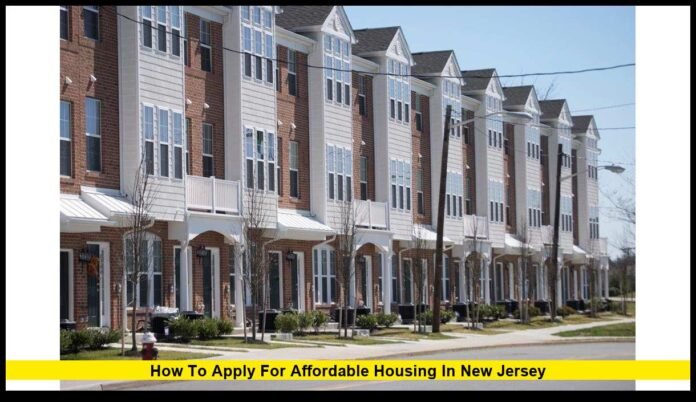

Understanding how to apply for affordable housing in new jersey can help individuals and families find housing that fits their income and household needs. New Jersey offers several affordable housing options, including public housing, income-restricted apartments, rental assistance, and municipal housing opportunities. Each program follows its own eligibility rules, application procedures, and waiting-list policies.
The application process begins with identifying the right housing program. Some opportunities are available through local public housing authorities, while others are managed by individual apartment communities or municipal affordable housing administrators. Applicants may need to complete separate applications to be considered for different properties and assistance programs.
Availability also varies across the state. Some housing providers accept applications during specific periods, while others maintain waiting lists for eligible households. Checking the current application status before submitting paperwork can help applicants use their time efficiently.
Understanding Affordable Housing Options in New Jersey
Affordable housing helps eligible households access homes with rents or purchase prices restricted under specific program requirements. These opportunities serve different income groups, and eligibility depends on the property and the program.
New Jersey residents can explore several types of housing assistance.
- Public housing: Rental homes managed by public housing authorities for qualifying households.
- Housing Choice Vouchers: Rental assistance that helps eligible households pay for privately owned housing.
- Income-restricted apartments: Homes reserved for applicants whose household income meets established limits.
- Municipal affordable housing: Rental or homeownership opportunities administered through participating municipalities.
- Senior housing: Properties designated for eligible older adults.
- Accessible housing: Apartments with accessibility features for people who need them, subject to availability and program requirements.
These options have different application procedures. A person applying for public housing may need to complete a separate application for rental vouchers or an income-restricted apartment.
Applicants should identify which program best fits their circumstances before gathering documents and submitting forms.
Who Can Qualify for Affordable Housing in New Jersey?
Affordable housing eligibility depends on household income, family size, location, and program-specific requirements. There is no single income threshold that applies to every affordable housing property in New Jersey.
Some programs focus on households with low incomes, while others serve applicants within particular income categories. A household may qualify for one apartment community but exceed the income limit for another.
Household Income Limits
Many affordable housing programs use Area Median Income, or AMI, to establish income limits.
The applicable amount depends on the geographic area, household size, and designated income category. A one-person household may have a different income limit from a household with four members.
Some developments offer apartments at several income levels. Therefore, applicants should examine the requirements for the specific unit rather than relying on a general statewide figure.
Depending on the program, administrators may consider income from:
- Employment and self-employment.
- Social Security benefits.
- Pensions and retirement payments.
- Unemployment benefits.
- Other income sources covered by the applicable rules.
Certain programs also review assets or apply specific calculations to particular types of income.
Applicants should use the current income limits provided by the housing administrator. Figures from previous years may no longer apply.
Household Size and Apartment Eligibility
Household size can affect income eligibility and the number of bedrooms an applicant may receive.
Housing providers may follow occupancy standards when determining whether a household qualifies for a one-bedroom, two-bedroom, or larger apartment.
Applicants must provide accurate information about everyone who will live in the home. If household circumstances change during the application process, the administrator may require an update.
Other Eligibility Requirements
Depending on the program, applicants may need to provide identification, verify household information, document income, and satisfy applicable federal or local requirements.
Some properties serve specific groups, including seniors or people who need accessible housing. Certain programs may also apply lawful preferences under their established rules.
Always review the eligibility criteria for the particular property or program before applying.
Where to Find Affordable Housing in New Jersey
Applicants can explore several channels to identify affordable housing opportunities. Each channel may serve different communities and manage its own application process.
Local Public Housing Authorities
Public housing authorities administer public housing and may operate Housing Choice Voucher programs.
These agencies determine eligibility, manage applications, and maintain waiting lists for the programs they oversee.
Contact the housing authority serving the community where you want to live. Ask whether it offers public housing, rental vouchers, or other housing assistance.
Before completing an application, confirm:
- Whether the waiting list is open.
- Which programs are accepting applications.
- What income limits apply.
- How applications must be submitted.
- Which documents are required.
- Whether each property or program has a separate waiting list.
A housing authority may accept applications for one program while keeping another list closed. Checking each program separately can help you identify additional options.
New Jersey Department of Community Affairs
The New Jersey Department of Community Affairs administers housing-related programs and provides information about assistance for eligible residents.
Applicants can use state housing resources to understand program requirements and identify the appropriate administering organization.
However, general program information does not automatically mean applications are available. Confirm the current status with the agency or organization responsible for accepting applications.
Municipal Affordable Housing Administrators
New Jersey municipalities may provide affordable rental or homeownership opportunities through local housing initiatives.
Some municipalities appoint an administrator to handle applications, verify household income, and coordinate available units.
Contact the municipality where you want to live and request details about its affordable housing program. Ask whether any properties are accepting applications and whether an active waiting list exists.
The application process may vary between towns and developments.
Affordable Apartment Communities
Some apartment communities manage their own income-restricted housing applications.
These properties may have specific household income limits, rent restrictions, bedroom requirements, and application deadlines.
Contact the property manager to determine whether units are available or whether the property maintains a waiting list.
Ask for the current application instructions and a list of required documents. Do not assume that submitting an application to one property automatically places you on another property’s list.
Step-by-Step Process for Applying for Affordable Housing
Applying for affordable housing becomes easier when you organize the process into manageable steps.
Step 1: Determine Your Housing Needs
Start by deciding what type of housing you need.
You may be looking for a subsidized rental, an income-restricted apartment, senior housing, an accessible unit, or an affordable home to purchase.
Consider which New Jersey communities are practical for your household. Employment, transportation, school arrangements, and access to essential services may influence your choices.
If you need help paying rent, investigate rental assistance programs. If you prefer a particular apartment community, contact its management office about income-restricted units.
Step 2: Check the Current Income Requirements
Once you identify a program, review its income limits.
Check the requirements for your household size, location, and applicable income category. Make sure the figures apply to the current program period.
Calculate your household income according to the administrator’s instructions. Include the income information requested for each household member.
If you are unsure whether a particular benefit or asset counts, ask the housing administrator for clarification.
Step 3: Confirm That the Application Period Is Open
Not every affordable housing program accepts applications continuously.
Some programs maintain open waiting lists, while others accept applications only during designated periods. A housing provider may temporarily stop accepting submissions because of demand or program requirements.
Check the official application page or contact the administrator before completing your paperwork.
If a waiting list is closed, ask whether the organization announces future openings. Do not rely on an unconfirmed reopening date.
Step 4: Prepare the Required Documents
Gather the records requested by the housing provider before submitting your application.
Commonly requested documents may include:
- Government-issued identification.
- Social Security numbers or other required identifiers.
- Recent pay stubs.
- Employer verification.
- Tax returns or other income records.
- Social Security or pension benefit statements.
- Bank or asset statements when required.
- Information about household members.
- Additional documentation required by the particular program.
The administrator’s checklist determines which documents you must provide. Not every program requires every item.
Keep copies of your paperwork and store sensitive financial information securely.
Step 5: Complete the Application Form
Enter the requested information accurately.
Most applications ask for household details, income information, contact details, and housing preferences.
Check spelling, dates, addresses, telephone numbers, and email addresses before submitting the form. Errors can make communication and eligibility verification more difficult.
Answer every required question honestly. Do not leave out household members or income sources that the program requires you to report.
If the application allows you to choose several properties or locations, review the available options carefully.
Step 6: Submit the Application Through the Approved Channel
Follow the housing provider’s instructions for submitting the application.
Depending on the program, applications may be accepted online, by mail, or through another approved method.
Save your confirmation number or submission receipt. Keep a copy of the completed form for your records.
Before paying any application fee, verify that the charge is legitimate and permitted. Avoid sharing personal financial information with unverified individuals who claim to offer guaranteed access to affordable housing.
Step 7: Monitor Your Application
After submitting the form, check your email, mail, and application account if the program provides one.
Some administrators issue immediate confirmation, while others need time to review submissions.
Respond to requests for additional documents within the stated deadline. Missing information may delay the review or affect your application under the program’s rules.
Notify the administrator if your address, phone number, email address, or household circumstances change, following the program’s instructions.
Step 8: Complete the Eligibility Review
Submitting an application does not necessarily establish final eligibility.
When your application reaches the next stage, the housing provider may request updated income records, identity documents, or additional household information.
Provide complete and accurate information. If you cannot obtain a requested document, contact the administrator to ask whether an alternative is acceptable.
Report changes in income or household composition when required.
Step 9: Review the Housing Offer
If a unit becomes available and your application advances, the housing provider will explain the next steps.
These may include additional verification, a property inspection, a lease review, or other program requirements.
Before accepting an apartment, review the rent, utility responsibilities, security deposit, occupancy rules, and any other applicable charges.
Ask questions if a requirement is unclear. Follow the deadline provided in the offer so you do not miss the opportunity.
How to Apply for Section 8 Housing in New Jersey
Section 8, also known as the Housing Choice Voucher program, helps eligible households afford privately owned rental housing.
Participating public housing authorities administer the program under federal rules. Each authority follows its own application procedures and manages its own waiting lists.
How Housing Choice Vouchers Work
An eligible household generally pays a portion of its adjusted income toward rent and eligible utilities. The housing authority pays the approved subsidy to the landlord according to program requirements.
The household’s contribution depends on the applicable calculation and individual circumstances.
A voucher does not guarantee that every apartment will qualify. The proposed rental must satisfy applicable program conditions, including rent requirements and housing quality standards.
Steps to Apply for a Housing Choice Voucher
- Identify a participating public housing authority in New Jersey.
- Confirm whether its voucher waiting list is open.
- Review the income and eligibility requirements.
- Complete the official application.
- Save your confirmation information.
- Monitor notices and respond to document requests.
- Follow the authority’s instructions if selected for further processing.
Waiting times vary by location, demand, funding, and program circumstances.
Keep in mind that a voucher waiting list is separate from a public housing waiting list. You may need to submit another application to be considered for public housing.
Applying for Municipal Affordable Housing
Municipal affordable housing programs can provide additional opportunities for households seeking income-restricted rentals or affordable homes for purchase.
Each municipality may use different procedures. Some work with designated housing administrators who accept applications, review income, and manage waiting lists.
Contact the Municipality
Begin by contacting the municipality where you want to live.
Ask for information about current affordable housing opportunities, the application administrator, and the properties accepting applications.
Review the program notice for:
- Household income limits.
- Family size requirements.
- Available apartment or home sizes.
- Application deadlines.
- Required documents.
- Any applicable preferences.
- Procedures for maintaining an application or waiting-list position.
Some developments may accept applications only for particular income categories or unit sizes. Others may not have an available apartment at the time of your inquiry.
Understand Income Certification
Municipal affordable housing programs generally require applicants to demonstrate that they meet the applicable income and household requirements.
Administrators may review employment earnings, benefits, assets, and other financial information under the program’s rules.
An initial application does not guarantee approval. Additional verification may be required before a housing offer can be made.
Keep your records current and respond to the administrator’s requests within the required timeframe.
What to Do When an Affordable Housing Waiting List Is Closed
A closed waiting list does not mean every affordable housing opportunity in New Jersey is unavailable.
Housing authorities, municipalities, and apartment communities operate different programs. One may stop accepting applications while another continues to accept them.
If you find a closed list, consider these options:
- Contact other public housing authorities in communities where you could live.
- Ask whether public housing applications are separate from voucher applications.
- Check income-restricted apartment communities.
- Contact municipal affordable housing administrators.
- Ask about official announcements for future application periods.
- Prepare your financial documents so you can apply when an appropriate opportunity opens.
Do not depend on one waiting list to represent all affordable housing options in the state.
Also, avoid assuming that a closed list will reopen soon. Treat future dates as unconfirmed unless the responsible administrator has announced them.
How Long Does It Take to Receive Affordable Housing?
The time required to obtain affordable housing varies across New Jersey.
Processing depends on the program, location, number of available units, funding, demand, and household eligibility.
Some apartment communities may have available units, while others maintain waiting lists. Applicants for rental vouchers may need to wait for a list to open, for their application to advance, and for eligibility verification to finish.
Contact the administrator for information about the current status of its list. If an estimated waiting period is available, remember that it is not a guaranteed move-in date.
Continue monitoring notices while you wait. Some programs require applicants to confirm their continued interest or provide updated information.
Missing a deadline may affect your application under the applicable program rules.
Common Application Mistakes to Avoid
Small errors can create unnecessary delays during the affordable housing application process.
Using outdated income limits: Check the current requirements for your household size, location, and program.
Ignoring waiting-list status: Confirm that applications are being accepted before submitting paperwork.
Providing incomplete information: Missing signatures or required details can delay processing.
Using unofficial websites: Apply through the responsible housing authority, municipality, or property manager.
Missing official notices: Check email and mail regularly, especially when an administrator requests documents.
Failing to update contact details: Notify the administrator when your phone number, address, or email changes.
Assuming one application covers multiple programs: Different housing providers generally have separate application procedures.
Providing inaccurate information: Misrepresenting income, assets, or household composition can lead to denial or other consequences under applicable rules.
Practical Tips for Finding Affordable Housing in New Jersey
A well-organized search can help you identify more suitable opportunities and avoid missed deadlines.
Start by listing several communities where you could realistically live. Expanding your search may reveal additional properties or programs.
Maintain a record of every application, including the submission date, property name, confirmation number, contact details, and follow-up requirements.
Prepare common financial documents in advance. Having these records available can make it easier to respond when an administrator requests verification.
Check the rules before applying to several properties. Some programs may require separate forms, eligibility reviews, or permitted fees.
Most importantly, communicate with official administrators whenever an instruction is unclear. Confirming an income limit, application deadline, or document requirement can prevent avoidable mistakes.
Important Affordable Housing Resources
Several types of organizations can help New Jersey residents understand their options.
- New Jersey Department of Community Affairs: Information about state housing programs and related assistance.
- Local public housing authorities: Details about public housing, voucher programs, eligibility, and waiting lists.
- Municipal affordable housing administrators: Information about local income-restricted rental and homeownership opportunities.
- Affordable apartment property managers: Details about property-specific eligibility, availability, and applications.
- Federal housing program administrators: Information about Housing Choice Vouchers and federal rental assistance.
Use the organization responsible for a program to confirm current application availability. General information can explain how a program operates, but the administering organization determines its current procedures and requirements.
Frequently Asked Questions About Applying for Affordable Housing
How do I apply for affordable housing in New Jersey?
Identify a housing program that matches your needs, review its income limits, and contact the appropriate housing authority, municipal administrator, or apartment community. Confirm that applications are open, submit the required information, and keep your confirmation.
Can I apply for affordable housing online?
Some New Jersey programs accept online applications, while others require paper forms or another approved method. Follow the instructions provided by the specific housing administrator.
What income qualifies for affordable housing in New Jersey?
Income limits depend on the location, household size, property, and program. Many programs use Area Median Income to determine eligibility. Check the current requirements for the particular opportunity.
Is Section 8 the same as affordable housing?
No. Section 8 generally refers to the Housing Choice Voucher program, which helps eligible households pay rent in private housing. Affordable housing also includes public housing, income-restricted apartments, and certain municipal homeownership opportunities.
Can I apply to multiple affordable housing programs?
In many cases, you can apply to multiple programs or properties if you meet their individual requirements. Each may have a separate application and waiting list.
What happens if the waiting list is closed?
Check other housing authorities, municipal programs, and income-restricted apartment communities. Ask whether the administrator has announced a future application period.
Do I need to live in New Jersey to apply?
Residency requirements and preferences vary by program. Some opportunities may consider local residency, while others may accept applicants from outside the municipality. Review the applicable rules before applying.
Does an application guarantee an apartment?
No. An application may lead to a waiting list or eligibility review, but housing is not guaranteed. Availability depends on the program, vacancies, funding, and the number of eligible applicants.
Which documents should I prepare?
Common documents include identification, income records, benefit statements, and household information. Some programs may also require asset records or additional supporting documents.
How can I check my application status?
Use the official application portal if available or contact the housing administrator directly. Keep your confirmation number ready and respond promptly to requests for additional information.
Are affordable housing applications free?
Fees depend on the program and property. Verify any requested charge with the official administrator before paying. Do not send money to unverified individuals who promise guaranteed housing.
Can seniors and people with disabilities apply?
Yes. Eligible seniors and people with disabilities may qualify for general affordable housing or properties designed for their needs. Income limits, accessibility features, and availability vary.
Final Thoughts on Affordable Housing in New Jersey
Finding affordable housing requires careful planning, accurate documentation, and regular attention to application deadlines. Start by identifying the housing options that fit your household, checking the current income limits, and confirming whether the relevant application process is open.
Because public housing, rental vouchers, income-restricted apartments, and municipal programs follow different procedures, consider applying to several suitable opportunities when permitted. Keep your records organized, monitor your application status, and respond to official requests promptly.
Have you applied for affordable housing in New Jersey or discovered a program that helped you? Share your experience in the comments and return for the latest confirmed housing updates.