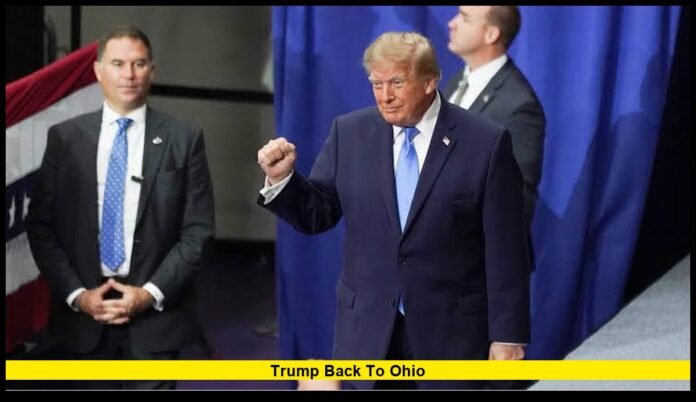

Trump back to Ohio became a major political development in the final stretch of the 2026 midterm campaign, as President Donald Trump traveled to Chillicothe for a Republican rally on October 28. The visit marked his third Ohio appearance in October, following earlier campaign events in Vandalia and Youngstown. With Election Day approaching on November 3, Trump’s return put renewed attention on Ohio’s competitive statewide races, Republican candidates, economic concerns, and the issues shaping voters’ decisions.
The latest confirmed information shows that Trump’s Chillicothe appearance was scheduled for the Shoemaker Center at Ohio University’s Chillicothe campus. The program was scheduled to begin around 5:30 p.m., with Trump expected to deliver remarks at approximately 7 p.m. The event formed part of the broader Republican effort to energize voters during the closing days of the midterm campaign.
Ohio remains an important state for both major political parties. Its Senate contest and gubernatorial race have attracted national attention, while concerns about household expenses, energy costs, manufacturing, and economic opportunity continue to influence the political debate.
Trump Returns to Ohio Ahead of the November 3 Midterms
President Trump’s October 28 visit to Chillicothe represented another effort to strengthen Republican support before voters headed to the polls. Campaign rallies allow presidents to promote their party’s candidates, highlight policy priorities, and encourage supporters to participate in elections.
This visit followed two earlier appearances in Ohio during October. Trump first campaigned in Vandalia on October 3, then traveled to Youngstown on October 12. Chillicothe became the third Ohio stop on his October campaign schedule.
The timing mattered because the November 3 election was only days away. Candidates across the country were using the final campaign period to reach undecided voters, reinforce support among their bases, and respond to criticism from their opponents.
For Republicans, Trump’s presence offered an opportunity to connect state-level candidates with the national party’s political message. His appearance also drew attention to the issues that Republican campaigns wanted voters to consider before Election Day.
The visit did not change the election date or the rules governing Ohio voting. Instead, it added another high-profile event to the state’s increasingly active campaign calendar.
Where Trump Held His Ohio Rally
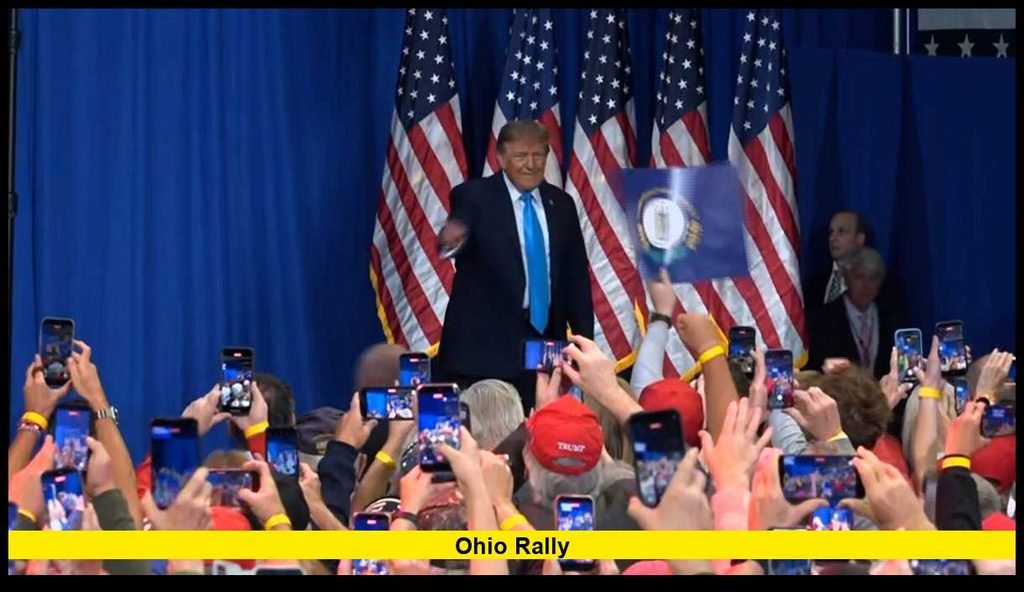
The scheduled location for Trump’s October 28 appearance was the Shoemaker Center at Ohio University’s Chillicothe campus in Chillicothe, Ohio.
The venue provided a setting for the president to address supporters during the final week of the midterm campaign. Local reporting indicated that doors were scheduled to open at 3:30 p.m., with the program beginning around 5:30 p.m. Trump was expected to speak at approximately 7 p.m.
These times described the published event schedule rather than a guarantee that every part of the program would begin exactly as planned.
The rally also required local preparations. Presidential visits typically involve security arrangements, transportation coordination, and temporary changes to nearby public access.
Ahead of the Chillicothe event, local authorities announced closures affecting parts of the city. Reported restrictions included areas around City Park Annex, Kopp Street, and a section of the Paint Creek Recreational Trail and flood wall. Additional closures could be implemented as needed.
The Federal Aviation Administration also issued temporary flight restrictions associated with presidential travel in the region. Such restrictions help protect presidential movements and are a familiar feature of visits by senior federal officials.
Residents and visitors therefore had reason to check local travel information before heading toward the event area.
Why Trump’s Return to Ohio Matters Politically
Ohio has played an important role in presidential and congressional elections for decades. Its voters include urban, suburban, and rural communities with different economic priorities and political preferences.
A presidential campaign visit can help attract media attention, increase turnout among supporters, and give local candidates a larger platform. It can also provide an opportunity to emphasize the issues that a party believes will matter most to voters.
Trump’s return to Ohio came as Republicans worked to maintain their political position in statewide races. The contest for the U.S. Senate seat and the race for governor were among the leading reasons Ohio remained prominent in national political coverage.
However, a rally alone cannot establish how voters will behave on Election Day. Attendance, enthusiasm, and campaign speeches provide information about political activity, but they do not replace election results or reliable polling.
The practical importance of the Chillicothe event was its timing. With the election approaching, the president’s appearance gave Republican candidates another opportunity to reach voters and reinforce their campaign themes.
The visit also highlighted how national political figures can influence local races without appearing on the ballot themselves.
Trump’s Earlier Ohio Visits in October 2026
Trump’s Chillicothe appearance followed two earlier Ohio campaign stops. Together, the three visits demonstrated the importance Republicans placed on the state during the final weeks before the midterms.
October 3: Trump Campaigns in Vandalia
Trump visited Butler High School in Vandalia on October 3. The rally featured his support for Republican gubernatorial candidate Vivek Ramaswamy and Republican U.S. Senate candidate Jon Husted.
During the event, Trump encouraged supporters to approach the election with the same level of enthusiasm they would bring to a presidential contest.
The Vandalia appearance also brought attention to economic concerns, immigration, energy prices, and the expansion of data centers. These subjects have become important in Ohio’s political debate because they connect national policy choices with local economic conditions.
Data center development, in particular, has raised questions about electricity demand, utility bills, water consumption, and the use of land. Supporters point to investment and economic opportunities, while critics have questioned how communities will manage the costs.
The discussion illustrated the challenge Republican candidates faced in presenting economic development as a benefit while addressing concerns about affordability.
October 12: Trump Visits Youngstown
Trump returned to Ohio on October 12 for an appearance at the Covelli Centre in Youngstown.
The event focused heavily on the economy and manufacturing. Trump presented industrial investment and economic development as evidence that his administration’s policies could benefit American workers and businesses.
Manufacturing carries particular importance in Ohio, where communities have experienced changes in employment, industrial production, and investment over several decades.
The state’s economic identity includes steel production, automotive manufacturing, machinery, logistics, and other industries. Political candidates frequently discuss these sectors when addressing jobs, wages, trade, and investment.
Trump’s Youngstown appearance therefore complemented the Vandalia rally by placing economic development near the center of his campaign message.
Chillicothe extended that campaign activity into another Ohio community as Election Day approached.
Trump’s Ohio Campaign and the Senate Race
The Ohio Senate contest has been one of the central political stories surrounding Trump’s October appearances.
Republican Jon Husted is campaigning against Democrat Sherrod Brown. Husted entered the race after receiving an appointment to fill the Senate seat previously held by JD Vance, who left the chamber to become vice president.
Brown, a former senator, is seeking to return to the chamber. The contest has attracted national attention because its outcome could influence the balance of power in Washington.
Trump’s appearances provide Husted with a prominent Republican ally during a competitive election period. Presidential support can help a candidate attract attention, mobilize party voters, and reinforce the relationship between a state campaign and the national Republican platform.
Nevertheless, voters will make the final decision through their ballots. A presidential endorsement does not automatically translate into electoral success.
Why the Senate Contest Matters
The Senate considers legislation, confirms many presidential nominees, and participates in decisions involving federal spending, national security, and judicial appointments.
Control of the chamber can affect which proposals advance and how the administration pursues its legislative priorities.
That makes competitive Senate races especially important during midterm elections. Ohio’s result could contribute to the national balance of power, although the outcome will depend on contests across multiple states.
For voters following Trump’s return to Ohio, the Senate race provides an important explanation for the political significance of the visit.
The president was not simply making a public appearance. He was participating in a broader campaign effort designed to help Republicans retain support in a state with national political consequences.
Vivek Ramaswamy and Ohio’s Governor’s Race
Ohio’s gubernatorial contest also forms part of the political background to Trump’s campaign visits.
Republican Vivek Ramaswamy is running against Democrat Amy Acton. The race has drawn attention because the winner will lead the state government and influence its policy direction.
A governor has substantial responsibilities involving the state budget, executive agencies, economic development, public administration, and the implementation of state law. The office can also influence how Ohio responds to federal policy changes and economic pressures.
Trump endorsed Ramaswamy during the October 3 event in Vandalia. That endorsement linked the governor’s race to the broader Republican campaign effort.
For Ramaswamy, support from a sitting Republican president offers a platform to reach voters who are already engaged with national politics. It also reinforces the campaign’s connection to the administration’s policy agenda.
For Acton and other Democrats, the campaign presents an opportunity to challenge Republican leadership and offer an alternative approach to state governance.
The Chillicothe visit took place within this wider political competition. However, the event itself should not be treated as evidence that either candidate has secured an advantage. Election results, verified polling, and voter participation provide more reliable measures of political outcomes.
The Economy Remains Central to Trump’s Ohio Message
Economic conditions have featured prominently in Trump’s Ohio appearances. For many voters, the most immediate questions concern the cost of daily life, employment opportunities, housing expenses, energy bills, and the outlook for local businesses.
Campaign speeches can shape how these issues are presented, but voters also evaluate their own experiences when deciding which candidates to support.
Manufacturing and Industrial Investment
Ohio has a long manufacturing tradition. Factories, suppliers, transportation networks, and industrial employers support jobs across the state.
Political leaders often present new manufacturing investment as a sign of economic strength. Such projects can bring construction work, long-term employment, and demand for local services.
However, investment announcements do not always translate immediately into jobs or higher wages. The economic impact depends on project completion, hiring, productivity, and conditions across the wider economy.
Trump’s Youngstown appearance highlighted manufacturing as a key part of his economic argument. The message was consistent with a broader Republican effort to emphasize industrial growth and domestic production.
Energy Prices and Household Costs
Energy affordability has also emerged as an important Ohio campaign issue.
Electricity and heating costs affect households, factories, commercial buildings, and public services. Higher utility bills can place additional pressure on family budgets and raise operating costs for employers.
The rapid growth of data centers has added another dimension to the debate. These facilities support computing infrastructure, including services used for artificial intelligence and cloud computing, but they can require substantial electricity and water resources.
Supporters argue that data centers can attract investment and create economic opportunities. Critics want stronger safeguards to ensure that local residents do not bear an unfair share of infrastructure costs.
Trump has defended data center development as strategically important, including in the context of competition with China. At the same time, concerns about energy costs have created a political challenge for Republicans in Ohio.
The debate illustrates the connection between national technology policy and everyday household expenses.
Data Centers Become a Major Issue in Ohio Politics
Data center development has become a significant subject in Ohio’s political conversation because it raises questions about who benefits from new investment and who pays for the infrastructure it requires.
Large computing facilities consume electricity to operate servers and maintain cooling systems. Depending on the project, they may also place demands on local water supplies, transmission infrastructure, roads, and land.
Supporters say these projects can expand the technology sector, generate tax revenue, attract private investment, and strengthen the United States’ ability to compete in artificial intelligence.
Opponents and concerned residents have raised questions about utility bills, water use, environmental impacts, and the long-term consequences of converting farmland or other land for industrial development.
These concerns matter in a state where manufacturing, agriculture, and household affordability all have political importance.
Trump’s defense of data center development has put him on one side of a debate that also affects Republican candidates. Husted has faced scrutiny over the issue, while voters continue to weigh the potential economic benefits against local costs.
For Ohio residents, the central questions involve transparency, infrastructure planning, electricity pricing, and whether new projects produce benefits that extend beyond the companies operating them.
The debate is likely to remain relevant beyond the immediate election campaign because data center construction and electricity demand involve long-term investment decisions.
What Trump’s Ohio Visit Means for Voters
The October 28 rally placed Trump directly before Ohio voters during the final days of the campaign. Its immediate political purpose was to promote Republican candidates and encourage supporters to participate in the election.
For voters, however, the significance of the event depends on the issues they consider most important.
Some may prioritize economic growth, industrial employment, immigration enforcement, or national security. Others may focus on utility bills, healthcare costs, state services, or concerns about the direction of federal policy.
The same rally can therefore carry different meanings for different communities.
Supporters may view a presidential appearance as a sign that national Republican leaders are paying attention to Ohio. Opponents may interpret the visit as an opportunity to criticize the administration’s record and mobilize Democratic voters.
Neither response determines the election result by itself.
The most useful way to evaluate the visit is to consider the candidates’ proposals, their public records, the state’s economic conditions, and the choices available to voters.
Ohio’s Senate and governor’s races will ultimately be decided by ballots cast under state election rules.
Ohio Election Timeline: Key Dates and Events
The October campaign schedule provides a clear timeline of Trump’s activity in the state.
| Date | Event |
|---|---|
| October 3, 2026 | Trump campaigns in Vandalia and backs Republican candidates. |
| October 12, 2026 | Trump appears at the Covelli Centre in Youngstown. |
| October 28, 2026 | Trump is scheduled to hold a rally at the Shoemaker Center in Chillicothe. |
| November 1, 2026 | Ohio’s early-voting period is scheduled to conclude on Sunday. |
| November 3, 2026 | Election Day for the 2026 midterm elections. |
These events show how the Ohio campaign intensified as Election Day approached. The schedule also places the Chillicothe rally within a broader national effort to mobilize voters in competitive races.
Ohio residents should rely on official state and county election information for voting locations, deadlines, identification requirements, and ballot procedures.
How to Follow Updates About Trump’s Ohio Visit
Readers following the latest developments should distinguish between confirmed information and campaign speculation.
Presidential schedules, official campaign announcements, local government notices, and established news coverage can help verify event details. Video of the president’s remarks can also provide context, although campaign speeches should be evaluated alongside independent reporting and other available evidence.
The most important details to verify include:
- Whether the president has completed the scheduled appearance.
- The substance of his remarks in Chillicothe.
- Any new endorsements or policy announcements.
- Changes to local traffic restrictions and public access.
- Developments in the Ohio Senate and governor’s races.
- Official voting deadlines and election results.
Because the Chillicothe event was scheduled for October 28, it is important to distinguish its announced program from any later-confirmed account of what actually occurred. A planned speech time alone does not establish the exact time Trump took the stage or the complete content of his remarks.
The same principle applies to campaign claims about jobs, prices, investment, and electoral support. Specific figures should be checked against reliable data before being presented as established facts.
What Happens After Trump’s Return to Ohio?
The next major milestone is Election Day on November 3. The results will determine the winners of Ohio’s statewide contests and contribute to the national balance of power in Congress.
Until votes are counted, campaign events remain part of the effort to persuade and mobilize the electorate. Rallies may generate attention, but they cannot substitute for certified results.
The Ohio Senate race will be closely watched because the result could affect the chamber’s composition. The gubernatorial election will also determine the direction of state executive leadership.
For the Trump administration, Republican performance in the midterms will provide a significant measure of the party’s standing with voters. For Ohio residents, the outcome will shape the political leadership responsible for decisions affecting the state and its communities.
Trump’s return to Ohio underscores the importance both parties have placed on the state during the final campaign stretch. It also shows how national political figures are using in-person events to support candidates and communicate their priorities.
The longer-term impact will depend on election results, legislative decisions, economic conditions, and whether the candidates’ promises translate into policies that affect Ohio residents.
Frequently Asked Questions
Why did Trump return to Ohio in October 2026?
Trump returned to campaign for Republican candidates ahead of the November 3 midterm elections. His October 28 appearance in Chillicothe followed earlier rallies in Vandalia and Youngstown.
Where was Trump’s October 28 Ohio rally scheduled?
The rally was scheduled for the Shoemaker Center at Ohio University’s Chillicothe campus in Chillicothe, Ohio.
What time was Trump expected to speak in Chillicothe?
The published schedule indicated that the program would begin around 5:30 p.m. and Trump was expected to speak at approximately 7 p.m. Those were scheduled times, not independent confirmation of the actual start.
How many times did Trump visit Ohio in October 2026?
The published campaign schedule and local reporting identified three Ohio appearances: Vandalia on October 3, Youngstown on October 12, and Chillicothe on October 28.
Which Republican candidates received Trump’s support in Ohio?
Trump backed Vivek Ramaswamy in the governor’s race and Jon Husted in the U.S. Senate contest. Both races were important parts of Ohio’s 2026 midterm campaign.
Who is Jon Husted running against in Ohio’s Senate race?
Husted is running against Democrat Sherrod Brown. The contest has attracted national attention because it could affect the balance of power in the U.S. Senate.
Why are data centers an issue in Ohio’s election campaign?
Data centers can attract investment and support technology development, but they also raise concerns about electricity demand, utility bills, water consumption, and land use. Those questions have become part of the state’s political debate.
When is Election Day in Ohio in 2026?
Election Day is Tuesday, November 3, 2026. Voters should check official election information for their county to confirm local voting details and deadlines.
Does Trump’s Ohio rally determine the outcome of the election?
No. A rally can influence campaign attention and voter enthusiasm, but election outcomes depend on ballots cast and officially counted under applicable election rules.
What should readers watch for after Trump’s Chillicothe visit?
Readers should watch for confirmed details of the president’s remarks, campaign developments, changes in the Senate and governor’s races, and official election results.
Trump’s return to Ohio put the state’s 2026 midterm contests in the national spotlight, and readers can share their views on the visit and follow confirmed developments as Election Day approaches.