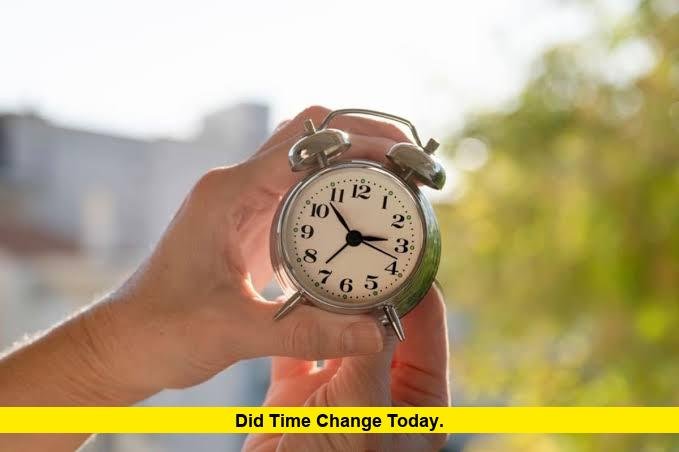

Did time change today? In the United States, the answer is no. Most Americans keep their clocks on daylight saving time this Sunday, October 25, 2026. The fall change arrives one week later, on Sunday, November 1, at 2 a.m. local time. Clocks in the United Kingdom and much of Europe did move back one hour this morning, which explains the mix-up.
Quick Answer: Did the Clocks Change Today?
The answer depends on where you live. The table below shows where clocks moved today and where they stay put.
| Region | Clock change today? | Next change |
|---|---|---|
| Most of the U.S. | No | Fall back on Nov. 1, 2026 |
| United Kingdom | Yes, back one hour at 2 a.m. | Forward on March 28, 2027 |
| Much of Europe | Yes, back one hour | Forward in late March 2027 |
| Hawaii and most of Arizona | No | No change, ever |
Americans who spotted a UK or European headline this morning can relax. Your clocks need no adjustment today.
Why Some Places Changed Their Clocks Today
The United Kingdom ended British Summer Time at 2 a.m. today. Clocks jumped back to 1 a.m., and the country returned to Greenwich Mean Time. The UK follows a fixed rule. Clocks go back on the last Sunday in October and forward on the last Sunday in March.
Much of Europe follows a similar schedule and also changed its clocks on the last Sunday of October. The United States uses a different rule, so American clocks wait until the first Sunday in November.
The UK will stay on Greenwich Mean Time until Sunday, March 28, 2027. British Summer Time returns on that date.
What the One-Week Gap Means for Calls and Travel
The mismatch creates a short scheduling headache. London normally runs five hours ahead of New York. Today, London dropped to Greenwich Mean Time while New York stays on Eastern Daylight Time. The gap shrinks to four hours this week.
The usual five-hour gap returns once U.S. clocks fall back on November 1. Remote teams, traveling families, and anyone joining video calls with UK or European contacts should double-check meeting times until then.
When Do U.S. Clocks Fall Back in 2026?
Daylight saving time ends on Sunday, November 1, 2026, at 2 a.m. local time. At that moment, clocks move back to 1 a.m. The country returns to standard time and gains an extra hour of sleep.
Most smartphones, computers, and connected smart home devices update on their own overnight. Analog wall clocks, car dashboards, microwaves, and ovens need a manual change. Plan to adjust them before bed on Saturday night, October 31.
Why the U.S. Waits Until November
The Uniform Time Act of 1966 sets the national schedule. Daylight saving time starts on the second Sunday in March and ends on the first Sunday in November. Congress last lengthened that stretch by four weeks in 2007.
This year, daylight saving time began on Sunday, March 8, 2026. It runs through November 1, so the country spends nearly eight months on daylight saving time.
Key Clock Dates for 2026 and 2027
| Date | What happens |
|---|---|
| March 8, 2026 | U.S. clocks spring forward (already happened) |
| October 25, 2026 | UK and much of Europe fall back (today) |
| November 1, 2026 | U.S. clocks fall back at 2 a.m. |
| March 14, 2027 | U.S. clocks spring forward from 2 a.m. to 3 a.m. |
| March 28, 2027 | UK clocks go forward one hour |
Where Clocks Never Change
Not every American changes the clocks twice a year. Hawaii and most of Arizona stay on standard time all year. Five U.S. territories also skip daylight saving time: American Samoa, Guam, the Northern Mariana Islands, Puerto Rico, and the U.S. Virgin Islands.
Residents of those places never need to ask whether the time changed. Their clocks stay the same in every season.
What Changes After the Fall Back
Turning the clocks back does not remove daylight. It shifts daylight toward the morning. Sunrise and sunset both arrive about one hour earlier after November 1.
Expect brighter mornings and darker late afternoons. Standard time then stays in place for roughly four months, through the coldest stretch of the year. Daylight saving time returns on March 14, 2027, when clocks spring forward and the country loses an hour of sleep.
Will Congress Stop the Clock Changes?
The Sunshine Protection Act, known as H.R. 139, would make daylight saving time permanent nationwide. The House passed the bill on July 14, 2026. The measure now sits in the Senate, and senators have not voted on it.
The bill would not affect Hawaii, most of Arizona, or territories that already skip daylight saving time. States could choose permanent standard time instead, but they would need to make that choice before the bill becomes law.
President Donald Trump has publicly voiced support for the bill. Nineteen states have approved laws that would adopt permanent daylight saving time once Congress allows it.
For clocks to stay put on November 1, the Senate would need to pass the bill and the president would need to sign it first. No vote has happened as of today. The November 1 change remains on schedule.
Why Permanent Time Stays Controversial
Supporters say brighter evenings encourage outdoor activity. They also argue that the change could reduce crime, traffic incidents, and energy use. Many families simply want to stop switching clocks twice a year.
Critics raise concerns about dark winter mornings, especially in northern states. Sleep specialists and medical groups, including the American Academy of Sleep Medicine, argue that permanent standard time fits the body’s natural rhythms better.
Some lawmakers want that alternative. Rep. Pat Harrigan of North Carolina introduced the Sunshine for Our Kids Act. It would make standard time the national default and let states opt into daylight saving time.
What to Do This Week
A few simple steps keep the changeover smooth:
- Keep your normal schedule today, because U.S. clocks did not change.
- Double-check meeting times with UK and European contacts through Saturday.
- Set analog clocks, car dashboards, microwaves, and ovens back one hour on Saturday night, October 31.
- Expect earlier sunsets starting Sunday, November 1.
- Watch for Senate news if you want to know whether the fall change could still shift.
Quick Answers to Common Questions
- Did the clocks change in the U.S. today? No. U.S. clocks change on November 1.
- Did the UK change its clocks today? Yes. UK clocks went back one hour at 2 a.m.
- Do we gain or lose an hour on November 1? You gain an hour of sleep.
- When do U.S. clocks spring forward next? Sunday, March 14, 2027, unless Congress acts first.
- Does every state change its clocks? No. Hawaii and most of Arizona stay on standard time.
Did your phone or oven clock surprise you this weekend? Share your thoughts in the comments and check back for the latest news on the Sunshine Protection Act.