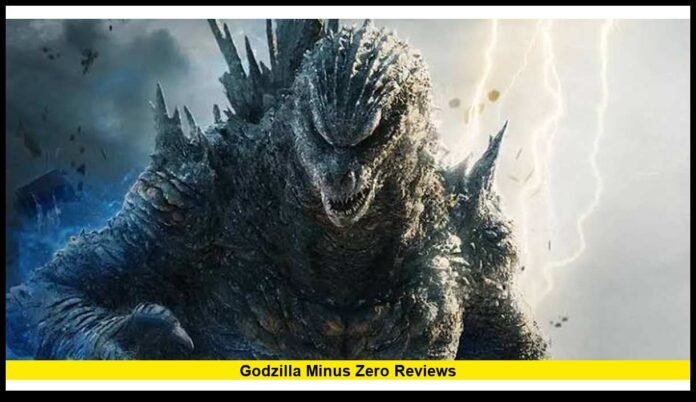

Godzilla Minus zero reviews are arriving ahead of the movie’s U.S. theatrical release, with early critics largely responding positively to Takashi Yamazaki’s highly anticipated follow-up to Godzilla Minus One. After its world premiere at the 2026 New York Film Festival, the sequel has already generated a substantial wave of professional reviews, giving audiences an early look at how the new film compares with its acclaimed predecessor.
As of October 3, 2026, Godzilla Minus Zero holds a 97% Tomatometer score from 32 critic reviews on Rotten Tomatoes. Its audience score has not yet been established because the film has not opened widely in U.S. theaters. Rotten Tomatoes lists the movie for a November 6, 2026 wide theatrical release in the United States.
The early critical response is not completely unanimous. Many reviewers praise the larger scale, visual effects, monster action and emotional storytelling, while some argue that the sequel does not consistently match the impact of Godzilla Minus One. That difference in opinion makes the early review picture more nuanced than a simple collection of positive reactions.
Godzilla Minus Zero reunites director and screenwriter Takashi Yamazaki with returning stars Ryûnosuke Kamiki and Minami Hamabe. The story moves forward two years after the events of Godzilla Minus One and again places postwar Japan at the center of a new kaiju crisis.
Current Rotten Tomatoes Score for Godzilla Minus Zero
The most significant early review indicator is Rotten Tomatoes, where Godzilla Minus Zero currently has a 97% Tomatometer rating based on 32 reviews.
That figure places the sequel just below Godzilla Minus One, which currently carries a 99% Tomatometer score on the platform.
The comparison is important because the 2023 film became one of the most critically successful entries in the long-running Godzilla franchise. Its reputation also grew after its international theatrical run and historic Academy Award victory for Visual Effects.
The current Rotten Tomatoes score for the sequel shows that critics have responded strongly to Yamazaki’s latest work, but the number should be viewed as an early figure. More reviews can still be added as the theatrical release approaches.
Rotten Tomatoes has also not established a verified audience score for Godzilla Minus Zero yet. That is expected because the movie is still awaiting its wide U.S. release.
For now, professional critics provide the clearest available indication of the film’s reception.
What Critics Like About the Sequel
Several early reviews highlight the movie’s combination of human drama and large-scale monster spectacle.
That balance was one of the defining characteristics of Godzilla Minus One, and Yamazaki again places considerable attention on the people living through the destruction rather than treating the monsters as the entire story.
Critics have specifically praised the film’s visual presentation. The sequel increases the scale of the action while maintaining the director’s emphasis on practical-looking environments, detailed creature work and carefully constructed sequences.
The larger monster set pieces have also attracted attention.
Godzilla remains the central attraction, but the sequel introduces another major kaiju threat, giving the story a broader conflict than the previous movie.
Several reviewers have described the monster sequences as spectacular, intense and technically ambitious. Others have pointed to the way Yamazaki builds tension before allowing the largest action moments to take over.
That approach means the film does not constantly place Godzilla on screen.
Instead, the movie uses anticipation and human reactions to build the significance of each major monster appearance.
Why the Human Story Matters in the Reviews
One of the most consistent subjects in early reviews is the human story.
Godzilla Minus One became notable because its emotional storyline received almost as much attention as its monster action. Godzilla Minus Zero follows the same broad filmmaking philosophy.
The story returns to Kōichi Shikishima, played by Ryûnosuke Kamiki, and Noriko Ôishi, played by Minami Hamabe.
The sequel is set in 1949, several years after the end of World War II. Japan is still dealing with the consequences of war while attempting to rebuild ordinary life.
The story therefore does not begin from a position of stability.
The characters are still living with loss, fear and the consequences of earlier events. The arrival of another catastrophic threat disrupts that fragile recovery.
Some reviewers have praised this emotional dimension. They see the film as more than a conventional monster sequel because the kaiju conflict remains connected to the characters’ experiences.
Other critics have been less enthusiastic about the amount of time devoted to the human characters.
That difference is one of the clearest themes in the early reviews. Viewers expecting nonstop monster action may find the pacing more deliberate, while audiences interested in Yamazaki’s character-focused approach may appreciate the additional drama.
Godzilla Minus Zero and the Return of Ghidorah
Another major subject in early reviews is the introduction of Ghidorah.
The three-headed monster is one of the most recognizable creatures in the Godzilla franchise. Its appearance gives Godzilla Minus Zero a new threat alongside Godzilla.
The sequel therefore expands its monster mythology without abandoning the grounded postwar setting established by Godzilla Minus One.
Early critics have noted that the presence of another major kaiju changes the scale of the story.
Instead of focusing exclusively on humanity’s struggle against Godzilla, the movie develops a conflict involving multiple enormous threats.
That creates opportunities for larger action sequences.
At the same time, the film continues to connect those battles to its human characters. The people on the ground remain vulnerable, and their attempts to survive the destruction provide much of the tension surrounding the monster encounters.
Some Critics Say It Does Not Match Minus One
Although the overall early response is strongly positive, not every reviewer considers Godzilla Minus Zero equal to its predecessor.
One criticism concerns emotional impact.
Godzilla Minus One surprised audiences by combining devastating monster destruction with a deeply personal story about guilt, survival and rebuilding. Some reviewers believe the sequel occasionally struggles to recreate that same emotional balance.
Other criticism concerns pacing.
Several reviews note that Godzilla does not dominate the movie from beginning to end. The film spends significant time establishing the human situation and developing its postwar setting.
For critics who wanted more monster action, that structure can make portions of the movie feel slower.
The Daily Beast, for example, has argued that the movie delays its central monster presence for too long and that the eventual kaiju confrontations do not always provide the same depth as the strongest sequences in the first film.
Time Out has also been critical of the sequel’s pacing, describing it as an underwhelming follow-up and arguing that it spends too much time away from its titular monster.
Those criticisms are important because they show that the 97% Rotten Tomatoes score does not mean every critic considers the movie flawless.
Other Reviews Praise the Larger Scale
The opposite reaction has also been strongly represented.
The Guardian praised the sequel’s combination of postwar drama and spectacular action. Its review highlighted the movie’s treatment of human resilience while also recognizing the impact of its visual effects.
The New York Post described the film as a thrilling continuation of the Japanese franchise and praised its mixture of emotional storytelling and monster spectacle.
Vulture also highlighted the film’s ability to deliver major kaiju action while maintaining its focus on people dealing with the consequences of war.
RogerEbert.com gave the film 3 out of 4 stars. That review praised aspects of the movie while noting that it does not reach the same heights as Godzilla Minus One.
This range of responses is useful for understanding the current critical picture. The sequel has attracted significant praise, but critics continue to debate how effectively it follows one of the most acclaimed modern Godzilla films.
How the Reviews Compare With Godzilla Minus One
The comparison between the two movies is unavoidable.
Godzilla Minus One currently has a 99% Tomatometer score on Rotten Tomatoes, while Godzilla Minus Zero currently stands at 97% from 32 reviews.
That two-point difference is relatively small, especially considering that the sequel has not yet reached its U.S. theatrical release.
The critical records also reflect different stages of each movie’s release history.
Godzilla Minus One has had years to accumulate reviews, audience reactions and continued discussion. Godzilla Minus Zero is only beginning its public theatrical journey.
The audience response could therefore change significantly once American moviegoers have seen the sequel.
For now, the available critic data shows that Yamazaki has successfully avoided a major critical backlash despite the enormous expectations created by the previous film.
What Metacritic Says Right Now
Metacritic presents a different situation.
As of October 3, 2026, its listing for Godzilla Minus Zero does not yet provide a Metascore because its critic review database has not reached the point required to calculate one.
The platform also does not currently show a user score for the movie.
That means Rotten Tomatoes is currently the main major review aggregator providing a numerical critic score for the sequel.
The absence of a Metacritic score should not be interpreted as a negative assessment. It simply means the platform has not yet accumulated enough qualifying reviews to publish its aggregate score.
That distinction matters when searching for the latest information about the movie.
Why the 97% Score Matters Before the U.S. Release
The current 97% Rotten Tomatoes score gives U.S. audiences a strong indication of the film’s early critical reception before its November release.
However, the score does not measure every aspect of the movie.
A Tomatometer score represents the percentage of collected critic reviews classified as positive by Rotten Tomatoes. It does not function as a traditional average rating.
That means a 97% score should not be read as saying that every critic gave the movie a near-perfect numerical grade.
The individual reviews show a wider range of reactions.
Some critics have described the sequel as spectacular and emotionally powerful. Others have found it slower or less effective than Godzilla Minus One.
Looking beyond the percentage provides a clearer picture of what audiences can expect.
Release Status in the United States
Godzilla Minus Zero is scheduled to open widely in U.S. theaters on November 6, 2026.
GKIDS is handling the U.S. distribution.
The film carries an R rating for bloody images and some violent content.
That rating represents a notable change from Godzilla Minus One, which received a PG-13 rating in the United States.
The movie has a reported runtime of approximately 2 hours and 15 minutes according to Rotten Tomatoes’ current listing.
The theatrical release is particularly significant because the majority of existing reviews come from festival screenings rather than ordinary nationwide showings.
That means the current review picture reflects professional critics who have already attended screenings, while the broader audience reaction remains unavailable.
What the Early Reviews Reveal About the Movie’s Tone
The reviews indicate that Godzilla Minus Zero remains serious in tone.
The film continues to explore postwar Japan rather than moving the franchise toward the lighter approach found in some other modern monster movies.
The setting also allows Yamazaki to continue exploring the consequences of destruction.
The characters are attempting to build ordinary lives after an extraordinary catastrophe. Their progress is disrupted when another enormous threat appears.
That structure gives the sequel a clear connection to its predecessor.
At the same time, the larger monster conflict gives the movie a different scale.
The early reviews repeatedly identify visual spectacle as one of the sequel’s major strengths.
Will the Audience Score Change the Current Picture?
Yes, but that reaction has not arrived yet in a measurable way.
Rotten Tomatoes currently lists 0 verified audience ratings for Godzilla Minus Zero. The reason is straightforward: the movie has not yet opened widely in U.S. theaters.
Once audiences can see the movie, the Popcornmeter will begin providing a separate measurement of viewer response.
That score could move in the same direction as the critic score, or it could produce a noticeably different picture.
The audience reaction to Godzilla Minus One was highly positive, and the first film developed a strong fan following after its release.
Whether the sequel generates the same level of enthusiasm remains something that cannot be established until more viewers have seen it.
Current Review Snapshot
Here is the confirmed review situation as of October 3, 2026:
| Review category | Current status |
|---|---|
| Rotten Tomatoes | 97% Tomatometer |
| Rotten Tomatoes critic reviews | 32 |
| Rotten Tomatoes audience score | Not yet available |
| Metacritic | No Metascore yet |
| U.S. theatrical release | November 6, 2026 |
| Director | Takashi Yamazaki |
| Screenwriter | Takashi Yamazaki |
| Rating | R |
| Runtime listed by Rotten Tomatoes | 2 hours, 15 minutes |
| Main returning stars | Ryûnosuke Kamiki, Minami Hamabe |
| Setting | 1949 Japan |
These figures reflect the currently available listings and can change as additional reviews and audience ratings are added.
What Viewers Should Know Before the Movie Opens
The early critical response suggests that audiences should not approach Godzilla Minus Zero simply as a nonstop monster battle.
The film continues the character-driven approach that defined Godzilla Minus One.
There are substantial human-story elements, postwar themes and periods in which the movie focuses on its characters rather than Godzilla.
At the same time, critics have repeatedly recognized the scale of the monster sequences.
The sequel is designed to build upon the previous film rather than simply repeat it.
That distinction explains why some reviews praise its ambition while others criticize its pacing.
The strongest consensus so far concerns the movie’s technical presentation. Visual effects, creature design, sound and large-scale action have received considerable attention in the early critical coverage.
The biggest disagreement centers on storytelling balance.
Some critics consider the human drama essential to the movie’s success. Others believe the sequel spends too much time away from its monsters.
What the Current Reviews Mean for Fans
The available evidence shows that Godzilla Minus Zero has entered its theatrical rollout with strong early critical support.
Its 97% Rotten Tomatoes score places it among the better-reviewed Godzilla films currently listed by the platform.
Still, the number should not be treated as a final verdict.
The movie has not yet opened across the United States, its Rotten Tomatoes audience score remains unavailable, and Metacritic has not published an aggregate score.
Those missing measurements will become increasingly important after November 6.
For now, the most reliable conclusion from the available reviews is that critics see the sequel as a serious continuation of Yamazaki’s postwar Godzilla story, with ambitious visual effects, larger monster action and substantial human drama.
The reaction is overwhelmingly positive, but several respected reviewers have also identified differences from Godzilla Minus One, particularly in pacing and emotional impact.
That makes the current review landscape more interesting than the headline score alone suggests.
For viewers interested in more entertainment and streaming coverage beyond theatrical releases, you can also explore the latest Netflix The Widower Rotten Tomatoes updates.
Frequently Asked Questions
What is the current Rotten Tomatoes score for Godzilla Minus Zero?
As of October 3, 2026, Godzilla Minus Zero has a 97% Tomatometer score based on 32 critic reviews.
Does Godzilla Minus Zero have an audience score yet?
No. Rotten Tomatoes currently lists zero verified audience ratings because the film has not yet received its wide U.S. theatrical release.
What is the Metacritic score for Godzilla Minus Zero?
Metacritic has not yet published a Metascore for the movie. Its current listing says critic reviews are not yet available for calculating the score.
When does Godzilla Minus Zero release in U.S. theaters?
The film is scheduled for a wide U.S. theatrical release on November 6, 2026.
Who directed Godzilla Minus Zero?
Takashi Yamazaki directed and wrote the sequel.
Does Godzilla Minus Zero continue Godzilla Minus One?
Yes. The sequel takes place two years after the events of Godzilla Minus One and continues the story of the Shikishima family.
Is Godzilla Minus Zero rated R?
Yes. Rotten Tomatoes lists the film as R for bloody images and some violent content.
How long is Godzilla Minus Zero?
Rotten Tomatoes currently lists the runtime at approximately 2 hours and 15 minutes.
Does Godzilla Minus Zero feature Ghidorah?
Yes. Early reviews and coverage confirm that Ghidorah is part of the new monster conflict in the sequel.
Is Godzilla Minus Zero receiving better reviews than Godzilla Minus One?
The current Rotten Tomatoes scores do not show that. Godzilla Minus One currently has a 99% Tomatometer score, while Godzilla Minus Zero has a 97% score from 32 reviews. The sequel’s review total can still change as more critics publish their assessments.
Are all reviews for Godzilla Minus Zero positive?
No. While the overall Rotten Tomatoes score is very high, individual critics have expressed reservations about pacing, the amount of human drama and how effectively the sequel matches the emotional impact of Godzilla Minus One.
Why are there no audience reviews yet?
The movie has premiered for critics at the New York Film Festival, but its wide U.S. theatrical release is scheduled for November 6, 2026. The broader audience response will become measurable after more viewers see it.
What are critics praising most about Godzilla Minus Zero?
The strongest praise has focused on the visual effects, monster action, emotional storytelling, postwar setting and Takashi Yamazaki’s direction.
What is the main criticism of Godzilla Minus Zero?
Some critics believe the movie takes too long to deliver its biggest monster moments and does not always reproduce the emotional impact of Godzilla Minus One.
The early reviews have already made Godzilla Minus Zero one of the most closely watched Godzilla releases of 2026, and the next major shift in its reception will come when U.S. audiences finally see the film on November 6.
Share your thoughts on the early reviews and stay tuned as the audience response and final review scores develop.