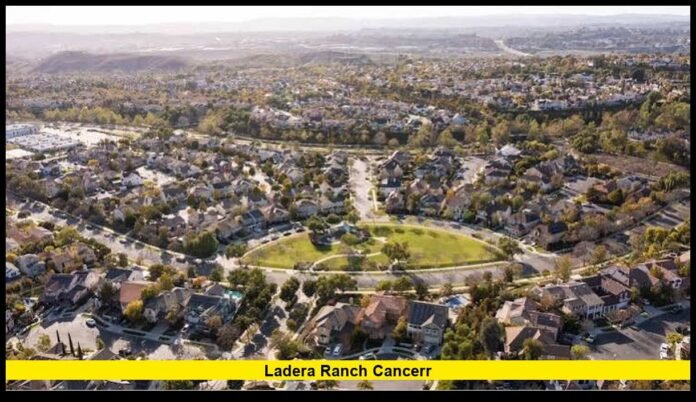

The ladera ranch cancer investigation is entering a new phase as researchers collect soil and water samples while California health officials conduct a focused review of reported childhood and young-adult cancer cases. At the center of the concern are at least six reported cases of Ewing sarcoma, a rare cancer affecting bones or nearby soft tissue. Officials have not established that the cases are connected to one another or to an environmental exposure, but the reports have prompted state, local and federal attention.
Why Ladera Ranch Is Under Investigation
Ladera Ranch is a planned community in Orange County, California, with roughly 26,000 residents. Concern intensified after families began sharing information about children and young adults diagnosed with Ewing sarcoma.
The disease is uncommon and primarily affects children, teenagers and young adults. Because of its rarity, several reported cases in one community have generated questions about whether the number is higher than would normally be expected.
Community members have raised several possible environmental explanations. Pesticides and herbicides used in landscaping have received substantial attention, while residents have also asked questions about drinking and irrigation water, soil conditions, historic land uses and nearby oil and gas infrastructure.
Those questions remain under investigation. No specific environmental cause has been identified.
The California Department of Public Health is conducting a dedicated cancer concern assessment using California Cancer Registry data. The review is intended to determine whether the incidence of selected cancers in the Ladera Ranch area is higher than expected.
New Environmental Testing Begins
One of the most significant recent developments came in September 2026, when researchers from California State University, Fullerton began preliminary environmental sampling in Ladera Ranch.
The research team is collecting soil and water samples from community locations, including parks. The samples are being examined for potential contaminants such as heavy metals and pesticides.
The testing is designed to generate actual environmental data rather than relying solely on historical records or resident reports. Researchers can use those results to determine whether additional sampling or more detailed scientific studies are appropriate.
The testing does not establish that an environmental contaminant caused cancer. Even if a chemical is detected, scientists would need to determine its concentration, potential exposure routes, duration of exposure and biological relevance before drawing conclusions about health effects.
Researchers have indicated that preliminary results are expected later in 2026.
What California Health Officials Are Reviewing
The California Department of Public Health has created a focused assessment specifically addressing community concerns.
The state’s California Cancer Registry is reviewing cancer incidence information for the Ladera Ranch area, including Ewing sarcoma and other cancer types identified as relevant to the investigation.
The current assessment is more geographically focused than the earlier county-level review conducted in 2024. State officials now have cancer case information through 2023 as well as census-tract-level data that can support a more localized analysis.
The assessment is expected to be completed in fall 2026, although officials have said the timetable could change if the scope becomes more complicated or additional information needs to be evaluated.
The central question is statistical: Are cancer diagnoses occurring at a rate higher than expected for the population being studied?
That question has to be answered before investigators can determine whether a meaningful cancer pattern exists.
What the Earlier Review Found
A 2024 county-level analysis did not identify an unusual cancer pattern in Orange County, but the state has explained that the data available at that time had limitations.
A county-wide analysis covers a much larger population than Ladera Ranch. A smaller geographic pattern can potentially be obscured when data are combined across an entire county.
The new assessment is therefore designed to examine Ladera Ranch more closely and use newer information.
The distinction is important because the absence of an unusual pattern at the county level does not prove that no localized pattern exists. At the same time, reported cases within a neighborhood do not by themselves establish that the community has a statistically confirmed cancer cluster.
The current state assessment is intended to provide that additional statistical evidence.
Pesticide Concerns Remain a Major Focus
Pesticide use has become one of the most visible issues in the community debate.
Ladera Ranch contains extensive landscaped areas, parks, pathways and common spaces maintained through homeowners-association and property-management operations. Residents have questioned whether repeated applications of herbicides and other landscape products could have created an exposure risk.
The California Department of Public Health says pesticide use is one of the specific concerns being considered. The Department of Pesticide Regulation and the Orange County Agricultural Commissioner are also reviewing local pesticide-use information.
That work includes examining application records, interviewing pesticide companies and reviewing training and operational information. Officials can use those records to determine what products were used, where they were applied and whether applications complied with applicable requirements.
A review of pesticide practices is different from a medical determination. Showing that a product was used in an area does not demonstrate that residents were exposed to a harmful dose or that the exposure caused a particular cancer.
Changes to Local Landscape Management
The investigation has already influenced landscape-management discussions.
Ladera Ranch Maintenance Corporation, commonly known as LARMAC, has taken steps to reduce or pause certain synthetic landscape treatments while its practices are being reviewed.
The organization has also been considering a longer-term approach that relies more heavily on organic-compatible, cultural, biological and mechanical methods where practical.
These changes have attracted attention beyond the immediate cancer investigation because they could affect how large planned communities approach weed control, landscaping and pesticide management.
Some residents want a permanent reduction in synthetic pesticide use. Others have emphasized the need to balance environmental concerns with the practical requirements of maintaining large landscaped areas.
The policy discussion, however, should not be confused with proof of a cancer cause. LARMAC’s changes are precautionary and responsive to community concerns; they do not establish that landscape chemicals caused the reported diagnoses.
Federal and State Attention
The issue has moved beyond local community meetings.
State legislators and other public officials have called for additional investigation and coordination among health and environmental agencies. A request for federal environmental review was also made during the summer.
The agencies involved include California public-health officials, California environmental regulators, the Department of Pesticide Regulation, the Orange County Agricultural Commissioner’s Office and federal environmental authorities.
The goal of coordinating these efforts is to avoid examining the cancer reports and environmental questions in isolation.
Cancer registry data can indicate whether diagnoses occur more frequently than expected. Environmental investigations can identify potential contaminants or exposure pathways. Medical research can provide information about known and unknown risk factors.
Combining these lines of evidence gives investigators a better basis for determining what questions can actually be answered.
What Is Known About Ewing Sarcoma?
Ewing sarcoma is a rare malignant tumor that most commonly develops in bone or soft tissue.
It is seen primarily in children, adolescents and young adults. Symptoms can vary depending on where the tumor develops, but pain, swelling or a mass can occur.
The disease is uncommon enough that even specialists encounter relatively few cases compared with more common childhood cancers.
Researchers have not identified a known lifestyle or environmental cause of Ewing sarcoma. Genetic and biological factors are believed to play important roles, but the rarity of the disease makes risk-factor research difficult.
That scientific background is one reason the Ladera Ranch investigation requires careful statistical and environmental analysis.
The presence of several reported cases is a reason for investigation, but it cannot by itself demonstrate a shared cause.
Could Water or Soil Be Responsible?
Water and soil are among the environmental questions being examined.
Residents have asked whether substances in soil or water could have exposed children over a long period. The new sampling program is intended to provide measurable information about environmental conditions.
Investigators can look for substances such as heavy metals and pesticide residues. If something is detected, additional questions would follow: How much is present? Is it naturally occurring or associated with human activity? Could residents have been exposed? For how long? And is the concentration high enough to be biologically meaningful?
Those questions are essential because the simple detection of a chemical does not prove that it caused disease.
Environmental exposure investigations generally require multiple pieces of evidence before a causal relationship can be established.
What About Oil and Gas Wells?
Historic oil and gas infrastructure has also attracted community attention.
Residents have raised questions about abandoned or idle wells and whether they could represent an environmental pathway. Such concerns have led to calls for additional review of certain well sites.
However, the scientific evidence does not currently establish that an oil or gas well caused the reported Ewing sarcoma cases in Ladera Ranch.
Research into possible environmental pathways must distinguish between a theoretical route of exposure and evidence showing that people were actually exposed to a substance at a level capable of producing a health effect.
That distinction will remain important as investigators review historical land-use records alongside new environmental measurements.
What Happens Next?
The next major milestone is the California Department of Public Health’s cancer assessment.
The agency expects the review to be completed in fall 2026. Its findings should help clarify whether the number of selected cancer diagnoses in Ladera Ranch is statistically higher than expected.
Environmental testing is also continuing. The Cal State Fullerton research effort could provide another layer of evidence about soil and water conditions.
Pesticide-use reviews by state and county authorities will add information about what products were used and how they were applied.
Local landscape-management changes will continue to develop as LARMAC evaluates alternatives to routine synthetic pesticide use.
These investigations are complementary, but they are not interchangeable. A cancer-incidence study can identify an unusual pattern without identifying a cause. Environmental testing can find contaminants without proving that they caused illness.
A credible conclusion will require the evidence from these different efforts to be evaluated together.
What Residents Should Watch For
Residents following the investigation should pay particular attention to several developments.
First is the state cancer assessment. Its statistical findings will be central to determining whether the reported diagnoses represent an unusual pattern.
Second are environmental sampling results. Soil and water testing may reveal whether particular contaminants are present in locations accessible to residents.
Third is the pesticide-use review. Records can help establish what products were applied, when they were used and whether applications complied with regulations.
Finally, any future research linking medical and environmental information could help investigators understand whether a common exposure pathway is plausible.
Until those pieces are available, claims about a specific cause should be treated cautiously.
The Bigger Public-Health Question
The Ladera Ranch investigation illustrates why suspected cancer clusters are difficult to evaluate.
Communities naturally look for explanations when several families experience rare illnesses. Scientists, however, must determine whether the number of cases is statistically unusual and then investigate possible exposures.
Rare diseases can appear geographically concentrated by chance, especially when a community actively searches for cases and families begin sharing information.
At the same time, an unusual pattern should not automatically be dismissed without investigation.
The purpose of the current review is to move the discussion from reports and concerns toward measurable evidence.
For families affected by cancer, the scientific process can feel slow. But distinguishing what is known from what remains uncertain is essential to reaching reliable conclusions.
Current Status of the Investigation
As of the latest update, the investigation remains open.
At least six children or young people connected to Ladera Ranch have been reported as having Ewing sarcoma, and the cases have prompted extensive community concern.
California health officials have not concluded that cancer incidence is elevated in the community. They have also not identified a specific environmental cause.
Environmental sampling is now underway, and pesticide-use records are being reviewed.
LARMAC has made changes to landscape-management practices while considering longer-term alternatives.
The state expects its focused cancer assessment in fall 2026, while researchers continue gathering environmental information.
The most important unanswered questions are whether the reported cancer incidence is statistically higher than expected and, if so, whether a common exposure or other factor could help explain the pattern.
For now, the investigation remains a search for evidence rather than a confirmed explanation. The forthcoming health assessment and environmental testing results will be closely watched by families, residents and public-health officials.
╔════════════════════════════════════════════════════════════════════╗
║ – At least six Ewing sarcoma cases among children and young people have been reported in Ladera Ranch. ║
║ – California health officials are conducting a focused review using updated cancer registry and census-tract data. ║
║ – Cal State Fullerton researchers have begun collecting soil and water samples in the community. ║
║ – Pesticide and herbicide use is being investigated, but no causal connection to the cancer cases has been established. ║
║ – LARMAC has taken steps to reduce or pause certain synthetic landscape treatments while longer-term practices are reviewed. ║
║ – The state expects its cancer concern assessment to be completed in fall 2026, subject to the scope of the review. ║
╚════════════════════════════════════════════════════════════════════╝