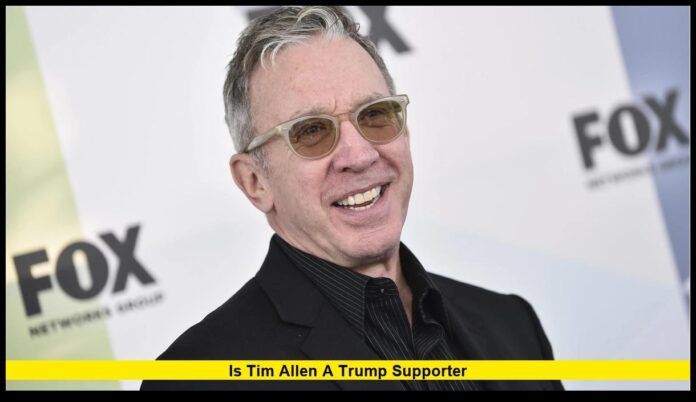

Tim Allen has expressed conservative views, attended Donald Trump’s 2017 inauguration, and praised aspects of Trump’s presidency, but he has not consistently identified himself as an official Trump supporter.
Is Tim Allen a Trump supporter? The question has followed the comedian and actor for years, sparking debates among fans and critics alike. Known for his roles in Home Improvement, Last Man Standing, The Santa Clause, and as the voice of Buzz Lightyear in Toy Story, Tim Allen has enjoyed a decades-long career in Hollywood. But unlike many of his peers in the entertainment industry, Allen has openly described himself as conservative — which has led to persistent curiosity about whether he aligns with Donald Trump.
The reality is not as simple as a yes-or-no answer. While Allen has expressed admiration for aspects of Trump’s personality and politics, he has also criticized him on multiple occasions. To fully understand the question, “is Tim Allen a Trump supporter,” it’s important to explore his statements, his history, and the larger context of his political identity.
How Old Is Tim Allen?
Tim Allen is 73 years old as of October 24, 2026. Born on June 13, 1953, in Denver, Colorado, the American actor and comedian has enjoyed a successful career spanning several decades. He became widely recognized for playing Tim “The Tool Man” Taylor in the hit sitcom Home Improvement and later starred in Last Man Standing. Allen is also famous for voicing Buzz Lightyear in Pixar’s Toy Story franchise and portraying Scott Calvin in The Santa Clause movies. His long career in television, film, and comedy has made him a familiar figure to audiences across generations.
Tim Allen’s First Marriage to Laura Deibel
Before marrying Jane Hajduk, Tim Allen was married to Laura Deibel. The couple met before Allen achieved national fame and married in 1984. During the early years of his career, Deibel supported him as he worked to establish himself in stand-up comedy and television. Together, they welcomed a daughter and spent nearly two decades as a married couple. However, the demands of Allen’s growing career and personal challenges reportedly placed strain on the relationship. Their marriage ended in divorce in 2003, closing an important chapter in Allen’s personal life.
Tim Allen Wife: Who Is Tim Allen Married To?
Tim Allen is married to Jane Hajduk. The couple exchanged vows on October 7, 2006, during a private wedding ceremony held in Colorado. Their relationship began several years before their marriage, and they have remained one of Hollywood’s more private couples, choosing to keep much of their personal life away from public attention.
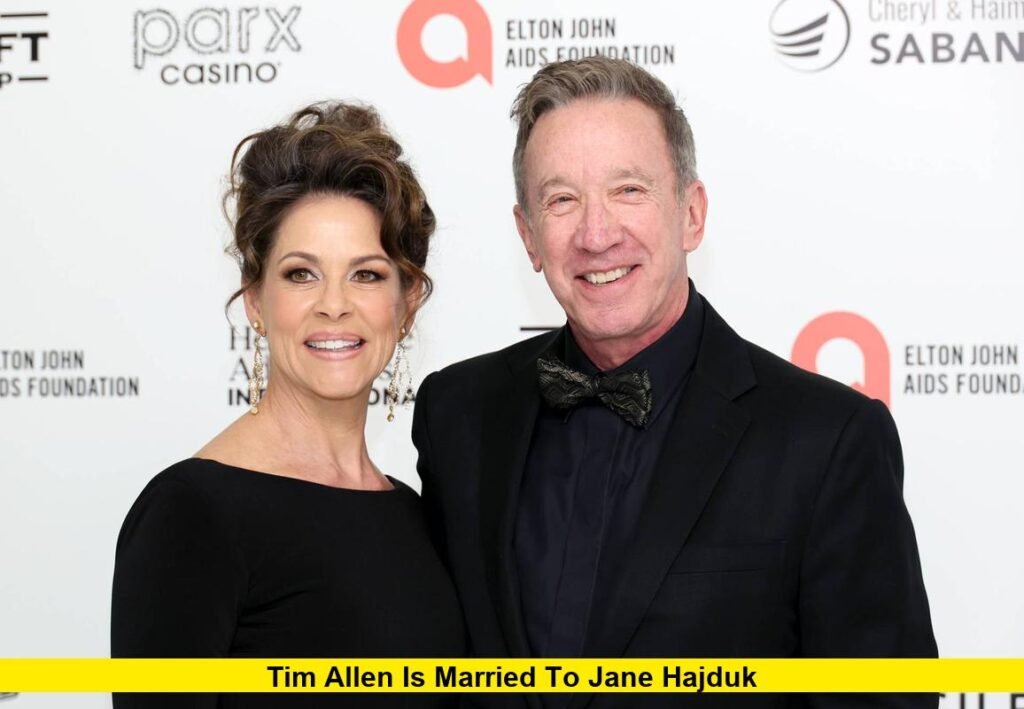
Jane Hajduk is an actress who has appeared in several film and television projects. She is perhaps best known for her roles in movies such as Zoom and The Shaggy Dog, both of which also starred Tim Allen. In addition to acting, Hajduk has occasionally collaborated with her husband on entertainment projects over the years.
Together, Tim Allen and Jane Hajduk have one daughter and are known for maintaining a close-knit family life despite Allen’s long career in the entertainment industry. Their marriage has lasted nearly two decades, a notable achievement in Hollywood.
Before marrying Jane Hajduk, Tim Allen was married to Laura Deibel. Allen and Deibel were married from 1984 until their divorce in 2003 and share a daughter from that relationship. Today, Allen and Hajduk continue to enjoy a stable and largely private family life.
Tim Allen Net Worth
Tim Allen has an estimated net worth of approximately $100 million as of 2026. Over several decades, he has built a substantial fortune through his work in television, film, stand-up comedy, voice acting, and various business ventures.
Allen first rose to national prominence with his starring role as Tim Taylor in the hit sitcom Home Improvement. The show’s immense popularity made him one of the highest-paid actors on television during its peak years and established him as a household name. He further expanded his success through major film roles, including the popular The Santa Clause series, which became a holiday favorite and generated significant earnings throughout its sequels and related projects.
Another major contributor to Allen’s wealth has been his long-running role as the voice of Buzz Lightyear in the acclaimed Toy Story franchise. The global success of the films helped secure his place among Hollywood’s most recognizable voice actors.
Beyond acting, Allen has earned income from stand-up comedy tours, book sales, production work, endorsements, and real estate investments. His diverse career and continued presence in entertainment have allowed him to maintain his position as one of Hollywood’s most successful comedians and television stars, with an estimated fortune that continues to reflect decades of industry success.
Tim Allen’s Political Identity
Tim Allen has often described himself as “fiscally conservative and emotionally liberal.” This characterization reflects his support for principles such as limited government, lower taxes, and personal responsibility, while also emphasizing compassion and understanding on social issues.
Over the years, Allen has acknowledged his Republican leanings and has been associated with conservative viewpoints. In an entertainment industry where many public figures avoid discussing politics, he has been relatively open about his beliefs, making him one of the more recognizable Hollywood personalities connected to right-leaning perspectives.
At the same time, Allen has repeatedly stressed the importance of independent thinking. Rather than automatically supporting a political party or leader, he has said that he prefers to evaluate policies and public figures on an individual basis. He has also criticized political polarization and what he sees as pressure to conform to group opinions.
Because of this approach, Allen’s political identity does not fit neatly into a single category. While he generally aligns with conservative economic ideas and has expressed views that resonate with many Republicans, he has maintained that he is not bound by strict party loyalty. His emphasis on judging issues case by case continues to shape public perceptions of his political outlook and distinguishes him from more openly partisan celebrities.
Moments That Fuel the Debate
Over the years, several public comments and actions by Tim Allen have fueled ongoing debate about whether he should be considered a supporter of Donald Trump. While Allen has never formally aligned himself with Trump in the way some political figures and celebrities have, certain moments have led many observers to draw connections between the two.
Attendance at Trump’s Inauguration
One of the most frequently cited examples occurred in January 2017, when Allen attended Donald Trump’s presidential inauguration in Washington, D.C. At a time when many celebrities openly opposed Trump and chose to distance themselves from the event, Allen’s presence attracted significant media attention.
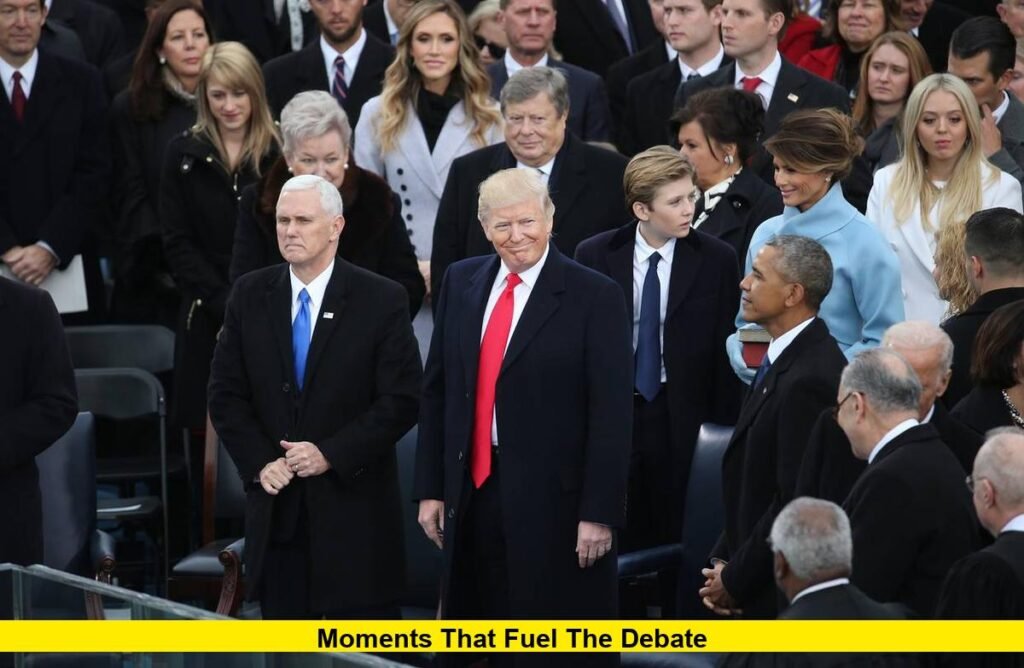
Allen later explained that part of his reason for attending involved participation in events honoring military veterans. Nevertheless, his appearance at the inauguration was widely interpreted by some as a sign of political support. In Hollywood, where public attendance at political events can often be viewed as an endorsement, the decision immediately sparked discussion about Allen’s political leanings.
Admiration for Trump’s Disruptive Style
Allen has also made comments suggesting that he found Trump’s unconventional political approach intriguing. Rather than focusing solely on specific policies, Allen has spoken about how Trump challenged traditional political norms and disrupted the established political order.
According to Allen, one of the most interesting aspects of Trump’s rise was his ability to force conversations on issues that many politicians and media figures preferred to avoid. Allen has indicated that he respected the willingness to challenge the status quo, even when doing so generated controversy. These remarks were interpreted by some as praise for Trump, while others viewed them as observations about political dynamics rather than outright support.
Support for Conservative Voices in Hollywood
Another factor contributing to the debate is Allen’s repeated criticism of what he sees as a lack of ideological diversity within the entertainment industry. Throughout his career, he has argued that conservative viewpoints are often met with skepticism or hostility in Hollywood.
In several interviews, Allen described feeling pressure to remain cautious when discussing political beliefs. He suggested that expressing conservative opinions in certain entertainment circles could carry professional and social risks. These comments resonated with many conservatives who believe their views are underrepresented in popular media.
Because Trump has frequently criticized Hollywood and what he describes as elite cultural institutions, Allen’s complaints about the industry have often been viewed as overlapping with themes common in Trump’s political messaging. As a result, many observers have linked Allen more closely to Trump, even though Allen has continued to emphasize his independent political outlook.
Public Criticism of Political Correctness
Allen has also spoken extensively about political correctness and free expression, topics that became central themes during the Trump era. He has argued that people should be able to discuss controversial issues without fear of immediate backlash or public condemnation.
His criticism of cancel culture and restrictions on speech has often aligned with concerns voiced by conservative commentators and politicians. While these positions do not automatically translate into support for Trump, they have contributed to the perception that Allen shares common ground with many of Trump’s supporters.
Why the Debate Continues
The debate surrounding Tim Allen’s relationship to Donald Trump persists because Allen occupies a political space that does not fit neatly into traditional categories. He has expressed admiration for certain aspects of Trump’s political impact, attended Trump-related events, and frequently defended conservative perspectives in Hollywood. At the same time, he has resisted labels, avoided becoming a political activist, and maintained that he evaluates leaders and issues individually rather than following a party line.
As a result, opinions remain divided. Some view Allen as a clear Trump supporter, while others see him as an independent-minded conservative who occasionally agrees with Trump but stops short of offering unconditional support.
Criticism of Trump and His Supporters
Although Tim Allen has occasionally expressed appreciation for Donald Trump’s ability to challenge political norms, he has also been careful to distance himself from the idea that he is an unwavering supporter. On multiple occasions, Allen has criticized actions and behaviors associated with Trump and some of his supporters, reinforcing his long-standing claim that he values independent thinking over partisan loyalty.
Reaction to January 6, 2021
One of Allen’s clearest breaks from pro-Trump narratives came after the January 6, 2021, attack on the U.S. Capitol. Following the events, Allen publicly condemned the violence in strong terms, describing the attack as “horrible,” “embarrassing,” and “shameful.”
He expressed concern that the incident had damaged the reputation of conservatives across the country and undermined legitimate political discourse. Allen also questioned how such a security failure could have occurred, suggesting that investigators should examine whether participants received assistance from individuals inside government institutions. Regardless of the causes, he made it clear that he viewed the attack as harmful to both the country and the conservative movement.
His reaction demonstrated that while he may have agreed with some conservative policies or criticisms of the political establishment, he was unwilling to excuse violence or attacks on democratic institutions.
Emphasis on Independence
Throughout his public life, Allen has consistently resisted attempts to place him firmly in any political camp. He has repeatedly stated that he prefers to evaluate leaders, policies, and events individually rather than supporting a politician simply because of party affiliation.
Allen has said that he dislikes political tribalism and refuses to join what he describes as ideological “lynch mobs” on either side of the spectrum. In his view, political identity should not require unquestioning loyalty to a party, movement, or public figure. This philosophy has led him to praise certain ideas associated with conservatives while criticizing others when he believes they go too far.
Because of this independent streak, Allen often occupies a middle ground that frustrates both supporters and critics who seek a clear political label for him.
Critiques of Political Polarization
Another recurring theme in Allen’s political commentary is his concern about growing polarization in the United States. He has argued that public debate has become increasingly hostile, leaving little room for nuance, compromise, or disagreement.
According to Allen, many Americans feel pressured to choose a side and defend it unconditionally, even when they have mixed opinions on important issues. He has criticized this mentality as unhealthy for democratic discussion and has encouraged people to think for themselves rather than simply adopting the views of their preferred political group.
Importantly, these concerns extend beyond criticism of Trump’s opponents. Allen has also suggested that some Trump supporters can contribute to the same divisive atmosphere they often criticize. By calling out excesses on multiple sides of the political spectrum, he has tried to position himself as an independent observer rather than a partisan advocate.
A More Nuanced Political Position
Taken together, Allen’s comments reveal a more complicated political identity than the labels often attached to him. While he has expressed admiration for certain aspects of Trump’s political impact and has defended conservative viewpoints in Hollywood, he has also condemned actions he believes are harmful, criticized extreme behavior among supporters, and consistently rejected blind political loyalty.
These positions help explain why debates about Allen’s politics continue. Rather than fitting neatly into the category of either devoted supporter or outspoken opponent, he has largely presented himself as an independent-minded conservative who is willing to agree with, criticize, or challenge political figures based on the circumstances.
Hollywood Backlash and Controversy
Tim Allen’s political comments have occasionally placed him at the center of controversy, particularly within the entertainment industry. As one of the few major Hollywood figures willing to publicly express conservative-leaning viewpoints, Allen has often found himself involved in broader debates about politics, free speech, and ideological diversity in entertainment.
The Last Man Standing Cancellation Debate
One of the most discussed controversies surrounding Allen occurred in 2017 when ABC canceled the popular sitcom Last Man Standing. The decision surprised many viewers because the show had maintained solid ratings and a loyal fan base throughout its run.
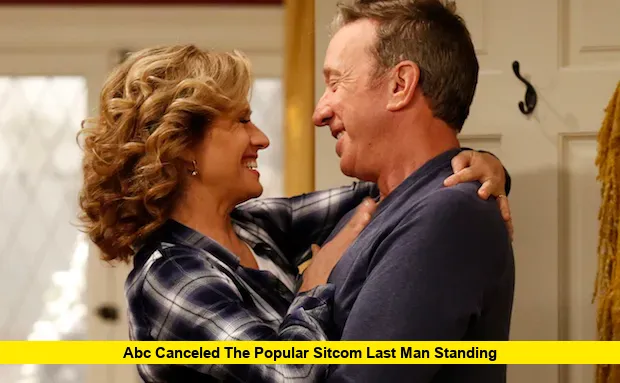
Almost immediately, speculation emerged that politics may have played a role in the cancellation. The show’s central character, Mike Baxter, portrayed by Allen, was known for expressing conservative views and frequently engaging in political and cultural debates on screen. Some fans argued that the series stood out in a television landscape where openly conservative characters were relatively uncommon.
ABC maintained that the cancellation was part of normal programming decisions, but the timing fueled intense public discussion. Supporters of the show viewed the move as evidence that conservative perspectives faced greater scrutiny in mainstream entertainment.
Tim Allen TV Shows
Tim Allen has enjoyed a highly successful television career spanning several decades. He rose to fame starring as Tim Taylor in the hit sitcom Home Improvement (1991–1999), one of the most popular comedy series of its era. Years later, he returned to television with Last Man Standing (2011–2021), where he played Mike Baxter, a marketing executive and family man. Allen also appeared in The Santa Clauses, reprising his famous Santa Claus role. His television work has earned widespread recognition and made him a longtime favorite among comedy audiences.
Read Also- Tim Allen says Erika Kirk’s memorial speech inspired him to forgive his father’s killer
Revival on Fox
The controversy gained even more attention when Last Man Standing was revived by Fox the following year. The successful return demonstrated the show’s continued popularity and reinforced the belief among many fans that there was strong audience demand for programming featuring a wider range of political viewpoints.
The revival became a symbolic victory for viewers who felt that conservative voices were underrepresented in television. While no definitive evidence ever proved that politics caused the original cancellation, the incident became a major talking point in discussions about ideology and media representation.
Allen’s Views on Hollywood Culture
Allen has frequently spoken about what he sees as a challenging environment for conservatives in Hollywood. In interviews, he has suggested that actors, writers, and producers who hold right-leaning views may sometimes feel pressure to remain silent about their political beliefs.
According to Allen, expressing unpopular opinions in the entertainment industry can carry professional and social risks. He has argued that many people choose not to discuss politics publicly because they fear criticism, damaged relationships, or potential career consequences.
These comments have resonated with individuals who believe Hollywood lacks ideological diversity. At the same time, critics have challenged Allen’s characterization of the industry, arguing that successful conservative entertainers continue to find opportunities and audiences.
Connection to the Trump Debate
Allen’s criticism of Hollywood culture has also contributed to ongoing speculation about his relationship with Donald Trump. Trump has frequently accused Hollywood and major media institutions of political bias, and Allen’s complaints about ideological conformity often echo some of those broader concerns.
Because of these overlapping themes, many observers associate Allen with Trump even when Allen is discussing issues such as free expression, workplace culture, or political tolerance rather than specific policies or political campaigns.
Why the Controversy Persists
The debate surrounding Allen’s place in Hollywood continues because it touches on larger questions about politics and entertainment. His willingness to challenge prevailing industry attitudes, defend conservative viewpoints, and discuss ideological diversity has made him a prominent voice in these conversations.
For supporters, Allen represents an example of independent political expression in an industry often perceived as overwhelmingly liberal. For critics, his comments sometimes reinforce political divisions that already exist within American culture. Either way, his experiences have ensured that discussions about politics, Hollywood, and free speech remain closely connected to his public image.
Comparing Admiration and Criticism
To understand Allen’s stance, it helps to lay out both sides clearly.
| Area | Tim Allen’s Position |
|---|---|
| Party Affiliation | Republican, fiscally conservative |
| Trump’s Persona | Finds disruptive style “interesting” and respects his ability to challenge elites |
| Support Actions | Attended Trump’s inauguration; voiced frustration with Hollywood’s liberal dominance |
| Criticism | Called January 6 riots “shameful”; rejected blind loyalty; emphasizes independence |
| Public Perception | Often labeled as a Trump supporter due to conservative identity and selective praise |
This comparison shows why the answer to “is Tim Allen a Trump supporter” is not black-and-white. He admires certain aspects of Trump but also openly distances himself from extremist actions and full endorsement.
Why the Question Keeps Coming Up
The question continues to trend because Tim Allen’s political views stand out in Hollywood. Most major actors and comedians lean left or avoid political commentary altogether. Allen, by contrast, is open about his Republican identity and willing to discuss Trump.
Additionally, his career longevity keeps him in the spotlight. Whether through new projects, reruns of Home Improvement, or his continued voice work as Buzz Lightyear, Allen remains a household name — which naturally keeps his politics under scrutiny.
Is Tim Allen a Republican?
Tim Allen has publicly stated that he has been registered as a Republican and generally holds conservative views on economic issues. He often describes himself as “fiscally conservative and emotionally liberal,” reflecting a mix of traditional conservative beliefs and more moderate social perspectives.
However, Allen has also emphasized that he values independent thinking and does not automatically support every Republican politician or policy. Throughout interviews, he has said that he prefers to evaluate issues and leaders individually rather than follow strict party loyalty. As a result, while Allen is commonly associated with the Republican Party and conservative viewpoints, he has consistently portrayed himself as politically independent rather than a purely partisan figure.
So, Is Tim Allen a Trump Supporter?
The answer is layered:
- Yes, to some degree: He has praised Trump’s ability to disrupt politics, attended the inauguration, and spoken out against liberal dominance in Hollywood.
- No, not fully: He condemned the January 6 attack, rejects blind loyalty, and stresses independence in his views.
In essence, Allen is a conservative Republican who occasionally aligns with Trump but stops short of full endorsement. His stance reflects a mix of agreement, critique, and independence.
The Bigger Picture
Tim Allen’s political journey illustrates how complicated public identities can be in a polarized era. He is a conservative voice in an overwhelmingly liberal industry, which makes his views stand out more prominently than they might otherwise. His openness invites both admiration and criticism, ensuring that the question of his support for Trump remains relevant.
Rather than fitting neatly into one category, Allen embodies the reality that many Americans feel politically conflicted, agreeing with some positions while rejecting others.
Tim Allen’s story reminds us that not every political view can be reduced to a label. While his comments and actions suggest partial alignment with Trump, his independence and criticisms set him apart from being a full-fledged supporter.
What’s your perspective on Tim Allen’s political views? Do you consider him a Trump supporter, or do his criticisms show a more independent stance? Share your thoughts in the comments below.