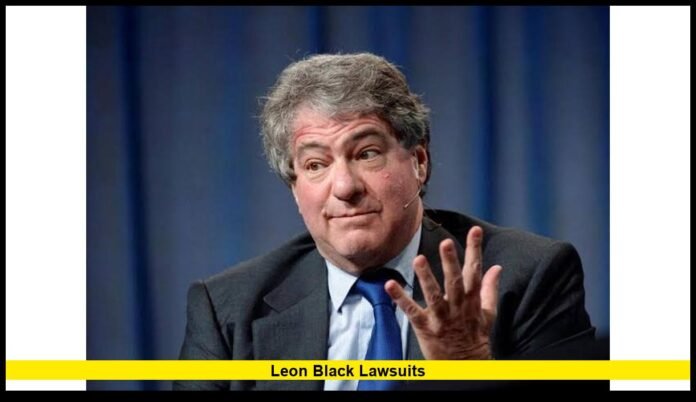

The leon black lawsuit has become a major development in the House investigation into Jeffrey Epstein after billionaire investor Leon Black declined to appear for a scheduled congressional deposition and instead filed a federal lawsuit challenging subpoenas issued by the House Oversight Committee. The legal battle centers on congressional investigative authority, nondisclosure agreements, private information and Black’s long financial relationship with Epstein.
The dispute escalated on September 3, 2026, when Black was expected to appear before lawmakers for a sworn, videotaped deposition. Rather than testify, he went to federal court in Washington, D.C., seeking to prevent the House committee from enforcing the subpoenas.
The confrontation puts one of Wall Street’s most prominent figures directly against Congress at a time when lawmakers are intensifying their examination of Epstein’s financial and social network.
What Is the Leon Black Lawsuit About?
Black’s federal complaint challenges two subpoenas issued by the House Committee on Oversight and Government Reform.
The subpoenas emerged from a contentious closed-door interview that Black attended voluntarily on June 26, 2026. During that session, lawmakers questioned him about his relationship with Epstein and about nondisclosure agreements involving women.
According to the committee, Black refused to answer important questions concerning those agreements. The confrontation eventually resulted in the committee demanding additional documents and requiring Black to return for a formal deposition.
Black’s attorneys now argue that Congress has gone too far.
The lawsuit asks a federal judge to declare the subpoenas invalid and prevent the House committee from enforcing them. His legal team maintains that lawmakers are seeking private material that does not have a legitimate connection to the committee’s legislative objectives.
The complaint also raises concerns about people who signed confidentiality agreements with Black. His attorneys argue that producing the agreements could expose private information belonging to women who have no established connection to Epstein.
Why Congress Wants Black to Testify
Black was a co-founder and former chief executive of Apollo Global Management, one of the world’s largest private-equity firms. He stepped down as Apollo’s CEO in 2021 as scrutiny surrounding his association with Epstein intensified.
Black has acknowledged that he paid Epstein approximately $158 million for tax, estate-planning and related financial services between 2012 and 2017. A review commissioned by Apollo previously concluded that the payments were for legitimate professional services.
The payments occurred after Epstein had pleaded guilty in Florida in 2008 to state prostitution-related charges involving a minor.
Black has maintained that he did not know the full extent of Epstein’s criminal conduct at the time. He has said he learned about Epstein’s alleged trafficking activity only in 2019, when federal authorities arrested Epstein on sex-trafficking charges.
That explanation is now being examined by congressional investigators.
The committee wants to understand not only how much money Black paid Epstein, but also what Epstein did for him, whom Epstein interacted with on Black’s behalf and whether confidentiality agreements provide additional information about the relationship.
The June Interview That Changed Everything
Black’s current legal fight can be traced to the June 26 interview.
He appeared voluntarily before the committee for a transcribed session. Instead of being a public hearing, the meeting took place behind closed doors.
Lawmakers questioned Black about his yearslong relationship with Epstein, the services Epstein provided and the existence of nondisclosure agreements.
Black was willing to discuss portions of his history but objected to questions concerning confidential agreements. His attorneys advised him against answering certain questions.
The session ended without lawmakers obtaining all the information they wanted.
The committee responded by issuing two subpoenas. One sought NDAs and related records. The other required Black to appear for a sworn deposition.
The dispute over those documents has become the central legal issue in the case.
What Are the Nondisclosure Agreements?
Nondisclosure agreements are contracts that restrict parties from revealing specified confidential information.
In Black’s case, lawmakers are interested in agreements involving women and circumstances that may overlap with questions about Epstein’s role in Black’s personal affairs.
Black has acknowledged that Epstein knew about at least one confidentiality arrangement. He has also said that Epstein was involved in his financial affairs and that Black sometimes discussed personal matters with him.
That connection is important to congressional investigators because they are attempting to determine how Epstein operated within the circles of wealthy and influential individuals.
The committee appears particularly interested in whether Epstein helped negotiate, arrange or advise Black regarding confidentiality agreements.
Black’s position is that the agreements are private and that Congress cannot demand them simply because they might contain information investigators find interesting.
That disagreement over relevance and congressional authority is likely to become a central issue as the federal case develops.
Black’s Lawyers Accuse Congress of Overreach
Black’s legal team has strongly criticized the committee’s approach.
His attorneys argue that the subpoenas amount to an overly broad search for information rather than a narrowly tailored congressional inquiry.
They contend that the requested NDAs could expose private information about women who negotiated confidentiality and have no public relationship with Epstein.
The complaint also challenges the committee’s stated legislative purpose.
At the heart of Black’s argument is the constitutional question of how far Congress can go when investigating a private citizen. Congressional committees have broad investigative powers, but those powers are generally tied to legitimate legislative or oversight purposes.
Black’s lawyers say the committee has crossed that boundary.
They want the court to intervene before the subpoenas can be enforced.
James Comer Defends the Investigation
House Oversight Committee Chairman James Comer has rejected Black’s position.
Comer argues that Black’s testimony is important because of his status as one of Epstein’s fee-paying clients and because he has information about nondisclosure agreements.
The committee is investigating how government agencies handled Epstein and Ghislaine Maxwell’s activities, how Epstein cultivated relationships with influential people and whether those relationships helped him avoid scrutiny.
From the committee’s perspective, Black’s relationship with Epstein falls squarely within that investigation.
Comer criticized Black for turning to litigation instead of appearing before lawmakers. The committee proceeded with the scheduled deposition even though Black was absent, leaving an empty chair to formally document his nonappearance.
That procedural move could become important if lawmakers pursue contempt proceedings.
Robert Garcia Calls for Contempt
The committee’s top Democrat, Rep. Robert Garcia, has also criticized Black’s decision.
Garcia said Black’s refusal to appear means he is defying congressional subpoenas and called for contempt proceedings to begin.
The bipartisan criticism gives the dispute unusual political weight.
Although Democrats and Republicans frequently disagree over congressional investigations, both sides of the Oversight Committee leadership have expressed frustration with Black’s refusal to testify.
The committee’s next step could involve a formal vote on whether to recommend holding him in contempt of Congress.
Such a move would not itself establish that Black committed a crime. It would instead begin a separate congressional enforcement process.
Could Black Face Contempt Charges?
Potential contempt proceedings are among the most important consequences of Black’s decision to skip the deposition.
If the House votes to hold him in contempt, the matter can be referred to the Justice Department. Prosecutors would then determine whether further action is appropriate.
The process can take time and does not guarantee criminal charges.
Black’s federal lawsuit adds another layer because he is simultaneously asking the courts to determine whether the subpoenas themselves are valid.
That creates a legal standoff: Congress says Black must comply, while Black is asking a judge to prevent Congress from enforcing the demands.
The outcome could influence how the committee proceeds not only against Black but also with other witnesses in its Epstein investigation.
Black’s Relationship With Epstein
Black first met Epstein in the 1990s, according to his congressional testimony.
Their relationship later developed into a professional arrangement in which Epstein provided financial advice to Black.
An Apollo-commissioned review found that Black paid Epstein $158 million between 2012 and 2017 for legitimate tax and estate-planning services.
Black has acknowledged that Epstein’s extensive network of influential contacts was one reason he valued his relationship with him.
Black has also said that, with hindsight, he regrets hiring Epstein and believes Epstein misled him about his activities and abilities.
The distinction between Black’s business relationship with Epstein and allegations of criminal conduct is important.
Black has repeatedly denied abusing women, having sexual contact with minors, engaging in sex trafficking or paying Epstein for access to women.
Those denials remain central to his public defense.
Epstein’s Criminal History Adds to the Scrutiny
The congressional investigation is taking place against the backdrop of Epstein’s well-documented criminal history.
Epstein pleaded guilty in 2008 to Florida state charges related to prostitution involving a minor and served a jail sentence.
More than a decade later, federal prosecutors arrested him in 2019 on sex-trafficking charges involving minors.
Epstein died in a New York jail in August 2019 while awaiting trial. His death was ruled a suicide.
Ghislaine Maxwell was later convicted in federal court for her role in recruiting and grooming minors for Epstein and received a 20-year prison sentence.
Congress is now examining how Epstein managed to maintain relationships with powerful individuals despite the allegations and criminal proceedings surrounding him.
Black’s financial connection makes him a particularly significant witness in that inquiry.
What Black Has Said About His Conduct
Black has consistently denied wrongdoing.
During his June congressional appearance, he maintained that he never abused women, never had sex with underage women, never participated in sex trafficking and never paid Epstein for access to women.
He has also said that Epstein’s criminal activities were hidden from him.
Black’s attorneys have emphasized these positions while arguing that the congressional investigation is going beyond legitimate oversight.
At the same time, lawmakers believe Black’s own testimony about Epstein, his payments and his personal dealings could help them understand how Epstein built relationships with wealthy clients.
That creates a fundamental disagreement over what information Congress is entitled to obtain.
Other Legal Battles Surrounding Black
The congressional dispute is not the only legal controversy involving Black.
He has previously been involved in civil litigation arising from allegations of sexual misconduct. Black has denied those allegations.
In separate litigation, Black sued the law firm Wigdor and others in a malicious-prosecution case connected to accusations involving a former woman in his life. A New York appellate court dismissed that lawsuit in 2025.
Those cases are separate from the congressional subpoena dispute.
The distinction matters because the current federal case concerns Congress’s investigative powers and Black’s obligation to respond to subpoenas, rather than a criminal prosecution establishing guilt or innocence.
Why the Case Could Have Broader Implications
The dispute raises questions that extend beyond Black.
Congress routinely uses subpoenas to obtain testimony and documents during investigations. At the same time, individuals can challenge subpoenas when they believe lawmakers have exceeded their constitutional authority.
The courts may therefore have to weigh two competing interests.
On one side is Congress’s responsibility to investigate government failures and potential gaps in laws or enforcement.
On the other is the privacy of individuals whose confidential agreements could become part of a congressional investigation.
The case could become especially significant if the court examines how closely the requested NDAs must be connected to Epstein before Congress can demand them.
A ruling could help clarify the limits of congressional subpoenas when private contracts and third-party privacy interests are involved.
Latest Developments in the Case
As of September 3, 2026, Black has filed his lawsuit in federal court and declined to appear for the House Oversight Committee’s scheduled deposition.
The committee has documented his absence and is considering what enforcement steps should follow.
Chairman James Comer has said Black’s testimony remains important to the investigation. Ranking Democrat Robert Garcia has called for contempt proceedings.
Black’s attorneys are asking the federal court to block the subpoenas and argue that Congress is demanding private information without a legitimate legislative purpose.
There is currently no final court ruling resolving the dispute.
The next major developments are likely to come from the federal court, the House Oversight Committee or both. A decision on whether Congress moves forward with contempt proceedings could determine the direction of the confrontation.
For Black, the case represents another significant legal battle surrounding his relationship with Epstein. For Congress, it is part of a much broader effort to understand Epstein’s network, his access to powerful people and the failures that allowed his activities to continue for years.
The legal fight is therefore about more than one billionaire and two subpoenas. It also tests the boundaries of congressional oversight, personal privacy and the government’s ability to investigate relationships surrounding one of the most notorious criminal cases of recent decades.