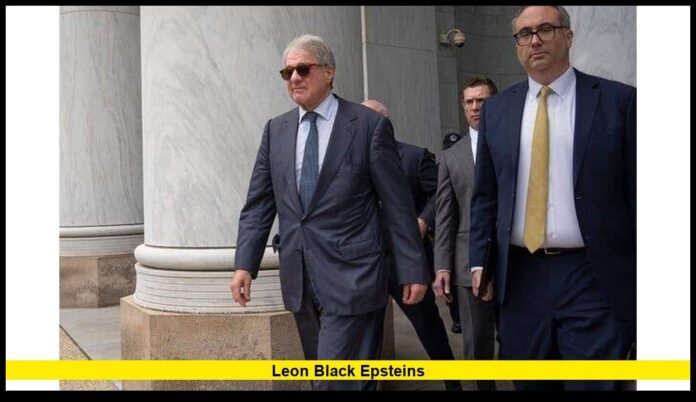

The leon black epstein controversy has taken a significant turn as billionaire investor Leon Black faces an escalating confrontation with the U.S. House Oversight Committee over his relationship with Jeffrey Epstein. Black did not appear for a scheduled congressional deposition on September 3, 2026, and instead filed a lawsuit in federal court challenging subpoenas that require him to provide documents and testify under oath.
The development has placed Black’s decades-long association with Epstein back under intense scrutiny. At the center of the dispute are the millions of dollars Black paid Epstein for financial advice, Epstein’s involvement in Black’s personal affairs, and nondisclosure agreements that congressional investigators believe could provide additional information about their relationship.
Black has consistently denied participating in Epstein’s criminal activities. He has said his payments to Epstein were for legitimate financial services and maintains that he did not learn the full extent of Epstein’s misconduct until Epstein’s 2019 federal arrest.
Why Leon Black Is Back in the Spotlight
Black co-founded Apollo Global Management and built a reputation as one of Wall Street’s most influential private equity executives. His professional standing changed dramatically after details emerged about his financial relationship with Epstein.
A review commissioned by Apollo found that Black paid Epstein approximately $158 million between 2012 and 2017 for tax, estate-planning and related services. Black’s relationship with Epstein continued even after Epstein pleaded guilty in Florida in 2008 to a prostitution-related offense involving a minor.
That timing has remained one of the most controversial elements of the relationship.
Black has said he knew about Epstein’s 2008 conviction but believed Epstein’s explanation that the matter had been mischaracterized. He has maintained that he did not understand the broader scope of Epstein’s behavior until 2019.
The congressional investigation is now attempting to establish what Black knew, what Epstein did for him, and whether additional documents can clarify the relationship.
Black Skips September 3 Congressional Deposition
The immediate catalyst for the latest developments was Black’s decision not to appear before the House Oversight Committee for a scheduled sworn deposition.
The committee had demanded that Black return after a June appearance in which lawmakers questioned him about his relationship with Epstein and nondisclosure agreements.
Rather than attend the September deposition, Black’s attorneys filed a lawsuit in Washington, D.C., federal court. The lawsuit seeks to block two subpoenas issued by the committee.
One subpoena concerns documents, including nondisclosure agreements. The other requires Black to participate in a formal deposition.
Black’s legal team argues that the committee has exceeded its constitutional authority and is seeking private information without a legitimate legislative purpose. His attorneys also argue that disclosure could compromise the privacy of women who entered into confidential agreements and have no established connection to Epstein.
The lawsuit represents a major escalation because Black is no longer simply resisting questions from lawmakers. He is asking a federal court to intervene directly in the congressional investigation.
House Lawmakers Push Back
House Oversight Chairman James Comer has rejected Black’s position.
Comer said Black’s testimony is important because he was a paying client of Epstein and has multiple nondisclosure agreements. The committee says its broader investigation is examining how Epstein developed relationships with influential people and how government agencies handled his activities over many years.
Comer also said the committee would continue with the scheduled deposition for the record despite Black’s absence.
The committee’s top Democrat, Rep. Robert Garcia, has gone further by calling for Black to be held in contempt of Congress.
A contempt proceeding could become an important next step if Black continues to refuse to comply with the subpoenas. Generally, a contempt resolution must go through the House before the matter can be referred to federal prosecutors.
The political response is notable because lawmakers from both parties have shown interest in obtaining additional information about Epstein’s network.
The $158 Million Financial Relationship
Perhaps the biggest reason Black remains central to congressional questions is the extraordinary amount of money he paid Epstein.
An Apollo-commissioned investigation determined that Black paid approximately $158 million to Epstein between 2012 and 2017.
Black has described those payments as compensation for legitimate financial assistance, particularly involving taxes and estate planning.
He has also said Epstein provided advice involving aspects of his personal financial affairs and family office operations.
The size of the payments has nevertheless raised questions from lawmakers and investigators. The issue is not simply whether Black paid Epstein, but why Epstein was compensated at such a high level and what services he actually performed.
Another important issue is the timing.
Epstein’s relationship with Black continued after Epstein’s 2008 conviction. That has prompted lawmakers to question why Black continued relying on Epstein despite the publicly known criminal case.
Black’s explanation has remained that Epstein convinced him that the 2008 case did not represent the full story and that Black was unaware of the broader criminal conduct later attributed to Epstein.
What Congress Wants to Know About the NDAs
Nondisclosure agreements have become one of the most important components of the congressional inquiry.
Lawmakers are interested in agreements involving Black and women with whom he had personal relationships. Investigators also want to understand whether Epstein played any role in negotiating, discussing or facilitating such arrangements.
The issue gained prominence during Black’s June appearance before the committee.
Black appeared voluntarily for a closed-door interview but declined to answer questions about NDAs. After the disagreement, the committee issued subpoenas requiring additional testimony and documents.
The committee believes the agreements may help establish how Epstein interacted with Black and whether Epstein had knowledge of sensitive personal matters involving the billionaire.
Black’s lawyers dispute that interpretation. They argue that confidential agreements involving private disputes should not automatically become congressional evidence simply because Epstein may have known about them.
That disagreement is now part of the federal lawsuit.
Epstein’s Role in Black’s Personal Affairs
The congressional interest extends beyond tax planning and investment advice.
Released material has indicated that Epstein was aware of at least one contentious personal dispute involving Black and a former romantic partner. Investigators are examining whether Epstein offered advice or assistance in handling that situation.
That issue is significant because it could show that Epstein’s relationship with Black went beyond conventional financial consulting.
Black has acknowledged that Epstein advised him on various matters, but he has denied that Epstein was involved in wrongdoing on his behalf.
The question for lawmakers is therefore one of scope: how extensive was Epstein’s role in Black’s personal and professional life?
Documents and testimony could potentially provide more clarity.
Black’s Position on Epstein’s Criminal Conduct
Black has repeatedly rejected claims that he was involved in Epstein’s sex-trafficking activities.
He has said he never engaged in sex trafficking, never had sex with underage women and never paid Epstein for access to women.
Black has also said he was not aware of Epstein’s criminal behavior beyond the 2008 conviction until Epstein was arrested again in 2019.
Those statements are central to Black’s defense.
The fact that someone had a professional or social relationship with Epstein does not, by itself, establish participation in Epstein’s crimes. Congressional investigations can examine associations and conduct, but allegations should not be treated as criminal findings without supporting evidence and due process.
That distinction is particularly important as more Epstein-related records become public.
Apollo Global Management and Black’s Departure
The controversy surrounding Epstein eventually affected Black’s position at Apollo Global Management.
Black stepped down as Apollo’s chief executive in 2021 following scrutiny of his relationship with Epstein and the payments made to him.
Apollo had commissioned an independent review to examine the relationship. The investigation reported no evidence that Black or Apollo employees participated in Epstein’s criminal activities.
The review did, however, document the scale of the financial relationship.
Black’s departure marked a major turning point in his career. Although he remained active in business, philanthropy and the art world, his association with Epstein continued to generate questions.
The renewed congressional inquiry has therefore revived an issue that first had major consequences for Black several years ago.
New Claims Are Being Made, But They Remain Disputed
The congressional investigation has generated increasingly strong accusations from some lawmakers.
On September 1, Rep. Thomas Massie publicly named Black among individuals he characterized as co-conspirators or perpetrators connected to Epstein and called for further investigation.
Such political allegations should be distinguished from formal criminal charges or court findings.
Black has denied criminal involvement with Epstein’s activities. The fact that his name appears in Epstein-related records, that he paid Epstein large sums, or that he maintained a relationship with Epstein does not by itself establish that Black participated in trafficking or sexual abuse.
The federal lawsuit and congressional investigation are focused on obtaining information and determining what additional facts may be established.
Why the Lawsuit Matters
Black’s lawsuit could have implications beyond his own case.
Congressional committees routinely use subpoenas to obtain testimony and documents during investigations. Witnesses sometimes challenge those subpoenas in court, particularly when they believe Congress has exceeded its constitutional authority.
Black’s lawyers argue that the Oversight Committee’s demands are overly broad and invade the privacy of individuals who are not part of the Epstein investigation.
The committee argues that the requested material is directly relevant because Epstein was a financial client relationship and had connections to Black’s personal affairs.
A federal judge could therefore be asked to weigh congressional investigative authority against privacy and other legal protections.
The outcome could influence how the Oversight Committee proceeds with other individuals connected to Epstein.
What Could Happen if Black Is Held in Contempt?
If lawmakers decide to pursue contempt proceedings, the issue could become more serious for Black.
A congressional contempt resolution would normally require action by the House. If approved, the matter could be referred to the U.S. Attorney’s Office for the District of Columbia.
That does not mean criminal charges would automatically follow.
The Justice Department would have a role in determining whether prosecution is appropriate. The legal process could also become complicated if Black’s federal lawsuit challenging the subpoenas remains active.
For now, lawmakers are signaling that they want compliance, while Black’s legal team is attempting to stop enforcement through the courts.
The Wider Epstein Investigation
Black’s case is part of a much larger congressional investigation into Epstein’s relationships with wealthy and influential people.
The House Oversight Committee has sought testimony from several prominent individuals and has examined documents connected to Epstein’s activities.
The broader inquiry is also examining how authorities handled Epstein over the years and whether his access to powerful people contributed to delays, missed opportunities or failures in accountability.
The investigation has gained momentum as additional records have been released and lawmakers have demanded greater transparency.
Black is particularly significant because of the size of his financial relationship with Epstein and the existence of confidential agreements that investigators believe could contain useful information.
What Happens Next?
The next stage will likely depend on both Congress and the federal courts.
Black’s lawsuit could determine whether the subpoenas can be enforced as written. At the same time, the House Oversight Committee could consider additional enforcement measures, including contempt proceedings.
The central questions remain unresolved.
Congress wants to know more about the financial arrangements between Black and Epstein, the nature of Epstein’s work for Black, and the circumstances surrounding the nondisclosure agreements.
Black wants the subpoenas blocked and argues that lawmakers are improperly targeting private matters.
The legal fight could therefore become a prolonged battle over congressional investigative power.
Final Takeaway
The leon black epstein controversy has moved beyond questions about a wealthy financier’s past relationship with Jeffrey Epstein and into a direct legal confrontation with Congress.
Black’s refusal to attend the September 3 deposition and his decision to challenge the House subpoenas in federal court have created a new chapter in the investigation.
His position remains that Epstein provided legitimate financial services, that Black did not participate in Epstein’s criminal conduct, and that he did not understand the extent of Epstein’s wrongdoing until 2019.
Congress, meanwhile, believes Black’s testimony and documents are important to understanding Epstein’s network and the way he interacted with powerful individuals.
The dispute is now likely to unfold on two fronts: in Congress, where lawmakers are considering how to enforce their demands, and in federal court, where Black is challenging the legitimacy of those demands.
Until additional evidence emerges or courts make definitive rulings, allegations surrounding Black should be kept separate from established facts. What is already clear is that his financial relationship with Epstein, his continued association with him after the 2008 conviction, and the questions surrounding nondisclosure agreements have made him a significant figure in the ongoing congressional examination of Epstein’s network.
Key Points Summary
╔════════════════════════════════════════════════════════════════════╗
║ – Leon Black skipped a scheduled House Oversight Committee deposition on September 3, 2026. ║
║ – Black filed a federal lawsuit seeking to block congressional subpoenas for testimony and documents. ║
║ – An Apollo-commissioned review found that Black paid Jeffrey Epstein about $158 million between 2012 and 2017 for financial services. ║
║ – Black says the payments were legitimate and denies participating in Epstein’s criminal activities. ║
║ – Congressional investigators are particularly interested in nondisclosure agreements and Epstein’s involvement in Black’s personal affairs. ║
║ – House lawmakers have discussed potentially holding Black in contempt if he does not comply with the subpoenas. ║
║ – The legal dispute could determine how far Congress can go in demanding private records from individuals connected to its Epstein investigation. ║
╚════════════════════════════════════════════════════════════════════╝