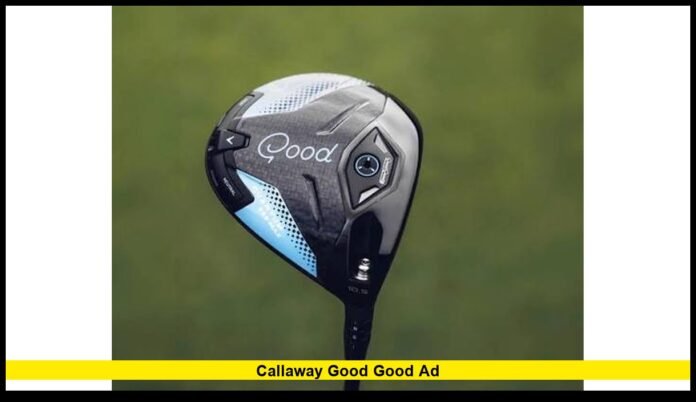

The Callaway Good Good Ad controversy has drawn widespread attention after a promotional video featuring Good Good Golf personalities Garrett Clark and Alexis Miestowski was removed following strong criticism. The advertisement promoted a co-branded Callaway Quantum driver and showed Clark pushing Miestowski to the ground after she reached toward the golf club.
Callaway and Good Good have both apologized for the advertisement. Callaway CEO Chip Brewer has also confirmed that Callaway approved the content before it was published. The company has since announced internal and external investigations and said it is reviewing its advertising approval procedures.
The controversy has quickly become a major discussion point in golf because of the advertisement’s portrayal of physical aggression and the involvement of two prominent names in modern golf media.
What happened in the Callaway Good Good advertisement?
The advertisement was created to promote a Good Good version of Callaway’s Quantum driver.
The video featured Garrett Clark, one of Good Good’s best-known members, alongside Alexis Miestowski. In the commercial, Miestowski reaches toward a golf bag containing the new driver.
Clark then pushes her to the ground.
The scene was presented as an exaggerated joke about protecting the new golf club. However, viewers criticized the creative concept because the humor relied on physical aggression toward a woman.
The video was subsequently removed from official channels.
Although the original post disappeared, copies and shorter clips continued circulating on social media. That helped keep the controversy visible even after the companies took down the official advertisement.
Why did the advertisement cause backlash?
The criticism focused primarily on the physical confrontation shown in the commercial.
Many viewers argued that using a man pushing a woman to the ground as the central joke in an advertisement was inappropriate, particularly for a mainstream golf brand.
The reaction also became more significant because Good Good has built its identity around making golf more accessible, entertaining and welcoming to a wider audience.
Callaway is also a major equipment manufacturer with a long-established presence in golf.
The combination meant that the advertisement reached an audience far larger than a typical creator post.
Rather than generating discussion primarily about the new Quantum driver, the commercial became associated with questions about judgment, advertising standards and the responsibilities of companies working with influential creators.
Good Good removes the commercial
Good Good responded to the criticism by removing the video and issuing a public apology.
The company said the content did not align with its values. It also reiterated its commitment to making golf more inclusive.
The response came quickly after the advertisement generated criticism.
However, deleting the original video could not prevent viewers from reposting clips and screenshots.
That is particularly important in social-media marketing. Once a controversial advertisement reaches a large audience, removing the original version does not necessarily remove the material from public circulation.
In this case, copies continued to fuel discussion after the official video was taken down.
Callaway also apologizes
Callaway subsequently addressed the controversy.
CEO Chip Brewer acknowledged that Callaway had approved the advertisement before it was released. He apologized for the company’s involvement and said the content did not represent Callaway’s values.
That statement became one of the most important developments in the story.
The controversy was initially centered on the creative decisions made by Good Good. Callaway’s acknowledgment confirmed that the equipment company had also played a role in the advertisement’s approval.
The company is now investigating how the content passed through its review process.
Callaway launches investigations
Callaway has announced internal and external investigations into the advertisement.
The company is also reviewing its content approval procedures.
The investigations are intended to determine how the advertisement was approved and what changes may be necessary to prevent similar situations.
At this stage, Callaway has not publicly released final findings from those investigations.
That distinction is important when discussing the current situation.
There has been extensive online speculation about who approved the commercial and how it reached publication. Those details should not be treated as confirmed unless Callaway officially establishes them.
What is confirmed is that Callaway approved the advertisement, removed it after the backlash and is now reviewing the process that allowed it to be published.
The Quantum driver connection
The controversial commercial was tied directly to Callaway’s Quantum driver.
The Quantum line has been a major part of Callaway’s equipment marketing during 2026. Good Good members have also appeared in Callaway content connected to the new driver.
The co-branded product was therefore part of an established commercial relationship rather than a one-time appearance.
That relationship made the controversy especially significant for both companies.
The advertisement was designed to attract attention to the driver. Instead, the creative concept became the main subject of discussion.
The product itself has largely taken a secondary position in the public conversation surrounding the advertisement.
Callaway and Good Good have worked together for years
The controversy comes after several years of collaboration between Callaway and Good Good.
Callaway announced its partnership with Good Good Golf in January 2023.
At the time, Good Good had already established itself as a major golf-focused YouTube brand and was rapidly expanding its audience.
The partnership combined Callaway’s established equipment business with Good Good’s creator-led approach to golf entertainment.
The companies subsequently worked together on equipment, digital content and promotional campaigns.
The relationship continued into 2026, including content involving Callaway’s Quantum equipment.
The latest advertisement therefore represents a setback within a much broader commercial partnership.
Neither company has publicly announced that its overall relationship has been terminated.
Good Good’s role in modern golf
Good Good has become one of the most recognizable creator brands in golf.
The company began as a YouTube-focused golf channel and expanded into apparel, equipment, events and other commercial ventures.
Its growing audience has helped change the way golf reaches younger and digitally focused viewers.
Good Good’s content typically combines golf challenges, entertainment and personalities rather than relying solely on traditional instructional or competitive formats.
That model has attracted millions of followers across social platforms.
The company’s growing influence also explains why the controversial advertisement received such extensive attention.
A mistake involving a small social-media account might disappear quickly. A campaign involving a large creator brand and a major equipment manufacturer can reach millions of viewers within hours.
Why the controversy is particularly significant for golf
The golf industry has increasingly embraced creator-led content.
Companies have recognized that online personalities can reach audiences that traditional advertising may struggle to engage.
Good Good is one of the clearest examples of that shift.
The company has helped make golf entertainment more personality-driven and social-media focused.
But creator partnerships also create challenges for established brands.
Creators often use humor, exaggeration and unexpected situations to attract attention. Corporate advertisers, meanwhile, must consider brand reputation, audience expectations and broader social concerns.
The controversial advertisement demonstrated what can happen when those considerations do not align.
The commercial attempted to use shock humor to promote a golf club. Instead, the physical confrontation became the defining feature of the campaign.
PGA TOUR response
The controversy has also attracted attention because Good Good is connected to the PGA TOUR through the upcoming Good Good Championship.
The inaugural tournament is scheduled for November 9-15, 2026, at the Fazio Canyons Course at Omni Barton Creek Resort & Spa in Austin, Texas.
The event is part of the PGA TOUR’s FedExCup Fall schedule.
The PGA TOUR has distanced itself from the controversial advertisement and emphasized that it does not condone violence.
Officials have also reiterated the organization’s commitment to an inclusive and respectful environment.
The tournament itself remains scheduled.
Its official format calls for 120 players competing over 72 holes, with a $6 million purse and 500 FedExCup points awarded to the winner.
The event represents an important milestone for Good Good as the company expands further into professional golf.
The Good Good Championship remains scheduled
Despite the advertisement controversy, there has been no confirmed announcement canceling or postponing the Good Good Championship.
The tournament remains scheduled for November in Austin.
The event is expected to bring Good Good’s creator-driven golf identity into a PGA TOUR setting.
That makes the coming months particularly important for the company.
Good Good will need to balance its entertainment-focused identity with the expectations associated with professional golf.
The recent advertising controversy has placed additional attention on the company’s public image ahead of that tournament.
What Callaway’s response means
Callaway’s decision to investigate the advertisement is significant because the company has accepted responsibility for approving the content.
The issue is therefore not limited to whether the advertisement was poorly received.
It also raises questions about corporate review procedures.
Major brands typically use multiple stages of review for marketing campaigns. Those processes can include creative, legal, communications and brand considerations.
Callaway has not publicly detailed every stage involved in this particular advertisement.
The company has, however, acknowledged that its approval process allowed the commercial to be published.
Its decision to conduct internal and external investigations suggests that the company considers the issue serious enough to warrant a broader review.
Will Callaway and Good Good continue working together?
As of the latest confirmed information, neither company has announced an end to their broader partnership.
Callaway has criticized the advertisement and apologized for approving it.
Good Good has removed the video and apologized for the content.
The companies have also emphasized values related to inclusivity and respect.
That leaves the future of their broader relationship unchanged publicly for now.
However, future campaigns are likely to face closer scrutiny because of what happened.
Any new co-branded advertising will be viewed through the lens of the recent controversy.
The companies’ next steps could therefore be important in determining how quickly the issue fades from public attention.
The difference between confirmed facts and online speculation
The controversy has generated a substantial amount of discussion across social media.
However, not every claim circulating online has been verified.
The confirmed facts are relatively clear:
- Good Good produced the advertisement.
- Garrett Clark and Alexis Miestowski appeared in the video.
- The advertisement promoted a Good Good and Callaway Quantum driver.
- Clark pushed Miestowski during the commercial.
- Good Good removed the advertisement.
- Good Good issued an apology.
- Callaway also apologized.
- Callaway CEO Chip Brewer confirmed that the company had approved the advertisement.
- Callaway announced internal and external investigations.
- Callaway is reviewing its content approval process.
- The PGA TOUR has rejected the video’s depiction of violence.
- The Good Good Championship remains scheduled for November 2026.
Other claims about individual employees, specific approval decisions or potential changes to the broader partnership should not be presented as fact unless the companies confirm them.
That distinction is especially important as the story continues developing.
What to watch next
The next major development is likely to come from Callaway’s investigation.
The company has not yet released final findings.
A formal explanation could provide more information about the approval process and whether additional changes will be made to marketing procedures.
Good Good’s future advertising will also receive attention.
The company has already acknowledged that the controversial campaign did not represent its values. Its future content will provide an opportunity to demonstrate how it intends to apply that commitment.
The Good Good Championship will also remain an important event to watch.
The tournament represents a significant expansion of Good Good’s role in professional golf and will bring the brand into a highly visible PGA TOUR environment.
Latest status of the Callaway Good Good ad controversy
The controversy remains active as of the latest available update.
The advertisement itself has been removed from the companies’ official channels, but copies continue circulating online.
Both Good Good and Callaway have apologized.
Callaway has accepted responsibility for approving the commercial and launched internal and external investigations.
The company is also reviewing its content approval procedures.
There has been no confirmed announcement ending the broader Callaway-Good Good partnership.
Likewise, the Good Good Championship remains scheduled for November 9-15 in Austin.
The situation now depends largely on the outcome of Callaway’s investigations and how both companies respond in future campaigns.
The incident has already become an important case study in modern golf marketing, particularly as traditional sports brands increasingly work with large creator-led companies.
The controversy shows how quickly a promotional concept can move beyond its intended message when audiences interpret the creative approach differently from the brands behind it.
What are your thoughts on the Callaway and Good Good advertising controversy? Share your view below and keep following the latest confirmed developments.