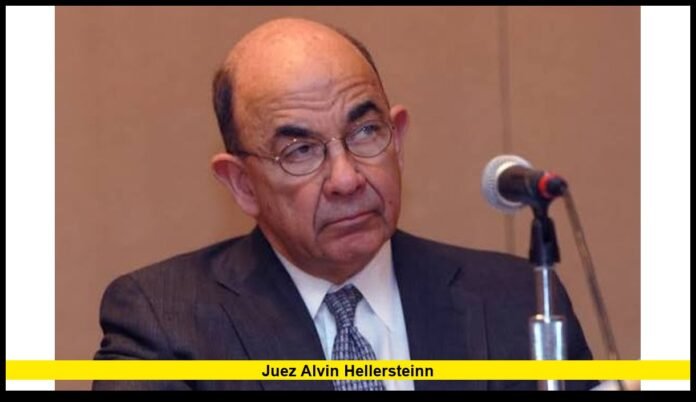

The death of longtime Manhattan federal judge Alvin K. Hellerstein on October 28, 2026, marks the end of a judicial career shaped by landmark litigation, politically sensitive disputes, and major criminal proceedings. The search term juez alvin hellerstein has gained relevance as readers seek information about the judge’s background, notable rulings, and the cases affected by his passing at age 92. Appointed by President Bill Clinton in 1998, Hellerstein served the U.S. District Court for the Southern District of New York for nearly three decades, including more than 15 years as a senior judge.
A Legal Career Built on Decades of Experience
Hellerstein was born in New York City on December 28, 1933. He graduated from Columbia College in 1954 and earned his law degree from Columbia Law School in 1956. His early professional experience included a federal judicial clerkship with Judge Edmund L. Palmieri and military service in the U.S. Army’s Judge Advocate General’s Corps between 1957 and 1960.
He entered private practice in 1960 and spent nearly four decades handling legal matters before joining the federal judiciary. President Clinton nominated him on May 15, 1998. The Senate confirmed his appointment on October 21, and he received his commission the following day. Hellerstein assumed senior status on January 30, 2011, allowing him to continue judicial work with a reduced workload.
Why His Manhattan Courtroom Attracted National Attention
The Southern District of New York handles significant commercial disputes, financial crimes, and federal prosecutions. Its jurisdiction includes Manhattan, an international center for banking, securities trading, and corporate business.
Hellerstein’s assignments placed him in the middle of cases involving major financial institutions, government officials, international defendants, and individuals seeking compensation for serious injuries. His courtroom responsibilities required him to evaluate complicated evidence, interpret federal law, and resolve disputes that sometimes attracted worldwide attention.
His long experience in private practice also gave him insight into the practical challenges facing lawyers and litigants. Throughout his judicial service, his decisions addressed both technical legal questions and broader issues involving accountability and individual rights.
His Work on September 11 Lawsuits
A defining part of Hellerstein’s judicial record involved litigation stemming from the September 11, 2001, terrorist attacks. Families of victims, rescue workers, cleanup personnel, and other affected individuals pursued claims involving deaths, injuries, and alleged failures to provide adequate protection.
Many first responders later reported serious health problems associated with exposure to dust and contaminants at Ground Zero. Their legal claims raised difficult questions about responsibility, medical evidence, and appropriate compensation.
Hellerstein supervised substantial portions of the litigation and examined proposed settlement arrangements. He scrutinized the distribution of compensation and questioned whether legal fees and other provisions adequately protected claimants.
The proceedings demonstrated the challenges of resolving thousands of related claims through the federal court system. They also established an important part of Hellerstein’s legacy: managing complex litigation involving people whose lives had been permanently affected by a national tragedy.
Donald Trump’s Hush-Money Conviction
Hellerstein returned to the national spotlight through Donald Trump’s attempts to move his New York hush-money case from state court to federal court.
Trump was convicted in May 2024 on 34 felony counts of falsifying business records related to payments made before the 2016 presidential election. In January 2025, he received an unconditional discharge, leaving the conviction intact without incarceration, probation, or a fine.
Trump subsequently pursued legal arguments involving presidential immunity and federal jurisdiction. On August 28, 2026, Hellerstein again rejected the effort to transfer the case, concluding that the grounds presented did not justify another removal attempt.
The decision addressed whether the case could be moved into federal court; it did not constitute a new criminal trial. The ruling attracted attention because it involved questions about presidential authority, private conduct, and the legal consequences of a state conviction.
Hellerstein’s handling of the dispute illustrated the distinction between deciding a procedural question and determining the ultimate merits of a criminal prosecution.
The Archegos Collapse and Financial Accountability
Hellerstein also handled proceedings connected to Archegos Capital Management, the investment firm whose collapse in March 2021 generated substantial losses for major banks.
The firm’s founder, Bill Hwang, built concentrated positions in publicly traded companies through financial arrangements with several institutions. When those positions deteriorated, the resulting collapse prompted criminal investigations and extensive litigation.
Hwang and former chief financial officer Patrick Halligan were convicted of federal offenses in 2024. The proceedings highlighted the complexity of financial investigations involving trading practices, market exposure, and alleged efforts to conceal investment risks.
Hellerstein’s work connected the criminal proceedings with issues surrounding financial consequences and restitution. Cases of this kind require courts to examine extensive financial records while distinguishing ordinary investment losses from losses linked to proven criminal conduct.
The Nicolás Maduro Case and International Attention
Another prominent assignment involved Venezuelan leader Nicolás Maduro and his wife, Cilia Flores. Both pleaded not guilty at their initial federal court appearance in Manhattan on January 5, 2026, after entering U.S. custody.
The prosecution involved serious federal allegations, including charges related to narco-terrorism conspiracy and cocaine importation conspiracy. The case drew international scrutiny because of its criminal allegations and diplomatic implications.
Hellerstein’s experience with complicated federal litigation made his role particularly significant. His death on October 28, 2026, means the court must arrange new judicial oversight for the Maduro proceedings and other matters remaining on his docket.
A replacement judge will handle future hearings, motions, and procedural decisions. The reassignment itself does not establish guilt or innocence, and the defendants retain their legal rights throughout the proceedings.
Other Decisions That Defined His Record
Hellerstein’s judicial work extended beyond headline criminal prosecutions. He handled copyright litigation involving artist Shepard Fairey and the Associated Press, as well as civil claims connected to film producer Harvey Weinstein.
In 2020, he rejected a proposed $18.9 million settlement involving Weinstein accusers, raising concerns about the proposed arrangement and the treatment of claimants. He also ordered Michael Cohen, Trump’s former attorney, released from federal prison to home confinement after finding that the government’s actions violated Cohen’s constitutional rights.
These decisions demonstrate the range of issues that can reach a federal district judge. Some involve commercial disputes and financial damages, while others require close examination of constitutional protections and the treatment of vulnerable claimants.
What His Death Means for Pending Cases
Hellerstein’s passing does not automatically terminate lawsuits or criminal proceedings assigned to him. Federal courts generally reassign pending matters so another judge can review the record, address outstanding motions, and determine the next steps.
The process depends on the status of each case and the applicable procedural rules. Some matters may require new hearings, while others can proceed based on existing filings and court orders.
His departure therefore represents both the loss of an experienced jurist and a transition for litigants awaiting decisions. The legal outcomes of those cases will depend on the evidence, governing law, and rulings issued by the judges who take them forward.
A Lasting Place in Federal Judicial History
Alvin Hellerstein’s career connected major moments in American legal history, from September 11 compensation claims to complex financial prosecutions and disputes over presidential immunity. His work showed how federal trial judges can influence the course of litigation while remaining responsible for applying established legal standards.
His death at 92 closes a long chapter in the Southern District of New York. The cases he handled, however, will continue through appeals, settlements, and further proceedings wherever the law requires.
Which of Hellerstein’s major rulings do you consider most consequential? Share your perspective and follow the latest confirmed developments in U.S. federal courts.