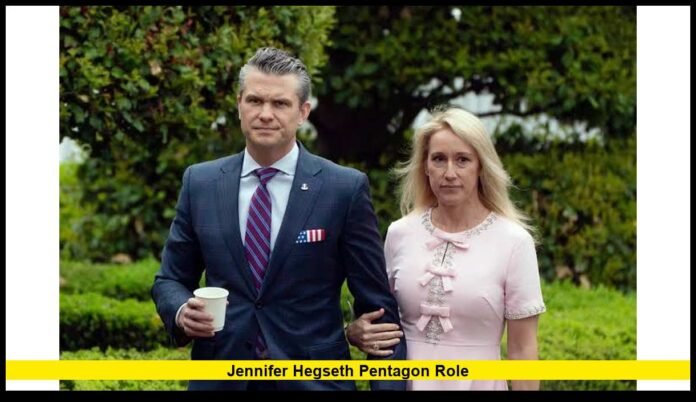

The jennifer hegseth pentagon role has become a major topic of discussion as questions continue over her involvement around Defense Secretary Pete Hegseth’s office and her level of access within the Department of Defense. Jennifer Hegseth does not serve as a traditional Pentagon official, but her participation in communications, advisory discussions, and events connected to the defense secretary has attracted significant public attention.
Jennifer Hegseth’s presence around the Pentagon has raised broader questions about how informal advisers operate near senior government officials. Her supporters describe her involvement as a form of trusted counsel based on her communications background, while critics have questioned whether an unofficial adviser should have influence in a department responsible for national security matters.
Who Is Jennifer Hegseth?
Jennifer Hegseth is a communications professional with experience in media and television production. Before becoming widely known through her connection to the Defense Department leadership, she worked in roles involving media strategy and public communication.
Her professional background has shaped much of the discussion surrounding her involvement with Pete Hegseth’s office. Her experience in media has been viewed as useful in helping prepare public messaging, manage appearances, and support communication efforts surrounding a high-profile government leader.
Jennifer Hegseth is married to Pete Hegseth, who became U.S. secretary of defense in 2025. As the spouse of a senior Cabinet official, she has been present at public events and has maintained a close relationship with the secretary during his tenure at the Pentagon.
Unlike a Senate-confirmed official or a government employee, Jennifer Hegseth does not lead a Pentagon office and does not hold a formal Defense Department title.
Read More –Pete Hegseth military record: A full look at his verified service history
Why Jennifer Hegseth’s Pentagon Involvement Has Received Attention
The discussion around Jennifer Hegseth has focused on the extent of her participation in activities connected to the defense secretary’s office.
Reports have described her as a close adviser who has assisted with areas such as media preparation, communications planning, and discussions involving personnel choices. Her involvement has attracted attention because the Pentagon traditionally relies on clearly defined roles and formal chains of responsibility.
The debate is not simply about whether a Cabinet secretary can receive personal advice. Senior officials often rely on trusted individuals outside government. The focus has been on how much access and influence an unofficial adviser should have within a national security agency.
The Pentagon manages military operations, defense policy, and sensitive information. Because of that responsibility, even informal participation by people without official government positions can become a matter of public interest.
Jennifer Hegseth’s Connection to Pentagon Communications
One of the most discussed aspects of Jennifer Hegseth’s involvement is communication strategy.
Defense secretaries operate in an environment where public messaging plays an important role. Officials regularly communicate military priorities, explain policy decisions, and respond to questions from lawmakers, service members, and the public.
Jennifer Hegseth’s media background has been viewed as relevant to these responsibilities. Her experience in television and communications has contributed to reports describing her as someone who helps with public appearances and messaging decisions connected to her husband.
Her supporters argue that communication expertise is valuable for any senior government leader. They say informal advice from someone with professional experience does not replace official Pentagon staff or decision-making authority.
Critics, however, have argued that government communication responsibilities should remain within established offices with formal oversight.
No Traditional Pentagon Appointment
A key point in understanding Jennifer Hegseth’s involvement is that she does not occupy a standard Pentagon position.
She is not a military official, civilian defense employee, or Senate-confirmed appointee. She does not have a publicly assigned government portfolio similar to assistant secretaries, advisers appointed through official channels, or department officials responsible for specific policy areas.
Her involvement has instead been connected to her personal relationship with the defense secretary and her experience in communications.
This distinction has shaped much of the debate surrounding her activities. Supporters see her as a trusted personal adviser, while critics believe government institutions require stronger separation between personal relationships and official operations.
Questions About Access and Influence
The Pentagon has strict procedures because it deals with military planning, international security issues, and classified information.
Questions surrounding Jennifer Hegseth have included whether informal advisers should participate in discussions normally handled by government officials and whether access should always correspond with an official role.
The concerns raised by critics generally focus on:
- Transparency in government decision-making
- Accountability for advice given to senior officials
- Security procedures involving sensitive discussions
- Clear separation between personal and official responsibilities
These questions have become part of a larger national conversation about how powerful government leaders use informal networks.
Supporters Defend Her Involvement
Supporters of Jennifer Hegseth’s role argue that senior officials frequently depend on trusted advisers outside formal government structures.
They point out that spouses and close advisers of public officials have historically played informal roles, especially in areas involving communication, public engagement, and personal support.
Her defenders have emphasized her professional experience and argue that providing advice does not mean controlling government decisions.
They also maintain that formal authority remains with Pentagon officials responsible for policy, military operations, and administrative decisions.
Criticism Surrounding Her Pentagon Presence
Critics have raised concerns that unofficial influence can create uncertainty about responsibility.
When major government decisions are made, the public expects to understand who is involved and who has authority. Critics argue that informal advisers can make accountability more difficult if their involvement becomes significant.
The Pentagon’s size and importance make these questions especially sensitive. The department employs hundreds of thousands of people and manages responsibilities affecting U.S. national security.
For critics, the issue is not Jennifer Hegseth’s personal relationship with the defense secretary but the broader question of how informal influence should function inside government institutions.
Jennifer Hegseth and the Debate Over Modern Political Advising
The discussion surrounding Jennifer Hegseth reflects a wider issue in Washington: the role of unofficial advisers.
Presidents, Cabinet secretaries, and other senior officials have often relied on personal advisers who do not always have formal government titles. These individuals may provide political advice, communication guidance, or strategic feedback.
However, government agencies operate under rules designed to maintain accountability and oversight.
The Pentagon faces additional scrutiny because decisions made inside the department can affect U.S. troops, international relationships, and military readiness.
The attention surrounding Jennifer Hegseth has therefore become part of a larger discussion about balancing trusted personal advice with institutional safeguards.
Current Understanding of Jennifer Hegseth’s Role
Jennifer Hegseth remains known publicly as the wife of Defense Secretary Pete Hegseth and as a communications professional who has been involved around his leadership team.
She does not hold a conventional Pentagon job title, but her involvement has continued to attract attention because of her proximity to one of the most powerful positions in the U.S. government.
The debate over her role reflects ongoing questions about influence, transparency, and responsibility within federal leadership.
As the Pentagon continues operating under Pete Hegseth’s leadership, interest in the people surrounding the defense secretary is likely to remain high. Jennifer Hegseth’s involvement represents a broader conversation about how informal advisers fit into modern government decision-making.
What are your thoughts on Jennifer Hegseth’s involvement around Pentagon leadership? Share your views in the comments and stay updated on the latest developments.