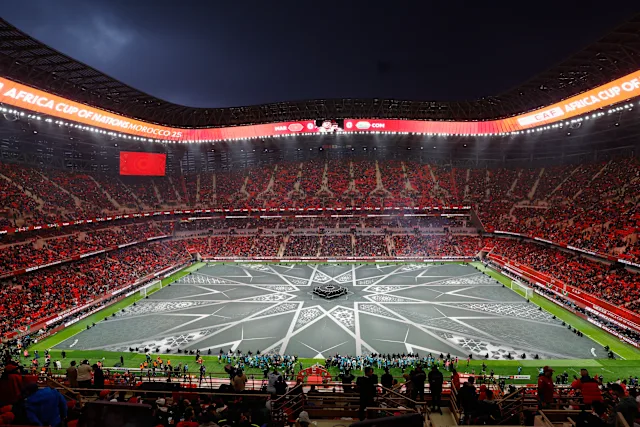

Football fans around the globe are already asking where is the next World Cup 2030, and the answer is unlike anything the tournament has ever produced. As the 2026 FIFA World Cup wraps up its historic three-nation run across the United States, Canada, and Mexico, attention is quickly turning toward the sport’s 100th anniversary celebration. The 2030 edition will be the largest and most geographically ambitious World Cup in history, spanning three continents and six countries in a single tournament.
The Official Hosts of the 2030 World Cup
The primary hosts of the 2030 FIFA World Cup are Morocco, Portugal, and Spain. FIFA officially confirmed this arrangement in December 2024 during an Extraordinary FIFA Congress, where all 211 member associations came together to ratify the decision. This marks the first time in tournament history that a World Cup will be staged across the Mediterranean region, connecting North Africa and southern Europe in one unified footballing celebration.
Spain will carry the largest share of the hosting responsibilities, with eleven stadiums spread across nine cities. Morocco will host matches in six stadiums across six cities, becoming the first North African nation to co-host football’s biggest event after several unsuccessful bids dating back decades. Portugal rounds out the trio with three stadiums in two cities. Combined, these three countries will provide the backbone of the tournament, hosting the overwhelming majority of matches, including the knockout rounds.
Why the 2030 World Cup Is So Unique
What truly sets the 2030 World Cup apart is its celebration of the tournament’s 100th anniversary. To honor the very first World Cup, which was played in Uruguay in 1930, FIFA has arranged for three additional countries to host special centenary matches. Argentina, Paraguay, and Uruguay will each stage one ceremonial opening-round match, bringing the total number of host nations to six and making the 2030 tournament the first World Cup ever played across three separate continents.
The centenary match in Uruguay will be held at Estadio Centenario in Montevideo, the very same stadium built for the inaugural 1930 tournament. Argentina will host its centenary fixture at the iconic Estadio Monumental in Buenos Aires, home of the 1978 World Cup final, while Paraguay will stage its match at Estadio Osvaldo Domínguez Dibb in Asunción, the city that serves as the headquarters of CONMEBOL, South America’s governing football body.
Because host nations automatically qualify for the World Cup, all six countries involved in the 2030 tournament have already secured their places in the competition, regardless of how qualifying tournaments in their respective confederations unfold.
A Record-Breaking Format and Timeline
The scale of the 2030 World Cup naturally extends its length. With matches taking place across three continents, travel logistics require a significantly longer tournament window than previous editions. The 2030 competition is expected to stretch across roughly 44 days, making it the longest World Cup in history, surpassing the 39-day format used for the 2026 tournament in North America.
The tournament is projected to include 21 stadiums across 18 cities, though the full and final list of venues, along with the location of the championship final, has not yet been confirmed by FIFA. Some cities originally proposed as hosts have since withdrawn. Málaga stepped back in July 2025 over renovation concerns at its stadium, and A Coruña withdrew in March 2026 due to hosting cost concerns, even though the city had explored upgrades to its home stadium. FIFA has indicated that the finalized host city list, along with confirmation of where the final will be played, is expected closer to the tournament, with an official deadline set for late 2026.
How Teams Will Qualify for 2030
Beyond the six automatically qualified host nations, the remaining spots in the 48-team tournament will be determined through expanded qualifying processes in each confederation. CONCACAF, for example, announced its qualification structure in February 2026, which will unfold across multiple rounds beginning in the 2027 international match windows and continuing into 2028. Lower-ranked CONCACAF nations will compete in an initial knockout round, with winners advancing to join higher-ranked teams in group play, eventually narrowing down to a final round that determines the region’s automatic qualifiers.
Other confederations, including UEFA and CONMEBOL, are expected to finalize their own qualifying formats throughout 2026 and 2027, following the conclusion of the 2026 World Cup. Since the tournament will again use a 48-team format introduced in 2026, qualification pathways across confederations are being restructured to accommodate the expanded field while balancing regional competitiveness.
Public Interest and Global Anticipation
Excitement surrounding the 2030 World Cup has grown steadily since the host announcement, and interest has only intensified as the 2026 tournament in North America has unfolded. Fans in Morocco are particularly enthusiastic, as the country will make history as the first African nation situated outside sub-Saharan Africa to host a World Cup, following South Africa’s landmark hosting of the 2010 tournament. Spanish and Portuguese supporters, meanwhile, are anticipating a tournament that showcases some of Europe’s most passionate football cultures, with cities like Madrid, Barcelona, Lisbon, and Porto expected to serve as central hubs for match action and fan festivities.
The centenary matches in South America have also generated significant attention, particularly given the symbolic weight of returning to Uruguay, the birthplace of the World Cup. Football historians and fans alike see the 2030 edition as a rare opportunity to connect the tournament’s origins with its modern global scale, a storyline that has added an emotional layer to the buildup beyond typical hosting announcements.
There has also been public discussion about overtourism concerns in some proposed host cities. In April 2025, residents of San Sebastián in Spain raised concerns with FIFA about the impact of hosting matches on their community, reflecting a broader conversation happening in several tourist-heavy European cities about balancing global sporting events with local quality of life.
Latest Updates on Host Cities and Planning
As of mid-2026, planning for the 2030 World Cup continues to evolve. While Morocco, Portugal, and Spain remain firmly established as the tournament’s primary hosts, the exact list of participating stadiums is still being finalized, with a small number of cities withdrawing from earlier proposals due to renovation costs or logistical challenges. FIFA has not yet confirmed the location of the tournament final, and there is no official confirmation on which stadium will host that landmark match. Speculation continues to circulate among fans and media outlets, but until FIFA makes a formal announcement, any claims about the final’s location should be treated as unconfirmed.
Discussions have also begun regarding future tournaments beyond 2030. Countries including Germany, Italy, France, and the United States have expressed early interest in bidding for the 2038 World Cup, though these conversations remain in preliminary stages and are unrelated to the confirmed 2030 hosting arrangement.
Final Thoughts
The question of where is the next World Cup 2030 has a clear and historic answer: Morocco, Portugal, and Spain will serve as the primary hosts, with Argentina, Paraguay, and Uruguay contributing centenary celebration matches that honor the tournament’s 100-year history. This six-nation, three-continent format is unprecedented in World Cup history and reflects FIFA’s ambition to make the centenary edition a truly global celebration of the sport. While some logistical details, including the full stadium list and the site of the final, remain unresolved, the framework for what promises to be the most expansive World Cup ever staged is already firmly in place. As qualifying tournaments unfold over the coming years and host city plans are finalized, fans worldwide can look forward to a tournament that bridges football’s past and present in a way no previous World Cup has attempted.
Stay tuned for more updates on the 2030 World Cup as host cities, stadiums, and qualifying details continue to develop — share your thoughts and predictions in the comments below.