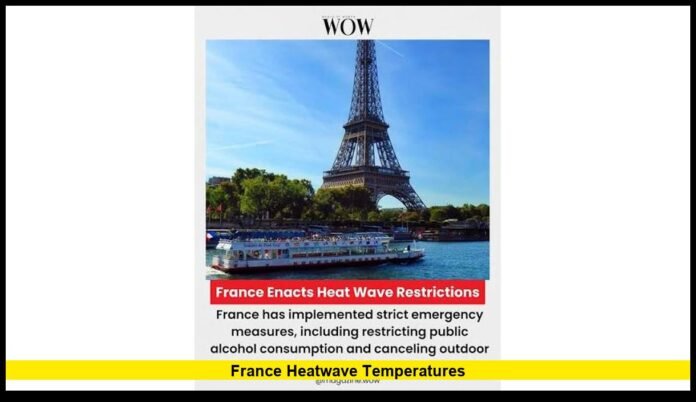

France heatwave temperatures have surged to extraordinary levels in June 2026, placing millions of people under severe heat warnings and prompting emergency measures across the country. Several regions have recorded temperatures above 40°C (104°F), while authorities continue to monitor public health risks, transportation disruptions, and the broader impact of one of the most intense early-summer heat events France has experienced in recent years.
The heatwave has spread across much of the nation, affecting major cities, rural communities, and popular tourist destinations. Schools have closed in numerous districts, hospitals have increased preparedness measures, and local governments have opened cooling centers to help residents cope with the extreme conditions.
For readers in the United States, the situation highlights the growing challenges that prolonged heat events can create for modern cities and infrastructure. The combination of scorching daytime temperatures and unusually warm nights has made this weather emergency particularly difficult for vulnerable populations.
Extreme Heat Covers Large Areas of France
The current heatwave has impacted a significant portion of mainland France. Meteorologists have reported temperatures far above seasonal averages, with some areas experiencing conditions more typical of the peak summer months.
Cities in western, central, and southern France have faced the highest temperatures. In several locations, thermometers have climbed beyond 40°C, creating dangerous conditions for outdoor activity.
The heat has not been limited to a single region. Instead, it has stretched across much of the country, making it one of the most widespread heat events of the year.
Officials have warned residents to remain indoors during the hottest hours of the day whenever possible. Many communities have also adjusted public services to reduce risks associated with prolonged exposure to high temperatures.
Several Regions Cross the 40°C Mark
One of the most significant aspects of the current event is the number of locations reporting temperatures above 40°C.
Among the areas facing extreme conditions are:
- Bordeaux and surrounding regions
- Parts of Nouvelle-Aquitaine
- Occitanie communities
- Central French departments
- Inland regions away from coastal influences
Some local forecasts have indicated highs approaching 43°C (109°F), levels capable of causing serious health concerns if proper precautions are not taken.
Temperatures in Paris have also climbed well above normal June averages. The capital has experienced intense afternoon heat, with many residents seeking relief in parks, shaded public areas, and cooling facilities.
Why Nighttime Temperatures Matter
While daytime heat often receives the most attention, overnight temperatures have become one of the biggest concerns during this event.
Many parts of France have experienced nights where temperatures remained above 25°C (77°F). These conditions are often referred to as tropical nights because the air never cools sufficiently after sunset.
This creates several problems:
- The body has less opportunity to recover from daytime heat.
- Indoor spaces remain uncomfortable.
- Sleep quality declines.
- Dehydration risks increase.
- Vulnerable individuals face prolonged exposure.
Health experts often view warm nights as a major factor in heat-related illnesses because they extend the period of physical stress.
In urban areas, the problem becomes even more severe due to the concentration of buildings, roads, and concrete surfaces that absorb heat during the day and release it slowly overnight.
Authorities Issue Highest-Level Heat Warnings
Government agencies have expanded heat alerts across France as temperatures continue to rise.
Many departments have been placed under the country’s highest warning category. These alerts trigger emergency response measures designed to protect public safety.
Authorities have urged residents to:
- Drink water frequently.
- Stay in cool environments.
- Avoid strenuous activities.
- Check on elderly family members.
- Monitor young children closely.
- Seek medical help if symptoms appear.
Emergency services have also increased staffing levels to prepare for a rise in heat-related calls.
Officials continue to emphasize that even healthy individuals can experience complications during prolonged periods of extreme heat.
School Closures Affect Thousands of Families
Education officials have temporarily closed or modified operations at more than a thousand schools.
Many school buildings were not designed to withstand temperatures exceeding 40°C. Classrooms without modern cooling systems can become dangerously hot during prolonged heat events.
Administrators reported concerns about:
- Indoor classroom temperatures
- Student hydration
- Staff safety
- Transportation conditions
- Reduced learning effectiveness
In some districts, schools shifted schedules to reduce exposure during the hottest hours. Others suspended classes altogether until conditions improve.
Parents have faced additional challenges as they arrange childcare and adjust work schedules.
Paris Confronts Urban Heat Challenges
Paris remains one of the most closely watched cities during the heatwave.
The French capital faces unique difficulties because of its dense urban environment. Streets, buildings, and public infrastructure retain heat long after sunset.
As temperatures rise, the urban heat island effect becomes more pronounced. This phenomenon causes cities to remain significantly warmer than surrounding rural areas.
Residents have reported:
- Hot apartment conditions overnight
- Crowded cooling areas
- Increased demand for air conditioning
- Greater use of public fountains and shaded parks
City officials have expanded access to cooling centers and encouraged residents to limit outdoor activity during peak heat periods.
Popular tourist locations have also adapted operations to help visitors cope with the unusual weather.
Transportation Networks Feel the Impact
Extreme heat can affect transportation systems in several ways.
Rail operators across France have implemented special procedures to reduce risks associated with high temperatures. Metal tracks expand when exposed to intense heat, requiring careful monitoring.
Transportation agencies are focusing on:
- Passenger safety
- Equipment inspections
- Track maintenance
- Schedule adjustments
- Heat-related operational challenges
Travelers have been advised to carry water and prepare for potential delays.
Public transit systems in major cities have also increased heat safety messaging for passengers.
Hospitals Prepare for Increased Demand
Healthcare providers remain on alert as the heatwave continues.
Medical facilities are closely monitoring admissions related to heat exposure and dehydration. Emergency departments have prepared for increased patient volumes, particularly among vulnerable populations.
Doctors are watching for symptoms such as:
- Dizziness
- Confusion
- Severe fatigue
- Rapid heartbeat
- High body temperature
- Loss of consciousness
Heat stroke remains the most dangerous heat-related condition. Without immediate treatment, it can become life-threatening.
Medical professionals continue urging people to seek assistance quickly if symptoms develop.
Read More – San Diego Weather: Today’s Coastal Forecast and Trends
Older Adults Face the Highest Risks
Public health officials have repeatedly emphasized the dangers that extreme heat poses to older adults.
Several factors increase vulnerability:
- Reduced ability to regulate body temperature
- Chronic medical conditions
- Certain medications
- Limited mobility
- Social isolation
Community organizations and local governments have expanded outreach programs aimed at checking on seniors during the heatwave.
Family members have also been encouraged to maintain regular contact with elderly relatives and neighbors.
These efforts play a critical role during prolonged periods of dangerous weather.
Children and Outdoor Workers Also Vulnerable
Young children face elevated risks because their bodies heat up more quickly than adults.
Schools, camps, and recreational programs have adjusted activities to minimize exposure during the hottest parts of the day.
Outdoor workers represent another high-risk group.
Construction crews, agricultural workers, delivery personnel, and maintenance teams continue operating under difficult conditions.
Many employers have implemented protective measures, including:
- Additional rest breaks
- Earlier start times
- Increased hydration access
- Shaded recovery areas
- Reduced physical workloads
Worker safety remains a major focus as temperatures stay elevated.
Agriculture Experiences Growing Pressure
French agriculture has begun feeling the effects of the prolonged heat.
High temperatures accelerate moisture loss from soil and increase water demands for crops.
Farmers across affected regions are monitoring:
- Irrigation needs
- Crop development
- Livestock health
- Water availability
- Soil conditions
Heat stress can affect agricultural productivity, particularly when extreme temperatures occur for several consecutive days.
Producers are taking steps to protect animals and maintain adequate water supplies during the hottest periods.
Tourism Adapts to Record Heat
France remains one of the world’s most visited destinations, and the heatwave has affected tourism activities in several regions.
Visitors are adjusting schedules to avoid midday heat.
Popular attractions have seen changes such as:
- Earlier visits
- Increased demand for indoor locations
- Greater use of shaded public spaces
- Higher water consumption
- Additional health advisories
Tourism officials continue encouraging visitors to follow local safety recommendations.
Many travelers are choosing morning and evening activities instead of spending extended periods outdoors during afternoon hours.
Energy Demand Climbs Across the Country
As temperatures rise, electricity consumption often increases as homes and businesses attempt to stay cool.
Energy providers have reported higher demand during the heatwave.
Air conditioning use, cooling systems, and refrigeration requirements place additional pressure on electrical infrastructure.
Authorities continue monitoring grid performance while encouraging responsible energy use during peak demand periods.
Despite the challenges, the national energy system has continued operating without major disruptions.
How This Heatwave Compares to Previous French Heat Events
France has experienced notable heatwaves in past decades, but the June 2026 event stands out for several reasons.
Among the distinguishing factors are:
| Factor | Current Heatwave |
|---|---|
| Timing | Occurring unusually early in summer |
| Geographic Reach | Affecting a large portion of France |
| Nighttime Temperatures | Persistently high |
| Public Alerts | Extensive use of highest warning levels |
| Duration | Multiple consecutive days of extreme heat |
Meteorologists continue comparing current conditions with historic heat episodes to assess the significance of this event.
Many locations are approaching or exceeding long-standing June temperature records.
The Broader European Heat Pattern
France is not the only country affected by extreme temperatures.
Large parts of Western and Southern Europe have experienced above-average heat during the same period.
The broader weather pattern has contributed to elevated temperatures across multiple nations.
Several neighboring countries have also issued heat warnings and implemented public safety measures.
This regional heat event has drawn attention from weather agencies throughout Europe because of its intensity and geographic scope.
What Residents Are Being Told to Do
Authorities continue emphasizing straightforward safety measures that can reduce health risks.
Recommendations include:
- Drink water regularly, even before feeling thirsty.
- Stay indoors during peak afternoon heat.
- Wear lightweight clothing.
- Keep homes shaded when possible.
- Avoid excessive physical activity.
- Check on vulnerable individuals.
These precautions may appear simple, but health officials say they remain the most effective ways to prevent heat-related illness.
Public awareness campaigns have expanded significantly as temperatures remain elevated.
What Comes Next for France
Forecasts indicate that some areas may begin experiencing gradual relief as weather patterns evolve.
However, many inland regions are expected to remain very hot in the near term.
Emergency officials continue monitoring conditions around the clock.
Healthcare systems, transportation agencies, schools, and local governments remain focused on protecting residents until temperatures return closer to seasonal norms.
The coming days will determine whether additional records are broken and how quickly communities can recover from one of the most significant weather events of the summer.
As the situation develops, France heatwave temperatures remain a major focus for officials, residents, and weather observers across Europe, reflecting the enormous impact that prolonged extreme heat can have on daily life, public health, and critical infrastructure.
Stay tuned for the latest developments and share your thoughts on how communities can better prepare for extreme heat events in the future.