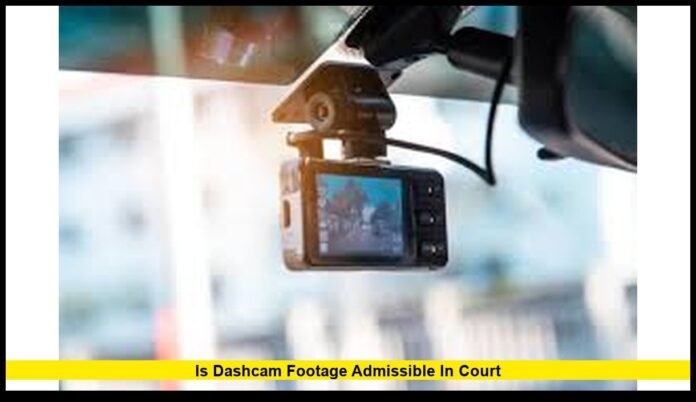

Is dashcam footage admissible in court? For most legal cases in the United States, dashcam recordings can be used as evidence when they meet established legal requirements. Courts, insurance companies, law enforcement agencies, and attorneys increasingly rely on dashboard camera footage to determine what happened during traffic accidents, road rage incidents, hit-and-run cases, and other vehicle-related disputes.
The growing popularity of dashboard cameras has changed how many legal cases are investigated. A few years ago, courts often depended heavily on witness statements and police reports. Today, video evidence frequently provides a clearer picture of events. When properly recorded and preserved, dashcam footage can help establish facts, verify timelines, and resolve disagreements between parties.
Understanding how courts evaluate dashcam recordings can help drivers know when video evidence may support their case and when legal challenges could arise.
What Is Dashcam Footage?
Dashcam footage refers to video recordings captured by cameras installed inside vehicles. Most dashboard cameras are mounted on the windshield or dashboard and continuously record the road ahead while a vehicle is in operation.
Modern dashcams often include advanced features such as:
- High-definition video recording
- Night vision capabilities
- GPS tracking
- Speed data recording
- Cloud storage integration
- Collision detection
- Front and rear camera systems
- Parking surveillance modes
These features can provide detailed information that may become valuable during legal proceedings.
Why Dashcam Evidence Has Become More Important
Vehicle accidents happen every day across the United States. In many situations, drivers provide different accounts of the same event. Witnesses may remember details differently, and physical evidence alone may not tell the entire story.
Dashcam recordings help fill those gaps.
Video evidence can show:
- The sequence of events leading up to a crash
- Traffic signal status
- Road conditions
- Driver actions
- Vehicle positioning
- Lane usage
- Weather conditions
- Pedestrian activity
Because video provides a visual record, courts often view it as highly persuasive evidence when determining facts.
Can Courts Accept Dashcam Footage as Evidence?
In general, yes.
American courts routinely admit dashcam recordings into evidence when the footage satisfies legal standards. Judges evaluate whether the recording is relevant to the case and whether it accurately depicts the events it claims to show.
Admissibility depends on several factors rather than simply whether a camera captured the incident.
Courts typically consider:
- Relevance
- Authenticity
- Reliability
- Legality of recording
- Preservation of evidence
- Absence of manipulation
If these conditions are met, the footage often becomes part of the evidentiary record.
How Relevance Affects Admissibility
Evidence must help prove or disprove an important fact in the case.
For example, if two vehicles collide in an intersection, footage showing the moments immediately before the crash is likely relevant.
Relevant recordings may demonstrate:
- Which driver entered the intersection first
- Whether a traffic signal was red or green
- If a driver failed to yield
- Whether speeding occurred
- The direction each vehicle traveled
Footage unrelated to the disputed issues generally carries little value in court.
Authenticating Dashcam Footage
Authentication is one of the most important legal requirements.
The court must be satisfied that the recording is genuine and accurately reflects what occurred.
Authentication often involves testimony explaining:
- Who owns the camera
- Where the camera was installed
- When the footage was recorded
- How the recording system operates
- Whether the footage has been altered
The vehicle owner, driver, or another knowledgeable witness may provide this information.
Without proper authentication, a court may refuse to admit the recording.
Why Original Footage Matters
Judges place significant importance on preserving original evidence.
When a dashcam captures an accident, drivers should save the original file as soon as possible.
Original footage provides:
- Accurate timestamps
- Complete video sequences
- Metadata
- Proof that editing did not occur
Editing, trimming, or modifying recordings can create legal complications.
Even if changes appear minor, opposing parties may argue that the footage no longer accurately represents events.
Maintaining original files helps strengthen credibility.
Can Edited Dashcam Videos Be Used in Court?
Edited recordings face additional scrutiny.
Courts generally prefer original versions because they present the entire context of an event.
Potential concerns include:
- Missing footage
- Selective editing
- Audio modifications
- Altered timestamps
- Visual enhancements
A judge may still review edited footage in some situations, but original recordings usually carry greater evidentiary value.
Common Cases Where Dashcam Footage Is Used
Dashcam evidence appears in many different legal matters.
Car Accident Lawsuits
Motor vehicle collisions represent the most common use of dashboard camera recordings.
Video footage can help establish:
- Driver negligence
- Fault determination
- Traffic violations
- Accident timelines
Clear recordings often reduce disputes regarding how a collision occurred.
Insurance Claims
Insurance companies frequently request dashcam footage following an accident.
The recordings may help:
- Verify statements
- Detect fraud
- Determine liability
- Speed up claim processing
Video evidence can sometimes prevent lengthy investigations by showing exactly what happened.
Hit-and-Run Investigations
Dashcams often capture critical details during hit-and-run incidents.
Recordings may reveal:
- License plate numbers
- Vehicle descriptions
- Driver behavior
- Travel direction
This information can assist law enforcement and insurers.
Road Rage Cases
Aggressive driving incidents sometimes escalate into criminal or civil disputes.
Dashcam footage may document:
- Dangerous maneuvers
- Threatening behavior
- Vehicle contact
- Traffic violations
Such recordings can become important evidence when allegations arise.
Personal Injury Claims
Injury lawsuits often rely on evidence showing how an accident occurred.
Dashcam footage can help establish:
- The force of impact
- Driver conduct
- Road conditions
- Visibility conditions
Attorneys frequently use video evidence when presenting negligence claims.
Can Dashcam Footage Be Used in Criminal Cases?
Yes.
Criminal courts may admit dashcam recordings when they are relevant to the charges being considered.
Examples include:
- Reckless driving
- DUI-related incidents
- Vehicular assault
- Hit-and-run offenses
- Street racing allegations
Prosecutors and defense attorneys may both use video evidence to support their arguments.
The court applies evidence rules to determine admissibility.
The Difference Between Video and Audio Recording
Many drivers focus on video recording but overlook audio recording laws.
Video recording on public roads is generally lawful because roads and highways are public spaces.
Audio recording may involve additional legal considerations.
State laws vary regarding recorded conversations.
Some states follow one-party consent rules, while others require all participants to consent before certain conversations may be recorded.
Drivers should understand applicable state laws when using dashcams that record audio inside a vehicle.
How Metadata Strengthens Dashcam Evidence
Modern cameras generate more than video files.
Many systems also record metadata.
Metadata may include:
- Date
- Time
- GPS coordinates
- Vehicle speed
- Direction of travel
- Impact events
This information can help verify the accuracy of a recording.
When footage and metadata align, courts may view the evidence as more reliable.
Read More – M5 Traffic: Tragedy and Recovery on the Motorway
Can Dashcam Footage Be Rejected by a Judge?
Yes.
Several factors may lead to exclusion.
Poor Video Quality
Blurry or unclear footage may provide little assistance in resolving factual disputes.
If key details cannot be seen, the evidence may carry less value.
Questions About Authenticity
If no witness can verify the recording’s origin, the court may reject it.
Authentication remains essential.
Evidence Tampering Concerns
Signs of alteration can undermine credibility.
Missing sections, suspicious edits, or inconsistent timestamps may create challenges.
Improper Handling of Evidence
Failure to preserve footage properly can raise questions regarding reliability.
Maintaining secure storage is important.
Legal Recording Issues
Courts may examine whether recordings comply with applicable laws.
Compliance strengthens the likelihood of admissibility.
How Dashcam Footage Helps Determine Fault
Fault determination often becomes the central issue in traffic accident cases.
Dashcam recordings can provide objective information regarding:
- Traffic signals
- Right-of-way disputes
- Lane changes
- Sudden braking
- Driver reactions
- Vehicle speeds
Insurance adjusters and juries frequently find visual evidence easier to evaluate than conflicting testimony.
As a result, video recordings often influence settlement negotiations and courtroom decisions.
Using Dashcam Footage to Fight Traffic Tickets
Some drivers use dashboard camera recordings when contesting citations.
Footage may assist in disputes involving:
- Red-light violations
- Stop sign allegations
- Improper lane changes
- Failure-to-yield citations
- Unsafe driving accusations
The effectiveness of the evidence depends on what the camera captured and how clearly the recording shows relevant events.
Commercial Vehicles and Dashcam Evidence
Commercial trucking companies increasingly equip vehicles with dashboard cameras.
Fleet operators use dashcams to:
- Improve safety
- Investigate accidents
- Monitor driving behavior
- Reduce fraudulent claims
When commercial vehicle crashes occur, dashcam footage often becomes a significant piece of evidence.
The recordings may help investigators reconstruct events more accurately.
Police and Dashcam Evidence
Law enforcement agencies regularly use dash-mounted cameras in patrol vehicles.
These systems frequently record:
- Traffic stops
- Pursuits
- Roadside interactions
- Suspected traffic violations
Courts have become familiar with video evidence from vehicle-mounted cameras, which contributes to broader acceptance of recorded footage during legal proceedings.
Best Practices After an Accident
Drivers who possess potentially important footage should act quickly.
Recommended steps include:
Save the Recording Immediately
Many dashcams automatically overwrite older footage.
Protecting the file quickly prevents accidental deletion.
Create Multiple Backups
Store copies in secure locations.
Cloud storage and external drives can provide additional protection.
Document Important Details
Record:
- Date
- Time
- Location
- Police report information
- Witness names
Supporting information can help establish authenticity later.
Preserve the Original File
Avoid modifying or editing the recording.
Original evidence generally carries greater legal value.
How Technology Is Shaping Future Court Cases
Dashboard camera technology continues to improve.
Newer systems provide:
- Higher-resolution video
- Wider viewing angles
- Enhanced night recording
- Cloud-based storage
- Real-time uploads
As these technologies become more common, video evidence will likely play an even larger role in accident investigations and court proceedings.
Judges, attorneys, insurers, and investigators increasingly rely on digital recordings when evaluating disputed events.
Frequently Asked Questions
Is dashcam footage admissible in court for every accident?
Not automatically. The footage must satisfy legal requirements involving relevance, authenticity, reliability, and lawful recording.
Can insurance companies review dashcam footage?
Yes. Many insurers consider dashcam recordings when investigating accident claims.
Can a dashcam help prove I was not at fault?
It can. Clear footage may show exactly how an incident occurred and support your version of events.
Should I keep the original video file?
Yes. Original recordings often provide the strongest evidence and help establish authenticity.
Can dashcam footage support a personal injury case?
Yes. Video recordings may help demonstrate negligence, road conditions, and the circumstances surrounding an accident.
Conclusion
Is dashcam footage admissible in court? In most situations throughout the United States, courts allow dashcam recordings to be introduced as evidence when they are relevant, authentic, reliable, and legally obtained. Video footage has become one of the most powerful tools available in modern traffic litigation because it can document events as they happen rather than relying solely on memory or conflicting accounts. Whether the issue involves a vehicle collision, insurance dispute, traffic citation, or personal injury claim, properly preserved dashcam footage can play a crucial role in helping courts determine the facts and reach informed decisions.
Have you installed a dashcam in your vehicle? Share your thoughts and stay updated on important legal topics affecting drivers across the United States.