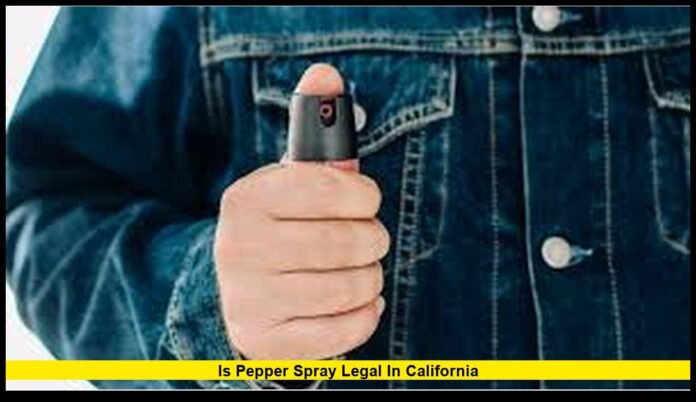

Is pepper spray legal in California? Yes, California allows most adults to buy, carry, and use pepper spray for self-defense. State law continues to permit lawful possession of pepper spray in 2026, but important restrictions apply. California limits the size of civilian pepper spray containers, prohibits certain individuals from possessing it, and imposes penalties for misuse. Anyone considering carrying pepper spray should understand these rules before relying on it for personal protection.
Pepper spray remains one of the most commonly carried self-defense tools across California. People use it while walking, commuting, exercising outdoors, traveling, or working late hours. Because it is designed to temporarily incapacitate an attacker without causing permanent injury in most situations, many residents see it as an accessible option for personal safety.
However, legality depends on more than simply purchasing a canister. State law outlines who can possess pepper spray, how it can be used, and what happens when someone violates those requirements.
Understanding California’s Pepper Spray Laws
California law recognizes pepper spray as a lawful self-defense device for eligible individuals. Unlike firearms, pepper spray does not generally require a permit, registration, waiting period, or special license for legal possession.
The law focuses on responsible use rather than broad restrictions. Legislators have long allowed Californians to carry pepper spray as a defensive tool, provided users follow specific requirements.
The primary legal considerations include:
- Eligibility to possess pepper spray
- Container size restrictions
- Lawful self-defense use
- Criminal penalties for misuse
- Restrictions involving minors and certain offenders
Knowing these rules can help residents avoid legal problems while exercising their right to self-defense.
Why Pepper Spray Is Popular in California
Personal safety concerns continue to drive demand for non-lethal self-defense products.
Pepper spray offers several advantages that appeal to many Californians:
- Lightweight and portable
- Easy to carry in a pocket or purse
- Available without a permit for most adults
- Generally less expensive than many other self-defense tools
- Designed to provide time to escape a dangerous situation
- Widely available through retailers and online stores
For many individuals, pepper spray provides an additional sense of security during daily activities.
People living in urban areas, suburban communities, and rural regions all use pepper spray as part of their personal safety plans.
Who Can Legally Carry Pepper Spray in California?
Most adults can legally carry pepper spray in California.
A person generally qualifies if they:
- Are at least 18 years old
- Are not prohibited under state law
- Intend to use pepper spray only for self-defense
The law does not require individuals to demonstrate a special need before purchasing pepper spray.
Residents and visitors who meet legal requirements may generally carry it throughout the state for personal protection.
Who Is Prohibited From Possessing Pepper Spray?
California law restricts pepper spray possession for certain individuals.
Several categories of people may not legally own or carry pepper spray.
These include:
| Category | Restriction |
|---|---|
| Convicted felons | Prohibited from possession |
| Individuals convicted of certain assault crimes | Restricted |
| Persons convicted of pepper spray misuse | Restricted |
| Individuals addicted to narcotic drugs | Restricted |
| Most minors | Restricted from possession |
These restrictions exist because lawmakers consider misuse risks higher among certain groups.
Anyone who falls into a prohibited category should carefully review applicable laws before attempting to purchase pepper spray.
Possessing pepper spray while prohibited can lead to criminal consequences.
What Is the Maximum Legal Pepper Spray Size in California?
One of California’s most important pepper spray regulations involves container size.
Civilian pepper spray devices may not exceed 2.5 ounces.
Many manufacturers specifically design California-compliant products that meet this requirement.
Consumers should always verify product specifications before purchasing.
A larger container that exceeds state limits may create legal issues even if the owner never uses it.
This restriction applies regardless of whether the pepper spray is purchased in California or brought into the state from elsewhere.
Because product sizes vary significantly, checking the label remains important.
Can Minors Carry Pepper Spray?
California generally restricts pepper spray possession by minors.
Most individuals under 18 years old cannot legally purchase or carry pepper spray on their own.
Parents sometimes assume pepper spray is automatically permitted for teenagers because it is a non-lethal device. That assumption can create legal complications.
Families should carefully review current state requirements before allowing a minor access to pepper spray.
Understanding the law in advance can prevent unnecessary violations.
Can Visitors Bring Pepper Spray Into California?
Many travelers ask whether pepper spray remains legal when entering California from another state.
Visitors can generally possess pepper spray if they meet California’s legal requirements.
However, California law still applies while they are inside the state.
This means visitors should ensure:
- Their pepper spray complies with California size limits
- They are not prohibited possessors
- They use the product only for lawful self-defense
Laws vary significantly from state to state, making it important for travelers to understand California’s specific requirements.
When Is Pepper Spray Use Considered Legal?
The key factor is self-defense.
California permits pepper spray use when a person reasonably believes they face an immediate threat of unlawful force or physical harm.
The purpose of pepper spray is to create an opportunity to escape danger safely.
Examples may include:
- Attempted assault
- Physical attacks
- Threats involving immediate danger
- Attempted robbery
- Situations where an individual reasonably fears bodily harm
In these circumstances, pepper spray may provide enough time for a person to reach safety and contact law enforcement.
The law generally expects users to act defensively rather than aggressively.
What Counts as Self-Defense?
Self-defense involves protecting yourself from an immediate threat.
The threat must be real and occurring at that moment.
Someone cannot typically claim self-defense after the danger has passed.
For example, using pepper spray against an individual who is actively attacking or attempting to attack may fit within lawful self-defense principles.
Using pepper spray later as retaliation usually does not.
Courts often examine the specific facts surrounding an incident when determining whether self-defense applies.
That is why responsible decision-making remains critical.
Situations Where Pepper Spray Use May Be Illegal
Possessing pepper spray legally does not mean it can be used in every conflict.
Several situations can lead to criminal charges.
Examples include:
- Using pepper spray during a verbal argument
- Spraying someone as a prank
- Threatening people without justification
- Using pepper spray offensively
- Retaliating after a confrontation ends
- Spraying individuals who do not pose an immediate threat
Misuse can transform a legal self-defense tool into evidence in a criminal case.
California authorities take these incidents seriously.
Criminal Penalties for Misusing Pepper Spray
Improper use of pepper spray may result in significant legal consequences.
Potential penalties can include:
- Criminal charges
- Fines
- Probation
- Jail time
- Civil lawsuits
The severity often depends on factors such as:
- Whether injuries occurred
- The circumstances of the incident
- The user’s criminal history
- Whether the conduct was intentional
A seemingly minor misuse can create lasting legal problems.
That is why understanding lawful self-defense standards is so important.
Can You Carry Pepper Spray in Public Places?
Yes, most eligible adults may carry pepper spray in public.
Many Californians carry pepper spray while:
- Walking their dogs
- Exercising outdoors
- Using public transportation
- Traveling alone
- Working evening shifts
- Visiting unfamiliar areas
Carrying pepper spray for lawful protection remains legal for most adults under California law.
The device should remain readily accessible but secure enough to prevent accidental discharge.
Read More- SEIU California Faces Turmoil Amid ICE Raids
Can You Carry Pepper Spray at Work?
Workplace policies vary.
California law may allow possession in many situations, but employers can establish workplace rules that restrict certain items on company property.
Employees should review their employer’s policies before bringing pepper spray to work.
Violating workplace rules could result in disciplinary action even when possession itself is legal under state law.
Different industries may impose different requirements.
Pepper Spray and School Campuses
Educational institutions often maintain stricter rules than those that apply in public spaces.
Many schools, colleges, and universities regulate or restrict self-defense devices on campus property.
Students should review campus regulations before carrying pepper spray.
School disciplinary consequences may exist even when criminal charges do not.
Understanding local policies helps avoid misunderstandings.
Can Pepper Spray Be Taken on Airplanes?
Air travel creates additional restrictions.
Federal transportation regulations govern what passengers may bring through airport security checkpoints.
Pepper spray generally is not allowed in carry-on baggage.
Certain limited exceptions may apply to checked luggage, but travelers should verify current airline and transportation requirements before flying.
Failure to follow transportation rules can result in delays, confiscation, or penalties.
Checking current travel regulations before arriving at the airport is always advisable.
Pepper Spray Versus Pepper Gel
Many self-defense shoppers compare pepper spray and pepper gel.
Both products use similar active ingredients, but they function differently.
Pepper Spray
Advantages include:
- Broad defensive coverage
- Quick deployment
- Common availability
Potential drawbacks include:
- Wind may affect accuracy
- Greater airborne spread
Pepper Gel
Advantages include:
- Better wind resistance
- Longer range in many products
- More targeted delivery
Potential drawbacks include:
- Requires more precise aiming
Both options remain legal in California when they comply with applicable state requirements.
How Effective Is Pepper Spray?
Pepper spray is designed to temporarily affect an attacker’s eyes, breathing, and ability to function normally.
Common effects may include:
- Eye irritation
- Temporary vision impairment
- Coughing
- Difficulty keeping eyes open
- Burning sensations
These effects often create an opportunity for the intended victim to escape and seek assistance.
Pepper spray should never be viewed as a substitute for situational awareness and personal safety planning.
Instead, it serves as one tool within a broader approach to self-protection.
Safe Pepper Spray Practices
Responsible ownership starts with safe handling.
Helpful safety practices include:
- Read all manufacturer instructions
- Check expiration dates
- Store securely
- Avoid exposing the canister to excessive heat
- Practice accessing the device quickly
- Keep it away from children
Many accidental discharges occur because users fail to familiarize themselves with their equipment.
Learning how the product works before an emergency can make a significant difference.
Common Misconceptions About California Pepper Spray Laws
Myth: Pepper Spray Is Illegal
False.
Most adults may legally carry pepper spray in California.
Myth: A Permit Is Required
False.
California generally does not require permits for lawful civilian possession.
Myth: Any Container Size Is Acceptable
False.
California limits civilian pepper spray containers to 2.5 ounces.
Myth: Pepper Spray Can Be Used During Any Dispute
False.
The law allows defensive use, not offensive use.
Myth: Visitors Are Automatically Exempt
False.
Visitors must comply with California law while inside the state.
What California Residents Should Remember in 2026
California continues to permit pepper spray as a self-defense tool for eligible adults.
The law remains straightforward but important restrictions still apply. Individuals must comply with possession requirements, follow the 2.5-ounce limit, and use pepper spray only when facing a legitimate self-defense situation.
For many Californians, pepper spray remains one of the most practical and accessible personal safety tools available. Understanding the law before carrying it can help ensure that a device intended for protection does not create unexpected legal problems.
Do you think California’s pepper spray laws strike the right balance between self-defense rights and public safety? Share your thoughts in the comments and stay informed about legal developments that affect everyday Californians.