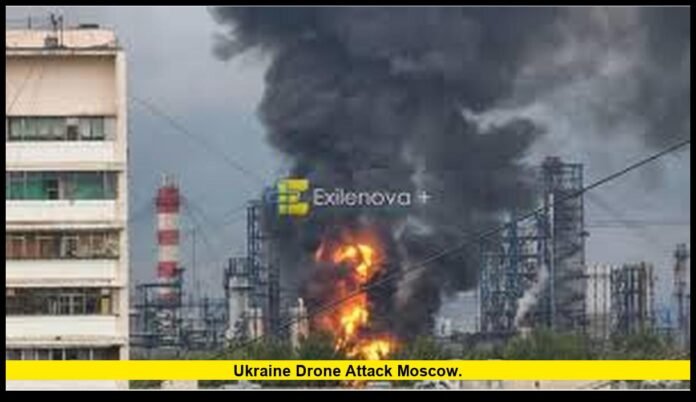

The ukraine drone attack moscow operation on June 18, 2026, became one of the most significant developments in the ongoing Russia-Ukraine conflict, as a large-scale wave of Ukrainian drones targeted the Russian capital and surrounding regions. The attack struck critical infrastructure, disrupted transportation networks, injured civilians, and once again demonstrated that Moscow remains vulnerable to long-range aerial operations despite extensive air-defense systems.
The latest strike occurred during a period of intensified military activity between Russia and Ukraine. Russian officials reported that air-defense units engaged numerous drones approaching Moscow from multiple directions. While many drones were intercepted, several reached their targets, including one of the capital’s most important energy facilities. Fires, emergency responses, airport restrictions, and damage assessments followed throughout the day as authorities worked to restore normal operations.
For observers in the United States and around the world, the attack highlighted how drone warfare continues to reshape modern conflicts. What began years ago as a battlefield technology has evolved into a strategic weapon capable of reaching major cities and critical infrastructure hundreds of miles from active combat zones.
A Night of Explosions Over Moscow
Residents across parts of Moscow and the surrounding region reported hearing explosions during the overnight hours as air-defense systems responded to incoming drones.
Videos shared online showed flashes in the sky and the sound of interceptors attempting to destroy aerial targets before they could reach populated areas. Emergency sirens and rapid-response teams were deployed in multiple districts.
Russian authorities stated that drones approached Moscow in waves rather than as a single coordinated strike. This approach forced defensive systems to engage targets across a broad area and increased the complexity of the response.
As dawn approached, reports of damage began to emerge. Several sites experienced impacts, and emergency crews rushed to affected locations.
The scale of the operation immediately attracted international attention because attacks of this size remain relatively rare against Moscow, one of the most heavily defended cities in Russia.
Oil Refinery Becomes a Major Target
One of the most important incidents involved the Moscow Oil Refinery.
The facility plays a critical role in supplying fuel to the Russian capital and nearby regions. Following the attack, fires broke out at sections of the refinery, prompting a large emergency response.
Images from the scene showed smoke rising above the industrial complex as firefighters worked to contain the blaze.
Energy infrastructure has increasingly become a focus of Ukrainian long-range strike operations. Facilities connected to fuel production, storage, and distribution have been targeted repeatedly throughout the conflict.
Military analysts view refineries as strategically important because they support transportation systems, industrial activity, and logistical operations.
The latest strike demonstrated that major energy assets remain vulnerable despite increased security measures.
Casualties and Injuries Reported
Authorities in the Moscow region confirmed that several people were injured during the attack.
Emergency medical personnel treated individuals affected by drone impacts and related incidents. Most injuries were reported in areas where debris fell following interceptions or where drones successfully reached their targets.
Officials launched inspections across affected districts to evaluate structural damage and ensure public safety.
Emergency teams examined:
- Residential buildings
- Industrial facilities
- Transportation infrastructure
- Utility networks
- Public spaces
Local authorities stated that recovery efforts began immediately after the attacks ended.
Airports Face Temporary Restrictions
The attack also disrupted air travel around Moscow.
Authorities introduced temporary restrictions at several airports serving the capital. Flight operations slowed as aviation officials assessed risks associated with drone activity in nearby airspace.
Passengers experienced delays, and some flights were redirected while restrictions remained in effect.
Airports have become increasingly vulnerable to disruptions caused by drone operations. Even when drones do not directly target aviation facilities, nearby activity can create safety concerns that require precautionary measures.
The latest disruptions served as another reminder that modern drone warfare can affect civilian transportation networks far beyond traditional military targets.
How Moscow’s Air Defenses Responded
Moscow possesses one of the most extensive air-defense networks in the country.
The city is protected by advanced radar systems, missile batteries, and layered defensive capabilities designed to detect and intercept incoming threats.
During the attack, authorities reported that defensive systems destroyed numerous drones before they reached the capital.
However, the fact that several drones successfully penetrated defenses and struck targets underscored a growing challenge facing military planners.
Large-scale drone attacks create unique difficulties for defenders.
Volume Creates Pressure
When dozens or even hundreds of drones approach simultaneously, operators must identify, track, and engage numerous targets at once.
Different Flight Paths
Drones often approach from multiple directions, forcing defensive systems to cover large areas.
Low-Altitude Operations
Many drones fly close to the ground, making detection more difficult than traditional aircraft.
Cost Considerations
Intercepting inexpensive drones can require costly missile systems, creating financial and logistical challenges.
The June 18 operation highlighted these realities and demonstrated how drone technology continues to challenge conventional defense strategies.
Ukraine’s Expanding Long-Range Capabilities
Since the beginning of the war, Ukraine has steadily expanded its drone program.
Early drone operations focused largely on battlefield reconnaissance and tactical missions near active front lines. Over time, Ukrainian forces developed increasingly sophisticated systems capable of traveling much greater distances.
Recent operations have shown improvements in:
- Navigation systems
- Range capabilities
- Precision targeting
- Electronic warfare resistance
- Coordinated strike planning
These advancements have enabled Ukraine to reach targets deep inside Russian territory.
The Moscow attack represented another example of how long-range drones have become a central component of Ukraine’s military strategy.
Strategic Importance of Infrastructure Targets
Infrastructure plays a critical role in modern warfare.
Rather than focusing solely on military installations, many recent operations have targeted facilities that support broader economic and logistical functions.
Important infrastructure categories include:
| Infrastructure Type | Strategic Value |
|---|---|
| Oil Refineries | Fuel production |
| Storage Depots | Energy reserves |
| Transportation Hubs | Logistics support |
| Utility Networks | Essential services |
| Industrial Facilities | Economic activity |
Attacks against these assets can create challenges that extend beyond immediate physical damage.
Repair costs, operational disruptions, and increased security requirements often generate long-term consequences.
The Moscow refinery attack fits within this broader strategic pattern.
Read More – Are Russia and Ukraine Still at War?
Life in Moscow During Repeated Drone Threats
For much of the conflict, daily life in Moscow remained relatively stable compared to regions closer to the fighting.
However, repeated drone incidents have gradually changed public perceptions.
Residents have become more familiar with:
- Emergency alerts
- Air-defense activity
- Temporary airport closures
- Security restrictions
- Infrastructure inspections
The latest attack reinforced concerns about the reach of modern drone warfare.
Although Moscow remains far from the primary battlefield, incidents like this demonstrate that distance alone no longer guarantees protection from military operations.
Economic Effects of Infrastructure Attacks
The economic implications of attacks on energy facilities often extend beyond the immediate damage.
When a refinery experiences disruptions, officials must evaluate:
Production Capacity
Temporary shutdowns can affect fuel output.
Repair Expenses
Infrastructure restoration often requires substantial investment.
Operational Delays
Facilities may operate below capacity during recovery efforts.
Security Upgrades
Additional protective measures can increase operating costs.
Market Reactions
Investors closely monitor developments affecting major energy assets.
While authorities reported that fuel supplies remained stable, analysts continue to watch for potential impacts on production and distribution.
The Growing Role of Drone Warfare
The conflict between Russia and Ukraine has become one of the defining examples of large-scale drone warfare.
Military organizations around the world are studying developments closely because drones have transformed how wars are fought.
Several trends have emerged:
Lower Operational Costs
Drones can be less expensive than traditional missile systems.
Greater Reach
Long-range systems can strike targets hundreds of miles away.
Improved Precision
Modern navigation technology allows accurate targeting.
Flexible Deployment
Operators can launch drones from various locations.
Psychological Impact
Repeated attacks can affect public confidence and perceptions of security.
The June 18 strike reflected all of these characteristics.
Russia’s Continuing Defensive Efforts
Russian authorities have invested heavily in strengthening air defenses around key cities and infrastructure sites.
Additional measures introduced in recent years include:
- Expanded radar coverage
- Enhanced electronic warfare systems
- Increased monitoring of critical facilities
- Additional interception capabilities
- Greater coordination between military and emergency agencies
Despite these efforts, the continued success of some drone operations indicates that defending large geographic areas remains a difficult challenge.
Military planners must balance resources across numerous potential targets while adapting to rapidly evolving technologies.
International Reactions and Security Implications
The attack generated significant attention outside the region.
Security experts, defense officials, and policymakers examined the operation as an example of how drone warfare continues to evolve.
Many observers noted that attacks on major capitals were once associated primarily with missile campaigns or air strikes involving conventional aircraft.
Today, drones have altered those assumptions.
The ability to launch large numbers of relatively inexpensive systems against distant targets has created new strategic realities that governments worldwide are now studying.
Countries across Europe, North America, and Asia continue investing in anti-drone technologies as a result.
The Psychological Dimension of Long-Range Attacks
Military operations often seek objectives beyond physical destruction.
Long-range attacks can influence public perception, political discussions, and strategic decision-making.
When residents of a major city witness explosions, emergency responses, and visible damage, the event can carry symbolic significance.
The Moscow attack drew attention because it occurred in the heart of Russia’s political and economic center.
Such incidents often generate extensive media coverage and public discussion, amplifying their overall impact.
What the Attack Reveals About the Current Conflict
The June 18 operation demonstrated several important realities about the war.
First, drone technology continues to play an increasingly central role.
Second, critical infrastructure remains a key target category.
Third, air-defense systems face ongoing challenges against large-scale drone operations.
Finally, the conflict continues to evolve in ways that extend far beyond traditional front-line combat.
Both sides continue adapting strategies, technologies, and defensive measures as the war enters another phase.
The attack on Moscow showed that the battlefield now includes energy infrastructure, transportation networks, and major urban centers located far from active combat zones.
Looking Ahead
As Russia and Ukraine continue their military operations, long-range drone attacks are likely to remain a defining feature of the conflict.
The latest strike demonstrated Ukraine’s ability to project force deep into Russian territory while highlighting the challenges facing even heavily defended cities.
Authorities continue assessing damage, repairing affected facilities, and strengthening defenses. At the same time, military planners on both sides are evaluating the lessons from one of the largest drone operations directed at Moscow since the war began.
The June 18 attack will likely be remembered as another major example of how rapidly evolving drone technology continues to reshape modern warfare, influence strategic planning, and affect daily life far beyond the front lines.
What are your thoughts on the growing role of drone warfare in modern conflicts? Share your perspective and stay informed as new developments unfold.