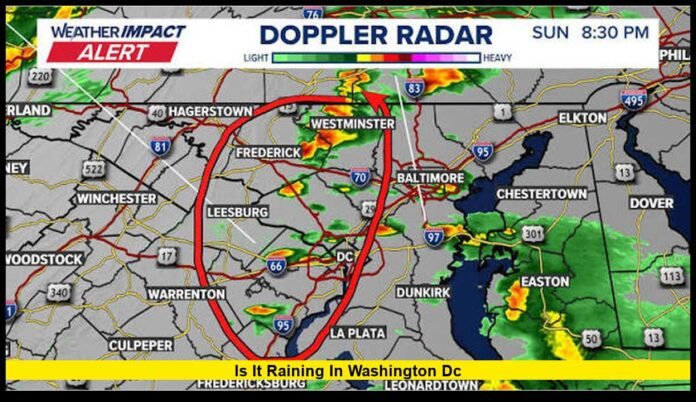

Is it raining in Washington DC? That is one of the most searched weather questions as residents, commuters, tourists, and event organizers across the nation’s capital keep a close eye on changing conditions. As of June 15, 2026, Washington, DC continues to experience a typical early-summer weather pattern marked by warm temperatures, elevated humidity, and the potential for scattered showers and thunderstorms during parts of the day.
Weather conditions in the District can change quickly. A bright and sunny morning may transition into cloudy skies by afternoon, followed by brief but intense rainfall in certain neighborhoods. This variability makes daily weather updates especially important for anyone planning to spend time outdoors.
Current Weather Situation Across Washington, DC
Washington is entering one of its most active weather periods of the year. June often brings a combination of warmth and moisture that supports rain development throughout the region.
Conditions across the metropolitan area remain warm and humid. These ingredients can create an environment favorable for afternoon and evening showers. While not every location receives rainfall at the same time, weather forecasters continue to monitor the possibility of scattered precipitation throughout the day.
The city’s location between the Atlantic coastline and the Appalachian Mountains contributes to changing weather patterns. Moist air moving inland often combines with daytime heating, increasing the chance of thunderstorms.
For many residents, checking whether rain is expected has become part of their daily routine, particularly during the summer season.
Why People Are Asking: Is It Raining in Washington DC?
Washington is more than just the capital of the United States. It is also one of the country’s busiest urban centers.
Every day, people travel throughout the city for work, tourism, government business, education, and recreation. Rain can affect nearly every aspect of daily life.
Some of the most common reasons people check weather conditions include:
- Morning and evening commutes
- Flights arriving and departing from local airports
- Outdoor festivals
- Sporting events
- Sightseeing plans
- Construction work
- Park visits
- Walking tours
Because many Washington attractions are outdoors, weather conditions can significantly influence visitor experiences.
How Rain Develops in Washington During June
Summer weather operates differently from winter weather.
During colder months, large storm systems often bring widespread rain or snow over several hours. Summer rainfall frequently develops from localized thunderstorms.
The process begins when the sun heats the ground throughout the day. Warm air rises into the atmosphere while moisture remains abundant near the surface.
As the warm air climbs higher, clouds begin to form.
If atmospheric conditions remain favorable, those clouds can grow into thunderstorms capable of producing:
- Heavy rainfall
- Lightning
- Thunder
- Brief strong winds
- Localized flooding
This process explains why Washington can experience sunshine in one neighborhood while another area receives a sudden downpour.
Rainfall Patterns in the Nation’s Capital
Washington experiences precipitation throughout the year, but summer rain often behaves differently than rainfall during other seasons.
Typical summer rainfall characteristics include:
Short Duration
Many storms last less than an hour.
Heavy Intensity
Rain can fall rapidly during thunderstorms, reducing visibility and creating temporary ponding on roads.
Localized Impact
A storm may affect one section of the city while nearby communities remain dry.
Quick Recovery
Conditions frequently improve soon after storms pass.
These characteristics make weather monitoring especially important during June, July, and August.
Neighborhood Weather Differences
One of the most interesting aspects of Washington weather is how conditions can vary across relatively short distances.
The metropolitan area includes:
- Downtown Washington
- Capitol Hill
- Georgetown
- Northwest DC
- Northeast DC
- Southwest DC
- Southeast DC
- Northern Virginia suburbs
- Maryland suburbs
A thunderstorm developing over one part of the region may not affect every community equally.
Residents often notice situations where rainfall occurs only a few miles away from their location.
This local variation contributes to the popularity of real-time weather tracking applications and radar services.
How Humidity Influences Rain Chances
Humidity plays a major role in determining whether rain develops.
When humidity levels rise, the atmosphere contains more moisture. That moisture serves as fuel for cloud formation and thunderstorm development.
Washington frequently experiences humid conditions during summer because of:
- Warm temperatures
- Moist air from the Atlantic Ocean
- Regional weather systems
- Seasonal climate patterns
High humidity often makes temperatures feel warmer than actual thermometer readings.
Many residents describe these conditions as sticky or muggy.
Although humidity alone does not guarantee rainfall, it creates an environment where storms can form more easily.
Impact on Daily Commuters
Rain can create challenges for people traveling throughout the Washington region.
Road Conditions
Heavy rain reduces visibility and can increase travel times.
Drivers often experience slower traffic during thunderstorms, particularly on major routes entering and leaving the city.
Public Transportation
Metro riders generally continue traveling during rain events, but severe weather occasionally causes operational adjustments.
Pedestrians
Washington remains one of the most walkable cities in the United States.
Thousands of people walk between offices, government buildings, restaurants, and attractions each day.
Rain can make sidewalks slippery and increase the need for umbrellas and rain jackets.
Tourism and Outdoor Attractions
Millions of visitors travel to Washington annually.
Many of the city’s most famous landmarks are outdoors.
Popular destinations include:
- National Mall
- Lincoln Memorial
- Washington Monument
- World War II Memorial
- Martin Luther King Jr. Memorial
- Jefferson Memorial
- U.S. Capitol grounds
- Tidal Basin
Rain can temporarily disrupt sightseeing schedules.
However, many summer showers move through quickly, allowing visitors to resume activities after conditions improve.
Travelers often benefit from checking weather updates before beginning a day of sightseeing.
Thunderstorms and Lightning Risks
While rain itself may be inconvenient, lightning presents a more serious concern.
Thunderstorms frequently produce lightning strikes capable of causing injuries and property damage.
Safety experts recommend moving indoors immediately when thunder becomes audible.
The common safety rule remains simple:
If you can hear thunder, you are close enough to be struck by lightning.
People participating in outdoor activities should pay particular attention to weather alerts during periods of thunderstorm development.
Can Heavy Rain Cause Flooding?
Yes.
Although Washington possesses extensive drainage infrastructure, intense rainfall can occasionally overwhelm stormwater systems.
Flooding concerns generally increase when:
- Rain falls rapidly
- Storms repeatedly affect the same area
- Drainage systems become blocked
- Streams and creeks rise quickly
Low-lying roads and underpasses often experience the greatest risk.
Drivers should never attempt to travel through flooded roadways.
Even shallow water can create dangerous conditions.
How Accurate Are Modern Weather Forecasts?
Weather forecasting technology continues to improve.
Meteorologists now use advanced tools that include:
- Weather satellites
- Doppler radar
- Computer forecast models
- Surface observation networks
- Atmospheric sensors
These technologies help forecasters identify areas where rain is most likely.
Despite major improvements, summer thunderstorms remain difficult to predict with complete precision.
Forecasters can often identify favorable conditions for storm development but cannot always determine the exact street or neighborhood where rainfall will occur.
This is why forecasts frequently mention percentages and probabilities rather than guarantees.
Weather Conditions During Washington Summers
Summer weather in Washington often follows a familiar pattern.
Morning conditions typically begin with sunshine and increasing warmth.
By afternoon, temperatures rise significantly.
Humidity builds throughout the day.
Clouds may begin developing during the late afternoon.
Some days remain dry, while others see scattered thunderstorms emerge before evening.
This cycle repeats frequently throughout the summer season.
Residents become accustomed to carrying umbrellas even when the day starts with clear skies.
Preparing for Rain in Washington
Being prepared for changing weather can prevent disruptions.
Useful items include:
- Compact umbrella
- Lightweight rain jacket
- Waterproof footwear
- Mobile weather app
- Portable phone charger
People attending outdoor events should also identify nearby indoor shelter locations.
Preparation becomes especially important during periods when thunderstorms are expected.
How Rain Benefits the Region
While rain can interfere with plans, it also provides important benefits.
Rainfall supports:
- Parks and green spaces
- Trees and vegetation
- Local waterways
- Regional water supplies
- Agricultural areas surrounding the city
Without regular rainfall, drought conditions could develop more easily across the Mid-Atlantic region.
Balanced precipitation helps maintain healthy ecosystems throughout Washington and neighboring communities.
Summer Events and Weather Concerns
Washington hosts numerous outdoor events during June.
These include:
- Cultural festivals
- Community celebrations
- Concerts
- Sporting events
- Public gatherings
- Tourism activities
Event organizers often monitor weather conditions closely.
Rain may lead to schedule adjustments, while lightning poses a greater concern because of safety requirements.
Many venues maintain weather plans designed to protect attendees during storms.
What Residents Should Watch Throughout the Day
Weather conditions can evolve quickly.
Key signs that rain may be approaching include:
Increasing Cloud Cover
Thickening clouds often signal developing weather activity.
Rising Humidity
Muggy air frequently precedes rainfall.
Darkening Skies
Dark clouds can indicate nearby showers or thunderstorms.
Thunder in the Distance
Thunder serves as an immediate warning sign that storms are nearby.
Weather Alerts
Mobile notifications and local forecasts provide valuable information when conditions change rapidly.
Looking Ahead for Washington Weather
The broader weather pattern across the Mid-Atlantic continues to support warm summer conditions.
Periods of sunshine are expected to alternate with opportunities for showers and thunderstorms.
This pattern is common during June and often continues into July and August.
Residents should expect changing weather conditions from day to day.
Checking the latest forecast before commuting, traveling, or attending outdoor activities remains the most effective way to stay informed.
Final Thoughts
For anyone asking, “is it raining in Washington DC,” the answer depends on the exact time and location within the metropolitan area. Warm temperatures, high humidity, and summer atmospheric conditions continue to create opportunities for scattered showers and thunderstorms across the region. While some neighborhoods may remain dry, others can experience brief periods of heavy rain, making weather awareness an important part of daily life in the nation’s capital.
Are you seeing rain, sunshine, or cloudy skies in Washington today? Share your local weather experience and stay tuned for the latest updates.