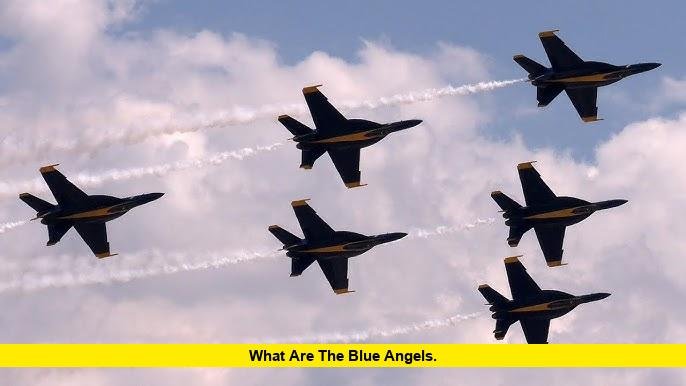

The roar of jets overhead, streaks of blue and gold across the sky, and formations so tight you can hardly believe your eyes — that is the magic of the Blue Angels. But what exactly are the Blue Angels, and why do millions of Americans make it a point to see them every year? Whether you are a lifelong aviation enthusiast or simply curious after spotting their name on an event poster, this guide covers everything you need to know about one of America’s most iconic military teams.
What Are the Blue Angels?
The Blue Angels are the United States Navy’s official flight demonstration squadron. Their mission is to showcase the precision, professionalism, and teamwork of the U.S. Navy and Marine Corps through breathtaking aerial performances and community outreach. Far from being a mere “stunt team,” the Blue Angels represent the very best of American naval aviation — serving as both ambassadors of military excellence and a powerful recruiting tool for the armed forces.
The squadron is officially known as the U.S. Navy Flight Demonstration Squadron, and their performances are carefully choreographed combinations of high-speed passes, gravity-defying formations, and heart-stopping solo maneuvers performed at air shows across the country and around the world.
The History of the Blue Angels
Founded in 1946
The Blue Angels were established on April 24, 1946, at the direction of Admiral Chester Nimitz, the Chief of Naval Operations, who envisioned a flight exhibition team to raise public interest in naval aviation and boost Navy morale in the aftermath of World War II. The team was initially called the Navy Flight Exhibition Team, a name that was quietly changed after pilot Wick Wickendoll spotted an advertisement for the Blue Angel supper club in Manhattan while thumbing through a copy of The New Yorker. The name stuck after newspapers began running headlines about the “Navy’s Blue Angels” — and the rest, as they say, is history.
Their first public demonstration took place on June 15, 1946, at Craig Airfield in Jacksonville, Florida, flying the Grumman F6F-5 Hellcat. The remote practice location, a stretch of Florida swampland, was chosen by team founder Roy “Butch” Voris for a simple reason — if anything went wrong, he said, “just the alligators would know.”
Eight Decades of Excellence
In the decades that followed, the Blue Angels evolved alongside American aviation:
- 1940s: The team flew the F6F Hellcat, the F8F Bearcat, and the F9F Panther, dazzling audiences with precision combat maneuvers.
- 1947: The iconic Diamond Formation — four planes flying in tight proximity — was introduced by Lt. Cmdr. Robert Clarke.
- 1950s: The team refined its aerobatic repertoire with the F9F Cougar and F-11 Tiger, and introduced the first six-plane delta formation, which is still flown to this day.
- 1960s: The F-4 Phantom became the team’s aircraft — the only two-seat jet ever flown in the delta formation.
- 1974: The team transitioned to the A-4 Skyhawk, a smaller, lighter jet with a tighter turning radius that allowed for a more dynamic show.
- 1986: The Blue Angels unveiled the Boeing F/A-18 Hornet, celebrating their 40th anniversary in style.
- 1963: The team logged its 1,000th career performance on the Fourth of July.
- 2021: The team transitioned to the current Boeing F/A-18 Super Hornet.
According to the Blue Angels’ official website, the squadron has performed for more than 500 million fans since its founding — a staggering testament to the team’s enduring popularity.
What Aircraft Do the Blue Angels Fly?
The Boeing F/A-18 Super Hornet
Since 2021, the Blue Angels have flown the Boeing F/A-18E/F Super Hornet — a combat-proven aircraft approximately 33% larger than its predecessor, the F/A-18 Hornet. The main performance jets (aircraft #1 through #6) are the single-seat F/A-18E variant, while the two-seat F/A-18F serves as the advance and backup aircraft.
These jets are modified specifically for air show performance. The Gatling gun-equipped nose cannon is removed — there is no need to deliver 20mm rounds during an air show — and replaced with a smoke-oil tank that creates the team’s signature smoke trails. According to HISTORY.com, the smoke is produced by pumping biodegradable, paraffin-based oil directly into the exhaust nozzles, where it is instantly vaporized. Beyond the visual spectacle, the smoke trails also serve a practical safety purpose, helping solo pilots see each other during opposing maneuvers and conditions of reduced visibility.
The jets are also fitted with a specialized spring on the control stick that adds pressure, enabling the ultra-precise maneuvering the Blue Angels are famous for. These aircraft can reach speeds of up to 700 mph during performances.
Fat Albert — The C-130J Super Hercules
Alongside the fighter jets, the Blue Angels fly the C-130J Super Hercules, affectionately nicknamed “Fat Albert.” Operated by U.S. Marine Corps pilots, Fat Albert always performs before the main Blue Angels demonstration, treating crowds to its own surprising aerobatic display before the F/A-18s take center stage. Fat Albert also serves as the team’s logistics aircraft, transporting maintenance crew, equipment, and supplies to each show site.
Who Are the Blue Angels Pilots?
The Blue Angels squadron is made up of 17 officers drawn from the U.S. Navy and Marine Corps, supported by a team of more than 150 active-duty Sailors and Marines who handle maintenance, logistics, and support.
The demonstration team includes five Navy pilots and one Marine Corps pilot who fly the F/A-18s in the main show. An additional pilot narrates shows and provides orientation flights for selected VIP guests. Each year, the squadron typically selects three new jet pilots, two new support officers, and one new Marine Corps C-130 pilot to replace departing members, as each tour of duty with the Blue Angels lasts approximately two to three years.
To even be considered as a Blue Angels pilot, candidates must have logged a minimum of 1,200 tactical jet flight hours — the same pilots who routinely land 15,000-pound fighter jets on the decks of aircraft carriers in the dead of night.
In a historic milestone, LCDR Amanda Lee made her debut as the first female fighter jet pilot in Blue Angels history, a landmark moment for both the squadron and naval aviation.
Famous Blue Angels Maneuvers
The Blue Angels’ approximately 45-minute performance is one of the most choreographed and rehearsed shows in aviation. Here are some of their most famous maneuvers:
Diamond 360: Four jets fly in the iconic diamond formation with their wingtips just 18 inches apart from each other as they complete a 360-degree turn. It is perhaps the most awe-inspiring maneuver in the show. In 2019, two jets actually made contact during practice of this move — leaving only a small scratch, with no injuries.
Opposing Knife-Edge Pass: Two solo pilots on opposite sides of the runway fly their planes directly at one another and pass at high speed in a knife-edge orientation. It is as terrifying as it sounds.
Diamond Dirty Loop: The four diamond jets perform a full loop with their landing gear and flaps left down — a maneuver first introduced in the 1960s.
Fortus: Two solo jets fly side by side with landing gear and tailhooks deployed, before one rolls to the inverted position, creating a perfect mirror image.
Section High Alpha Pass: Two solo jets pass the crowd at approximately 120 mph but angle themselves so steeply that they appear to be standing nearly upright.
Diamond Roll: The four jets in diamond formation execute a synchronized roll while flying at 400 mph.
Sneak Pass: A solo jet streaks past the crowd at near-ground level and maximum speed — often described by fans as the crowd-favorite moment of every show.
The Blue Angels’ Mission Beyond the Air Show
The Blue Angels do far more than perform spectacular aerial demonstrations. A core part of their mission is community outreach — visiting schools, hospitals, and public events to interact with fans and inspire the next generation of aviators and service members. According to the team’s official materials, the Blue Angels are committed to “inspiring a culture of excellence and service to country” in everything they do, on and off the flight line.
The squadron’s performances also serve as a highly visible recruitment and public relations tool for the Navy and Marine Corps, showcasing the caliber of talent and professionalism that defines American naval aviation.
2026: The Blue Angels’ 80th Anniversary Season
A Historic Milestone Year
The 2026 air show season carries extraordinary significance. This year marks the 80th anniversary of the U.S. Navy Blue Angels, coinciding with America’s 250th birthday celebration. As Navy Capt. Adam Bryan, the Blue Angels’ commanding officer, stated after receiving official certification for the 2026 season: “Earning this certification is always an honor, but it carries special weight this year as we prepare to celebrate the squadron’s 80th anniversary.”
2026 Show Schedule Highlights
The Blue Angels’ 2026 schedule is packed with performances coast to coast. Key show dates include:
- March 14 — NAF El Centro, California (season opener)
- March 21–22 — NAS Lemoore, California
- April 11–12 — Cocoa Beach, Florida
- May 2–3 — JB Charleston, South Carolina
- May 9–10 — MCAS Cherry Point, North Carolina
- June 6–7 — St. Louis (Chesterfield), Missouri
- June 13–14 — Dayton, Ohio
- July 5–6 — Wantagh, New York
- July 15–18 — Pensacola Beach, Florida (80th Anniversary Homecoming)
- August 1–2 — Seattle, Washington
- August 15–16 — McMinnville, Oregon
- November 6–7 — NAS Pensacola, Florida (Season Finale Homecoming Air Show)
The Pensacola Beach Air Show in July is especially significant this season, as it honors both the team’s 80th anniversary and America’s 250th birthday. According to the Santa Rosa Island Authority, fans at the show can expect to see all of the Blue Angels’ signature maneuvers, including the Diamond Dirty Loop, the Double Farvel, the Vertical Pitch, the Fleur-de-Lis, and the crowd-favorite Sneak Pass.
Note: Schedules are always subject to change. Check the official Blue Angels website at blueangels.navy.mil for the most up-to-date information.
Fun Facts About the Blue Angels
- The team’s name was inspired by a New York City nightclub called the Blue Angel, spotted in a New Yorker ad by pilot Wick Wickendoll.
- The Blue Angels have performed for more than 500 million fans since 1946.
- During the Diamond 360 maneuver, jets fly as close as 18 inches apart from each other.
- The smoke trails are created using biodegradable, paraffin-based oil — completely non-hazardous.
- The Blue Angels are the second-oldest operating military jet team in the world.
- Pilot candidates must have at least 1,200 tactical jet flight hours before being considered.
- The team reached its 1,000th career show on July 4, 1963.
Frequently Asked Questions
Q: Are the Blue Angels part of the military? A: Yes. The Blue Angels are an official unit of the U.S. Navy, and their members are active-duty Navy and Marine Corps personnel.
Q: Do Blue Angels pilots fight in combat? A: Blue Angels pilots are combat-qualified naval aviators, but they do not fly combat missions during their tours with the squadron. After their time with the Blue Angels, many return to active fleet assignments.
Q: How close do the Blue Angels actually fly to each other? A: During the Diamond 360 maneuver, the jets fly as close as 18 inches apart — roughly the width of a standard ruler.
Q: Where are the Blue Angels based? A: The Blue Angels are headquartered at Naval Air Station Pensacola, Florida. They conduct winter training at NAF El Centro in California.
Q: How fast do the Blue Angels fly? A: The F/A-18 Super Hornets can reach speeds of up to 700 mph during performances.
Q: How can I see the Blue Angels in 2026? A: The Blue Angels have a full schedule of air shows across the U.S. in 2026 as part of their 80th anniversary season. Visit blueangels.navy.mil/show for the complete and most current schedule.
Q: Are Blue Angels air shows free? A: Many Blue Angels performances are free to the public, though some events charge an admission fee. Individual air show organizers set ticket policies, so check with the specific event for details.
Q: What happened to “Fat Albert”? A: Fat Albert — the team’s beloved C-130 support aircraft — is still very much part of the show. Since 2021, the Blue Angels have operated the updated C-130J Super Hercules, which performs its own aerobatic opening act before the fighter jets take to the sky.
Whether you are planning your first trip to an air show or you have been watching the Blue Angels for decades, 2026 is the most historic year yet to experience their breathtaking performances — drop a comment below and let us know if you are heading to a show this season!