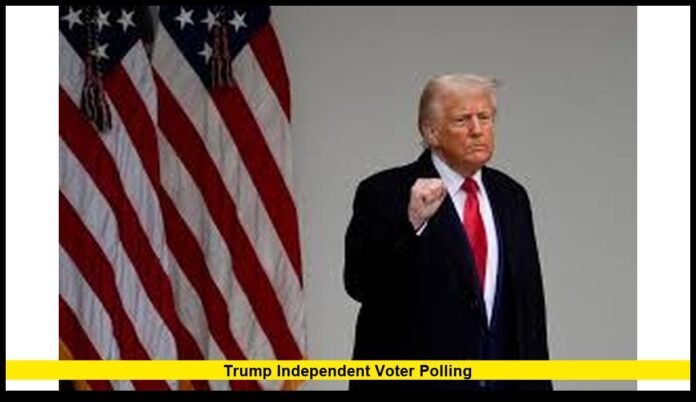

Trump independent voter polling has become one of the most closely watched indicators in American politics as new national surveys reveal a significant gap between President Donald Trump’s support among Republican voters and his standing with independents. With the 2026 midterm elections drawing increased attention, political observers are focusing on how swing voters view the administration’s performance on the economy, inflation, foreign policy, and other key issues that influence election outcomes.
Independent voters have long served as a political barometer in the United States. Unlike voters who consistently support one party, independents often evaluate candidates and elected officials based on current conditions and recent performance. Their opinions can shift quickly, making them one of the most influential groups in modern elections.
Recent polling trends suggest that Trump continues to maintain strong support among Republicans while facing greater challenges among independents. Those numbers are attracting attention because independent voters frequently determine the outcome of competitive House, Senate, gubernatorial, and presidential contests.
Why Independent Voters Matter in National Politics
Independent voters hold a unique position in the American political system.
Many states feature closely divided electorates where neither major party enjoys a dominant advantage. In these environments, independent voters often decide which candidates ultimately win office.
Political campaigns devote significant resources to persuading independent voters because they tend to be more flexible in their voting behavior than strong partisans. They are also more likely to focus on practical concerns such as economic conditions, public safety, healthcare costs, and overall quality of life.
Over the past several election cycles, independents have played critical roles in determining control of Congress and influencing presidential election outcomes.
Their importance becomes even greater during midterm elections, when turnout patterns differ from presidential years and every competitive district matters.
Current Approval Trends Among Independents
Recent national surveys show a noticeable divide between Trump’s overall Republican support and his approval among independents.
Several major polls conducted during the spring and early summer of 2026 found that independent voters express significantly higher levels of dissatisfaction with the administration than Republican voters.
While Trump continues to receive strong approval from members of his party, independent voters have become increasingly critical on several major issues.
Polling analysts point to a few recurring themes:
- Economic concerns remain dominant.
- Inflation continues to influence public opinion.
- Cost-of-living pressures affect household budgets.
- Concerns about government effectiveness persist.
- Many independents express frustration with political polarization.
These trends appear consistently across multiple national surveys.
The Economy Remains the Central Issue
Economic performance continues to shape political attitudes more than any other topic.
When voters assess a president’s performance, they often focus on issues that affect daily life. Grocery prices, rent payments, mortgage rates, utility bills, and transportation costs remain top concerns for millions of Americans.
Independent voters frequently place economic issues above partisan considerations.
As a result, changes in economic sentiment often have a direct impact on presidential approval ratings.
Many recent surveys show that independents remain concerned about the overall direction of the economy despite continued debate over broader economic indicators.
For voters managing household budgets, personal financial experiences often carry greater weight than national statistics.
Inflation Continues to Influence Voter Sentiment
Inflation remains one of the most significant factors affecting public opinion.
Even when price increases slow, many consumers continue to feel the effects of higher costs accumulated over several years.
Independent voters consistently identify inflation as one of their leading concerns.
Common areas of concern include:
- Food and grocery expenses
- Housing costs
- Utility bills
- Healthcare spending
- Automobile insurance
- Childcare expenses
- Fuel prices
These expenses directly affect household finances, making inflation a major political issue.
When voters believe their purchasing power has weakened, approval ratings often suffer regardless of party affiliation.
This dynamic has become increasingly visible in recent polling data.
Cost-of-Living Concerns Extend Beyond Inflation
While inflation receives considerable attention, many independents also focus on broader affordability issues.
Housing affordability has become a major challenge in many regions of the country.
Home prices remain elevated in numerous metropolitan areas, while mortgage rates continue to influence purchasing decisions.
Renters face similar pressures.
Healthcare expenses also remain a persistent concern.
Many voters report frustration with rising insurance premiums, prescription costs, and out-of-pocket medical expenses.
These affordability challenges contribute to broader concerns about financial stability and economic opportunity.
For many independents, these everyday realities play a central role in evaluating elected leaders.
How Foreign Policy Affects Independent Voters
Foreign policy has also emerged as an important factor in public opinion.
International developments often influence voter attitudes when they affect national security, economic conditions, or perceptions of leadership.
Recent polling suggests that many independents closely monitor major international events and evaluate how government decisions affect American interests.
Issues drawing attention include:
- Global security challenges
- International trade relationships
- Military commitments overseas
- Diplomatic negotiations
- Energy markets
Independent voters frequently assess foreign policy through a practical lens, focusing on outcomes rather than ideological arguments.
Their reactions to international developments can influence broader presidential approval trends.
Independent Voters Often Decide Competitive Elections
One reason polling among independents receives so much attention is their ability to influence election outcomes.
In many battleground states and competitive congressional districts, neither party commands overwhelming support.
Candidates therefore compete aggressively for independent voters.
A shift of only a few percentage points among independents can determine the outcome of close races.
This reality applies to:
- U.S. House elections
- Senate contests
- Governor races
- State legislative elections
- Presidential campaigns
Because of their influence, independent voter trends often become a major focus for political strategists.
Read More – GOP Concerns Trump Midterm Outlook as Republican Anxiety Grows Before 2026 Elections
Suburban Voters Continue to Play a Major Role
Many independent voters live in suburban communities.
Suburban areas have become some of the most politically competitive regions in the country.
These communities often contain diverse populations with varying economic backgrounds and policy priorities.
Key issues among suburban independents include:
- Education
- Public safety
- Property taxes
- Transportation
- Housing affordability
- Economic opportunity
Campaigns from both parties invest heavily in suburban outreach because these voters can determine the outcome of closely contested races.
Recent polling suggests that economic concerns remain particularly influential among suburban independents.
The Midterm Election Environment
Historically, midterm elections often serve as a referendum on the party controlling the White House.
Voters use these elections to express satisfaction or dissatisfaction with national leadership.
Independent voters frequently play a decisive role during these contests.
Their participation becomes especially important because midterm turnout patterns differ from presidential election years.
Several factors contribute to the importance of independents during midterms:
- Smaller turnout magnifies the impact of swing voters.
- Competitive districts often depend on moderate voters.
- Local issues can influence national political trends.
- Independent voters are more likely to split their tickets.
As the 2026 midterm season approaches, both parties are carefully tracking changes in independent voter attitudes.
Republican Support Remains Strong
Despite challenges among independents, Trump’s position within the Republican Party remains strong.
National surveys consistently show broad approval among Republican voters.
Many Republicans continue to support Trump’s agenda and leadership style.
This creates a political landscape in which the administration’s greatest challenge may not involve retaining its base but expanding support among persuadable voters.
Political analysts frequently note that elections are often decided not by core supporters but by voters who remain open to changing their minds.
Independent voters fit that description more than any other major voting group.
What Independent Voters Say They Want
Polling data suggests that many independents share several common priorities.
These voters often emphasize results over ideology.
Among their most frequently cited concerns are:
Economic Stability
Many independents want lower costs and greater financial predictability.
Effective Government
Voters often express frustration with political gridlock and partisan conflict.
Public Safety
Crime and community safety remain important concerns in many regions.
Affordable Healthcare
Healthcare costs continue to rank among the top issues nationally.
Practical Solutions
Independent voters often favor policies they believe will produce measurable results.
These priorities help explain why economic conditions remain such a powerful factor in political polling.
Regional Differences Matter
Independent voter attitudes do not look identical across the country.
Different regions face different economic conditions and policy concerns.
For example:
| Region | Key Concerns |
|---|---|
| Northeast | Housing costs, taxes, healthcare |
| Midwest | Manufacturing, wages, inflation |
| South | Economic growth, energy, affordability |
| West | Housing, transportation, cost of living |
These regional differences can affect how voters respond to national political developments.
Campaigns often tailor their messaging to address local concerns while maintaining broader national themes.
The Relationship Between Approval Ratings and Elections
Presidential approval ratings often influence congressional races.
When approval ratings are strong, candidates from the president’s party may benefit.
When approval ratings weaken, opposition candidates frequently gain momentum.
Independent voters play a crucial role in this process.
Their perceptions often influence whether approval ratings rise or fall.
Because independents are less tied to party identity, they are more likely to change their views in response to economic conditions and current events.
This makes them one of the most important groups for understanding the national political climate.
Looking Ahead to the Rest of 2026
The political landscape can change rapidly.
Economic developments, legislative actions, international events, and public policy debates all have the potential to influence voter sentiment.
Future polling will reveal whether current trends among independents continue or begin to shift.
Political campaigns from both parties will spend the coming months working to persuade undecided and independent voters.
Every major election cycle reinforces the same lesson: independent voters remain one of the most powerful forces in American politics.
Their views can shape congressional majorities, influence state elections, and alter the national political conversation.
For that reason, polling data involving independents will remain under intense scrutiny throughout the remainder of 2026.
Conclusion
The latest data surrounding trump independent voter polling highlights the growing importance of swing voters as the nation moves deeper into the 2026 election cycle. While President Trump continues to enjoy strong backing from Republican voters, independent voters are expressing greater concern about economic conditions, affordability, and overall government performance. Those attitudes could play a significant role in shaping the political landscape over the coming months and may influence some of the most competitive elections in the country.
How do you think independent voters will impact the 2026 elections? Share your thoughts and keep following the latest political developments.