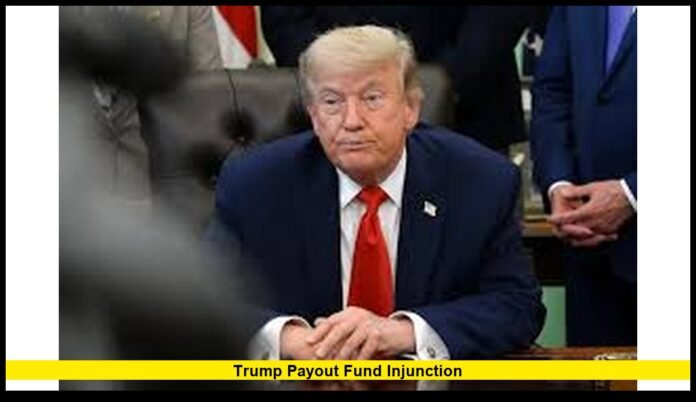

The trump payout fund injunction remains at the center of a major legal dispute in the United States after a federal judge ruled that the proposed $1.8 billion compensation program cannot move forward while court challenges continue. The latest court action keeps the fund frozen and prevents any payments from being issued as judges examine whether the initiative complies with federal law and constitutional limits on executive authority.
The case has attracted nationwide attention because it involves a significant amount of taxpayer money, questions about presidential power, and concerns over how federal funds may be distributed. While administration officials have indicated that the proposal is no longer being pursued, the court determined that stronger legal assurances are necessary before the case can be considered resolved.
As of June 13, 2026, the proposed fund remains blocked, no compensation claims have been approved, and legal proceedings are ongoing.
Why the Case Has Drawn National Attention
The dispute centers on a proposal known as the Anti-Weaponization Fund. The program was designed to provide compensation to individuals who claimed they suffered harm from government investigations or actions that they believed were politically motivated.
The proposal immediately became one of the most debated legal and political issues in Washington.
Supporters argued that some Americans experienced significant financial and personal damage due to government actions and deserved compensation. Critics questioned whether the executive branch had the legal authority to establish such a large compensation program without direct congressional approval.
Those concerns eventually led to multiple lawsuits seeking to stop the fund before any money could be distributed.
The resulting court battle now serves as an important test of how far executive power can extend when creating programs involving federal funds.
Federal Judge Extends the Block
The latest development came when U.S. District Judge Leonie Brinkema issued a preliminary injunction preventing implementation of the fund.
A preliminary injunction is not a final ruling on the merits of a case. Instead, it temporarily prevents a policy from taking effect while courts continue reviewing legal arguments.
In practical terms, the decision means:
- The fund cannot be activated.
- No applications can be processed.
- No compensation payments can be approved.
- Federal agencies cannot administer the program.
- The administration cannot distribute any money connected to the fund.
The court determined that the legal questions surrounding the proposal remain unresolved and therefore justified continued judicial intervention.
The ruling represented a major victory for organizations and individuals who challenged the program in federal court.
The Court’s Main Concern
One of the most important issues raised during the proceedings involved statements from administration officials indicating that the fund was effectively dead.
Government lawyers argued that the administration was no longer moving forward with the proposal.
However, the judge noted that public statements alone do not carry the same legal weight as formal government action.
The court emphasized that no binding legal document had been filed permanently terminating the program.
As a result, the judge concluded that the possibility of future implementation still existed.
That concern became a key factor behind the decision to keep the injunction in place.
The ruling also signaled that courts want legally enforceable commitments rather than informal assurances.
What Is the Anti-Weaponization Fund?
The proposed fund emerged from broader discussions involving claims that certain individuals were unfairly targeted by government investigations.
Its stated purpose was to compensate people who believed they suffered financial losses, legal expenses, reputational harm, or other damages resulting from government actions viewed as politically motivated.
Although the concept generated support among some political groups, many details remained unclear.
Questions included:
- Who would qualify for payments?
- How would eligibility be determined?
- Which agency would oversee claims?
- What standards would be used to evaluate cases?
- How would appeals be handled?
- What oversight mechanisms would exist?
The lack of clear answers became a major point of criticism.
Legal challengers argued that the government could not distribute billions of dollars through a program whose operational details remained uncertain.
The Financial Stakes
The proposed program involved approximately $1.8 billion.
That figure alone ensured national attention.
Any federal initiative involving billions of taxpayer dollars is likely to face intense scrutiny from lawmakers, watchdog organizations, and the courts.
Opponents argued that spending authority belongs primarily to Congress.
They maintained that major compensation programs require explicit legislative approval before federal funds can be distributed.
Supporters responded that the administration possessed sufficient authority to address harms suffered by affected individuals.
The disagreement over spending authority now forms a central component of the litigation.
Questions About Constitutional Authority
Beyond the financial issues, the case raises important constitutional questions.
The U.S. Constitution establishes a system of checks and balances among the branches of government.
Congress controls federal spending.
The executive branch implements laws and administers government programs.
Federal courts interpret legal disputes when disagreements arise.
Critics of the fund argue that the proposal blurred those constitutional boundaries.
They contend that creating a large compensation program without congressional authorization exceeds executive authority.
Supporters disagree and maintain that the administration acted within its lawful powers.
The courts will ultimately determine which interpretation prevails.
How the Lawsuits Developed
The legal challenges moved quickly after details of the proposal became public.
Several organizations filed lawsuits seeking immediate court intervention.
The plaintiffs argued that allowing the fund to move forward could result in irreversible consequences.
Once payments were distributed, recovering the money would become extremely difficult.
Because of that concern, challengers requested emergency court orders.
Judges initially issued temporary restrictions while reviewing the arguments.
Those temporary measures eventually led to the more significant preliminary injunction that remains in effect today.
The progression of events demonstrates how rapidly major constitutional disputes can move through the federal court system.
Current Status of the Fund
At the moment, the program exists only as a proposal.
The court order prevents any operational activity.
The following table summarizes the current situation:
| Category | Status |
|---|---|
| Fund creation | Blocked |
| Claims process | Blocked |
| Payment approvals | Blocked |
| Distribution of funds | Blocked |
| Court review | Ongoing |
| Final ruling | Not issued |
| Appeals | Possible |
This means no individual has received compensation through the proposed program.
The court’s order remains fully effective.
Read More – Federal Judge Halts Trump Fund: What You Need to Know About the $1.8 Billion Anti-Weaponization Ruling
Why Sworn Statements Matter
A major issue during recent proceedings involved the court’s request for sworn declarations from administration officials.
A sworn declaration carries legal consequences.
An official submitting such a statement can face penalties for knowingly providing false information.
The judge suggested that sworn commitments would provide stronger assurances than public comments or statements made during litigation.
The court wants clear evidence regarding whether the administration truly intends to abandon the fund permanently.
That request places additional pressure on officials involved in the case.
Their response could influence future court decisions.
Reaction Across Washington
The controversy has generated debate among lawmakers from both major political parties.
Some elected officials questioned whether the executive branch possessed authority to create the fund.
Others focused on the broader issue of compensating individuals who claim they suffered from government misconduct.
The debate extends beyond a single administration.
Many policymakers recognize that the legal principles established in this case could affect future presidents as well.
For that reason, the dispute has implications far beyond the immediate controversy.
Lawmakers continue to monitor developments closely as litigation proceeds.
Broader Legal Implications
The significance of the case reaches beyond the specific fund itself.
Federal courts may ultimately issue rulings that clarify:
- Limits of executive authority
- Requirements for federal spending programs
- Standards for taxpayer-funded compensation initiatives
- Oversight obligations for federal agencies
- Judicial review of executive actions
Such decisions could influence future administrations regardless of political affiliation.
Legal experts often point to cases like this when discussing constitutional boundaries between branches of government.
The outcome may become an important reference point in future disputes involving federal authority.
What Happens Next in Court
Several developments could occur in the coming weeks and months.
The administration may provide the sworn declarations requested by the judge.
Additional hearings could be scheduled.
Parties may submit further legal briefs addressing constitutional questions.
Appeals could also become part of the process.
Federal litigation often unfolds over extended periods, especially when major constitutional issues are involved.
Because the court has not issued a final ruling on the legality of the program itself, significant legal questions remain unanswered.
Until those issues are resolved, the injunction will continue to play a central role.
No Payments Can Be Issued
One of the clearest consequences of the court order is that no compensation can be distributed.
Regardless of political views surrounding the proposal, the legal reality remains straightforward.
The fund cannot operate while the injunction is in effect.
No application process exists.
No claims are being reviewed.
No payment approvals are occurring.
No funds are being transferred.
The court’s decision effectively freezes every aspect of the program.
That status will remain unchanged unless a future ruling modifies or removes the injunction.
Why Taxpayers Are Watching Closely
Taxpayer organizations have paid close attention to the litigation because of the amount of money involved.
A $1.8 billion federal program naturally raises questions about accountability and oversight.
Many observers want clarity regarding how funds would be allocated and who would qualify for compensation.
The court’s intervention ensures those questions receive detailed examination before any money can leave federal accounts.
That review process remains one of the central purposes of the ongoing litigation.
For now, taxpayer funds connected to the proposal remain undistributed.
The Political Dimension
Although the case centers on legal questions, it also carries political significance.
The proposal emerged during a period of intense national debate over government investigations, accountability, and public trust in federal institutions.
Supporters view the fund as a response to alleged government overreach.
Opponents see it as an improper use of federal resources.
Those competing perspectives have helped keep the controversy in the national spotlight.
Even so, the courts continue to focus primarily on legal and constitutional issues rather than political arguments.
That distinction remains important as the case moves forward.
The Importance of Judicial Oversight
Federal courts often serve as the final referee when disputes arise between government branches.
This case highlights that role.
By issuing the injunction, the court ensured that major constitutional questions receive thorough review before a large federal program can proceed.
Judicial oversight helps maintain the balance of power established by the Constitution.
Whether one supports or opposes the proposed fund, the court’s involvement reflects the legal process designed to address disagreements over governmental authority.
The coming stages of litigation will determine whether the proposal can survive legal scrutiny.
Looking Ahead
The legal battle surrounding the trump payout fund injunction remains far from over. The federal court’s latest action keeps the proposed $1.8 billion compensation program frozen while judges continue reviewing critical questions involving executive authority, federal spending powers, and constitutional limits.
For now, the fund cannot operate, no payouts can occur, and the administration faces continuing legal pressure to clarify its intentions regarding the program’s future. As the case progresses, its outcome could shape how future administrations approach large-scale federal compensation initiatives and define important boundaries within the American system of government.
The legal fight continues to evolve, and readers should watch closely as new court decisions determine the future of one of the most closely watched federal cases of 2026.