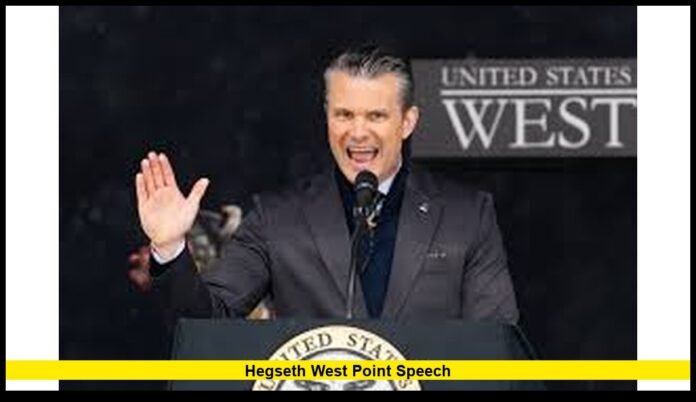

The hegseth west point speech delivered during the 2026 commencement ceremony at the United States Military Academy became one of the most widely discussed moments in national politics and military circles this week. Defense Secretary Pete Hegseth used the high-profile appearance to outline his vision for the future of the U.S. military, focusing heavily on combat readiness, recruitment gains, leadership discipline, and the role of traditional military values in shaping the next generation of Army officers.
The speech immediately sparked conversation across the country because of its direct tone and strong criticism of policies that Hegseth argued distracted the armed forces from their core mission. Addressing graduating cadets at West Point’s Michie Stadium, he emphasized battlefield preparation, national defense priorities, and what he described as a renewed focus on military excellence.
The ceremony marked a defining moment not only for the graduating class but also for broader national debates surrounding the direction of America’s military institutions. With thousands of family members, veterans, active-duty personnel, and public officials watching, the address quickly became a major political and cultural talking point.
A Historic Ceremony at One of America’s Most Respected Military Institutions
West Point has long held a unique place in American history. Founded in 1802, the academy has trained generations of Army officers who later led troops through some of the nation’s most significant military conflicts.
Each graduation ceremony carries symbolic importance because it represents the transition of cadets into commissioned officers entrusted with leadership responsibilities across the U.S. Army.
This year’s ceremony attracted even more public attention due to Hegseth’s role as commencement speaker. Since becoming defense secretary, he has consistently spoken about reshaping military culture and restoring what he considers mission-first leadership throughout the Pentagon.
The atmosphere at Michie Stadium reflected both celebration and heightened public interest. Cadets in formal dress uniforms gathered alongside proud families and military officials as Hegseth delivered remarks that combined praise for graduates with broader commentary about the future of the armed forces.
His speech lasted several minutes and included repeated references to leadership, accountability, patriotism, and military preparedness.
Hegseth Pushes a “Warrior Ethos” Message
A central theme of the address involved what Hegseth repeatedly described as restoring a “warrior ethos” within the military.
He told cadets they were entering service during a period of increasing global instability and warned that future military leaders must stay focused on readiness and operational capability.
Hegseth stressed that the military’s primary purpose is to defend the country and win wars. He argued that maintaining strong standards, rigorous training, and disciplined leadership is essential for achieving that mission.
Throughout the speech, he praised the graduating class for completing one of the nation’s most demanding leadership programs. He described West Point graduates as future commanders who will shape the Army’s culture and battlefield effectiveness for decades.
He also emphasized physical fitness, combat preparation, and mental toughness as core qualities expected from Army officers.
The defense secretary’s remarks reflected themes he has consistently promoted during recent public appearances and Pentagon initiatives.
Recruiting Success Highlighted During the Address
One of the biggest headlines from the event involved Army recruiting numbers.
Hegseth announced that the Army had reached its recruiting targets for 2026 months earlier than projected. According to figures discussed during the ceremony, the service is expected to bring in more than 61,000 recruits this year.
Recruitment has become a major issue for the military in recent years. Several branches struggled to meet enlistment goals after the pandemic, while changing public attitudes and demographic shifts created additional challenges.
Hegseth framed the improved numbers as evidence that Americans still strongly support military service when leadership focuses on patriotism, merit, and combat readiness.
The recruiting announcement received applause from many in attendance and quickly spread across television broadcasts and social media platforms after the ceremony ended.
Military analysts have noted that recruiting remains one of the Pentagon’s top concerns because long-term readiness depends heavily on maintaining strong enlistment levels.
Hegseth argued that emphasizing standards and purpose has helped rebuild enthusiasm for military service among younger Americans.
Criticism of Diversity Policies Sparks Debate
Another major focus of the speech involved Hegseth’s criticism of diversity and inclusion initiatives implemented during previous years.
He argued that military institutions should prioritize shared mission objectives and common standards rather than identity-based policies. During the speech, he stated that military effectiveness comes from unity, discipline, and merit-driven leadership.
Those comments immediately became one of the most debated portions of the event.
Supporters praised Hegseth for speaking directly about concerns they believe have affected military culture and operational focus. Many conservative commentators and veterans argued that the armed forces should remain centered on combat capability above all else.
Critics, however, said the remarks risked creating division within the military and injecting partisan politics into a ceremony traditionally focused on leadership and service.
Some observers argued that military academies and commencement events historically avoid overt political messaging in order to preserve public trust and institutional neutrality.
The reaction highlighted how deeply military policy discussions have become intertwined with broader national political debates.
West Point Cadets Prepare for a New Era of Military Leadership
The graduating cadets who listened to Hegseth’s address now enter active military service during a period of global uncertainty.
The Army continues facing evolving security challenges involving international conflicts, cyber threats, advanced technology, and strategic competition among major world powers.
Hegseth referenced those realities throughout his remarks. He warned cadets that future military operations may involve rapidly changing combat environments and increasingly complex missions.
He urged graduates to remain adaptable, disciplined, and prepared to lead under pressure.
Several portions of the speech focused on the responsibilities associated with command leadership. Hegseth reminded cadets that soldiers depend on officers for guidance, accountability, and decision-making during critical situations.
He also praised military families for supporting cadets throughout their years of training at West Point.
The defense secretary described the graduating class as leaders who will influence the future direction of the Army during a transformative period for the U.S. military.
National Reactions Continue Following the Ceremony
Public reaction to the speech remained intense long after the ceremony concluded.
Supporters described the address as motivational, patriotic, and focused on restoring military effectiveness. Many veterans groups and conservative political figures praised Hegseth for emphasizing standards, readiness, and combat preparation.
Some supporters argued that the speech reflected frustrations among service members who believe military leadership became overly focused on social and political issues in recent years.
Others viewed the remarks as a broader call for institutional reform inside the Pentagon.
At the same time, critics argued that the commencement address blurred the line between military leadership and political messaging.
Some analysts expressed concern that openly partisan rhetoric could affect morale or create unnecessary divisions among service members from different backgrounds.
Others questioned whether graduation ceremonies at military academies should serve as platforms for ideological debate.
Despite the criticism, the speech succeeded in drawing widespread national attention and reigniting conversations about military identity, leadership culture, and defense policy priorities.
The Broader Debate Over Military Culture
The national response to the hegseth west point speech reflects larger debates currently shaping public discussions about the U.S. military.
Questions involving recruitment, readiness, diversity programs, leadership standards, and military neutrality have become increasingly visible in political conversations over the past several years.
Some Americans believe military institutions should aggressively modernize and reflect changing social dynamics within the country.
Others argue the armed forces must remain narrowly focused on battlefield performance and mission execution without becoming involved in cultural or ideological disputes.
These disagreements have influenced congressional hearings, Pentagon policy discussions, and public commentary from veterans and political leaders.
Hegseth’s speech placed those tensions directly into the national spotlight because of West Point’s historical significance and the visibility of the graduation ceremony.
The address also underscored how military issues continue playing a major role in broader political discussions ahead of upcoming national elections.
Hegseth’s Leadership Style Continues to Shape Pentagon Messaging
Since becoming defense secretary, Hegseth has developed a reputation for direct communication and outspoken views on military reform.
He frequently discusses issues involving recruitment, standards, military preparedness, and organizational culture during public appearances.
His supporters say that approach appeals to Americans who want stronger accountability and a renewed focus on traditional military priorities.
Critics argue his rhetoric sometimes risks politicizing military institutions that traditionally aim to remain nonpartisan.
The West Point speech reflected many of the same themes Hegseth has emphasized during interviews, policy announcements, and Pentagon events.
He continues advocating for stricter physical standards, streamlined leadership structures, and policies centered primarily on combat effectiveness.
The commencement ceremony gave him one of the largest and most symbolic platforms yet to deliver that message.
Why the Speech Resonated Across the Country
Several factors contributed to the massive attention surrounding the speech.
First, West Point remains one of the nation’s most respected military academies, giving every commencement address national visibility.
Second, ongoing debates surrounding military recruitment and readiness have already become major political issues.
Third, Hegseth’s communication style often generates strong reactions because of his blunt language and willingness to challenge existing policies.
The combination of those factors ensured that the speech quickly dominated political discussions online and across television coverage.
Clips from the address circulated widely as supporters and critics debated the implications of his remarks.
For many Americans, the event represented more than a graduation ceremony. It became another flashpoint in broader arguments about patriotism, military identity, leadership standards, and the future direction of the armed forces.
Military Recruitment Remains a Key Focus for the Pentagon
One of the lasting impacts of the speech may involve renewed public attention on military recruitment trends.
Recruitment challenges have worried Pentagon leaders for years as fewer young Americans meet eligibility requirements or express interest in military service.
The Army’s reported recruiting improvement became one of the most significant announcements made during the ceremony.
Military officials continue working to strengthen outreach programs, improve retention, and maintain readiness levels across all branches.
Hegseth’s comments suggested the administration views recruitment success as closely connected to public confidence in military leadership and organizational priorities.
That issue is expected to remain central in defense policy discussions moving forward.
Looking Ahead After the West Point Ceremony
The West Point commencement ceremony may continue influencing political and military discussions for weeks to come.
Lawmakers, veterans organizations, military analysts, and Pentagon officials are likely to continue debating the broader themes raised during the speech.
The graduating cadets themselves now move forward into leadership roles across the Army, carrying with them the expectations and responsibilities outlined during the ceremony.
Meanwhile, public attention surrounding military readiness, recruitment, and leadership culture shows little sign of slowing down.
The speech succeeded in bringing those issues back into national focus at one of the most symbolic moments in American military tradition.
As the Army enters another year of global challenges and evolving defense priorities, conversations surrounding leadership, preparedness, and institutional identity are expected to remain at the center of public debate.
What are your thoughts on the hegseth west point speech and the future direction of America’s military leadership? Share your opinion in the comments and stay tuned for more national defense updates.