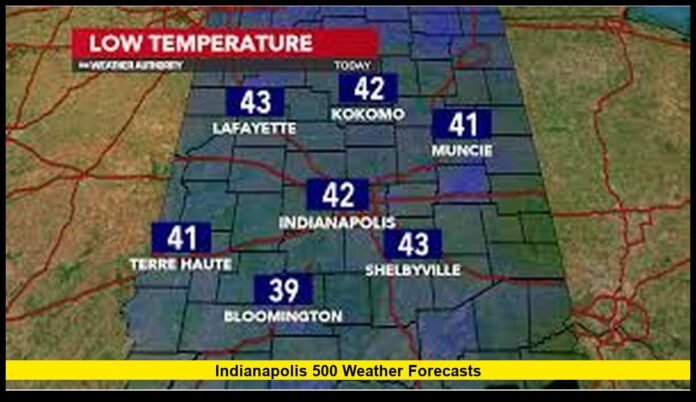

The indianapolis 500 weather forecast is becoming one of the biggest storylines leading into race weekend as fans, teams, and officials prepare for massive crowds at Indianapolis Motor Speedway. Weather conditions have already disrupted qualifying sessions earlier this week, and updated projections now show the possibility of rain and cloudy skies during Sunday’s race.
The 110th running of the Indianapolis 500 is scheduled for May 24, and current conditions point toward a mild but potentially unsettled afternoon in Indianapolis. Temperatures are expected to remain in the 70s for much of race day, while humidity levels and changing cloud patterns could influence track conditions from start to finish.
With one of the largest sporting crowds in America expected to fill the speedway, race fans are closely tracking updates before heading to the historic venue.
Fans planning to attend the race should prepare for both warm afternoon conditions and possible rain delays as forecasts continue evolving through the weekend.
Weather Already Forced Major Changes During Indy 500 Week
Race week at Indianapolis Motor Speedway has already experienced significant weather-related disruptions. Earlier qualifying sessions were interrupted by rain, forcing officials to cancel an entire day of qualifying activity for the first time in nearly two decades.
The washed-out schedule created a compressed qualifying format that placed extra pressure on teams and drivers. Engineers had limited time to fine-tune setups, while drivers faced rapidly changing track temperatures and unpredictable grip levels.
Rainfall also complicated practice sessions throughout the week. Teams struggled to gather consistent long-run data because track conditions shifted frequently between sunny, cloudy, and damp periods.
That uncertainty remains a concern heading into race day.
Drivers often spend weeks preparing for Indianapolis because the speedway demands precision at extremely high speeds. Weather changes can alter tire wear, aerodynamic balance, and fuel strategy within minutes, especially on a 2.5-mile oval where cars exceed 230 mph during qualifying runs.
Sunday Forecast Could Shape the Entire Race
Current projections indicate race day should begin with mostly cloudy conditions and mild temperatures across Indianapolis. Afternoon highs are expected to climb into the low-to-mid 70s, creating comfortable conditions for fans inside the speedway.
However, rain chances continue to remain part of the outlook.
Forecasters expect the highest risk of precipitation during the afternoon hours, which overlaps with race activity and post-start stages of the event. Winds are expected to stay relatively light, though humidity levels could remain elevated throughout the day.
Even a small amount of rainfall can create major problems for oval racing.
Unlike road course events where wet-weather tires are sometimes used, IndyCar races on oval tracks require dry conditions for safety reasons. Standing water and spray at extreme speeds create dangerous visibility and traction problems for drivers.
If showers move into the area during the race, officials may temporarily halt competition until the surface is fully dry.
Why Weather Plays Such a Huge Role at Indianapolis
Weather impacts every aspect of the Indianapolis 500, from race strategy to car handling.
Cooler temperatures generally improve engine performance because denser air helps combustion efficiency. At the same time, cooler pavement temperatures can reduce tire grip in corners, forcing drivers to manage throttle inputs more carefully.
Cloud cover also affects how rubber builds on the racing surface.
When sunlight disappears behind clouds, track temperatures often drop quickly. That can improve speed in some situations while making cars less stable in traffic.
Humidity becomes another major factor during long green-flag runs. Moisture-heavy air changes aerodynamic efficiency and can slightly affect how engines perform over extended distances.
Teams constantly monitor radar, temperature swings, and wind direction throughout the race because even small changes influence pit strategy decisions.
Indianapolis is one of the few races where weather discussions often become as important as discussions about speed.
Massive Crowd Expected Despite Uncertain Conditions
The Indianapolis 500 remains one of the biggest annual sporting events in the United States, and race organizers are still expecting an enormous crowd despite weather concerns.
Hundreds of thousands of fans are expected to pack Indianapolis Motor Speedway throughout the weekend. Campgrounds, parking lots, and hotels across Indianapolis have already filled with race fans arriving from around the country.
Many longtime attendees understand that changing weather conditions are simply part of the Indianapolis 500 experience.
Late May in Indiana often produces rapidly shifting forecasts because warm spring air and incoming storm systems can develop quickly across the Midwest.
Fans attending Sunday’s race are being encouraged to monitor updates closely before leaving for the track.
Recommended items include:
- Rain jackets or ponchos
- Comfortable walking shoes
- Sunscreen
- Bottled water
- Portable phone chargers
- Light layers for cooler morning conditions
The speedway’s enormous size means many fans spend hours outdoors before and after the race.
Track Conditions Could Change Throughout the Afternoon
One of the biggest concerns for teams involves how quickly track conditions may evolve during the race itself.
Cloud movement, sunlight, and humidity can dramatically alter grip levels around the four corners of Indianapolis Motor Speedway.
Drivers often describe Indianapolis as one of the most sensitive tracks on the IndyCar calendar because every weather shift changes the car’s balance.
A car that feels stable early in the race may suddenly become difficult to control later if temperatures rise or clouds disappear.
Wind direction is another critical factor.
Even moderate crosswinds entering Turn 1 or Turn 3 can change handling characteristics significantly at Indianapolis. Drivers must constantly adjust steering inputs and throttle application depending on wind gusts and track temperature changes.
Engineers use weather monitoring systems throughout the event to anticipate setup adjustments and pit timing strategies.
Teams Preparing Multiple Race Strategies
Because rain remains possible Sunday afternoon, many teams are entering race day with flexible strategy plans.
Fuel windows, tire management, and pit timing all become more complicated when weather uncertainty exists.
Some teams may choose aggressive early tactics in hopes of gaining track position before possible weather interruptions. Others may focus on conserving fuel and tires in case the race experiences multiple caution periods or delays.
Pit crews also face additional pressure during changing weather conditions.
A sudden yellow flag before rainfall can completely alter race outcomes. Teams must react instantly when radar changes or officials begin monitoring approaching storms.
Veteran organizations usually gain an advantage during unpredictable races because experience becomes critical when adapting strategy under pressure.
Alex Palou Headlines the Field Entering Race Weekend
Defending Indianapolis 500 winner Alex Palou enters race weekend as one of the favorites after securing pole position earlier this week.
Palou delivered one of the fastest qualifying performances of the month despite weather disruptions that shortened preparation time for several teams.
His ability to adapt quickly to changing conditions has become one of his greatest strengths in recent seasons.
Other contenders near the front of the grid include several experienced IndyCar veterans capable of managing long races under difficult conditions.
Indianapolis often rewards patience and strategic discipline just as much as outright speed. Drivers who avoid mistakes during weather-related caution periods frequently place themselves in position to contend during the closing laps.
The race’s 500-mile distance also means conditions can shift dramatically between the opening and final stages.
Rain Delays Could Create a Long Day for Fans
Race organizers continue preparing contingency plans in case rain affects Sunday’s schedule.
If storms develop before the green flag, officials could delay the race start until conditions improve. If rain arrives during competition, track drying operations may require lengthy stoppages depending on rainfall intensity.
Drying the Indianapolis Motor Speedway is a massive operation because the oval stretches 2.5 miles around four separate corners and long straightaways.
Humidity levels also affect how quickly the surface dries after rain ends.
Fans attending the race should prepare for possible schedule adjustments and extended waits if weather interruptions occur.
Traffic around the speedway may also become significantly heavier during wet conditions.
Indianapolis 500 Traditions Continue to Drive Excitement
Despite the weather concerns, excitement surrounding race weekend continues building across Indianapolis.
The Indy 500 remains one of the most iconic traditions in American sports. Fans gather every year for race ceremonies, driver introductions, patriotic performances, and the unforgettable atmosphere that surrounds race morning.
The pageantry associated with the event remains unmatched in motorsports.
Many attendees arrive before sunrise to secure viewing spots, tailgate with friends, and experience the energy surrounding the race.
Even changing forecasts have done little to slow enthusiasm throughout the city.
Downtown Indianapolis hotels, restaurants, bars, and entertainment districts remain packed with visitors celebrating one of the busiest weekends of the year.
Weather Could Influence Tire and Fuel Decisions
Teams will pay close attention to tire degradation Sunday because changing temperatures can influence performance over long runs.
Cooler cloudy conditions may reduce tire wear compared with hotter race afternoons. However, fluctuating temperatures can create inconsistent handling throughout the race.
Fuel strategy also becomes more unpredictable if caution periods occur because of weather interruptions.
Teams constantly calculate fuel mileage scenarios during Indianapolis races. A yellow flag at the right moment can completely change the outcome of the event.
Rain threats may encourage some teams to gamble on alternative pit strategies earlier than usual.
The final stages of the race could become especially dramatic if storms appear nearby late in the afternoon.
Fans Continue Searching for Race Day Updates
Interest surrounding the indianapolis 500 weather forecast has surged online throughout race week as fans search for the latest updates before traveling to Indianapolis.
Hotels near the speedway remain busy, while campgrounds and tailgating areas continue filling ahead of Sunday’s event.
Many longtime race attendees say weather unpredictability adds another layer of excitement to the Indianapolis 500 experience.
Race morning conditions can look completely different by mid-afternoon, especially during Indiana’s active spring weather season.
That uncertainty creates tension not only for fans but also for drivers and race strategists preparing for 500 miles of competition.
Historic Event Ready for Another Dramatic Chapter
The Indianapolis 500 has delivered unforgettable moments for more than a century, and this year’s edition appears ready to add another dramatic chapter.
Weather concerns, shifting track conditions, and a highly competitive field are creating enormous anticipation heading into race weekend.
Fans across America will once again turn their attention to Indianapolis Motor Speedway as drivers chase one of the most prestigious victories in motorsports.
Whether sunshine or rain arrives Sunday afternoon, the race remains one of the defining events on the global racing calendar.
Who do you think handles the changing weather conditions best at Indianapolis? Share your predictions and stay tuned for more Indy 500 race weekend updates.