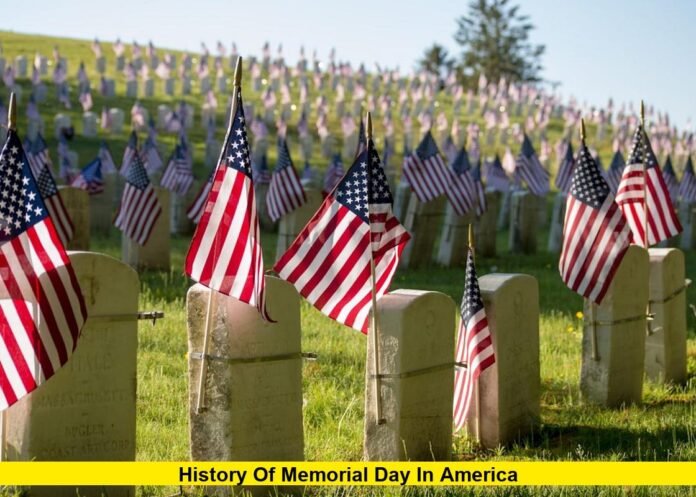

Every year in the United States, Memorial Day marks a powerful moment of remembrance for military personnel who lost their lives while serving the country. While many Americans associate the holiday with parades, family gatherings, travel, and the unofficial start of summer, the deeper meaning of Memorial Day is rooted in sacrifice, grief, and national unity.
The history of Memorial Day in America stretches back more than a century and reflects the country’s efforts to honor soldiers who died in war. From its origins after the Civil War to its modern observance across all 50 states, the holiday has evolved into one of the nation’s most significant federal commemorations.
Origins of Memorial Day in the United States
The earliest form of Memorial Day emerged after the American Civil War, one of the deadliest conflicts in U.S. history. The war, fought between 1861 and 1865, claimed the lives of more than 600,000 soldiers and left communities across the country mourning loved ones.
In the years following the war, Americans began organizing local tributes to fallen soldiers. Citizens decorated graves with flowers, flags, and wreaths in cemeteries throughout the country. These observances became known as “Decoration Day.”
Many towns and cities have claimed to be the birthplace of Memorial Day. Communities in states such as New York, Mississippi, Pennsylvania, and South Carolina held remembrance ceremonies before the holiday became nationally recognized. One of the most notable early ceremonies took place in Charleston, South Carolina, where formerly enslaved African Americans honored Union soldiers buried during the Civil War.
Why Decoration Day Became Memorial Day
The term “Decoration Day” was widely used in the late 19th century because people decorated soldiers’ graves with flowers each spring. In 1868, General John A. Logan, leader of a Union veterans’ organization called the Grand Army of the Republic, officially called for a nationwide day of remembrance.
May 30 was selected as the date for Decoration Day because flowers would be in bloom across much of the country. The first large national observance was held at Arlington National Cemetery in Virginia, where thousands gathered to honor Union soldiers.
Over time, the holiday expanded beyond Civil War remembrance. Following World War I, Americans began honoring military personnel who died in all U.S. wars and conflicts. As the meaning broadened, the name “Memorial Day” gradually became more common.
By the mid-20th century, Memorial Day had effectively replaced Decoration Day in everyday use.
Memorial Day Becomes a Federal Holiday
Memorial Day was officially declared a federal holiday in 1971 under the Uniform Monday Holiday Act. The law moved several federal holidays to Mondays in order to create long weekends for workers.
As a result, Memorial Day is now observed on the last Monday of May each year. The three-day weekend quickly became one of the busiest travel periods in the United States.
Despite its modern association with vacations and retail sales, veterans’ groups and historians continue to encourage Americans to remember the holiday’s true purpose: honoring those who died in military service.
Traditions and Symbols of Memorial Day
Throughout America, Memorial Day traditions remain deeply connected to remembrance and patriotism. Cemeteries, monuments, and memorial sites often host ceremonies featuring speeches, military honors, and moments of silence.
One of the most recognized traditions is placing American flags on the graves of fallen soldiers. Volunteers, veterans, and military families participate in this practice every year at national cemeteries.
The National Moment of Remembrance, established by Congress in 2000, encourages Americans to pause at 3 p.m. local time on Memorial Day for one minute of reflection.
Other common Memorial Day traditions include:
- Visiting military cemeteries and memorials
- Participating in parades honoring veterans
- Flying the U.S. flag at half-staff until noon
- Wearing red poppies as a symbol of remembrance
- Attending community ceremonies and patriotic events
The red poppy became linked to remembrance after World War I, inspired by the famous war poem In Flanders Fields written by Canadian physician Lieutenant Colonel John McCrae.
The Role of Arlington National Cemetery
No discussion of Memorial Day history in America is complete without mentioning Arlington National Cemetery. Located near Washington, D.C., the cemetery serves as one of the nation’s most important military burial grounds.
Each Memorial Day, thousands of visitors attend ceremonies there, including the annual wreath-laying event at the Tomb of the Unknown Soldier. U.S. presidents traditionally participate in the observance to honor military sacrifice.
The cemetery has become a symbol of national memory, representing generations of service members who gave their lives in conflicts ranging from the Civil War to modern military operations.
How Memorial Day Is Observed Today
Modern Memorial Day observances combine remembrance with community activities. While many Americans spend the weekend with family and friends, patriotic events remain central to the holiday.
Across the country, cities host parades featuring veterans’ organizations, marching bands, and military units. Museums and historical sites often organize educational programs focused on U.S. military history.
For many families, Memorial Day is also a deeply personal occasion. Gold Star families — those who lost relatives in military service — use the holiday to remember loved ones and reflect on their sacrifice.
In recent years, digital tributes and online remembrance campaigns have also become more common, allowing Americans to share stories of military heroes through social media and memorial websites.
Memorial Day and American Identity
Memorial Day remains one of the most meaningful patriotic holidays in the United States because it connects national history with personal sacrifice. It reminds Americans that freedom and security often come at a tremendous cost.
The holiday also reflects the nation’s ongoing effort to preserve the memory of those who served during times of war. From Civil War soldiers to modern service members, Memorial Day continues to unite Americans in remembrance across generations.
As the country evolves, the holiday’s core message remains unchanged: honoring courage, sacrifice, and the lives lost defending the nation.
Memorial Day is more than a long weekend — it is a lasting tribute to the brave men and women whose sacrifice shaped America’s history. Share your thoughts or memories and stay connected for more historical insights and national stories.