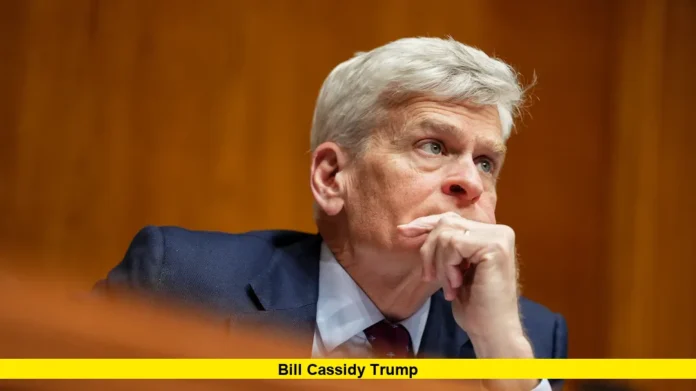

The political clash between Bill Cassidy and Donald Trump has become one of the clearest examples of how modern Republican primaries are reshaping American politics. What began as a dramatic impeachment vote evolved into a larger battle over party loyalty, voter influence, and the future of the GOP.
As Republican primary elections continue to reward candidates aligned with Trump, many political analysts argue that the party’s internal system has become increasingly unforgiving toward dissenting voices. Cassidy’s political story reflects that transformation in real time.
Why Bill Cassidy Became a Target of Trump Allies
The tension between Bill Cassidy and Donald Trump intensified after Cassidy voted to convict Trump during the Senate impeachment trial connected to the January 6 Capitol attack. Cassidy was one of only seven Republican senators to support conviction, making him a major target within conservative political circles.
At the time, Cassidy defended his decision by arguing that constitutional responsibility mattered more than political consequences. However, the vote immediately placed him in the crosshairs of Trump supporters, conservative activists, and influential Republican donors.
Trump repeatedly criticized Cassidy publicly, portraying him as disconnected from the Republican base. That criticism helped fuel support for a Trump-backed challenger in Louisiana politics and reinforced the growing expectation that Republican candidates remain closely aligned with Trump’s agenda.
The Republican Primary System Under Pressure
The conflict surrounding Bill Cassidy has reignited debate over America’s increasingly polarized primary election system.
Political observers argue that today’s primaries often reward ideological loyalty over independent decision-making. In many deeply conservative states, the real political contest occurs during the Republican primary rather than the general election. As a result, candidates focus heavily on satisfying the party’s most active and passionate voters.
Critics say this environment discourages compromise and punishes lawmakers who break from party expectations.
Cassidy’s situation became a national symbol of that dynamic. His impeachment vote may have reflected his personal constitutional interpretation, but within the Republican primary landscape, it was treated by many voters as political betrayal.
Trump’s Influence Remains Dominant in GOP Politics
Even years after leaving office, Donald Trump continues to wield enormous influence inside the Republican Party. Endorsements from Trump remain highly valuable in competitive Republican primaries, particularly in Southern and conservative states.
Trump-backed candidates have repeatedly challenged Republican incumbents viewed as insufficiently loyal to his movement. While not every endorsed candidate wins, Trump’s influence continues to shape fundraising, media coverage, and voter enthusiasm.
In Cassidy’s case, Trump’s criticism became a powerful rallying point for opponents eager to redefine Louisiana Republican politics around unwavering support for the former president.
This broader trend has transformed how Republican politicians approach controversial issues. Many lawmakers now carefully consider how their actions may affect their standing with Trump-aligned voters and conservative media audiences.
Bill Cassidy’s Response to Political Defeat
Despite mounting political pressure, Cassidy has continued defending his impeachment vote and broader political positions.
Supporters argue that Cassidy demonstrated political independence by prioritizing constitutional principles over party pressure. They view his willingness to face backlash as evidence of political courage in an era increasingly dominated by partisan loyalty tests.
Critics, however, believe Cassidy misjudged the priorities of Republican voters in Louisiana and underestimated Trump’s long-term influence over the GOP electorate.
After suffering political setbacks and facing intensified criticism from Trump supporters, Cassidy’s response carried a message of its own. Rather than fully retreating from his earlier stance, he continued warning about the dangers of political extremism and the weakening of institutional norms.
For many analysts, Cassidy’s experience illustrates the shrinking space for moderate or independent voices within modern Republican politics.
How Republican Voters Are Reshaping the Party
The battle between Bill Cassidy and Trump-aligned conservatives also reflects broader changes within the Republican voter base.
Republican primary voters increasingly prioritize issues such as:
- Immigration enforcement
- Cultural and social conservatism
- Opposition to establishment politics
- Loyalty to Trump’s political movement
- Populist economic messaging
Candidates viewed as resistant to these priorities often face intense primary challenges.
This shift has altered the Republican Party’s identity over the past decade. Traditional conservative figures who once emphasized fiscal restraint, bipartisan negotiation, or institutional norms now compete in a political environment dominated by populist energy and anti-establishment sentiment.
Cassidy’s conflict with Trump became a high-profile example of how quickly political standing can change inside the modern GOP.
What This Means for Future Elections
The long-term consequences of the Cassidy-Trump feud may extend beyond Louisiana politics.
Political strategists from both parties are closely watching how Republican primaries evolve ahead of future national elections. Several important questions remain:
- Will independent-minded Republicans continue losing influence?
- Can moderate conservatives still survive statewide primaries?
- Will Trump’s endorsement power remain dominant in upcoming cycles?
- How will younger Republican voters shape the party’s direction?
The answers could determine not only the future of the Republican Party but also the broader tone of American politics in the coming years.
Some analysts argue that increasingly ideological primaries contribute to political polarization nationwide by rewarding candidates who appeal to the party base rather than the broader electorate.
Others believe the primary system simply reflects the will of voters and allows parties to define their political identity more clearly.
Media Attention Around Bill Cassidy and Trump
The ongoing attention surrounding Bill Cassidy and Donald Trump demonstrates how political conflicts now extend far beyond policy disagreements.
Television networks, political commentators, podcasts, and social media platforms transformed Cassidy’s impeachment vote into a long-running national debate about party loyalty and political survival.
For Republican politicians across the country, the situation became a warning about the potential risks of opposing Trump publicly.
Meanwhile, Cassidy’s defenders argue that elected officials should not fear political retaliation for acting according to their constitutional judgment.
That divide continues to shape conversations throughout Washington and conservative political circles.
The Future of the Republican Establishment
Cassidy’s experience also reflects the weakening influence of the traditional Republican establishment.
For decades, establishment Republicans often prioritized governing experience, legislative compromise, and party discipline. Today, grassroots energy and populist activism frequently carry greater influence within Republican primaries.
Trump accelerated that transformation by building a movement centered on outsider politics and direct voter connection.
As a result, many establishment figures now face difficult choices:
- Align closely with Trump
- Remain politically neutral
- Risk backlash by opposing him
Cassidy chose a path that placed constitutional interpretation ahead of political safety, and the fallout demonstrated how costly that decision can become within the current Republican environment.
Conclusion
The political conflict between Bill Cassidy and Donald Trump represents far more than a personal feud. It has become a powerful case study in how America’s Republican primary system is changing modern politics.
Cassidy’s impeachment vote, Trump’s response, and the resulting political consequences exposed deep divisions within the GOP over loyalty, leadership, and constitutional responsibility.
As future elections approach, the debate surrounding Republican primaries, party identity, and Trump’s influence is likely to remain one of the most important stories in American politics.
What do you think about the growing influence of Republican primaries and Trump-backed candidates? Share your thoughts and stay tuned for more political updates.