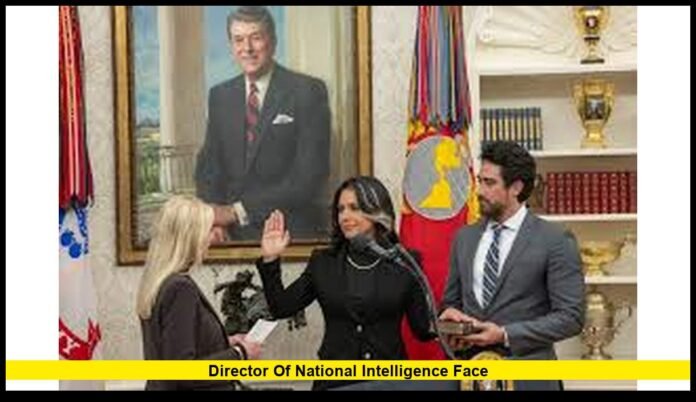

The office of the director of national intelligence has become one of the most closely watched positions in Washington as Tulsi Gabbard accelerates a broad intelligence overhaul tied to cybersecurity, foreign laboratory investigations, terrorism monitoring, and rising geopolitical tensions involving China, Iran, Russia, and North Korea.
Over the past several months, the Office of the Director of National Intelligence has moved aggressively to reshape the way America’s intelligence agencies coordinate national security operations. The latest developments include new cybersecurity modernization efforts, expanded reviews of overseas biological laboratories funded with U.S. taxpayer dollars, and updated intelligence warnings about missile programs and foreign cyber threats.
The changes arrive during a period of growing international instability and intense political debate over intelligence transparency, surveillance authorities, and the future role of federal security agencies.
Americans are increasingly paying attention to intelligence policy as cyberattacks, artificial intelligence, election security, and foreign influence operations continue dominating national security discussions across the country.
Washington insiders expect additional intelligence reforms and national security announcements in the coming months as Congress intensifies oversight hearings and federal agencies adapt to rapidly evolving global threats.
The renewed attention on intelligence operations comes as the United States prepares for several major security challenges expected to define the remainder of 2026.
Readers following these fast-moving developments should watch closely as intelligence leaders continue unveiling new initiatives aimed at protecting critical infrastructure, monitoring global conflicts, and strengthening homeland defense.
Tulsi Gabbard Expands Intelligence Community Reforms
Tulsi Gabbard officially took over leadership of the U.S. intelligence community earlier this year after securing Senate confirmation. Since entering office, she has launched a series of restructuring initiatives designed to modernize intelligence operations and reduce what administration officials describe as bureaucratic inefficiencies inside federal agencies.
The Office of the Director of National Intelligence coordinates America’s 18 intelligence organizations, including agencies tied to military intelligence, cyber operations, counterterrorism, and foreign surveillance.
Under Gabbard’s leadership, ODNI has focused heavily on improving interagency coordination and accelerating technology modernization projects that officials argue are necessary to counter emerging threats from hostile foreign governments.
One of the administration’s largest priorities involves cybersecurity.
Federal officials recently announced what was described as the biggest cybersecurity investment and modernization initiative ever launched across the intelligence community. The effort includes upgrades to classified networks, digital defense systems, data protection programs, and cyber intelligence coordination.
Officials warn that foreign adversaries are increasingly using artificial intelligence and sophisticated cyber tools to target government systems, financial networks, military infrastructure, and sensitive communications.
The modernization push aims to reduce vulnerabilities across intelligence agencies while improving response capabilities during cyber emergencies.
Security analysts note that cyber warfare has evolved dramatically over the last decade, turning digital threats into one of the most urgent national security concerns facing the United States.
Foreign Biolab Review Sparks National Debate
One of the biggest recent intelligence developments involves a sweeping investigation into overseas biological laboratories that previously received U.S. support or funding.
The review reportedly covers more than 120 laboratories spread across over 30 countries.
Federal officials are examining research activity involving pathogens and reviewing oversight standards connected to experiments that critics say may have involved gain-of-function research.
The issue has generated strong reactions in Washington because gain-of-function experiments became highly controversial after the COVID-19 pandemic intensified public scrutiny surrounding laboratory safety and pandemic preparedness.
Officials involved in the investigation say the goal is to determine what research projects were approved, where funding was directed, and whether adequate safeguards existed at overseas facilities.
Several laboratories under review are located in regions affected by political instability or military conflict, increasing concerns surrounding security protections and operational oversight.
The administration argues that stronger monitoring is necessary to prevent future biological risks and improve accountability involving taxpayer-funded international research programs.
The investigation has also reignited broader conversations surrounding biosecurity, government transparency, and international scientific cooperation.
Critics of the administration’s approach argue that highly politicized rhetoric around biological research could complicate diplomatic relationships and create additional global tensions.
Still, the administration maintains that national security agencies must fully understand how federally supported research programs operate abroad, especially when dangerous pathogens are involved.
Annual Threat Assessment Warns of Expanding Risks
The intelligence community’s latest Annual Threat Assessment painted a concerning picture of the security challenges facing the United States.
During testimony before the Senate Intelligence Committee, intelligence leaders outlined multiple threats ranging from cyber warfare and missile development to terrorism and foreign espionage.
China, Russia, Iran, and North Korea remained central concerns throughout the assessment.
Officials warned that geopolitical rivals continue investing heavily in advanced weapons systems, cyber capabilities, artificial intelligence, and military modernization.
The intelligence report highlighted the growing risk posed by cyberattacks targeting American infrastructure and government systems.
Federal agencies continue warning that hostile foreign actors are probing vulnerabilities tied to transportation networks, power grids, communication systems, and financial infrastructure.
Intelligence officials also pointed to expanding missile programs among several adversarial nations.
Iran’s ballistic missile development attracted significant attention during congressional hearings, particularly as tensions in the Middle East continue affecting global security calculations.
Officials additionally warned that North Korea’s cyber operations remain highly sophisticated and financially motivated, particularly in areas involving cryptocurrency theft and digital intrusions.
The intelligence community also stressed that modern threats increasingly combine traditional espionage with cyber warfare, misinformation campaigns, and emerging artificial intelligence technologies.
Cybersecurity Becomes a Dominant National Security Focus
Cybersecurity has rapidly become one of the defining issues inside the intelligence community.
Government agencies continue facing pressure to defend against increasingly advanced cyber operations conducted by foreign governments and criminal organizations.
Security experts warn that cyberattacks no longer target only military or intelligence systems.
Modern cyber threats can disrupt hospitals, airports, energy grids, water systems, financial institutions, and election infrastructure.
Officials say artificial intelligence tools may further increase the sophistication and speed of future cyberattacks.
As a result, intelligence agencies are investing heavily in cyber defense programs, digital monitoring systems, and specialized workforce recruitment.
The administration’s modernization efforts are expected to include expanded partnerships between intelligence agencies and private-sector technology companies focused on digital defense technologies.
Federal officials argue that protecting America’s digital infrastructure now requires the same level of urgency historically associated with military defense planning.
The growing importance of cybersecurity is likely to keep intelligence agencies at the center of national policy debates for years to come.
Counterterrorism Remains a Core Mission
Despite growing focus on cyber warfare and geopolitical competition, counterterrorism operations remain a central mission for U.S. intelligence agencies.
Federal officials continue monitoring extremist organizations operating across multiple regions of the world.
Security agencies warn that terrorist recruitment methods have evolved significantly in recent years, with online propaganda and encrypted communication platforms playing larger roles in radicalization efforts.
The National Counterterrorism Center continues coordinating with international allies to track terrorist networks and prevent attacks against American interests.
Recent intelligence operations involving detainee transfers from Syria to Iraq highlighted the ongoing effort to prevent extremist organizations from rebuilding operational capabilities.
Officials say intelligence sharing between allied governments remains critical to disrupting international terrorist threats.
Counterterrorism analysts also warn that lone-actor attacks inspired through online extremist content remain a continuing security concern inside the United States and abroad.
Political Battles Intensify Around Intelligence Oversight
The intelligence community’s recent restructuring efforts have also intensified political tensions in Washington.
Several lawmakers have questioned staffing reductions and organizational changes implemented across ODNI offices during the past year.
Critics argue that major cuts could weaken institutional expertise and reduce long-term strategic planning capabilities inside national security agencies.
Supporters of the reforms counter that streamlining federal intelligence operations is necessary to improve efficiency and accountability.
The disagreements reflect a broader national debate over how intelligence agencies should operate during a period of rising political polarization.
Questions involving surveillance powers, classified investigations, whistleblower protections, and intelligence transparency continue fueling heated disputes on Capitol Hill.
Lawmakers from both parties have demanded additional oversight hearings related to intelligence reforms and national security decision-making.
The growing political attention surrounding intelligence agencies demonstrates how central national security issues have become within broader American political debates.
Artificial Intelligence Changes the Intelligence Landscape
Artificial intelligence is rapidly transforming the way intelligence agencies operate.
Federal officials warn that rival nations are investing heavily in AI-driven surveillance systems, cyber capabilities, military technology, and information warfare operations.
At the same time, American intelligence agencies are increasing their own use of machine learning and advanced data analysis systems to process enormous amounts of global intelligence information.
Experts say artificial intelligence can help intelligence analysts identify cyber threats faster, monitor emerging security risks, and improve predictive analysis capabilities.
However, officials also warn that AI technologies could be exploited by foreign adversaries to spread misinformation, manipulate digital content, or conduct more sophisticated cyberattacks.
The intelligence community now faces the difficult challenge of embracing advanced technologies while protecting against their misuse.
National security experts expect artificial intelligence to remain one of the most important intelligence policy issues throughout the next decade.
Global Tensions Continue Shaping Intelligence Priorities
International instability remains a major driver of intelligence activity.
Conflicts involving Russia, tensions in the Middle East, Chinese military expansion, and North Korean weapons development continue shaping U.S. intelligence priorities.
Officials say global conflicts are becoming increasingly interconnected through cyber warfare, economic competition, disinformation campaigns, and emerging military technologies.
The intelligence community is also closely monitoring developments involving drone warfare, satellite surveillance systems, and advanced missile technologies.
Analysts warn that future conflicts could involve simultaneous cyber operations, digital misinformation campaigns, and conventional military action.
These changing dynamics are forcing intelligence agencies to expand cooperation across military, diplomatic, technological, and law enforcement organizations.
Federal officials argue that intelligence coordination is now more important than ever as national security threats grow increasingly complex and global in scope.
The Growing Power of the Intelligence Chief
The position of director of national intelligence has evolved significantly since it was created after the September 11 terrorist attacks.
The office was originally established to improve coordination between intelligence agencies following major intelligence failures tied to the attacks.
Today, the role carries enormous influence over national security strategy, intelligence integration, foreign threat analysis, and presidential briefings.
The intelligence chief oversees coordination between agencies including the CIA, NSA, FBI intelligence divisions, and military intelligence organizations.
As cyber warfare, artificial intelligence, and geopolitical competition continue reshaping global security, the responsibilities attached to the position are expected to expand even further.
The coming months will likely determine how effectively intelligence agencies balance modernization efforts, political pressures, global threats, and public demands for transparency.
With cyber threats escalating and international tensions continuing to rise, the intelligence community is expected to remain one of the most closely watched parts of the federal government throughout the rest of 2026.