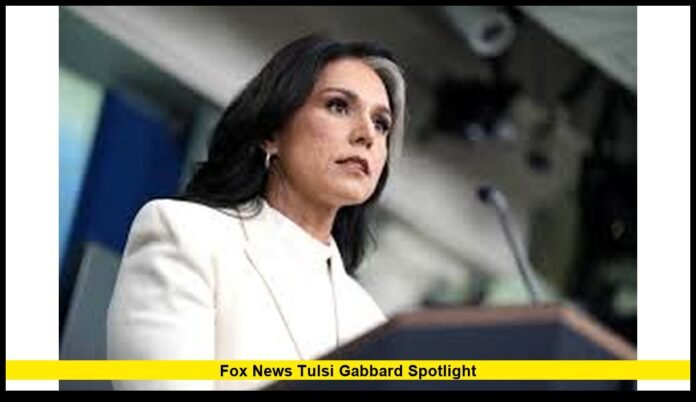

The spotlight surrounding fox news tulsi gabbard discussions has grown even stronger in recent weeks as Director of National Intelligence Tulsi Gabbard continues navigating some of the most challenging national security issues facing the United States. From intelligence reform efforts to foreign policy tensions and domestic security concerns, Gabbard’s role inside the administration has placed her at the center of major political debates across Washington.
As one of the most recognizable figures in the administration, Gabbard has become a frequent topic of national conversation due to her outspoken leadership style, intelligence oversight decisions, and continued appearances in high-profile interviews and hearings. Her transition from former Democratic congresswoman to one of the administration’s top intelligence officials remains one of the most remarkable political shifts in recent years.
Political observers say her growing influence inside the administration reflects the importance of national security issues heading deeper into 2026. Intelligence agencies are dealing with rising cyber threats, escalating global instability, election security concerns, artificial intelligence risks, and ongoing geopolitical tensions involving major world powers.
Tulsi Gabbard’s Intelligence Leadership Under National Attention
Tulsi Gabbard assumed the role of Director of National Intelligence during a period of growing uncertainty in global affairs. Since taking office, she has overseen multiple intelligence reviews while also becoming one of the administration’s most visible public officials.
Her office coordinates intelligence operations and assessments involving numerous federal agencies, including matters related to terrorism, cybersecurity, foreign threats, border security, and strategic military risks.
In recent congressional hearings, Gabbard emphasized that intelligence agencies remain highly focused on evolving threats from extremist organizations, cybercriminal networks, and hostile foreign governments.
Officials warned lawmakers that smaller decentralized extremist operations continue presenting significant dangers because they are often more difficult to detect in advance. Security analysts have repeatedly stressed that lone actors inspired online can sometimes bypass traditional intelligence monitoring systems.
Gabbard also highlighted growing concerns over cyberattacks targeting infrastructure, businesses, government systems, and financial institutions. Intelligence officials believe foreign adversaries continue testing vulnerabilities in American digital networks.
Growing Focus on Artificial Intelligence Security Risks
One of the largest national security discussions this year has centered around artificial intelligence and its potential misuse. Gabbard has repeatedly warned that rapidly advancing AI systems could dramatically change the nature of cyber warfare and information operations.
Federal intelligence agencies now consider AI-driven threats among the most urgent long-term challenges facing the country.
According to administration officials, hostile actors may increasingly use artificial intelligence tools to spread misinformation, launch sophisticated phishing operations, manipulate financial systems, and conduct advanced cyberattacks.
Government cybersecurity teams are also studying how AI-generated content could complicate election security efforts and public trust in digital information.
Gabbard stated during recent intelligence briefings that agencies are investing heavily in technologies designed to identify manipulated media, AI-generated propaganda, and coordinated digital influence campaigns.
Technology experts say the rapid pace of AI development has created new risks faster than governments can regulate them. That reality has pushed intelligence agencies into a race to modernize defensive capabilities.
The administration has also encouraged stronger cooperation between federal agencies and private technology companies to address emerging cybersecurity threats before they escalate into larger crises.
Congressional Hearings Spark Heated Debate
Gabbard’s recent appearances before congressional committees generated intense political discussion as lawmakers questioned intelligence officials about the administration’s security priorities.
The hearings covered a wide range of international and domestic concerns, including:
- China’s military activity
- Russian intelligence operations
- Middle East instability
- Border security challenges
- Drug trafficking organizations
- Cybersecurity vulnerabilities
- Election security preparations
- Terrorism monitoring efforts
Several lawmakers pressed intelligence leaders for details regarding how agencies are preparing for increasingly sophisticated cyberattacks linked to foreign adversaries.
Questions also focused heavily on intelligence-sharing practices between agencies and concerns about political bias within federal institutions.
Gabbard defended ongoing reform efforts, arguing that intelligence agencies must rebuild trust with the public while improving operational efficiency.
Her responses drew praise from supporters who believe intelligence institutions require modernization and stronger accountability measures. Critics, however, argued that some of the administration’s reform efforts risk undermining the independence of national security agencies.
Election Security Controversy Draws New Scrutiny
One of the most discussed moments of Gabbard’s tenure involved her appearance during an FBI operation tied to election-related materials in Georgia.
The incident quickly became a major political flashpoint because the Director of National Intelligence traditionally does not participate directly in domestic law enforcement activities.
Questions intensified after differing public explanations emerged regarding the purpose of her presence during the operation.
Critics argued the situation blurred important lines between intelligence agencies and domestic investigative work. Supporters countered that election security issues involving potential foreign interference can overlap with intelligence responsibilities.
The controversy fueled broader national conversations about how intelligence agencies should operate in politically sensitive investigations.
Legal analysts and former intelligence officials debated whether existing oversight systems adequately define the boundaries between national security functions and federal law enforcement activities.
Despite criticism, administration officials defended Gabbard’s actions and maintained that election security remains a top national priority.
Foreign Policy Challenges Continue Escalating
International tensions have also placed Gabbard at the center of major foreign policy discussions.
Recent intelligence assessments under her leadership examined military developments involving Iran, Russia, and China. Officials have repeatedly warned that geopolitical instability continues increasing across several regions.
The administration has expressed growing concern about Iran’s regional activities and missile capabilities. Intelligence leaders continue monitoring military developments throughout the Middle East amid fears that regional conflicts could escalate unexpectedly.
Meanwhile, China remains one of the largest long-term strategic concerns for U.S. intelligence agencies.
Federal officials believe China continues expanding its military capabilities while investing heavily in artificial intelligence, cyber warfare technology, and advanced surveillance systems.
Lawmakers from both parties have increasingly demanded stronger intelligence coordination to address economic espionage, technology theft, and cyber threats tied to foreign governments.
Russia also remains a major intelligence focus due to ongoing geopolitical tensions and cybersecurity concerns.
Security experts say the complexity of modern global threats has forced intelligence agencies to operate in a rapidly changing environment where cyber warfare, economic pressure, misinformation campaigns, and military risks are increasingly interconnected.
Internal Intelligence Community Reforms Continue
Another defining element of Gabbard’s leadership has been her effort to restructure parts of the intelligence community.
Since taking office, she has supported multiple reviews involving staffing procedures, agency coordination, budget priorities, and transparency policies.
Her office previously launched a reform initiative aimed at evaluating internal intelligence operations and improving accountability standards.
Administration officials argued that several intelligence agencies required modernization after years of political controversy and public distrust.
Supporters of the reforms believe intelligence institutions must become more transparent and efficient while remaining focused on national security priorities.
Critics, however, worry that aggressive restructuring efforts could weaken morale inside intelligence agencies or create perceptions of political interference.
Several former intelligence officials publicly debated whether some proposed reforms risk damaging institutional independence.
Despite those concerns, the administration continues emphasizing that reform efforts are necessary to improve public confidence in federal institutions.
Media Attention Around Gabbard Keeps Expanding
Media coverage involving Tulsi Gabbard has increased substantially during her tenure as Director of National Intelligence.
Her public visibility has grown due to repeated appearances discussing national security, intelligence operations, border issues, terrorism threats, and foreign policy developments.
Coverage surrounding fox news tulsi gabbard segments has particularly attracted political attention because of her evolving role within the administration and her history as a former Democratic presidential candidate.
Political analysts continue debating whether Gabbard represents a new political movement inside Washington or simply reflects broader shifts occurring across the American political landscape.
Her supporters often describe her as an independent-minded leader willing to challenge entrenched institutions. Critics argue that her confrontational approach has intensified political divisions surrounding intelligence operations.
Regardless of political opinion, few officials in Washington currently receive as much bipartisan scrutiny as Gabbard.
Border Security and Cartel Activity Remain Key Priorities
Another issue dominating intelligence discussions this year involves border security and transnational criminal organizations.
Federal agencies continue monitoring cartel-related violence, fentanyl trafficking operations, human smuggling networks, and organized crime activity linked to international criminal groups.
Intelligence assessments have warned that drug trafficking organizations are becoming increasingly sophisticated in their use of technology, financial systems, and cross-border coordination.
Administration officials argue that intelligence-sharing between agencies has become essential for disrupting criminal operations tied to narcotics trafficking and money laundering.
Gabbard has repeatedly emphasized the importance of integrating intelligence resources with law enforcement efforts targeting organized criminal networks.
The administration also remains focused on migration-related security concerns as instability in several regions contributes to increased humanitarian and border pressures.
Political Future Sparks Ongoing Speculation
Even while serving in one of the nation’s most sensitive intelligence positions, Tulsi Gabbard’s political future continues generating speculation.
Her unusual political evolution has made her one of the most recognizable figures in American politics.
After first gaining national prominence as a Democratic congresswoman and presidential candidate, Gabbard later moved toward more independent and conservative political positions before joining the administration.
Some analysts believe her growing national profile could eventually position her for future political campaigns or additional leadership roles.
Others argue that the controversies surrounding intelligence oversight and national security decisions could shape how voters ultimately view her leadership.
Regardless of what happens politically, Gabbard’s role inside the administration has already made her one of the defining political figures of this era.
National Security Challenges Expected to Intensify
Intelligence experts warn that the next several years could bring even greater security challenges as technological change accelerates and geopolitical tensions continue rising worldwide.
Federal agencies are increasingly focused on preparing for threats involving:
- Artificial intelligence misuse
- Cyber warfare
- Election interference
- Domestic extremism
- Global military tensions
- Economic espionage
- Critical infrastructure attacks
Each of these concerns intersects directly with the responsibilities of the Director of National Intelligence.
Washington observers expect congressional oversight battles and public debate surrounding intelligence operations to remain intense throughout the year.
As the administration continues navigating national security pressures, Tulsi Gabbard is expected to remain one of the most closely watched officials in American politics.
Her decisions on intelligence transparency, cybersecurity strategy, foreign policy coordination, and agency reform will likely continue shaping political discussions across the country.
What are your thoughts on Tulsi Gabbard’s growing influence in national security and intelligence leadership? Join the conversation and check back for more updates on this developing story.